
Why Machining Chips Are a Different Problem From Scrap Yard Feed
A machine shop that turns, mills, or drills aluminum and steel produces a waste stream that behaves nothing like the mixed scrap a yard shredder is built for. Machining chips arrive wet with cutting fluid, machining chips are light for their volume, and machining chips oxidize quickly when left in an open bin. A foundry or die-casting plant that remelts machining chips cares about one thing: how much clean, dry metal actually reaches the furnace.
The guide below explains how to match a chip processing setup to the material a machining operation actually generates. The guide covers the two decisions that drive most of the cost — how to size the shredding stage and whether to add briquetting — and the guide shows which questions a supplier needs answered before quoting a line.
What Makes Machining Chip Handling Different
Loose aluminum turnings and steel swarf occupy a large volume relative to their weight. A bin that looks full may hold only a fraction of the metal a foundry expects, and transport is charged on volume as often as on weight. Cutting fluid trapped in the chips adds moisture, which lowers the effective metal content of every load and can create smoke and flare when the material reaches a melt shop.
Long, stringy turnings also bridge and jam in conveyors and hoppers. A shredding stage that reduces turnings to a consistent chip size keeps downstream equipment fed evenly and makes the material easier to sample and weigh. The shredding stage is therefore not only about size reduction; the shredding stage also stabilizes the feed for whatever separation or compaction step follows.
Sizing the Shredding Stage for Swarf and Turnings
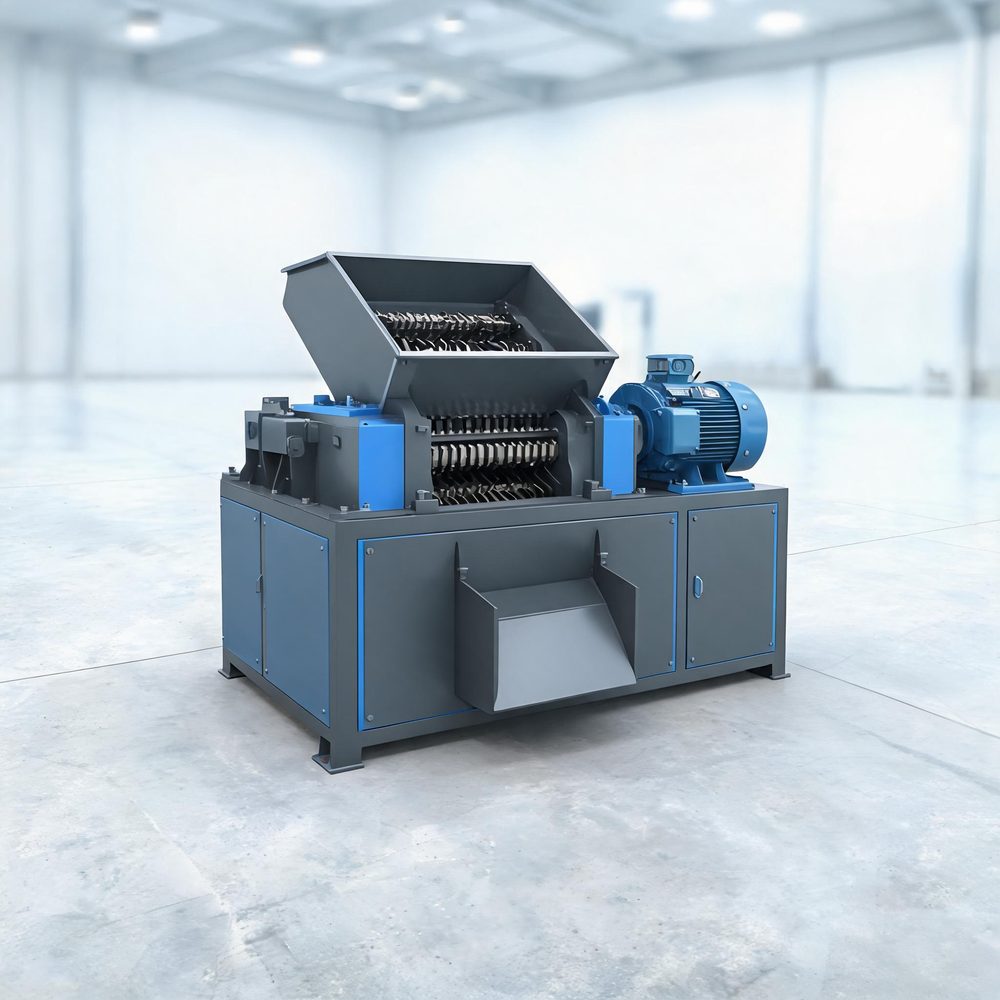
The first input a supplier needs is the material itself. Aluminum swarf from a machining center behaves differently from steel turnings from a lathe, and mixed loads of both need a machine that can handle the harder fraction without stalling on the softer one. A twin-shaft shredder with low-speed, high-torque shafts shears turnings rather than hammering the turnings, which keeps the material from work-hardening and reduces the fine dust a high-speed mill would generate.
Throughput should be matched to the volume the shop actually produces, not to a nameplate figure. A shop generating a few hundred kilograms of aluminum swarf per shift does not need the same drive power as a plant running a continuous casting line. The TG-AluShred 120 aluminum swarf shredder is built around a 2x18.5 kW drive with an inclined hopper and sealed bearings, a configuration aimed at wet turnings and borings rather than dry bulk scrap.
Questions That Decide the Shredder Configuration
- What metals appear in the chip stream, and in what proportion?
- Are the chips wet with cutting fluid, or has the shop already run a centrifuge?
- What is the longest turning the machine must accept without pre-cutting?
- What discharge size does the downstream separation or briquetting step require?
When to Add a Briquetting Stage
Shredding alone reduces chip size but does not change bulk density much. A briquetting press compacts loose chips into dense cylindrical briquettes, and the density gain is what changes the economics of shipping and melting. The TG-BriqPress 250 metal briquetting system handles steel, cast iron, aluminum, copper, and brass chips, and the press recovers cutting fluid during compaction so the fluid can be collected rather than lost in the load.
Briquetting pays back fastest where transport distance is long or where the melt shop pays a penalty for oily, low-density charge. A shop that sells chips locally to a nearby foundry may find shredding alone sufficient. A shop that ships chips to a distant smelter, or that remelts the chips in house, usually gains more from adding the press.
Decision rule: if the cost of moving and melting loose chips is a significant line item, test the density gain from briquetting against the press cost. If chips are consumed locally and the melt shop accepts loose material, a shredding stage may be enough.
Comparing a Standalone Machine With an Integrated Line
A single shredder or press suits a shop that wants to process one material stream and already has handling equipment. An integrated line suits a plant that wants shredding, separation, and compaction coordinated in one sequence with a single control system.
| Setup | Best fit | What the setup includes |
|---|---|---|
| Standalone shredder | Single material stream, existing handling | Size reduction only |
| Standalone briquetting press | Shops that already shred and want density gain | Compaction and fluid recovery |
| Integrated line | Mixed aluminum streams, continuous output | Shredding, magnetic separation, eddy current separation, briquetting |
The TG-AluLine 200 aluminum scrap recycling processing line combines a twin-shaft shredder, magnetic contaminant removal, an eddy current separator, and a hydraulic briquetting press. The line turns loose aluminum swarf, profiles, and sheet offcuts into dense furnace-ready briquettes in one pass, which suits a plant that receives mixed aluminum rather than a single clean chip stream.
Separation and Fluid Recovery in the Same Pass
Aluminum chip streams often carry steel contamination from tooling, fasteners, or mixed production. A magnetic separator placed after the shredder pulls ferrous contamination out before the material reaches the press, which protects briquette quality and keeps the aluminum fraction clean for remelting. An eddy current separator then lifts the non-ferrous aluminum from the remaining residue.
Cutting fluid recovery matters for two reasons. Recovered fluid can be returned to the machining process, and drier briquettes command a better price and produce less smoke at the furnace. A press that drains fluid during compaction captures value that would otherwise leave the plant inside the chip load.
What to Send a Supplier Before Requesting a Quote
A supplier can size a chip processing setup accurately only when the material and the operating pattern are clear. The following inputs shorten the path from inquiry to a workable proposal:
- Metal types and approximate monthly tonnage of chips.
- Whether chips are wet or dry, and whether a centrifuge is already in use.
- Typical turning length and the largest piece the machine must accept.
- Available floor space and the plant electrical supply, including 50 Hz or 60 Hz.
- Whether the shop sells chips or remelts chips in house.
- Target briquette size or downstream handling requirements.
Frequently Asked Questions
Can one machine handle both aluminum and steel chips?
A twin-shaft shredder with low-speed, high-torque shafts can process both aluminum and steel chips, but the harder steel fraction sets the drive power requirement. A shop running mostly aluminum with occasional steel should tell the supplier the proportion of each so the machine is not oversized for the common case.
Does briquetting remove all the cutting fluid?
Compaction recovers a large share of the fluid, and the press drains fluid during the cycle. Residual moisture depends on the material and the press setting, so a shop that needs a specific dryness level should state that requirement when requesting a quote.
How much space does a chip processing line need?
Space depends on the number of stages. A standalone shredder needs less floor area than an integrated line that adds separation and briquetting. Sharing the plant layout and available footprint with the supplier lets the line be arranged to fit the building.
Is a shredder needed if the shop already briquettes?
Long turnings can bridge in a press feed, so many shops shred first to give the press a consistent feed. A shop with short, uniform chips may be able to feed the press directly. The turning length in the actual chip stream decides whether a shredding stage is needed.
Next Step
Matching a chip processing setup to a machining operation comes down to the material, the volume, and whether the plant ships or remelts the chips. Sharing the material, the volume, and the shipping pattern with an equipment supplier is the fastest way to get a configuration that fits the shop rather than a generic proposal.
To discuss a specific chip stream, send the metal types, monthly tonnage, and whether the chips are wet or dry. The engineering team can then recommend a shredding stage, a briquetting press, or an integrated line, and confirm the drive power and discharge size that match the material.