Buying Guide
\n\nManufacturers across Southeast Asia-Vietnam, Indonesia, Thailand, Malaysia, and the Philippines-are generating growing volumes of metal turnings, chips, and swarf as machining and fabrication capacity expands. Loose metal scrap occupies significant storage space, retains cutting fluids that leak during transport, and sells at lower per-tonne rates because of its low bulk density. A briquetting machine addresses all three problems by compacting loose chips into dense, uniform briquettes that are easier to store, cheaper to ship, and command higher prices from foundries and steel mills.
\n\nThis guide walks Southeast Asian buyers through the types, selection criteria, cost factors, and common mistakes to avoid when investing in a briquetting machine.
\n\nWhat Is a Briquetting Machine?
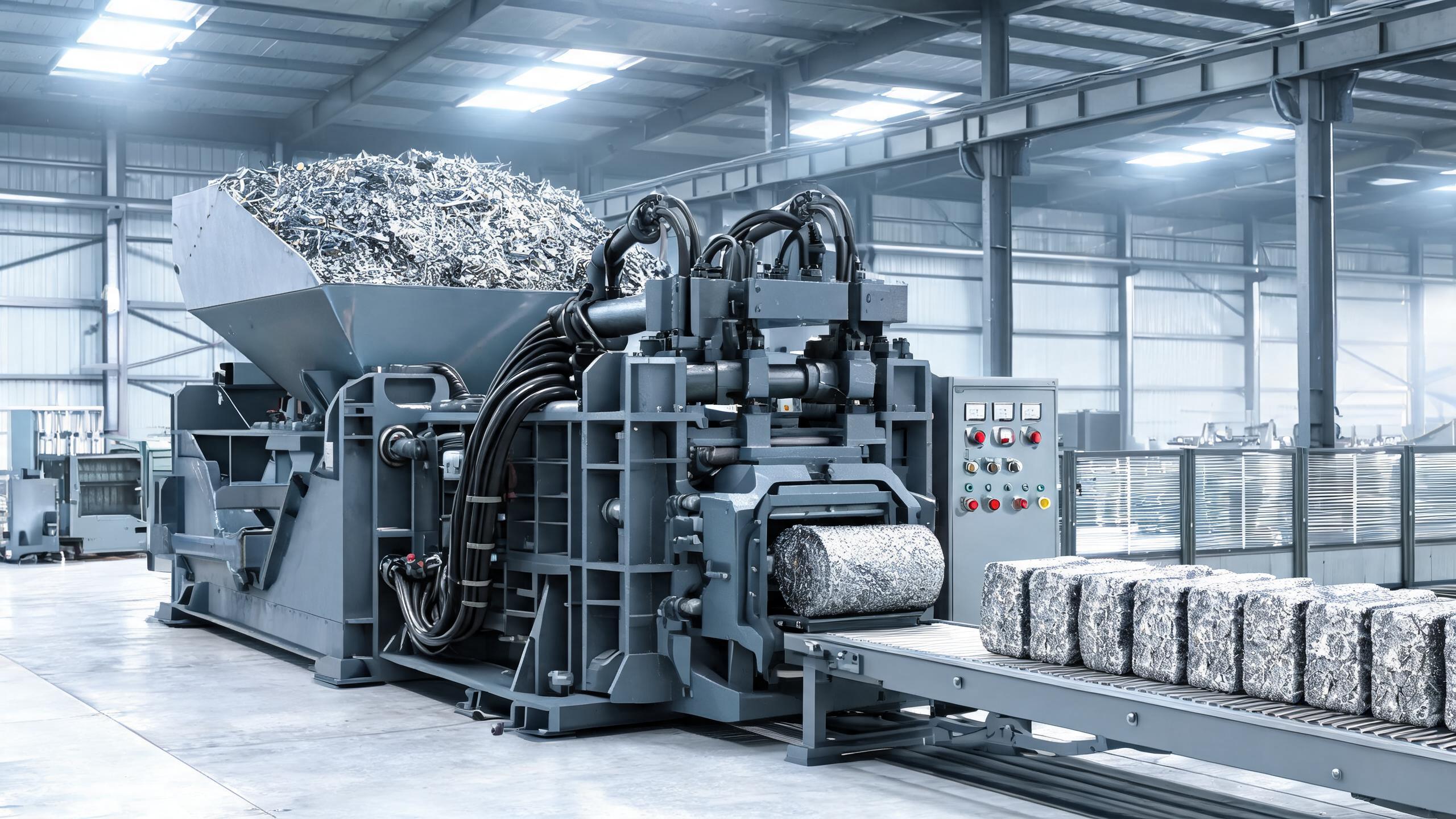
\n\nA briquetting machine compresses loose metal chips, turnings, and swarf into solid briquettes-typically cylindrical blocks-using high-pressure hydraulics or mechanical force. During compaction, cutting fluid and coolant trapped in the chips are squeezed out and can be recovered for reuse. The resulting briquettes have a bulk density far higher than loose scrap, which directly translates into lower transport costs and higher resale value.
\n\nFor foundries and smelters, briquettes are also easier to charge into furnaces: they melt more uniformly, reduce oxidation loss, and avoid the safety risks of loose wet chips hitting molten metal.
\n\nTypes of Briquetting Machines
\n\nThree main drive types dominate the market. Each suits different materials, throughput requirements, and budget levels.
\n\n\n\n\n\n\n\n\n\n\n| Type | Best For | Typical Throughput | Relative Cost |
|---|---|---|---|
| Hydraulic | Steel, cast iron, aluminum, copper, brass chips | Medium to high (varies by model) | Mid-range |
| Mechanical | High-volume ferrous scrap in continuous-shift operations | High | Higher upfront |
| Screw (Extrusion) | Biomass and light metal fines | Low to medium | Lower upfront |
Hydraulic briquetting presses are the most versatile choice for metal recyclers. The TG-BriqPress 250 Metal Briquetting System, for example, is a standalone hydraulic unit that handles steel, cast iron, aluminum, copper, and brass. It compacts loose swarf into dense cylindrical briquettes and simultaneously recovers cutting fluid during the pressing cycle.
\n\nKey Selection Criteria for Southeast Asian Buyers
\n\n1. Throughput Capacity
\nMatch the machine's rated output to your daily scrap generation. A small machine shop producing 200–500 kg of chips per day needs a very different system from a foundry processing 5 tonnes per hour. Undersizing creates bottlenecks; oversizing wastes capital and floor space.
\n\n2. Raw Material Compatibility
\nNot every briquetting press handles every metal. If you process mixed chips-aluminum one day, steel the next-confirm the machine can switch materials without lengthy changeover. Hydraulic presses with interchangeable compression chambers generally offer the broadest material range.
\n\n3. Power Supply
\nSoutheast Asian industrial power varies: Vietnam and Indonesia commonly use 380V 3-phase 50Hz; Thailand uses 380V 50Hz; Malaysia uses 415V 50Hz; the Philippines uses 460V 60Hz in many industrial zones. Verify that the machine's motor and control panel match your local supply, or request a compatible variant. Lead times for custom electrical configurations may extend delivery.
\n\n4. Maintenance and Spare Parts
\nBriquetting machines operate under high pressure, so wear parts-seal kits, hydraulic valves, compression chamber liners-need periodic replacement. Choose a supplier that ships spare-parts kits with the machine and can dispatch replacement components within a reasonable timeframe. A 12-month warranty and remote technical support are baseline expectations for industrial-grade equipment.
\n\n5. Floor Space and Installation
\nHydraulic briquetting presses require a reinforced concrete pad and adequate clearance for material feeding, briquette discharge, and fluid collection. Measure your available floor area before ordering, and request installation supervision from the supplier-especially for first-time buyers.
\n\nCost Factors and ROI Analysis
\n\nThe total cost of ownership for a briquetting machine extends well beyond the purchase price:
\n\n- \n
- Equipment price: Varies by drive type, throughput, and automation level. Hydraulic systems typically sit in the mid-range; mechanical high-throughput presses cost more upfront. \n
- Shipping and import duties: Southeast Asian buyers should factor in ocean freight from China, customs clearance, and local VAT or import duties on industrial machinery. \n
- Installation and commissioning: Includes foundation preparation, electrical connection, and on-site setup by a technician. \n
- Operating costs: Hydraulic oil, electricity, wear parts, and labor. \n
On the revenue side, briquetting delivers measurable returns. Compacted briquettes can reduce transport costs by 5–10 times compared to loose chips, because trucks carry metal instead of air. Recovered cutting fluid reduces coolant purchase and disposal costs. Foundries pay higher per-tonne prices for dense, clean briquettes than for loose, oily turnings. For a facility generating several tonnes of metal chips per week, the payback period typically ranges from 12 to 24 months depending on scrap volume and local material prices.
\n\nCommon Mistakes When Choosing a Briquetting Machine
\n\n- \n
- Ignoring material mix: Buying a press designed for aluminum only, then trying to process steel chips. Always confirm material compatibility before purchase. \n
- Underestimating throughput needs: Selecting a machine based on average daily scrap rather than peak generation. Sizing for peaks prevents accumulation during busy periods. \n
- Overlooking fluid recovery: Not all presses recover cutting fluid. If coolant cost is significant, prioritize systems with integrated fluid collection. \n
- Neglecting after-sales support: A cheaper machine with no spare-parts supply or technical support becomes expensive when it sits idle for weeks waiting for parts. \n
- Skipping site preparation: Arriving equipment with no prepared foundation or power connection delays commissioning and may incur additional technician fees. \n
Frequently Asked Questions
\n\nWhat materials can a hydraulic briquetting machine process?
\nHydraulic presses like the TG-BriqPress 250 handle steel, cast iron, aluminum, copper, and brass chips. Always confirm compatibility with your specific material before ordering, especially for unusual alloys or mixed streams.
\n\nHow much floor space does a briquetting system require?
\nSpace requirements depend on throughput and configuration. A standalone hydraulic press needs a reinforced pad plus clearance for feeding, discharge, and fluid collection. Request dimensional drawings from the supplier during planning.
\n\nCan the machine recover cutting fluid from chips?
\nYes-hydraulic briquetting presses squeeze out cutting fluid and coolant during compaction. The recovered fluid can be filtered and reused, reducing both purchase and disposal costs.
\n\nWhat warranty and support should I expect?
\nIndustrial-grade briquetting equipment should come with at least a 12-month warranty, spare-parts kits shipped with the machine, installation supervision, and operator training. Confirm these terms before signing a purchase agreement.
\n\nHow long does delivery take?
\nFor standard models from established manufacturers, lead times are typically under 45 days. Custom electrical configurations or modified compression chambers may extend delivery-confirm timelines with your supplier.
\nNeed Help Selecting the Right Briquetting Machine?
\nOur engineering team configures compression chamber dimensions, hydraulic parameters, and discharge options to match your specific material mix and throughput requirements. Explore the TG-BriqPress 250 or contact us with your material details for a tailored proposal.
\n