
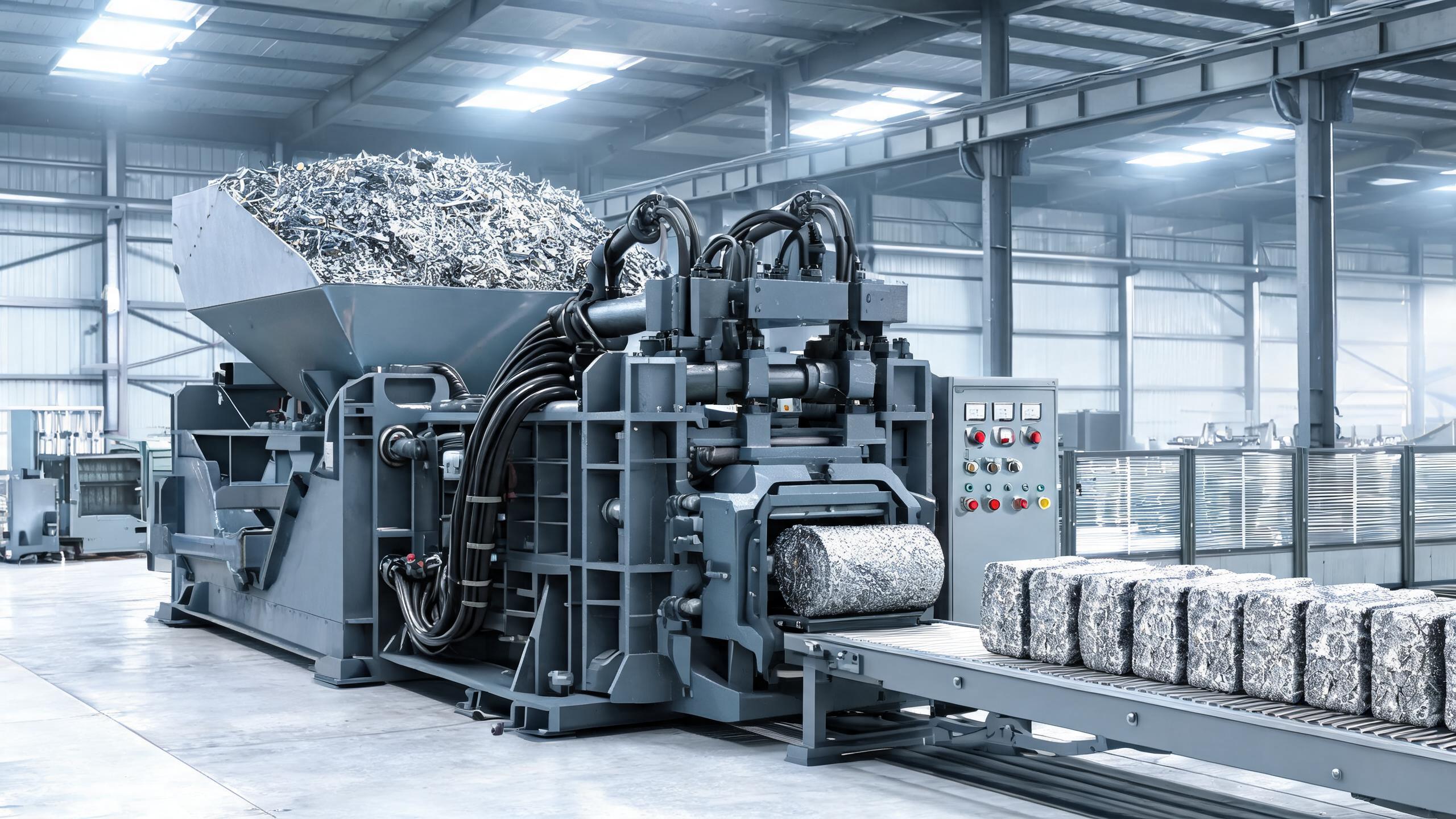
Why Metal Chip Recycling Demands a Briquetting Press Machine
Metalworking facilities across Southeast Asia-precision machining shops in Vietnam, automotive parts manufacturers in Thailand, aluminum extrusion plants in Indonesia-generate significant volumes of loose metal chips, turnings, and swarf every day. These byproducts carry two costly problems: extremely low bulk density (0.2–0.5 t/m³ for loose steel chips, even lower for aluminum) that inflates transport and storage costs, and residual cutting fluid that creates environmental and handling issues. A briquetting press machine solves both by compacting loose metal chips under high hydraulic pressure into dense cylindrical briquettes, simultaneously squeezing out recoverable cutting fluid.
The TG-BriqPress 250 is a standalone hydraulic briquetting system designed for exactly this purpose. It handles steel, cast iron, aluminum, copper, and brass chips, compacting them into dense briquettes that raise bulk density to approximately 2.0–2.5 t/m³-a 5–10x improvement over loose chips. This density gain translates directly into lower transport costs per tonne, higher resale value to foundries and remelters, and cleaner workshop floors.
Key Selection Criteria for a Briquetting Press Machine
1. Material Type and Chip Characteristics
Not all metal chips behave the same under compaction. Steel turnings from lathe operations are stringy and tend to interlock, which helps briquette formation. Aluminum swarf is lighter and may require higher compaction pressure to achieve stable briquette density. Copper and brass chips are denser but ductile-they compress rather than fracture. The TG-BriqPress 250 handles all five common metals, but the compaction chamber configuration and hydraulic pressure setting should match your dominant chip type. If your facility processes multiple metals, discuss the feed mix with the manufacturer so the chamber and press cycle are specified correctly.
2. Throughput Requirement
Throughput on a briquetting press machine depends on chip material, bulk density of the feed, and briquette diameter. A small machining shop generating 200–500 kg of chips per day has very different requirements from a high-volume automotive parts plant producing 5–10 tonnes daily. Oversizing the press wastes capital and energy; undersizing creates a processing bottleneck. The TG-BriqPress 250 is engineered for mid-range industrial volumes-confirm your daily chip generation rate and peak surge volume at inquiry so the manufacturer can verify the press cycle and hopper capacity match your operation.
3. Briquette Density and Quality
The economic case for briquetting rests on achieving consistent briquette density. Loose aluminum chips at 0.2–0.5 t/m³ are expensive to transport and store. Compacted briquettes at 2.0–2.5 t/m³ occupy far less space and command a higher per-tonne price from foundries. Inconsistent density-caused by insufficient pressure, contaminated feed, or mixed material types-reduces both transport efficiency and resale value. A properly specified hydraulic press maintains compaction pressure consistently across cycles.
4. Cutting Fluid Recovery
Many metal chips carry cutting fluid, coolant, or oil residue. During compaction, the briquetting press machine squeezes this fluid out of the chip matrix. If your operation includes cutting fluid recovery, the press should have drain points connected to a filtration system. The TG-BriqPress 250 includes fluid drainage capability during the compaction cycle-confirm your coolant type and volume so the drainage and sealing configuration is correctly specified.
5. Power Supply and Site Infrastructure
Industrial power supply varies across Southeast Asia. Vietnam and Indonesia primarily use 50 Hz supply; some facilities in Malaysia and the Philippines may have different voltage standards. The TG-BriqPress 250 can be configured for 50 Hz or 60 Hz supply. Verify your site voltage, transformer capacity, and available floor space-including clearance for hopper loading and briquette discharge-before ordering.
Operating Cost Comparison: Loose Chips vs. Briquetted Chips
| Factor | Loose Chips | Briquetted Chips |
|---|---|---|
| Bulk density | 0.2–0.5 t/m³ | 2.0–2.5 t/m³ |
| Transport cost per tonne | High (low payload utilization) | 5–10x lower |
| Cutting fluid recovery | Lost with chips | Squeezed out, recoverable |
| Foundry resale price | Lower (contaminated, low density) | Higher (clean, furnace-ready) |
| Storage footprint | Large bins or piles | Compact stacks |
For a Southeast Asian machining facility generating 3 tonnes of aluminum swarf per day, the transport cost difference alone can be substantial. At loose bulk density, a standard truck may carry only 3–4 tonnes of chips per load. Briquetted at 2.0+ t/m³, the same truck carries significantly more metal per trip. Over a year, this reduces logistics costs and carbon emissions-a growing consideration as ASEAN countries tighten environmental regulations on industrial waste transport.
Standalone Press vs. Integrated Recycling Line
Some facilities need more than a standalone briquetting press machine. If your operation generates mixed metal waste with contaminants-ferrous tramp in aluminum swarf, non-metallic residue, or varying chip sizes-an integrated line may be more appropriate.
The TG-AluLine 200, for example, combines a twin-shaft shredder, magnetic contaminant removal, eddy current separator, and hydraulic briquetting press into a continuous processing line with unified PLC control. This configuration transforms loose, contaminated aluminum scrap into clean, furnace-ready briquettes in a single pass. The TG-ScrapLine 150 offers a similar turnkey approach for mixed ferrous scrap, rated at 15 tonnes per hour with CE certification and ISO 9001 manufacturing.
For facilities with a single dominant chip type and minimal contamination, a standalone TG-BriqPress 250 may suffice. For mixed feed streams, the integrated line eliminates the need to manage multiple vendors and throughput matching across standalone units.
Briquetting Press Machine: Southeast Asian Market Considerations
- Vietnam: The manufacturing sector is growing rapidly, with many new machining and metalworking facilities. Chip recycling is becoming a compliance priority as industrial waste regulations tighten. A briquetting press machine helps facilities meet waste reduction targets while generating revenue from scrap.
- Indonesia: With a large metals processing industry spread across Java and Sumatra, transport distances to recycling centers can be long. Briquetting reduces transport volume, making it economically viable to ship chips to centralized foundries.
- Thailand: Automotive parts manufacturing generates high volumes of steel and aluminum chips. Facilities serving Japanese and Western OEMs often face strict environmental management requirements-briquetting supports both cost reduction and compliance.
- Malaysia and Philippines: Growing electronics and precision manufacturing sectors generate non-ferrous swarf. The TG-BriqPress 250 handles copper and brass chips, supporting recovery of higher-value metals.
What to Confirm Before Ordering
- Dominant chip material(s) and any secondary materials in the mix
- Daily chip generation volume and peak surge rates
- Current chip disposal method and associated costs
- Cutting fluid or coolant type and whether recovery is needed
- Site power supply (voltage and frequency)
- Available floor space and ceiling height for hopper loading
- Whether a standalone press or an integrated line with shredding and separation is more appropriate
- Any regional certification or documentation requirements
Tiangong manufactures the TG-BriqPress 250 in a 12,000 m² facility under ISO 9001 quality management, with installation supervision, operator training, and a 12-month warranty included with commissioning. Standard lead time for replacement wear parts is under 45 days. To receive a configured proposal, include your chip material types, daily volume, coolant details, and site power specifications.