
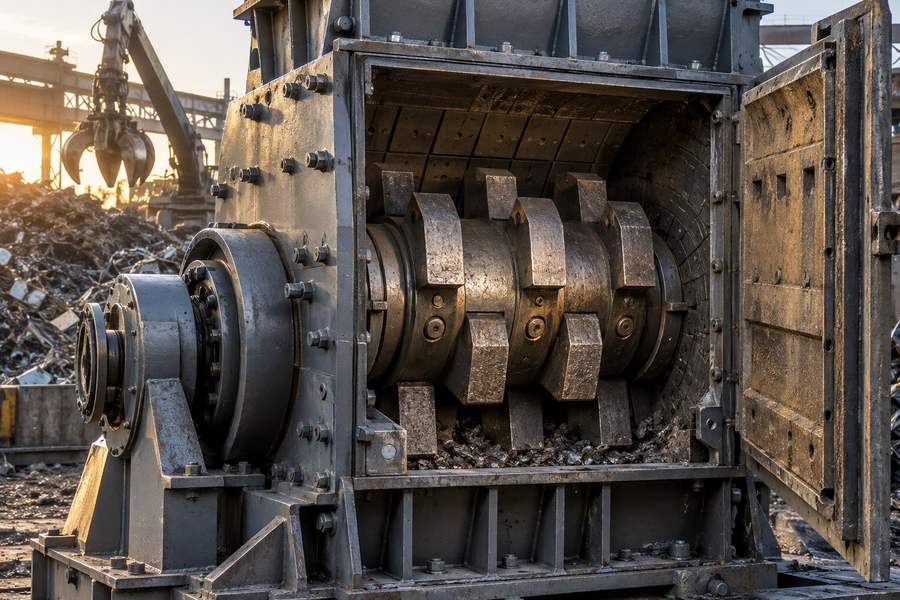
Why Hammer Mill Wear Parts Decide Your Operating Cost
In a scrap recycling yard, the hammer mill is usually the machine that sets the pace of the whole line. When hammers, grate bars, and liners wear out faster than planned, throughput drops and electricity cost per ton rises. A structured maintenance routine for the hammer mill keeps output fragment size stable and protects the gearbox and rotor bearings from shock loads.
Tiangong builds the TG-Hammer 800 Heavy-Duty Metal Crusher with reversible manganese steel hammers and replaceable grate bars, so a trained crew can rotate and swap wear parts without dismantling the rotor. The TG-Hammer 800 product page lists the 750 kW drive, 500-ton hydraulic compression ram, and 40 to 60 t/h throughput range that the following maintenance steps are designed to protect.
Inspect Hammers on a Fixed Schedule
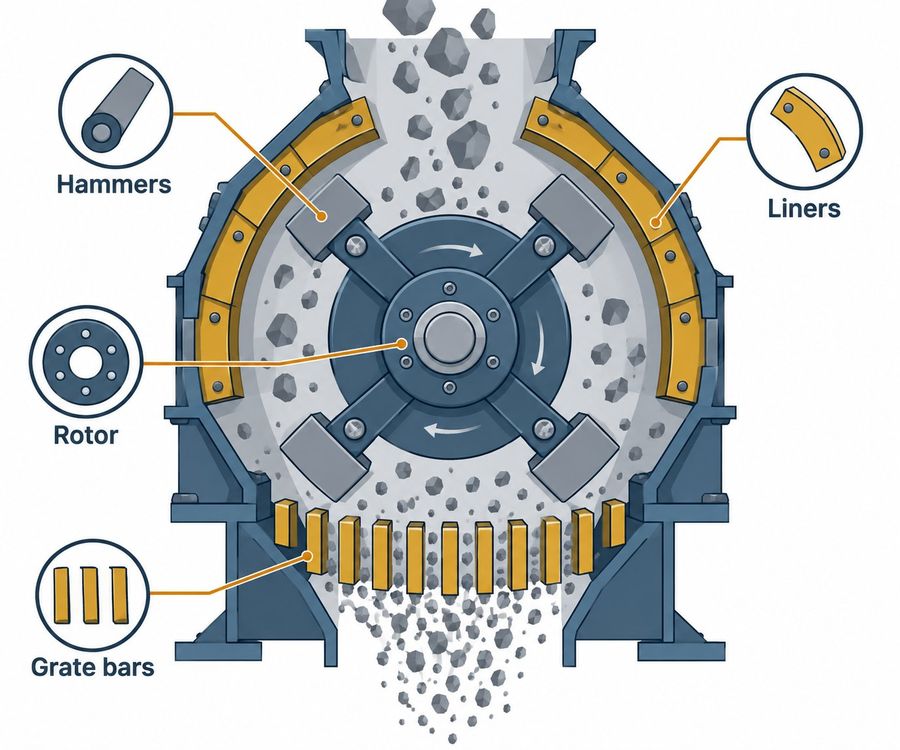
Check hammer weight and edge profile every 150 to 200 operating hours as a starting interval for mixed ferrous feed at medium throughput; yards crushing dense automobile bodies should shorten the interval, and light-gauge feed allows longer intervals. Manganese steel work-hardens in service, but uneven wear on one hammer row unbalances the rotor and shortens bearing life. Rotate hammers from the inner position to the outer position before the edge loses more than one third of the original profile, and always replace hammers in matched sets so the hammer mill rotor stays balanced.
Keep Grate Bar Gaps Within Specification
Grate bars control the discharge fragment size. Worn or bent bars let oversized fragments pass into downstream conveyors, which then jam separators and balers. Measure the grate gap weekly with a gauge, compare the reading against the commissioning record, and replace bars in the same slot pattern they were designed for. The TG-Hammer 800 offers multiple grate slot sizes, so a yard processing automobile bodies can switch the pattern when the feed mix changes.
Watch Liners, Bearings, and Feed Discipline
Impact liners behind the rotor deflect unbroken stock back into the hammer circle; a liner worn through exposes the housing and multiplies repair cost. Grease rotor bearings on the interval stated in the manual, and log bearing temperature after every shift. Feed discipline matters as much as parts: never feed the hammer mill with unexploded gas cylinders or sealed containers, and use the hydraulic compression ram to keep bulky stock engaged at a steady rate instead of shock-feeding the rotor.
Safety Comes Before Every Inspection
Chamber inspection on a hammer mill is high-risk work. Before opening any access door, stop the feed, run the chamber empty, lock out and tag out the main breaker, and wait for the rotor to come to a complete standstill; on large rotors, apply the rotor locking device described in the manual so residual rotation cannot start the machine. Only trained personnel wearing cut-resistant gloves, helmets, and eye protection should enter or reach into the chamber, and a second person should stay outside the guarded zone during the check.
Plan Spare Parts Before the Shutdown
A hammer mill stops earning money the day a wear part fails without a spare on the shelf. Tiangong ships a spare-parts kit with each machine order, and standard-model lead times are confirmed at order placement, so buyers can size local stock against the confirmed delivery schedule. As a baseline, hold one matched hammer set, one grate set, and bearing seals for the installed model; the exact hammer and bar counts per set depend on the rotor configuration and are listed in the machine documentation. For yards building a complete line, the TG-ScrapLine 150 Integrated Scrap Processing System pairs the shredder, magnetic separator, and briquetting press with the same spare-parts logic.
Questions Buyers Ask Before Ordering
How often should hammers be replaced? The interval depends on feed density and hours; inspect every 150 to 200 hours as a starting point and rotate or replace based on measured edge loss, not on a fixed calendar date.
Can the hammer mill handle automobile bodies? The TG-Hammer 800 is rated for automobile bodies, light steel, and mixed ferrous scrap at 40 to 60 t/h, with the 500-ton compression ram maintaining steady feed engagement.
What support comes with the machine? Tiangong provides installation supervision, operator training, and a spare-parts kit with each machine order; warranty terms, certification documents, and delivery schedules are confirmed in the sales contract for the specific model and destination.
Send Tiangong your feed material list, target throughput, and local power supply, and the engineering team will configure hammer profiles, grate openings, and hopper dimensions for the hammer mill that matches the yard's real workload.