
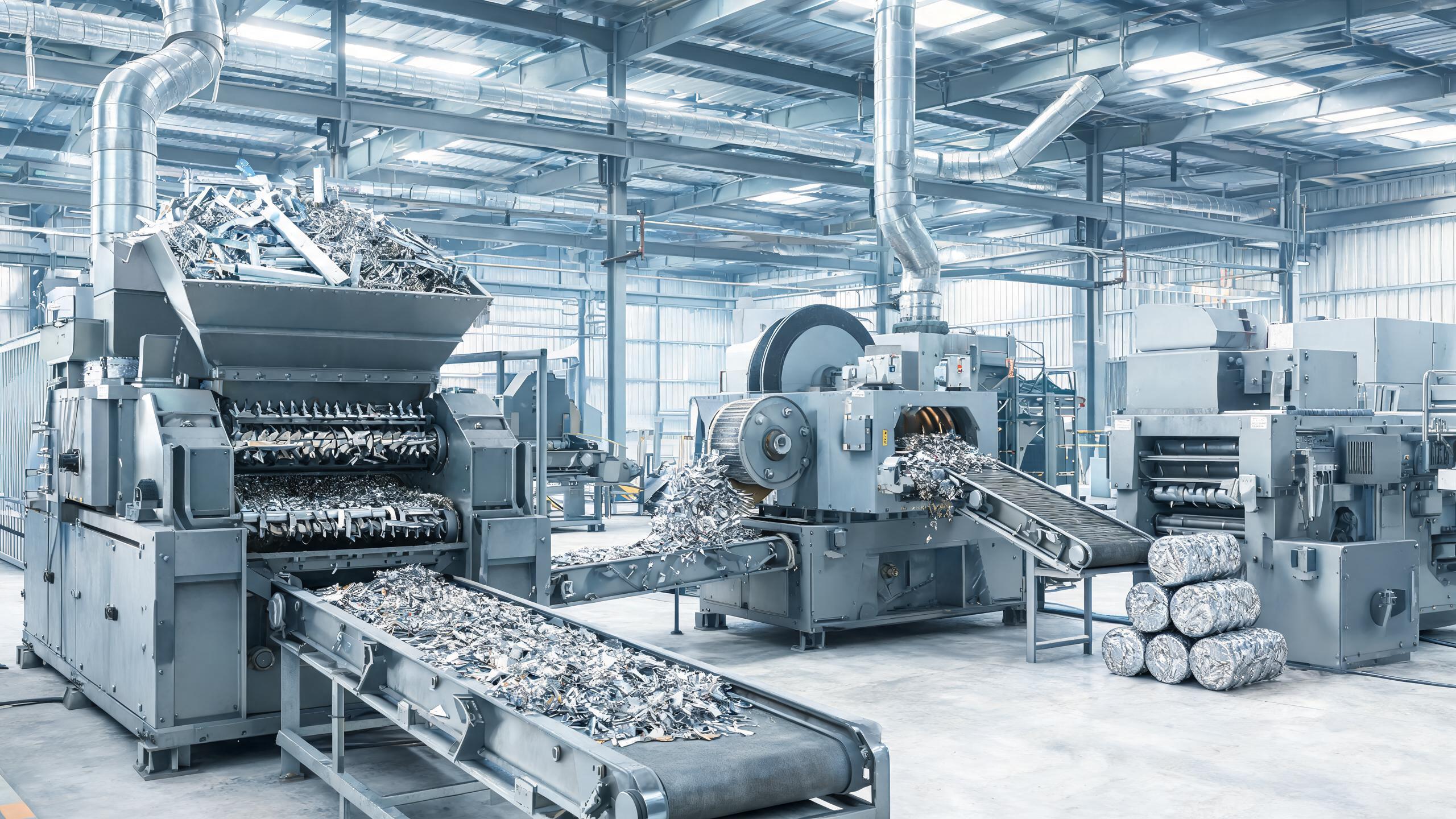
Choosing Scrap Metal Recycling Equipment: Where Southeast Asian Buyers Start
If you operate a scrap processing facility in Vietnam, Thailand, or Indonesia, the question is not whether you need scrap metal recycling equipment-it is which type, at what capacity, and how to justify the investment. The wrong choice means stalled machinery, wear parts consumed faster than expected, and output that does not meet downstream buyer specifications.
This article walks through the selection process step by step: understanding your feedstock, matching crusher and shredder capacity, planning a complete processing flow, evaluating return on investment, and addressing regulatory requirements specific to Southeast Asian markets.
Step 1: Define Your Feedstock Profile
Before comparing machine models, document what actually enters your facility. The four variables that determine equipment selection are:
- Material type: Ferrous (steel, cast iron), non-ferrous (aluminum, copper, brass), or mixed. Ferrous and non-ferrous require different cutting tool profiles and downstream separation.
- Material form: Sheet and light scrap, turnings and swarf, castings and engine components, wire and cable, or mixed auto hulks. Each form feeds differently into shredders and crushers.
- Maximum piece size: The largest single piece your machine must accept. Oversized pieces stall rotors, damage cutting tools, and reduce effective throughput.
- Contamination level: Dirt, sand, plastic, rubber, and cutting fluid mixed with scrap. Higher contamination means shorter wear part life and may require pre-washing or sorting stages.
| Common Feedstock | Vietnam | Thailand | Indonesia |
|---|---|---|---|
| Aluminum turnings & swarf | Machining industry, growing manufacturing base | Automotive parts manufacturing | Smelting sector byproduct |
| Mixed ferrous scrap | Construction and demolition scrap | Auto dismantling, ELV processing | Steel mill scrap, nickel pig iron slag |
| Copper wire & cable | Electronics manufacturing | Electrical equipment sector | Mining and smelting operations |
| E-waste | Emerging volume | Established recycling programs | Growing regulatory focus |
Step 2: Match Crusher and Shredder Capacity to Daily Volume
Throughput rating is the first specification buyers look at, but it is also the most commonly misapplied. Here is how to align capacity with real operational needs:
Light-duty operations (2–8 t/h)
For fabrication shops and small recyclers processing sheet offcuts, aluminum profiles, and light mixed scrap. A compact twin-shaft shredder with 2 × 15 kW drive (30 kW total) handles steel sheet up to 3 mm and aluminum up to 5 mm. The low connected power means standard industrial three-phase supply is sufficient, without transformer upgrades. Material thickness beyond these limits will stall the rotors and risk damaging cutting discs.
Medium-capacity yards (15 t/h)
For yards processing 80–120 tonnes per day across one to two shifts. An integrated scrap processing system combines a twin-shaft primary shredder (250 kW main drive), overband magnetic separator, and hydraulic briquetting press in one PLC-controlled line. The twin-shaft shredder handles automobile scrap, light steel, and mixed ferrous without pre-sorting. The briquetting press raises bulk density above 4.0 t/m³, directly improving per-tonne sale value.
Heavy-duty processing (40–60 t/h)
For large-scale continuous-shift operations on mixed ferrous scrap, automobile bodies, and dense cast iron. A 750 kW hammer crusher with 500-ton hydraulic compression maintains consistent feed engagement on bulky stock. Reversible manganese steel hammers extend service intervals. The throughput range reflects feedstock variation-light sheet steel runs toward 60 t/h, while denser inputs like bundled structural sections sit toward 40 t/h.
Key principle: Match the capacity tier to your daily tonnage and shift pattern, not to peak inbound volume on the busiest day. A machine running at 60% utilization with room to grow is more cost-effective than one running at 100% with no margin for volume increases.
Step 3: Plan the Complete Scrap Processing Flow
A single shredder or crusher is rarely the full solution. A complete scrap metal recycling line typically includes four stages:
- Stage 1 – Primary size reduction: Twin-shaft shredder for mixed light scrap, jaw crusher for hard castings, or hammer crusher for dense ferrous. This stage reduces oversized material to a workable fragment size.
- Stage 2 – Conveyor transport with oversize return: Discharge conveyor moves shredded material downstream. Oversized pieces are screened and returned for a second pass, keeping fragment size consistent.
- Stage 3 – Magnetic separation: Overband or drum magnetic separator pulls ferrous fragments from the discharge stream, separating clean steel from non-magnetic residue and non-ferrous metals.
- Stage 4 – Densification: Hydraulic briquetting press compacts separated material into dense briquettes. For aluminum, bulk density improves from 0.2–0.5 t/m³ (loose chips) to 2.0–2.5 t/m³ (briquettes). For ferrous scrap, briquettes reach 4.0 t/m³ or higher.
When each stage is pre-matched on throughput and controlled by a unified PLC system, an overload at the briquetting press automatically pauses upstream feeding-preventing material spillage. This eliminates the coordination burden of managing individual unit controls from different suppliers.
Step 4: Evaluate Return on Investment
The financial case for investing in scrap metal recycling equipment rests on three revenue drivers:
- Bulk density improvement: Loose shredded steel sells at a discount to steel mills because of low density and oxidation during storage. Briquetting to 4.0+ t/m³ reduces transport cost per tonne and commands a higher per-tonne price.
- Throughput efficiency: A hydraulic compression ram on a hammer crusher maintains consistent feed engagement, reducing empty-cycle time. This means more tonnes processed per shift at the same motor power.
- Wear cost management: Reversible hammers and jaw plates (use both sides before replacement) extend service intervals. Mn18 jaw plates for abrasive cast iron last longer than standard Mn13, reducing replacement frequency and downtime.
For a medium-capacity yard processing 100 tonnes per day, the briquetting stage alone can increase per-tonne revenue by improving bulk density fivefold. The payback period on the briquetting press component is typically measured in months, not years, when the yard is shipping to distant steel mills or foundries.
Step 5: Understand Regulatory Requirements
Southeast Asian countries are tightening regulations on scrap metal processing, environmental controls, and workplace safety:
- Indonesia: The government has implemented import restrictions on scrap metal, requiring domestic processing capacity to handle locally generated scrap. Facilities processing nickel pig iron slag and stainless steel scrap must meet environmental standards for dust and noise emissions.
- Thailand: ELV (end-of-life vehicle) processing requires depollution-draining fluids, removing batteries, and extracting hazardous components-before shredding. Facilities must comply with industrial waste management regulations.
- Vietnam: Scrap import regulations require environmental permits and specify quality standards for imported scrap material. Domestic processing facilities must meet workplace safety standards for noise, dust, and machine guarding.
CE-marked equipment with interlocked safety guards, documented risk assessments, and emergency stop circuits supports compliance with these regulatory frameworks. The technical construction file and declaration of conformity provided with CE-marked machines facilitate local safety authority reviews during facility commissioning.
Frequently Asked Questions
Request a Configured Proposal
Tiangong Technology manufactures scrap metal recycling equipment from a 12,000 m² facility established in 2008, with CE-marked machines and ISO 9001 quality management. The product range includes twin-shaft and four-shaft shredders, jaw and hammer crushers, impact crushers, briquetting presses, and integrated processing lines. The engineering team configures rotor profiles, screen sizes, and hopper dimensions to match each buyer's feedstock and downstream requirements.
To receive a configured proposal, include your typical feed material types and maximum piece size, daily volume and shift pattern, site power supply, and whether you need a standalone machine or integrated line. Mention any country-specific regulatory requirements that affect equipment configuration.