If you run a scrap yard in Vietnam, Indonesia, Thailand, Malaysia, or the Philippines, you already know the challenge: end-of-life vehicles (ELVs) are piling up, and manual dismantling is slow, labor-intensive, and leaves money on the table. An automated ELV recycling line can turn a depolluted car hulk into clean ferrous, non-ferrous, and residue fractions in a single pass — but only if you choose the right supplier.
This guide walks you through what a complete ELV recycling line includes, the key selection criteria, a supplier evaluation checklist, and what to prepare before you ask for a quote.
- A complete ELV recycling line combines depollution, shredding, magnetic separation, eddy current separation, and air classification.
- Match throughput to your actual feed volume — not to the biggest machine you can afford.
- Output purity determines your selling price; check how the supplier configures separators and screens.
- Verify manufacturing capability, customization options, installation supervision, training, and warranty terms.
- Prepare feed material details, target output specs, and site constraints before requesting quotes.
What a Complete ELV Recycling Line Includes
An ELV recycling line is not a single machine. It is an integrated system that processes a depolluted vehicle hulk into sorted fractions. Here are the core stages:
1. Depollution
Before shredding, fluids (fuel, oil, coolant), batteries, and other hazardous components must be removed. This is often done manually or with dedicated depollution equipment. Some suppliers offer depollution stations as part of the line; others expect you to handle it separately. Confirm what is included in the quote.
2. Hammer Mill Shredder
The heart of the line. A hammer mill shredder breaks the hulk into fist-sized fragments. Rotor design, hammer configuration, and screen opening size determine the output particle size and throughput. For ELV processing, a heavy-duty shredder with wear-resistant liners is essential.
3. Magnetic Separator
After shredding, an overband magnetic separator pulls out ferrous metals (steel, iron). The purity of this ferrous fraction is critical — it is the highest-volume output and often the main revenue stream.
4. Eddy Current Separator
Non-ferrous metals (aluminum, copper, brass) are recovered using an eddy current separator. This unit uses a high-speed magnetic rotor to repel non-ferrous metals from the waste stream. The recovery rate and purity of the non-ferrous fraction depend on the separator's design and the feed size distribution.
5. Air Classification
Light materials such as plastics, textiles, and foam are removed via air classification (sometimes called wind shifting or aspiration). This cleans the metal fractions and reduces residue volume.
Some suppliers offer integrated lines that combine all these stages into a single continuous pass. For example, the TG-ELVLine 300 End-of-Life Vehicle Shredding and Recycling Line from Tiangong Technology integrates a hammer mill shredder, magnetic separator, eddy current separator, and air classification, turning depolluted vehicle hulks into sorted ferrous, non-ferrous, and residue fractions in one continuous operation.
Key Selection Criteria
When comparing ELV recycling line suppliers, focus on these four areas:
1. Throughput vs. Feed Volume
Do not overbuy. A line rated at 15 t/h (like the TG-ScrapLine 150) may be overkill if your yard processes 5 tonnes per day. Conversely, an undersized line will create bottlenecks. Calculate your average daily and peak feed volume, then ask the supplier to recommend a model that matches. Suppliers should provide throughput curves for different feed materials.
2. Output Fraction Purity
The purity of your ferrous and non-ferrous fractions directly affects your selling price. Ask the supplier for typical purity levels they guarantee (or at least their test data). A line with efficient magnetic separation and eddy current separation will produce cleaner fractions. Also ask about the residue fraction — how much is left, and can it be further processed?
3. Automation Level
Automation reduces labor costs and improves consistency. Look for PLC-controlled systems that monitor and adjust key parameters. The TG-ScrapLine 150, for example, includes PLC control. Ask about the level of automation included in the base price, and what optional upgrades are available.
4. After-Sales and Spare Parts
In Southeast Asia, downtime is expensive. Ask about spare parts availability, lead times for wear parts (hammers, screens, magnets), and the supplier's service network. Does the supplier have local agents or technicians? What is the response time for breakdowns? A 12-month warranty is standard — confirm what it covers and what it excludes.
Supplier Evaluation Checklist
Use this checklist when evaluating an ELV recycling line supplier. It goes beyond the brochure.
| Checkpoint | What to Verify | Why It Matters |
|---|---|---|
| Manufacturing capability | Factory size, production equipment, in-house engineering | Suppliers with real manufacturing capacity (e.g., Tiangong's 12,000 m² facility) are more likely to deliver on time and support customizations. |
| Customization options | Rotor knife profiles, screen openings, separator settings | Different feed materials require different configurations. A supplier that offers customization can optimize your line for your specific input. |
| Installation supervision | Does the supplier provide on-site supervision? | Proper installation prevents costly errors. Some suppliers include this in the package. |
| Operator training | Is training included? For how long? | Well-trained operators increase efficiency and reduce wear and tear. |
| Warranty terms | Duration, coverage, exclusions | A 12-month warranty is common; clarify what parts and labor are covered. |
When you contact a supplier, ask for their company profile, factory photos, and list of reference installations (if available). If they hesitate to share details, treat it as a red flag.
Inquiry Process: What to Prepare
To get an accurate quote, you need to provide the supplier with specific information. Here is a checklist of what to prepare before you send an inquiry:
- Feed material description: Types of vehicles (cars, trucks, mixed), whether depollution is done before shredding, and any contaminants (e.g., batteries, gas tanks).
- Target output: Desired particle size, and which fractions you want to recover (ferrous, non-ferrous, residue).
- Daily throughput: Average and peak tonnes per hour or per day.
- Site conditions: Available space, power supply (voltage, phase), and any environmental regulations (e.g., dust control, noise limits).
- Budget range: Be transparent about your budget — it helps the supplier recommend a suitable configuration.
With this information, a reputable supplier like Tiangong Technology can provide a tailored proposal. Tiangong, founded in 2008, manufactures CE-marked metal shredding equipment and offers lead times under 45 days for standard models. Their integrated systems, such as the TG-ELVLine 300, are designed for efficient ELV processing.
Common Pitfalls to Avoid
- Buying based on price alone: The cheapest line may have lower output purity or higher maintenance costs. Calculate total cost of ownership.
- Ignoring after-sales: A line that is down for weeks due to missing spare parts costs more than the savings from a lower initial price.
- Overlooking environmental compliance: ELV processing generates dust and noise. Check local regulations and ensure the supplier's equipment can meet them.
- Not testing with your material: If possible, ask for a test run with a sample of your feed material. This is the best way to verify performance.
FAQ
Q: What is the typical lead time for an ELV recycling line?
Lead times vary by supplier and configuration. Tiangong Technology states lead times under 45 days for standard models. Customized lines may take longer.
Q: Do I need to depollute vehicles before shredding?
Yes. Depollution removes hazardous fluids and components, making the shredding process safer and improving the quality of the output fractions. Some lines include depollution stations, but many yards do it separately.
Q: Can I process other scrap besides ELVs with the same line?
Many shredding lines can handle mixed scrap, but the configuration may need adjustment. Discuss your full range of feed materials with the supplier to ensure the line is flexible enough.
Q: What certifications should the equipment have?
Look for CE marking (for the EU market) and ISO 9001 quality management. Tiangong's TG-ScrapLine 150 is CE certified and ISO 9001 compliant.
Next Steps
Choosing the right ELV recycling line supplier is a strategic decision. Start by defining your feed volume and output requirements, then shortlist suppliers that meet the criteria above. Prepare your inquiry with the information listed, and ask for a detailed proposal including installation, training, and warranty terms.
If you are evaluating suppliers for your scrap yard in Southeast Asia, consider Tiangong Technology. With a 12,000 m² manufacturing facility, CE-marked equipment, and a 12-month warranty, they offer the reliability and support that scrap yard owners need. Explore their ELV recycling line and integrated scrap processing system to see which fits your operation.
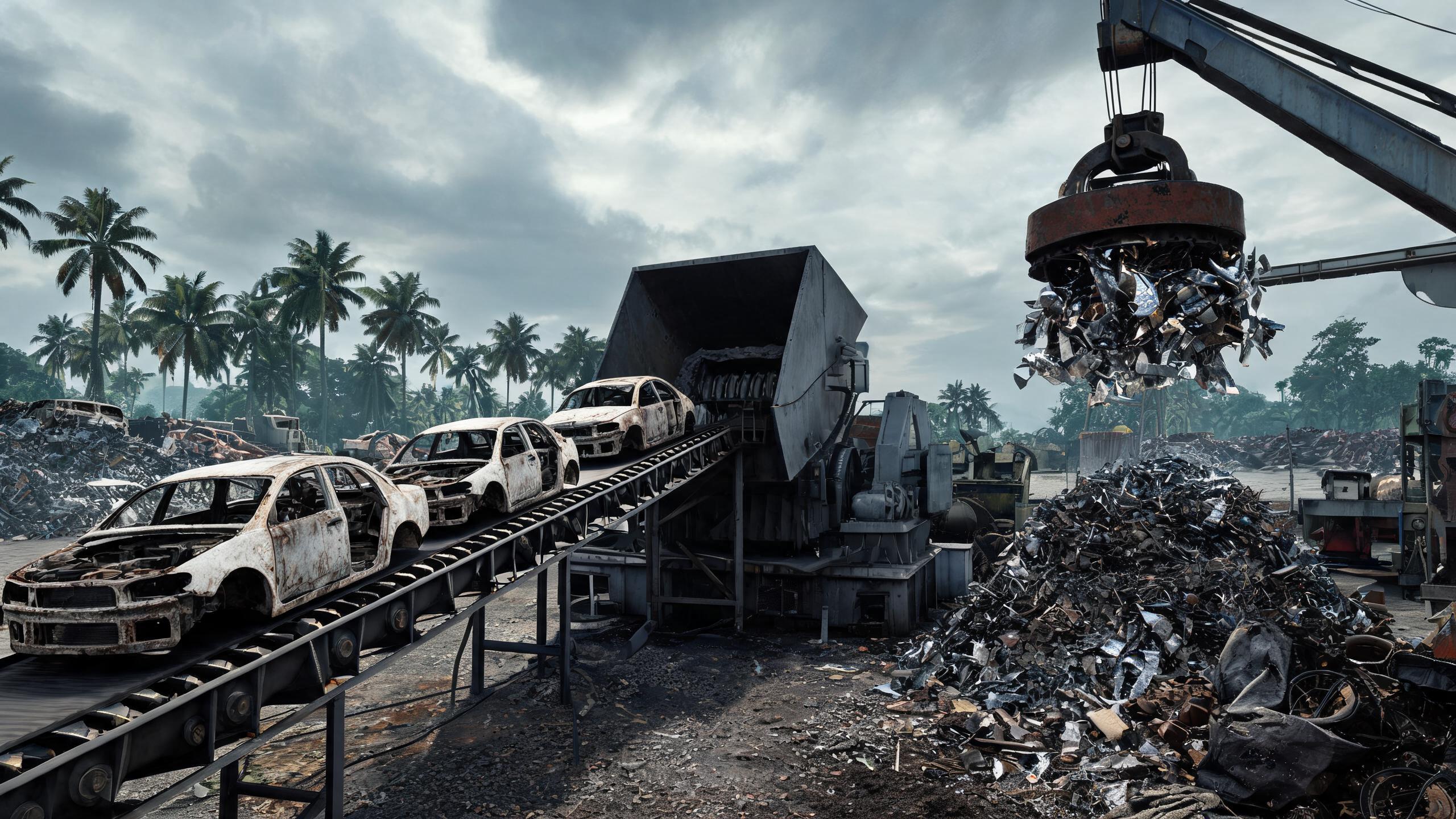
Cover image is illustrative and does not represent a specific installation.