What Drives the Price of a Metal Shredder?
If you are searching "how much do shredders cost," you are likely at the budgeting stage of a scrap-processing project. The honest answer is that an industrial metal shredder is priced by capability, not by a single sticker figure. A compact light-duty unit and a heavy twin-shaft machine can differ in price by a wide margin because they are built for completely different throughputs, feed sizes, and duty cycles.
Before comparing quotes, it helps to understand the main cost drivers so you can match the machine to your actual material and target output — and avoid paying for capacity you do not need.
Key Factors That Influence Shredder Pricing
1. Drive Power and Throughput
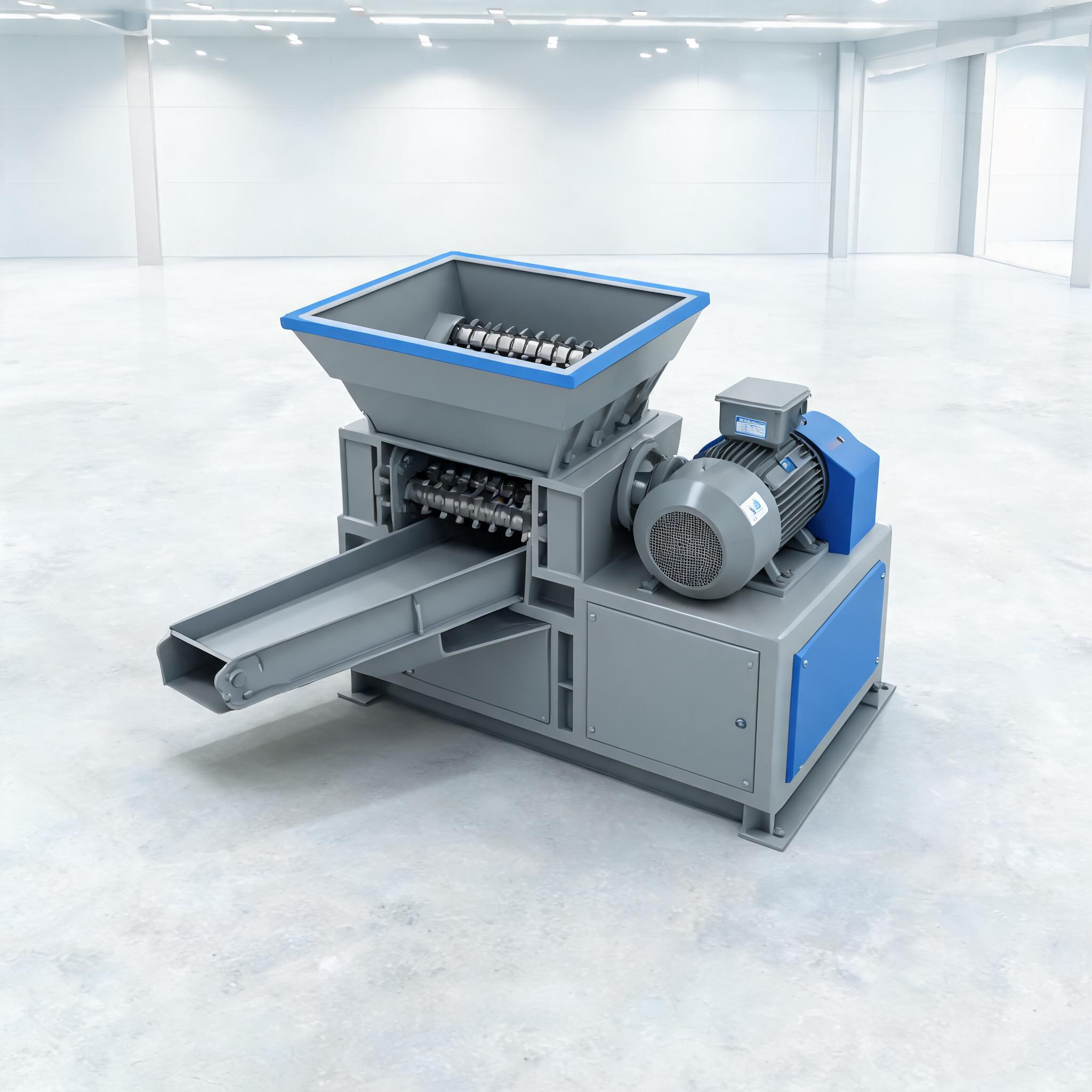
Motor power is the single largest cost driver. A light-duty twin-shaft shredder such as the TG-LightMetal 80 runs on a 2x15 kW drive and suits sheet steel, aluminum profiles, and cable. A mid-range single-shaft machine like the TG-SingleShaft 200 uses a 55 kW drive with a hydraulic feed ram and interchangeable screen for precise particle size control. At the heavy end, the TG-2200 is a heavy-duty twin-shaft shredder rated at 2000 HP (1492 kW), built for large-scale scrap processing lines and rated at up to 80 tons per hour of mixed scrap. Higher power and throughput mean a larger frame, heavier shafts, and a bigger motor — all of which raise the price.
2. Shaft Configuration
Single-shaft, twin-shaft, and four-shaft designs serve different jobs. Twin-shaft shredders use counter-rotating shafts with bolt-on cutting discs to shear mixed scrap into uniform, transportable fractions. Four-shaft machines such as the TG-FourShaft 400 add a screen basket with interchangeable screens from 20 to 60 mm for tighter particle size control, which is useful when downstream separation or melting requires a consistent fraction. More shafts and more cutting tools mean more wear parts and a higher initial investment.
3. Cutting Tools and Wear Parts
The material and design of the cutting tools affect both price and long-term operating cost. Bolt-on alloy tool-steel cutting discs can be replaced individually in the field, which lowers maintenance cost over the machine's life. Reversible manganese steel hammers on hammer crushers such as the TG-Hammer 800 extend service intervals between replacements. When comparing quotes, ask what the cutting tools are made of and how they are replaced — this has a direct impact on your cost per ton.
4. Automation and Controls
PLC-controlled auto-reverse, soft-start, and variable-frequency drive options add cost but improve safety and protect the machine from jams. For plants with limited grid inrush capacity, soft-start and VFD options are worth considering. These features are typically configurable rather than standard, so they appear as line items in a quote.
5. Certification and Electrical Configuration
CE-marked machines are required for European installation, and UL-compliant electrical panels are available for North American buyers on request. Standard 50 Hz and 60 Hz motor configurations let you match regional electrical standards — an important detail for buyers in Vietnam, Indonesia, and Thailand, where plant power supplies vary. Certification and electrical variants affect price, so confirm which standard your site requires before comparing quotes.
How to Size a Shredder to Your Material
Rather than starting from price, start from your feedstock. What material are you processing — light sheet steel, aluminum profiles, mixed scrap, or heavy castings? What output size do you need for downstream separation or melting? What is your target throughput in tons per hour?
Common mid-size metal shredders process roughly 2 to 30 tons per hour depending on material density and discharge size. Heavy-duty machines sit above this range: the TG-Hammer 800, a hammer crusher, reaches 40 to 60 tons per hour on mixed ferrous scrap with suitable feed density, while the TG-2200 heavy-duty twin-shaft shredder is rated up to 80 tons per hour. Matching the machine to your material density and target fraction is the fastest way to avoid overspending on capacity your line cannot feed.
How to Get an Accurate Quote
To receive a meaningful price, provide the supplier with: the material type and density, maximum feed size, target output particle size, required throughput, and your plant's electrical standard (50 Hz or 60 Hz). A reputable manufacturer will configure rotor knife profiles, screen mesh openings, and hopper dimensions to match your input material and downstream separation requirements.
At Tiangong, standard models are built in a 12,000 m² facility with in-house machining, welding, and electrical assembly. Lead times for standard models are under 45 days, and every machine ships with a spare-parts kit and a 12-month warranty covering the main components. Installation supervision and operator training are available.
FAQ
Why do metal shredder prices vary so much?
Because machines are sized by drive power, shaft configuration, cutting tool material, automation, and certification. A light-duty unit and a heavy twin-shaft machine are built for different throughputs and duty cycles, so their prices differ accordingly.
What is the most important spec to match?
Throughput and output particle size. Match the machine to your material density and target fraction so you do not pay for capacity you cannot use.
Do I need CE marking?
CE marking is required for European installation. UL-compliant electrical panels are available for North American buyers on request. Confirm your regional requirement before comparing quotes.
To get a quote matched to your material, contact the Tiangong team with your feedstock details and target output.