
Aluminum Scrap Pricing
Aluminum scrap does not go for one price. It goes for a range, and where your load lands in that range is set almost entirely by the grade bucket it falls into and how clean and consistent it is. Two sellers can bring in material that looks similar and walk away with different payouts because one load is sorted, dry, and free of attachments, while the other is mixed, oily, or full of iron and plastic.
This article explains the grade buckets yards use, the specific factors that move a load between the top and bottom of the range, and the preparation steps that reliably raise what you get paid. If you are searching for how much does aluminum scrap go for, the practical answer is: it depends on the grade you deliver. Here is how to control that grade.
Key takeaways
- Aluminum scrap is bought by grade, not as a single commodity.
- Cleanliness, alloy separation, attachments, oil/moisture, and density are the main payout drivers.
- Preparation that removes contaminants and increases density can move a load toward the top of its grade range.
- Understanding your material and using the right processing steps makes the difference between a low and a high offer.
Why "How Much Does Aluminum Scrap Go For" Has No Single Answer
When a seller asks how much aluminum scrap goes for, they usually expect one number. In reality, a yard evaluates the material against a set of grade categories, each with its own payout band. The band itself moves with market conditions, but which band you qualify for is determined by the physical state of your scrap.
Consider two loads of aluminum turnings. One is dry, stored under cover, and free of steel chips. The other has been sitting outside, is wet with coolant, and mixed with a few pounds of iron. Both are "aluminum turnings" in a loose sense, but they will not go for the same payout. The yard has to process them differently, and the offer reflects that.
The grade bucket is the single biggest lever. Everything else — cleanliness, separation, attachments, moisture, form — is what determines which bucket your load actually lands in.
The Grade Buckets That Set the Range
While specific grade names vary by region and yard, most aluminum scrap falls into a few broad categories. Understanding these helps you predict where your material will be placed.
| Broad grade category | Typical material | What the yard expects |
|---|---|---|
| Clean, sorted alloy | Extrusions, clean sheet, mixed alloy separated by type | Minimal attachments, no iron, no moisture, consistent size |
| Mixed aluminum | Assorted castings, sheet, and extrusions together | Some contamination allowed, but no heavy iron or non-metallic debris |
| Turnings and swarf | Machining chips, shavings, saw swarf | Free of cutting fluid or coolant where possible, no mixed metals |
| Light gauge / low density | Thin sheet, foil, cans, gutters | Baled or densified for handling; free of dirt and moisture |
The payout for each category reflects the recovery effort required. Clean sorted alloy commands the highest relative payout because it needs the least processing. Mixed or dirty material sits lower because the yard must sort, clean, or shred it before it can be sold to a mill.
What Moves a Load Between the Top and Bottom of Its Range
Within any grade, several factors can push a load up or down. These are the details a yard inspector looks at when deciding the final offer.
Cleanliness
Dirt, paint, plastic, rubber, and other non-metallic material reduce the aluminum content of a load. A yard pays for recoverable aluminum, so anything that burns off or has to be removed lowers the value. Clean material consistently lands in a better grade bucket than the same material with debris attached.
Alloy Separation
Aluminum is not one material. Extrusions, castings, and sheet often have different alloy compositions. When these are mixed together, the yard cannot sell them as a single specification and must either downgrade the load or spend labor separating it. Keeping alloys separate — even roughly — can move a load into a higher-paying category.
Attachments
Steel screws, rivets, hinges, and fittings are common on aluminum scrap. Iron and steel contamination is a major reason loads get downgraded. Removing attachments before delivery is one of the most reliable ways to improve the payout, because it eliminates a step the yard would otherwise charge against you.
Oil, Moisture, and Coolant
Turnings and swarf from machining often carry cutting fluid. Wet or oily material weighs more but contains less aluminum, and the yard must account for the moisture and the disposal or cleaning of the fluid. Dry, drained material is valued more highly because the weight you deliver is closer to the aluminum you actually sell.
Form and Density
Light, fluffy material takes up space and is difficult to handle. Yards prefer material that is baled, briquetted, or otherwise densified. Dense material loads more efficiently, melts more predictably, and is easier to sample. This is why thin sheet and turnings often go for less than the same alloy in a solid, dense form — unless they have been processed.
Preparation That Reliably Raises the Payout
The good news is that most of the factors above are within the seller's control. Preparation does not change the market, but it does change which grade bucket your load qualifies for. A few consistent steps make a measurable difference.
Sort by Alloy and Remove Attachments
Start by separating obvious alloy families and stripping steel fittings. This alone can lift a load out of the mixed category. Even a rough sort is better than delivering a fully mixed load, because it shows the yard the material is manageable.
Keep Material Dry and Drain Fluids
Store turnings and swarf under cover and allow them to drain before delivery. If your operation generates oily chips, consider a centrifuge or a dedicated draining step. Dry material is consistently graded higher than wet material of the same alloy.
Reduce Volume with Shredding and Densification
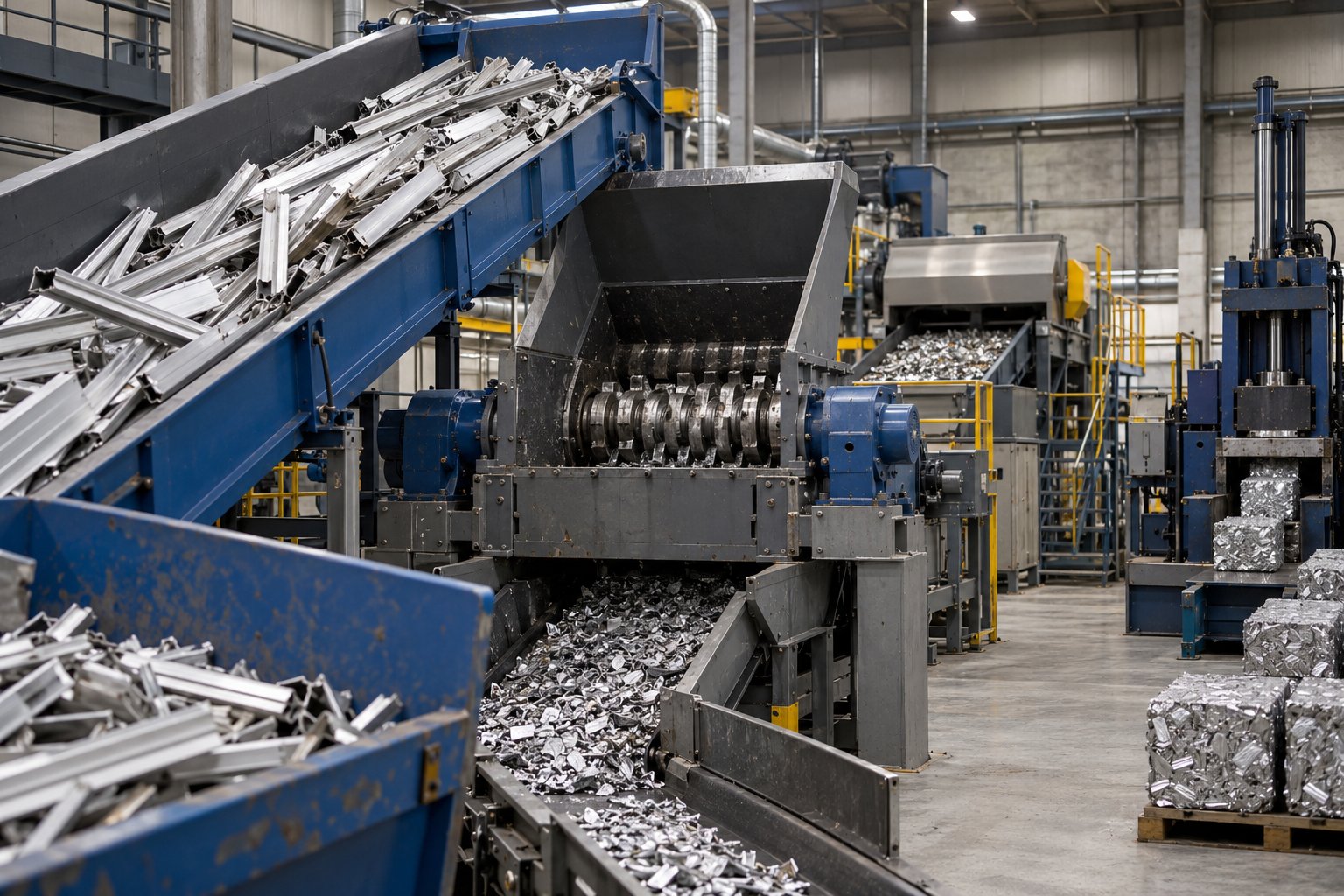
Loose turnings, thin sheet, and light scrap are difficult to handle and often undervalued. Shredding and briquetting change the physical form so the material can be sold as a denser, more furnace-ready product. For aluminum swarf and turnings, a twin-shaft low-speed shear shredder such as the TG-AluShred 120 is designed to break down stringy turnings without causing work-hardening, which keeps the material easier to briquette or remelt. For mixed light metal, the TG-LightMetal 80 light-duty metal shredder uses twin 2x15 kW motors and a PLC-controlled auto-reverse function to handle varying feed without constant manual intervention.
For operations that want a complete flow — shredding, magnetic removal of iron, eddy current separation of non-ferrous metals, and briquetting into furnace-ready briquettes — an integrated line like the TG-AluLine 200 combines these steps in one system. The result is a denser, cleaner product that yards and mills can accept at a higher grade.
Consistency Across Loads
Yards value predictability. If you deliver material that is consistently sorted, dry, and dense, you build a reputation for a reliable grade. That consistency can translate into better terms over time, because the yard spends less effort inspecting and processing your loads.
How to Think About the Offer You Receive
When you get an offer, it reflects the grade the yard assigns and the market conditions at that moment. You cannot control the market, but you can control the grade. Before you deliver, ask yourself:
- Is the material sorted by alloy, or is it a mix?
- Are there steel attachments still present?
- Is the material dry and free of coolant or oil?
- Is the form dense enough for efficient handling, or is it loose and fluffy?
- Is the load consistent with what I delivered last time?
Each "yes" moves you toward the top of your grade range. Each "no" gives the yard a reason to downgrade. If you are unsure how your material compares, ask the yard what grade they would assign and what would need to change to reach the next level. That conversation is often more valuable than comparing raw numbers, because it tells you exactly where to focus your preparation efforts.
Frequently Asked Questions
Does aluminum scrap go for the same price regardless of form?
No. Form and density affect handling and melting efficiency, so loose turnings or thin sheet typically go for less than the same alloy in a denser, prepared form. Shredding and briquetting can move material into a more valuable category.
How much does cleanliness affect what I get paid?
Cleanliness is one of the biggest factors. Dirt, moisture, oil, and non-metallic debris reduce the recoverable aluminum content, which lowers the grade a yard will assign. Dry, clean material consistently receives better offers than dirty material of the same alloy.
Can I improve the payout on aluminum turnings?
Yes. Draining coolant, keeping turnings dry, removing mixed metals, and reducing volume through shredding or briquetting all help. Using equipment designed for swarf, such as the TG-AluShred 120, can make turnings easier to handle and more acceptable to yards.
Should I separate alloys before selling?
Separating alloys is one of the most effective ways to raise the grade of a load. Mixed alloys often get downgraded because the yard must separate them. Even a basic sort by extrusion, casting, and sheet can make a difference.
Next Steps
If your goal is to get more from your aluminum scrap, focus on the factors you control: sort, clean, dry, and densify. The grade bucket your material lands in determines the range, and your preparation determines where you sit within it. To explore equipment that supports these steps, review the TG-AluLine 200, TG-AluShred 120, and TG-LightMetal 80. For specific guidance on your material, contact the supplier with details of your scrap type and volume.