
Scrap Metal Trading
Becoming a scrap metal dealer is a logistics, sorting and relationship business more than a metal business. You make money by knowing what a load actually is, moving it to someone who needs that specific grade, and keeping records that satisfy your local regulator. Here is the honest path from zero to first paid load.
- Where scrap actually comes from
- Learning grades and sorting
- Licensing, permits and record-keeping
- Weighing and transport logistics
- Finding buyers and making first sales
- Scaling from dealing into processing
Where Scrap Metal Actually Comes From
New dealers often assume the material appears at scrapyards. It does not. Yards buy from people like you. Your job is to be closer to the source than the next dealer, so start by mapping the places that generate metal as a by-product of their real work.
- Trades and contractors. Plumbers, HVAC technicians, roofers and general builders remove copper pipe, brass fittings, aluminum flashing and steel frames every week. They want the material gone and rarely want to drive it to a yard themselves.
- Demolition and renovation sites. Structural steel, cable, rebar, window frames and ducting come out in volume. Site managers care about clearance schedules, not about the metal's resale value.
- Electricians. Insulated cable, busbar and panel components are among the densest value per kilogram. Build a pickup routine around their project completions.
- Small manufacturers and machine shops. Swarf, turnings, stamping offcuts, punched sheet and rejected parts accumulate continuously and predictably. These are the best accounts because the volume is recurring rather than one-off.
- Auto repair shops and body shops. Radiators, wheels, batteries, alternators and catalytic components arrive with every job.
The practical first move is not advertising. It is visiting twenty of these businesses in person, explaining that you will collect on a fixed schedule, and leaving a phone number. Consistent collection beats the highest offer for most of these accounts, because their real cost is storage space and staff time.
Learning Grades and Sorting
Prices in this trade are set by grade, and grade is decided by composition, cleanliness and preparation, not by what the seller calls it. Two loads of the same weight can differ several times over in value. Before you buy anything, learn to separate the material you will actually encounter.
| Category | Typical examples | What affects the grade |
|---|---|---|
| Copper | Bare bright wire, pipe, insulated cable, brass fittings | Insulation, solder, paint, attached fittings |
| Aluminum | Extrusions, sheet, castings, wheels, swarf and turnings | Alloy mix, iron attachments, oil or coolant contamination |
| Steel and iron | Structural sections, rebar, plate, cast iron | Thickness, length, attached non-ferrous parts |
| Stainless | Kitchen equipment, pipework, fasteners | Nickel content, magnetic contamination |
| Cable | Power cable, data cable, armoured cable | Copper-to-insulation ratio, armouring |
Three habits separate a competent dealer from an amateur. First, keep a magnet on you at all times; it immediately separates ferrous from non-ferrous and catches the steel screws hidden in an aluminum extrusion. Second, never buy mixed material as a single lot unless you have priced the downside of the mix. Third, take a sample of anything unfamiliar to a yard and ask them what they call it and how they price it. Yards generally will tell you, because you are bringing them future volume.
Sorting also has a physical side. Material that arrives loose, wet, oily or tangled loses value at the yard scale, both because of contamination and because of handling time. Cutting long sections to fit, draining fluids, and removing plastic and rubber before delivery all raise the price you are paid.
Check Licensing and Record-Keeping Rules Before You Trade
This is the step where new dealers get into real trouble. Scrap metal is a regulated trade in most jurisdictions because it is a known outlet for stolen material. Requirements vary widely by country, state, province and even city, and they change. Do not rely on a forum post or on what a neighbouring dealer told you.
Before your first transaction, contact your local business authority, environmental regulator and police or licensing department and ask directly about:
- Whether a specific scrap dealer, second-hand dealer or waste carrier licence is required, and what the application involves.
- Whether you may buy from the public or only from registered businesses.
- What identification and record you must keep for each purchase, and for how long.
- Whether there are cash payment limits or mandatory electronic payment for purchases.
- Whether a waiting period applies before certain items may be resold.
- Site requirements if you will store material, including zoning, containment and fire separation.
Then build the paperwork into your routine from day one rather than retrofitting it later. A simple, disciplined record for every purchase — date, seller identity, vehicle registration, description and weight of material, amount paid — protects you if material is ever traced, and it is what an inspector will ask for. Get this right and the rest of the business is straightforward.
Before your first purchase, confirm in writing
Licence requirement and scope, permitted sources of material, mandatory ID and record fields, retention period, payment method restrictions, and any storage or zoning conditions. Rules differ by location and are updated periodically, so verify with your own local authority rather than assuming another market's requirements apply.
Weighing and Transport Logistics
Your margin lives in accurate measurement and low handling cost. A dealer who guesses weights loses money on every load, in both directions — you overpay the seller and you get shorted at the yard.
- Scales. Start with certified platform or pallet scales appropriate to your volumes. Verify calibration periodically and keep the records; a yard that questions your weights is a commercial risk you can avoid.
- Vehicle. Match the vehicle to the material. A pickup or small flatbed handles trade collections and shop swarf. Bulk steel and demolition work need a tipper or hooklift arrangement, often hired per job until volumes justify ownership.
- Containers and bins. Supplying a manufacturer with a dedicated bin for aluminum turnings or steel offcuts converts a one-off collection into a scheduled route. This is how dealers grow without chasing new leads every week.
- Route planning. Combine collections geographically. Fuel and driver time are usually the second-largest cost after the material itself.
- Safety and compliance. Load security, weight limits, sharp-edge handling, battery and fuel segregation, and any waste-transfer documentation required for the material you move.
Finding Buyers and Making Your First Sales
You have two broad buyer channels, and most new dealers should use both.
Local yards and processors. They buy small and mixed lots, pay quickly, and give you immediate feedback on how well you sorted. Visit several, ask for their grade list and price sheet, and find out how they handle deductions for contamination. Their prices are lower than export pricing, but they carry less risk and no minimum volume.
Export buyers and larger consumers. Mills, foundries and exporters buy specific grades in container or truckload quantities at better prices, but they require consistent quality, reliable documentation and the volume to fill a shipment. Approach them once you can supply a repeatable grade on a predictable schedule. Ask what specification they need, what contamination tolerance they accept, and how they want material prepared and packed.
For first sales, the sequence that works is simple: start with one or two yards, deliver clean and correctly sorted loads, ask for written pricing on each grade, and use that feedback to refine what you collect. Then approach a larger buyer with a specific grade and a realistic monthly volume. Being able to say "I can supply this grade consistently" is worth more than a long list of materials you occasionally handle.
Scaling from Dealing into Processing
Dealing scales with people, vehicles and accounts. Processing scales with equipment, and it changes your economics in two ways: it lets you buy lower-grade material that other dealers avoid, and it lets you sell a denser, cleaner product that commands a better price per tonne.
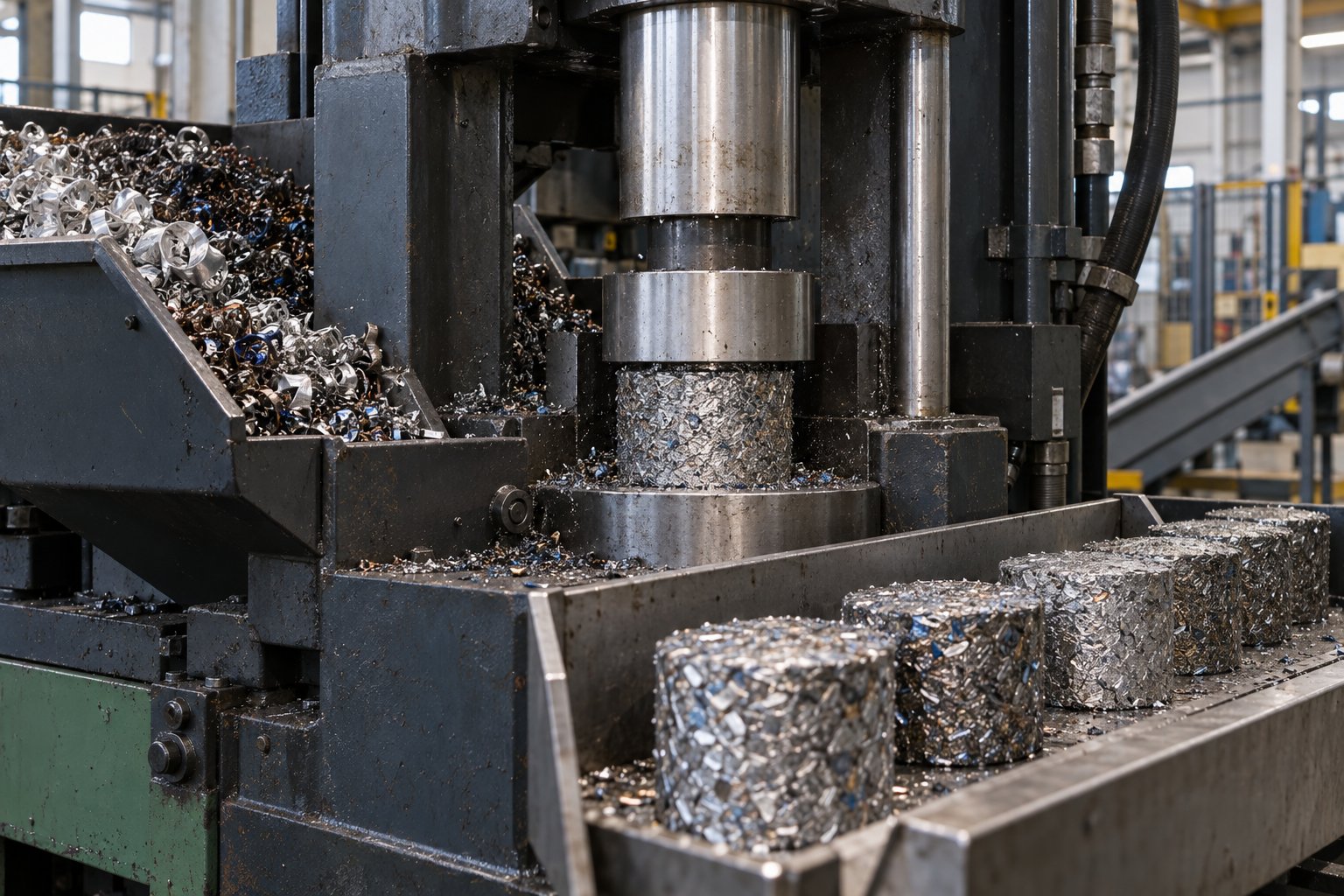
The clearest example is aluminum swarf and turnings. Machine shops generate it continuously, but loose turnings are bulky, oil-covered and awkward to ship, so yards price them at a discount. Shredding and briquetting turns that material into a dense, transportable product. A purpose-built unit such as the TG-AluShred 120 Aluminum Swarf Shredder is designed for exactly this feedstock — a twin-shaft, low-speed shearing action intended to reduce aluminum swarf, turnings and chips without the work-hardening that high-speed impact can cause, with an inclined hopper, sealed bearings and a discharge screen, CE marked and running on 50/60 Hz supply.
At the next step up, a dealer handling mixed ferrous and non-ferrous streams can move into a turnkey line. The TG-ScrapLine 150 Integrated Scrap Processing System combines a twin-shaft shredder, magnetic separator, briquetting press and PLC control in a 15 t/h line, CE certified and ISO 9001. The magnetic separator is what makes mixed-stream processing viable: ferrous and non-ferrous fractions are split mechanically rather than by hand, which is the point at which a two-person operation can start handling volumes that would otherwise require a sorting crew.
Treat equipment as a response to a specific bottleneck, not as a growth strategy in itself. If your constraint is handling time on swarf, a shredder addresses it. If your constraint is that you are turning away mixed loads, a separation line addresses it. If your constraint is simply that you do not have enough accounts, equipment will not help — buy more collections first.
Frequently Asked Questions
Do I need a licence to become a scrap metal dealer?
In most places, yes, or at minimum a business registration plus mandatory purchase records. The specific requirement depends on your country, state and city, and it changes over time. Confirm directly with your local business authority, environmental regulator and licensing department before your first purchase.
How much capital do I need to start?
It depends heavily on your model. A trade-collection operation needs a vehicle, scales and working capital to pay sellers before your buyer pays you. A storage-and-processing operation needs a compliant site and equipment. Start with the smallest model that lets you trade legally and learn the grades.
Can I start part-time?
Many dealers do. Trade collections and small manufacturer accounts can be serviced on a fixed weekly route outside other working hours. The constraint is reliability — if you commit to a collection schedule, missing it costs you the account.
What is the most common beginner mistake?
Buying mixed or unidentified material at a price based on the best component in the load. Sort first, price second. The second most common mistake is neglecting purchase records, which creates legal exposure far beyond the value of the load.
When should I buy processing equipment?
When a specific, repeatable material stream is being discounted because of its form — loose swarf, tangled cable, mixed ferrous and non-ferrous — and you can supply enough volume to keep the machine occupied. Equipment amplifies an existing flow of material; it does not create one.
Next Step
If you are already collecting aluminum swarf or mixed scrap and losing value on how it ships, review the machine specifications against your actual feedstock and monthly volume before committing. Both the TG-AluShred 120 and the TG-ScrapLine 150 pages list the technical details you will need to check against your material type, throughput requirement and site power supply.