
BUYER GUIDE · SOUTHEAST ASIA
Setting up or upgrading a scrap metal recycling line in Vietnam, Thailand, or Indonesia is a different exercise than doing so in a mature market like Japan or Germany. Power supply can be unstable in some industrial zones. Spare parts lead times are longer. Local operators often run two shifts with minimal technical staff. And the scrap mix—especially in emerging collection networks—contains far more contamination than what you would see at a clean, source-separated yard in Europe.
This guide walks through the practical selection criteria for scrap metal recycling equipment in these three markets. It focuses on what actually affects your uptime and total cost per ton, not on brand marketing.
- Define your input material first—mixed scrap, shredded cars, or clean production offcuts—because it determines the entire equipment chain.
- Match capacity to your actual intake, not to a growth forecast. Oversized equipment wastes capital and idles in electricity costs.
- Verify power supply and voltage compatibility before ordering. Three-phase 380V is standard across the three countries, but voltage fluctuation is common in rural industrial zones.
- Ask for a spare parts list and local service response time in writing. This matters more than the machine's theoretical throughput.
- Budget for dust, noise, and wastewater treatment. Environmental compliance is tightening in all three markets.
Start with the Material, Not the Machine
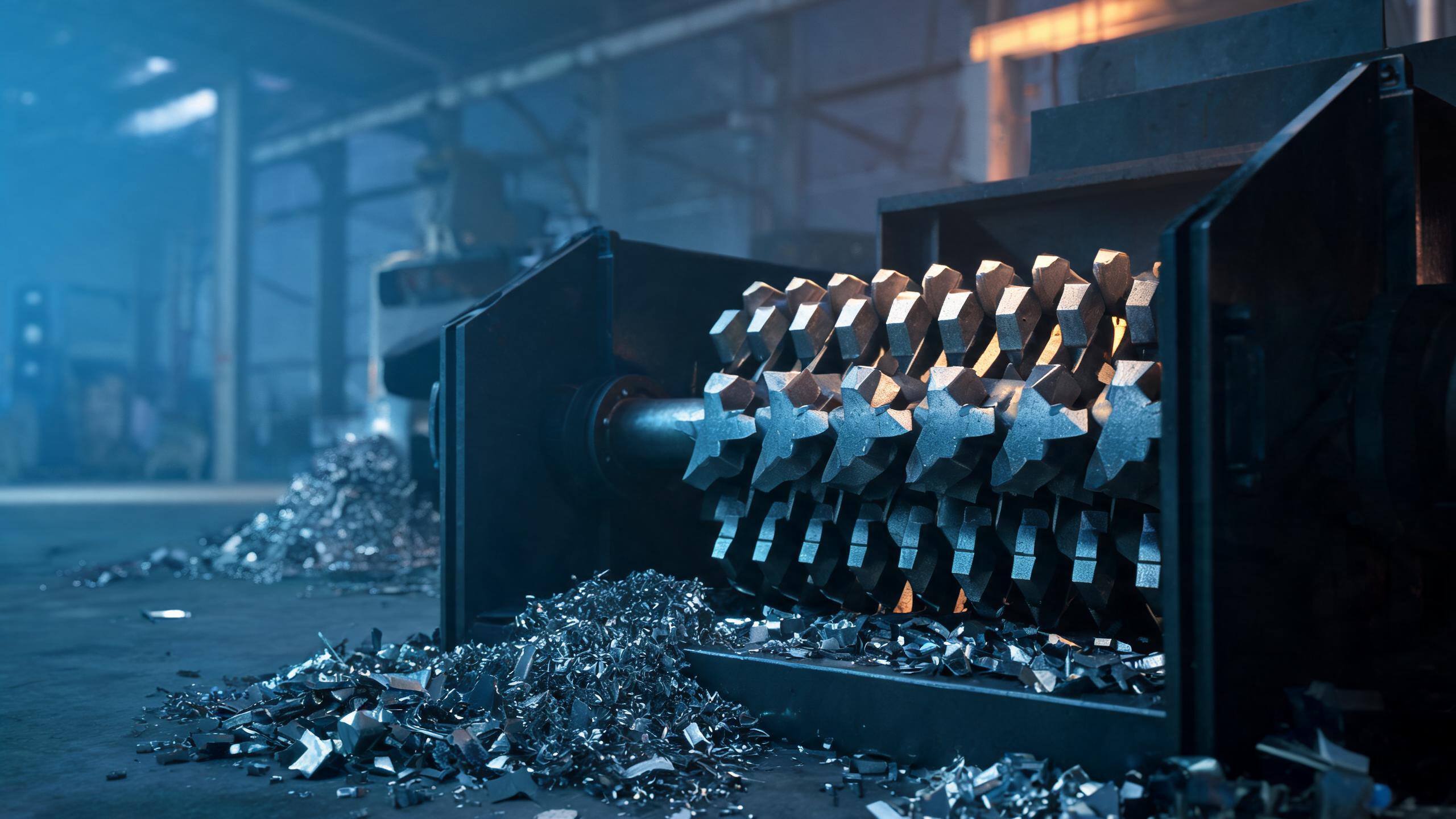
Buyers often start by asking "which shredder is best?" The correct first question is: what exactly are you feeding into it? The material composition drives every downstream decision.
In Vietnam, a large share of collected scrap comes from demolition sites and small collection points—mixed steel rebar, wire, and light sheet metal with concrete and dirt attached. In Thailand, auto recycling generates significant shredded scrap with residual copper wiring and rubber. In Indonesia, much of the intake at smaller yards is household appliances and industrial offcuts, often with motors and compressors still assembled.
These differences matter because a machine set up for clean, dense scrap will struggle with light, contaminated material. A dual-shaft shredder handles mixed feed better than a single-shaft unit. A pre-shredder or sorting step may be necessary before your main shredder if contamination is high.
Capacity: Match the Machine to Actual Intake
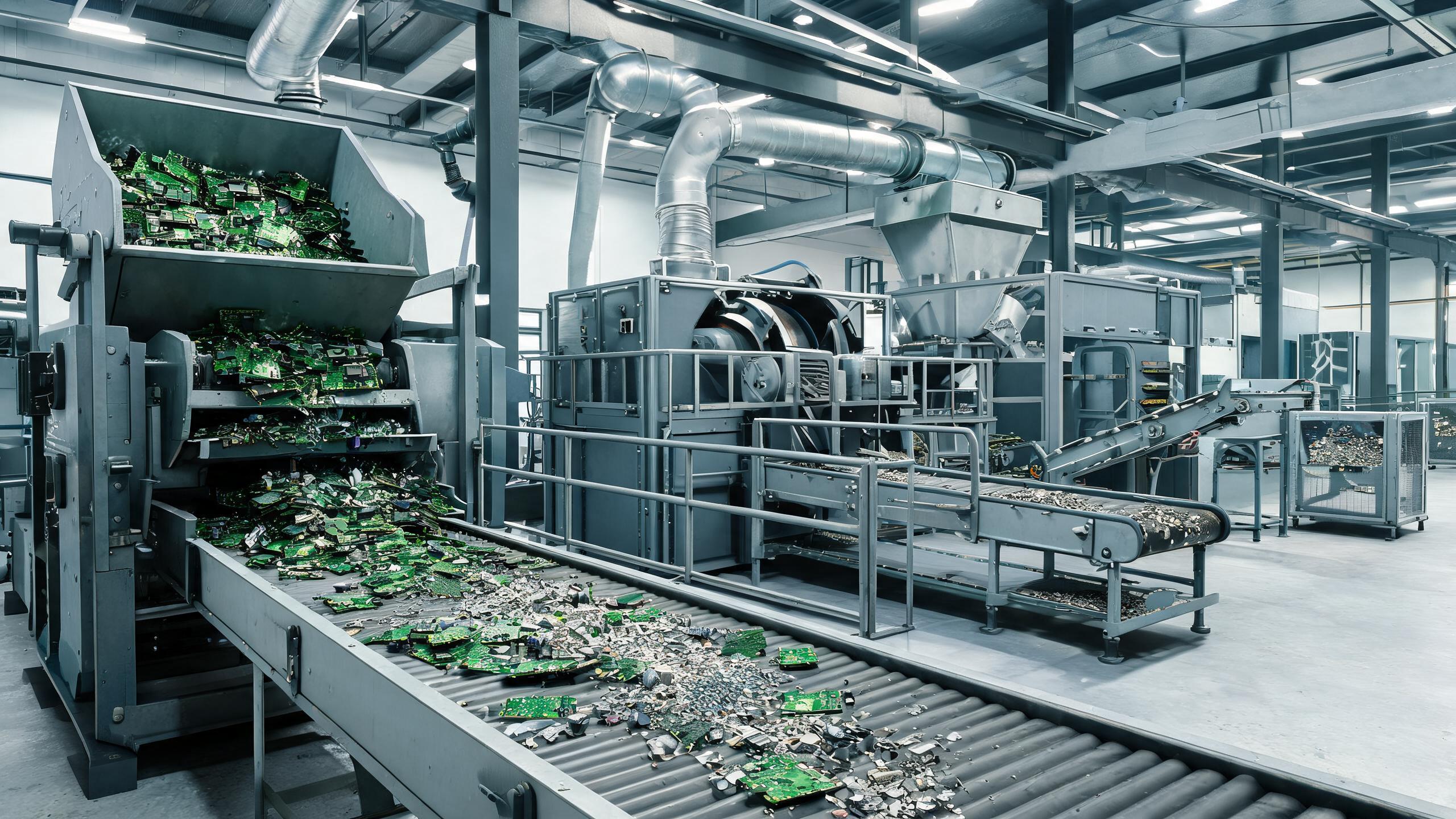
Capacity is quoted in tons per hour, but the real question is tons per shift—and how many operating hours you can realistically sustain. Many facilities in the region run 8–10 hours per day, not 24. A machine rated at 5 t/h will not produce 40 tons in an 8-hour shift if you spend two hours on blockages, blade changes, and feeding interruptions.
Work backward from your monthly intake. If you process 1,500 tons per month over 25 working days, that is 60 tons per day. At 8 effective operating hours, you need 7.5 t/h of sustained throughput—not peak. Add a 20% safety margin for feed variability and maintenance stops.
| Monthly Intake (tons) | Working Days | Daily Requirement (tons) | Recommended Sustained Capacity (t/h) |
|---|---|---|---|
| 600 | 25 | 24 | 3–4 |
| 1,200 | 25 | 48 | 6–8 |
| 2,500 | 25 | 100 | 12–15 |
| 5,000 | 25 | 200 | 25–30 |
Rule of thumb: buy for the tonnage you handle today, not the tonnage you hope to handle in three years. You can always add a second unit later.
Power Supply and Voltage Compatibility
All three countries use 380V three-phase as the industrial standard, but the reality on the ground varies. Industrial zones in Vietnam's Binh Duong or Thailand's Rayong have stable supply. Rural yards often run on weaker grids where voltage drops of 10–15% are not uncommon.
Electric motors are sensitive to voltage fluctuation. If your site has known instability, specify a machine with a wider voltage tolerance or plan to install a stabilizer. Also confirm the frequency: all three countries use 50 Hz, which matches most European and Chinese-made equipment. Equipment sourced from North America (60 Hz) will require conversion.
Ask the supplier for the full load amperage and starting current. A shredder with a 90 kW motor can draw several times its running current on startup. If your transformer is undersized, the machine will trip breakers repeatedly—a problem that is expensive to fix after installation.
Automation Level: Match It to Your Labor Reality
Automation is not always the answer. In Germany, a fully automated sorting line makes sense because labor is expensive and scarce. In Vietnam, Thailand, and Indonesia, manual sorting is often more cost-effective for certain fractions, especially non-ferrous metals where visual inspection matters.
A practical middle ground is semi-automated systems: an excavator with a grapple feeds the shredder, a magnetic separator pulls ferrous material, and manual pickers remove copper and aluminum from the conveyor. This configuration is common across the region because it balances labor cost with throughput.
If you do invest in automation—eddy current separators, optical sorters, or robotic sorting—confirm that your local team can maintain it. A sensor that takes three months to replace is worse than a manual picker who is there every day.
After-Sales Support: The Real Differentiator
Scrap metal recycling equipment is heavy machinery. It will break down. The question is how quickly it runs again. In Southeast Asia, the difference between a good supplier and a bad one is not the machine—it is the response time when something fails.
Before ordering, ask the supplier for:
- Spare parts list with part numbers and estimated lead times for delivery to your country.
- Local service network—do they have a technician in your country, or will they fly one in?
- Training plan—how many days of on-site training for your operators and maintenance staff?
- Warranty terms—what is covered, what is excluded, and who pays for the technician's travel?
Get these answers in writing. A supplier who hesitates on the spare parts list is usually hiding long lead times.
Environmental Compliance: Budget for It Now
Environmental enforcement is tightening across all three markets. Vietnam's Decree 08/2022/ND-CP strengthens waste management requirements. Thailand's Pollution Control Department is increasing inspections of recycling facilities. Indonesia's Ministry of Environment has been issuing stricter permits for scrap processing operations.
At minimum, plan for:
- Dust control—water misting systems or baghouse filters for shredding and screening areas.
- Noise reduction—enclosures or acoustic barriers, especially if your facility is near residential areas.
- Wastewater treatment—if you use wet separation or washing, you need a settling pond or filtration system.
These add 10–15% to your capital cost but prevent shutdown orders and fines. In some provinces, a compliant facility also gets priority for operating permits, which shortens your time to revenue.
New vs. Used Equipment
The used equipment market in Southeast Asia is active, and some buyers find good value in machines retired from Japan or South Korea. However, used machines come with hidden costs: unknown wear on blades and bearings, outdated electrical panels, and no warranty.
If you buy used, factor in a full inspection by an independent engineer and budget 15–20% of the purchase price for immediate repairs and spare parts. For critical components—the shredder shaft, gearbox, and main motor—a new machine with a warranty is often the safer investment, even at a higher upfront cost.
Decision Checklist
Before you sign a purchase order, run through this checklist:
| Checklist Item | Why It Matters |
|---|---|
| Input material defined and tested | A machine sized for clean scrap fails on contaminated feed. |
| Capacity matched to actual monthly intake | Avoids overspending and idle capacity. |
| Voltage and frequency confirmed at your site | Prevents startup failures and electrical damage. |
| Spare parts list and lead times in writing | Determines real downtime risk. |
| Local service response time confirmed | A supplier 5,000 km away is not local support. |
| Environmental compliance budget included | Avoids fines and permit delays. |
| Operator training plan agreed | Poor operation is the #1 cause of premature wear. |
Frequently Asked Questions
Q: Should I buy a shredder or a baler first?
A: It depends on your output. If you sell loose shredded scrap to a mill, a shredder is the priority. If you sell to a trader who pays more for dense, baled material, a baler may generate faster payback. Many facilities start with a baler and add a shredder as volume grows.
Q: What is the typical payback period for a medium-capacity shredder in this region?
A: This varies widely with scrap prices and local demand. As a rough guide, facilities processing 1,000+ tons per month often see payback in 18–30 months. We recommend asking suppliers for a cost-per-ton calculation based on your specific input and energy tariffs.
Q: Can I use the same equipment for ferrous and non-ferrous scrap?
A: Yes, with the right configuration. A magnetic separator removes ferrous material, and an eddy current separator (or manual picking) recovers non-ferrous. However, running both through the same shredder means you need a machine with replaceable screens and blades suited to both material types.
Q: How do I verify a supplier's claims about throughput?
A: Ask for a reference facility in your region or a similar market. If possible, visit an operating installation. If that is not feasible, request a test run with your own material sample before ordering.
Next Steps
Choosing the right scrap metal recycling equipment comes down to matching the machine to your real operating conditions—material, power, labor, and compliance—rather than chasing the highest specification sheet. Start with the checklist above, and get every claim from the supplier in writing.
If you are planning a new line or upgrading an existing one, we can help you evaluate capacity, power requirements, and after-sales support for your specific site. Contact us with your monthly intake and material type, and we will send you a configuration recommendation with estimated cost per ton.