BUYER GUIDE
If you are planning an organic fertilizer plant, the term organic fertilizer production line is likely part of your search. This is not a single machine but a complete chain of equipment that transforms raw organic materials into a uniform, marketable product. Whether you are in Vietnam, Indonesia, Thailand, Malaysia, or the Philippines, the core question is the same: what equipment do I need, and how do I choose it?
This guide walks you through each stage of the line—from raw material handling to bagging—and explains the factors that determine equipment selection at every step. It also lists the questions you should clarify with your supplier before placing an order.
- A complete line typically includes crushing, mixing, composting/fermentation, granulation, drying, cooling, screening, coating, and bagging.
- Your raw material type and moisture content drive most equipment choices.
- Granulation method (wet, dry, or extrusion) depends on your target product form and budget.
- Always confirm capacity, automation level, and after-sales support with the supplier before ordering.
Stage 1: Raw Material Handling and Crushing
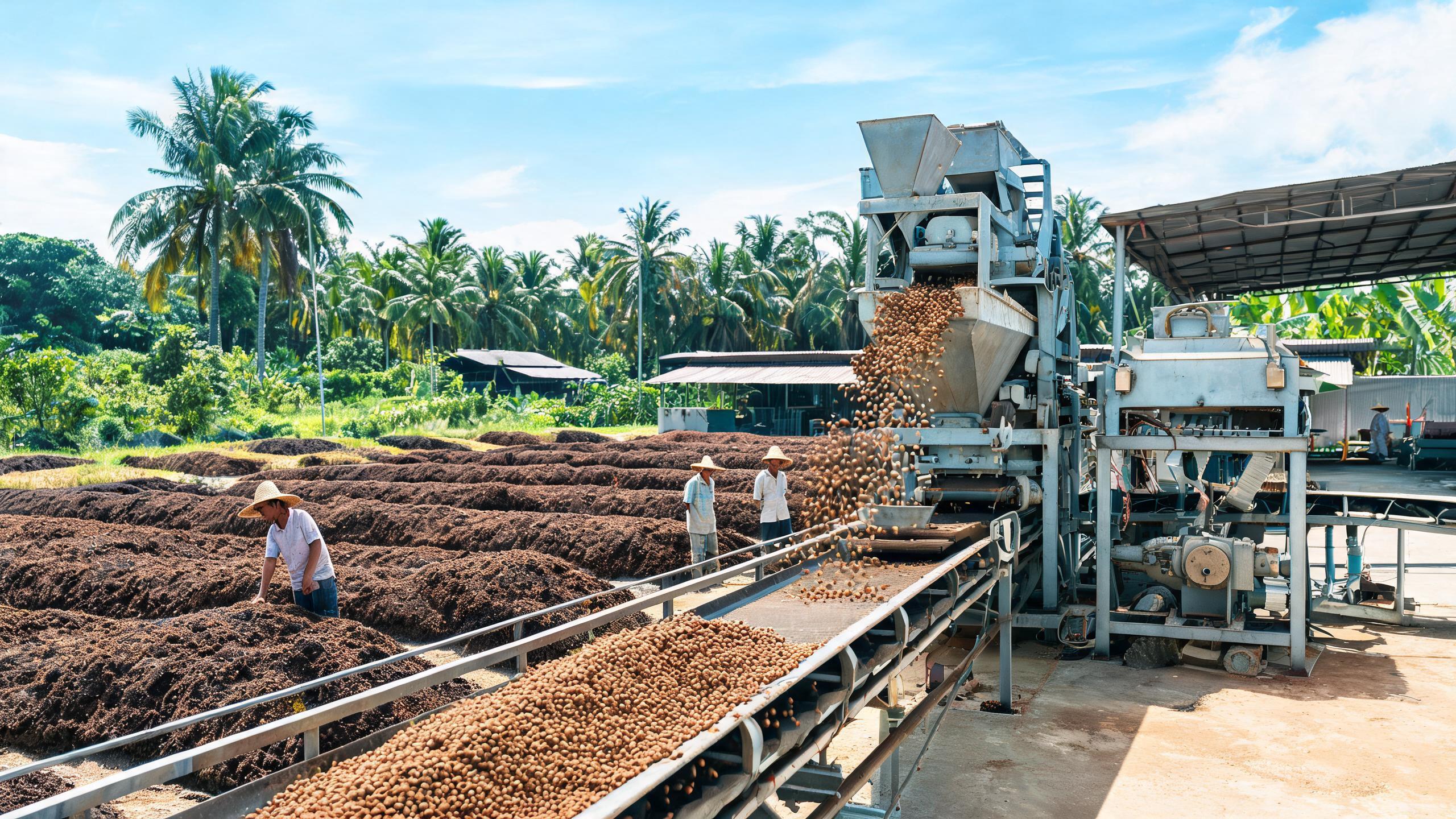
The first step is to prepare your raw materials. These may include animal manure, crop residues, food waste, or other organic by-products. The goal is to reduce particle size and create a consistent base for the next stages.
Equipment in this stage: crushers, shredders, and sometimes pre-screening units.
Selection factors:
- Material type: Hard materials like bones or shells require heavy-duty crushers, while softer materials like manure may only need a simple shredder.
- Moisture content: High-moisture materials can clog standard crushers; you may need a machine designed for wet feed.
- Particle size requirement: The desired output size affects the crusher type and screen aperture.
Ask your supplier: What is the maximum hardness and moisture of the materials this crusher can handle?
Stage 2: Mixing
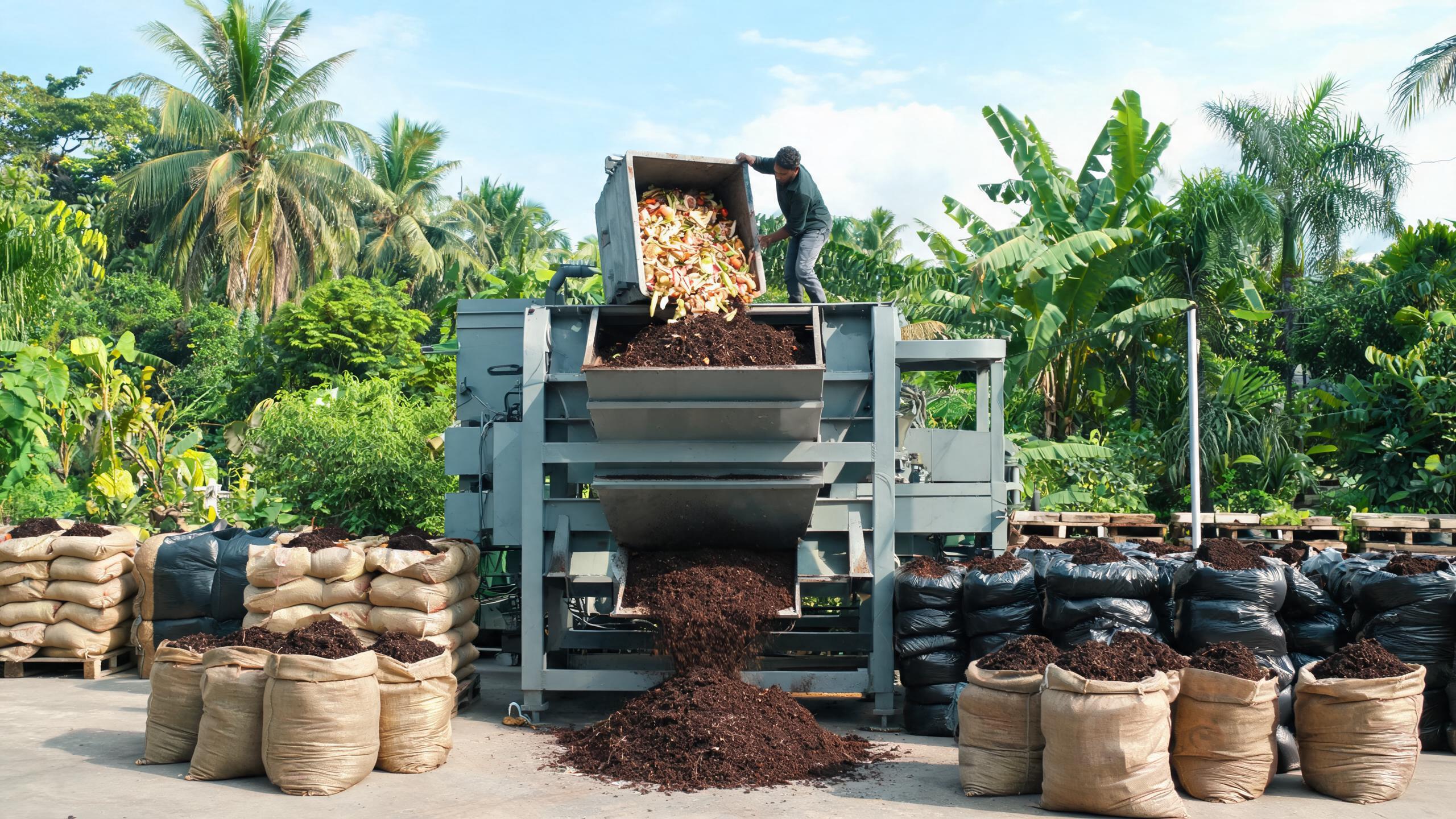
After crushing, you need to blend different raw materials and additives (such as nitrogen, phosphorus, potassium sources, or beneficial microbes) to achieve a balanced nutrient formula.
Equipment: horizontal or vertical mixers. The choice depends on batch size and mixing uniformity requirements.
Selection factors:
- Batch vs. continuous: For small to medium plants, batch mixers are common. Continuous mixers suit larger operations.
- Mixing uniformity: If you produce premium fertilizer with precise nutrient ratios, you need a mixer with high homogeneity.
- Material characteristics: Sticky or fibrous materials may require special mixing blades.
For example, TIANGONG (founded in 2008) includes mixers in its organic fertilizer equipment range. Their 12,000 m² facility handles in-house machining, welding, and electrical assembly, which gives them control over mixer quality. But always confirm the specific mixer type and capacity that fits your formula.
Stage 3: Composting / Fermentation
Composting is where organic matter breaks down into stable humus. This stage is critical for eliminating pathogens and weed seeds, and for improving the fertilizer's effectiveness.
Equipment: compost turners (windrow or trough type), fermentation tanks, or in-vessel systems.
Selection factors:
- Volume of waste: Daily input volume determines the size and type of turner.
- Space: Windrow composting needs large open areas; trough or in-vessel systems are more compact but costlier.
- Odor control: If your plant is near residential areas, consider enclosed fermentation with biofilters.
- Climate: In tropical climates like the Philippines or Indonesia, high rainfall may require covered composting areas.
Ask: What is the recommended composting duration for my raw materials, and what turner capacity do I need?
Stage 4: Granulation
Granulation converts the composted powder into granules. This is the heart of the line, as granule quality affects handling, storage, and application.
Equipment: rotary drum granulators, disc granulators, extrusion granulators, or flat-die pellet mills.
Selection factors:
- Target granule form: Spherical granules are often preferred for aesthetics and uniform application. Extrusion produces cylindrical granules.
- Moisture content: Wet granulation requires moisture addition; dry granulation works with lower moisture feeds.
- Production capacity: Each granulator type has a capacity range; match it to your overall line output.
- Investment vs. operating cost: Disc granulators are cheaper but require skilled operation; drum granulators offer higher output.
Remember: the granulator you choose must match the moisture and particle size from your compost stage. A mismatch can cause poor granule quality or frequent downtime.
Stage 5: Drying and Cooling
Fresh granules have high moisture and need to be dried to a safe storage level to prevent caking and microbial growth. Cooling then reduces the temperature so that the granules are stable for handling.
Equipment: rotary dryers and coolers, often with hot air furnaces.
Selection factors:
- Fuel type: Coal, gas, diesel, or biomass—availability and cost in your region matter.
- Energy efficiency: Look for dryers with good heat exchange design to reduce fuel consumption.
- Environmental controls: Dust and exhaust gas treatment may be required by local regulations.
Ask: What is the fuel consumption per ton of product, and what emissions control does the dryer include?
Stage 6: Screening
After drying, granules are screened to separate on-size product from fines and oversize particles. These can be recycled back to the granulator.
Equipment: rotary screens or vibrating screens.
Selection factors:
- Mesh size: Determines the granule size range of your final product.
- Throughput: The screen must handle the full output of the dryer.
- Ease of cleaning: Screens should be easy to inspect and change.
Stage 7: Coating (Optional)
Coating is used to add anti-caking agents, micro-nutrients, or slow-release coatings. This is optional but adds value to specialty products.
Equipment: coating machines, often similar to small drum granulators.
Selection factors:
- Coating type: Powder or liquid coating requires different application systems.
- Precision: If you need precise coating amounts, look for machines with controlled dosing.
Stage 8: Bagging
The final stage is packaging. Automated bagging lines increase efficiency and reduce labor costs.
Equipment: automatic bagging scales, bag sealing machines, and conveyor systems.
Selection factors:
- Bag type: Valve bags, open-mouth bags, or bulk bags affect the bagging system.
- Accuracy: Legal metrology requirements may demand high-precision scales.
- Speed: Match the bagging speed to your line capacity to avoid bottlenecks.
How to Choose the Right Supplier for Your Organic Fertilizer Equipment
Selecting the right supplier is as important as selecting the right machines. A reliable supplier will not only provide equipment but also support installation, training, and after-sales service.
Consider these criteria when evaluating suppliers:
- Experience in organic fertilizer equipment: Look for a company that specializes in this field, not just general machinery.
- Manufacturing capability: If the supplier has in-house machining, welding, and electrical assembly, they can better control quality and customization. For example, TIANGONG operates a 12,000 m² facility with these capabilities, which allows them to handle custom requirements.
- Installation and training: Ask if they provide installation supervision and operator training. This is crucial for a smooth startup.
- Warranty and support: A standard warranty period (e.g., 12 months) shows confidence in the equipment. Clarify what is covered and the response time for spare parts.
| Stage | Key Equipment | Main Selection Criteria |
|---|---|---|
| Raw material handling | Crushers, shredders | Material hardness, moisture, particle size |
| Mixing | Mixers | Batch size, uniformity, material stickiness |
| Composting | Turners, fermentation tanks | Volume, space, odor control, climate |
| Granulation | Granulators | Granule shape, moisture, capacity, cost |
| Drying & cooling | Dryers, coolers | Fuel type, efficiency, emissions |
| Screening | Screens | Mesh size, throughput, ease of cleaning |
| Coating (optional) | Coating machines | Coating type, precision |
| Bagging | Bagging scales, sealers | Bag type, accuracy, speed |
Questions to Clarify with Your Supplier Before Ordering
To avoid costly mistakes, always get these points in writing:
- Capacity: What is the guaranteed output per hour or per day for the entire line?
- Automation level: How many operators are needed? What is the level of automation (manual, semi-auto, fully auto)?
- Raw material flexibility: Can the line handle multiple types of organic waste?
- Installation scope: Does the supplier provide installation supervision? Are there additional costs for civil works or utilities?
- Training: Is operator training included? For how many people?
- Spare parts: Which spare parts are critical? What is the typical lead time for replacements?
- Warranty: What is the warranty period, and what does it cover?
Common Mistakes to Avoid
- Underestimating raw material moisture: Many buyers focus on capacity and ignore moisture, which can clog crushers and granulators.
- Buying a line without a proper layout: Equipment dimensions and flow must fit your facility. Ask for a layout drawing.
- Ignoring environmental regulations: Dust, odor, and wastewater from composting may require permits. Check local rules early.
- Choosing the cheapest option: Low-cost equipment may have higher operating costs or frequent breakdowns. Consider total cost of ownership.
Conclusion
Configuring an organic fertilizer production line requires careful planning. Each stage—from raw material handling to bagging—has its own equipment selection criteria. By understanding these factors and asking the right questions, you can build a line that meets your production goals, fits your budget, and operates reliably.
If you are evaluating suppliers, look for a partner with proven experience in organic fertilizer equipment, in-house manufacturing capabilities, and solid after-sales support. TIANGONG, for example, has been in the industry since 2008 and offers complete organic fertilizer equipment, including mixers and solid waste treatment machines. Their 12,000 m² facility and 12-month warranty are indicators of their commitment to quality. However, always verify that their equipment specifications match your specific requirements.
Ready to discuss your project? Contact us to get a tailored equipment list and layout proposal for your organic fertilizer plant.