
Top Durable Scrap Metal Crushers for Industrial Use: 2025 Ranking & Selection Guide
When your scrap yard processes automobile bodies, light steel, or mixed ferrous scrap, the crusher is the backbone of your operation. A machine that fails mid-shift costs you thousands in downtime and repair. This ranking evaluates industrial scrap metal crushers on durability, throughput, safety, and total cost of ownership — with verified data on the TG-Hammer 800 Heavy-Duty Metal Crusher as a benchmark. We also explain how to match a crusher to your specific feed, budget, and regulatory environment.
Ranking Criteria: What Makes a Crusher 'Durable'?
Durability is not a single spec. We rank machines across five weighted dimensions:
- Structural integrity (30%) — Frame certification, hydraulic compression force, and housing thickness.
- Wear-part longevity (25%) — Hammer material, reversibility, and grate bar replaceability.
- Throughput consistency (20%) — Rated capacity and ability to handle bulky, irregular feed.
- Safety & compliance (15%) — Guarding, interlocks, and CE or equivalent certification.
- Serviceability (10%) — Ease of access, spare parts availability, and electrical flexibility.
2025 Industrial Scrap Metal Crusher Ranking
1. TG-Hammer 800 Heavy-Duty Metal Crusher — Best for Continuous Ferrous Processing

The TG-Hammer 800 leads our ranking for mixed ferrous scrap. Its 750 kW main motor is sized for continuous-shift processing, while a 500-ton hydraulic compression ram maintains consistent feed engagement on bulky stock — a critical feature when processing whole car bodies or light steel bales. The reversible manganese steel hammers extend service intervals between replacements, directly reducing per-ton operating costs. With a throughput of 40 to 60 tons per hour (depending on feed density and fragment size setting), it suits mid-to-large scrap yards in Europe and North America.
Why it wins: The CE-marked frame comes with a technical file and declaration, simplifying installation in regulated facilities. Interlocked safety guards on rotor and hydraulic zones protect operators, and replaceable grate bars in multiple slot sizes let you adjust output fragment size without changing the machine. A 60 Hz electrical variant is available for North American power supply.
Consider if: You process automobile bodies, light steel, or mixed ferrous scrap at a rate above 40 t/h and require CE compliance. If your feed is primarily non-ferrous (aluminum, copper), a dedicated metal crushers line may be more cost-effective.
2. TG-ScrapLine 150 Integrated Scrap Processing System — Best for Turnkey Operations

For yards that need a complete processing line — from feeding to sorting — the TG-ScrapLine 150 integrates a crusher with conveyors and magnetic separation. Its durability comes from a modular design that reduces structural stress, and its throughput is optimized for medium-volume operations. While not as powerful as the TG-Hammer 800, it offers a lower capital entry point and faster installation.
3. TG-EWasteLine 150 E-Waste Metal Recovery Line — Best for Electronics Scrap
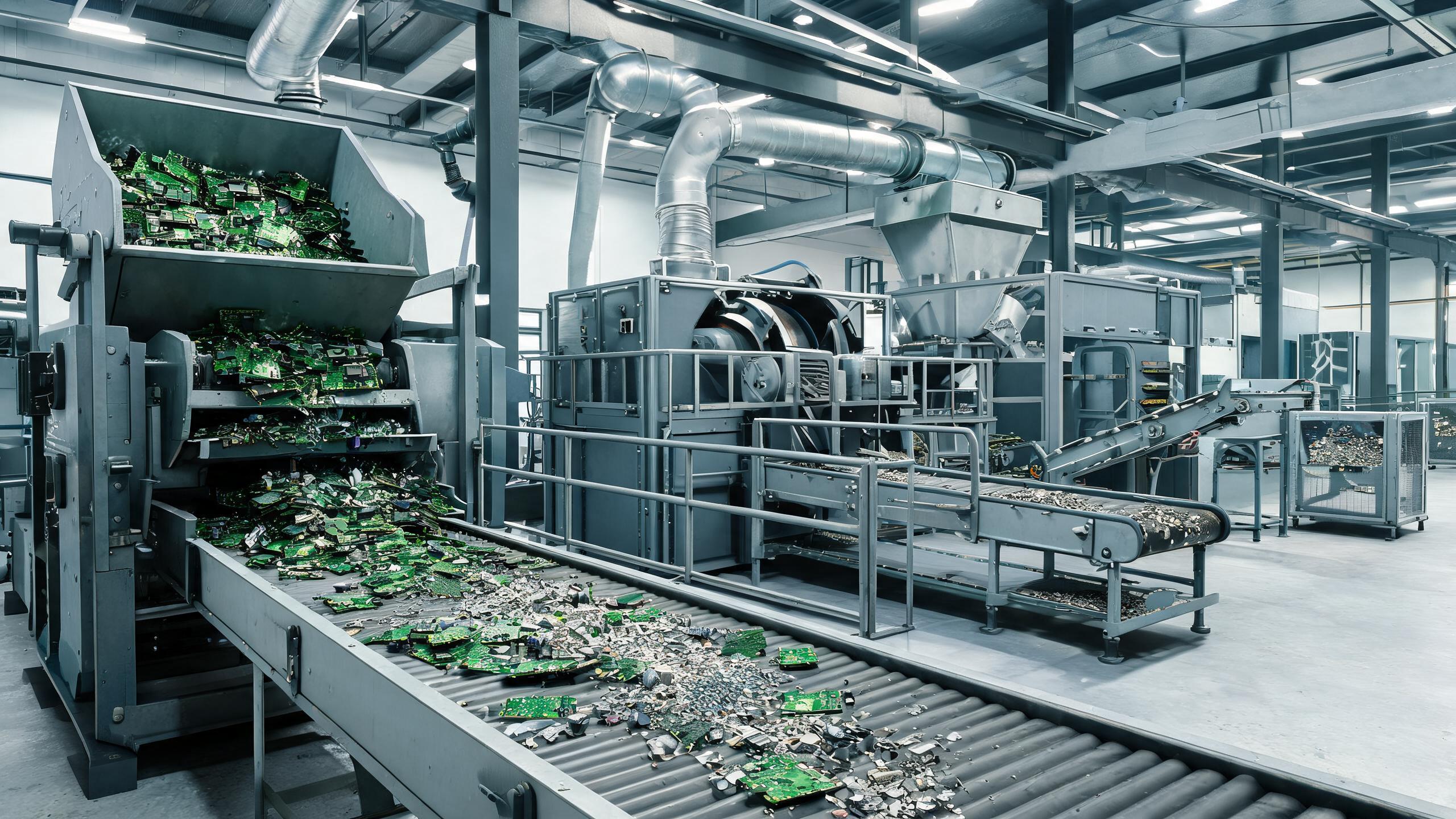
If your input is e-waste (PCBs, cables, small appliances), a standard crusher may jam on boards and plastics. The TG-EWasteLine 150 is designed for metal recovery from e-waste, with specialized hammers and screens that separate ferrous and non-ferrous fractions. Its durability is enhanced by wear-resistant liners in high-impact zones. However, it is not suitable for heavy ferrous scrap like car bodies.
4. TG-SingleShaft 200 Single-Shaft Metal Shredder — Best for Pre-Shredding and Low-Density Feed
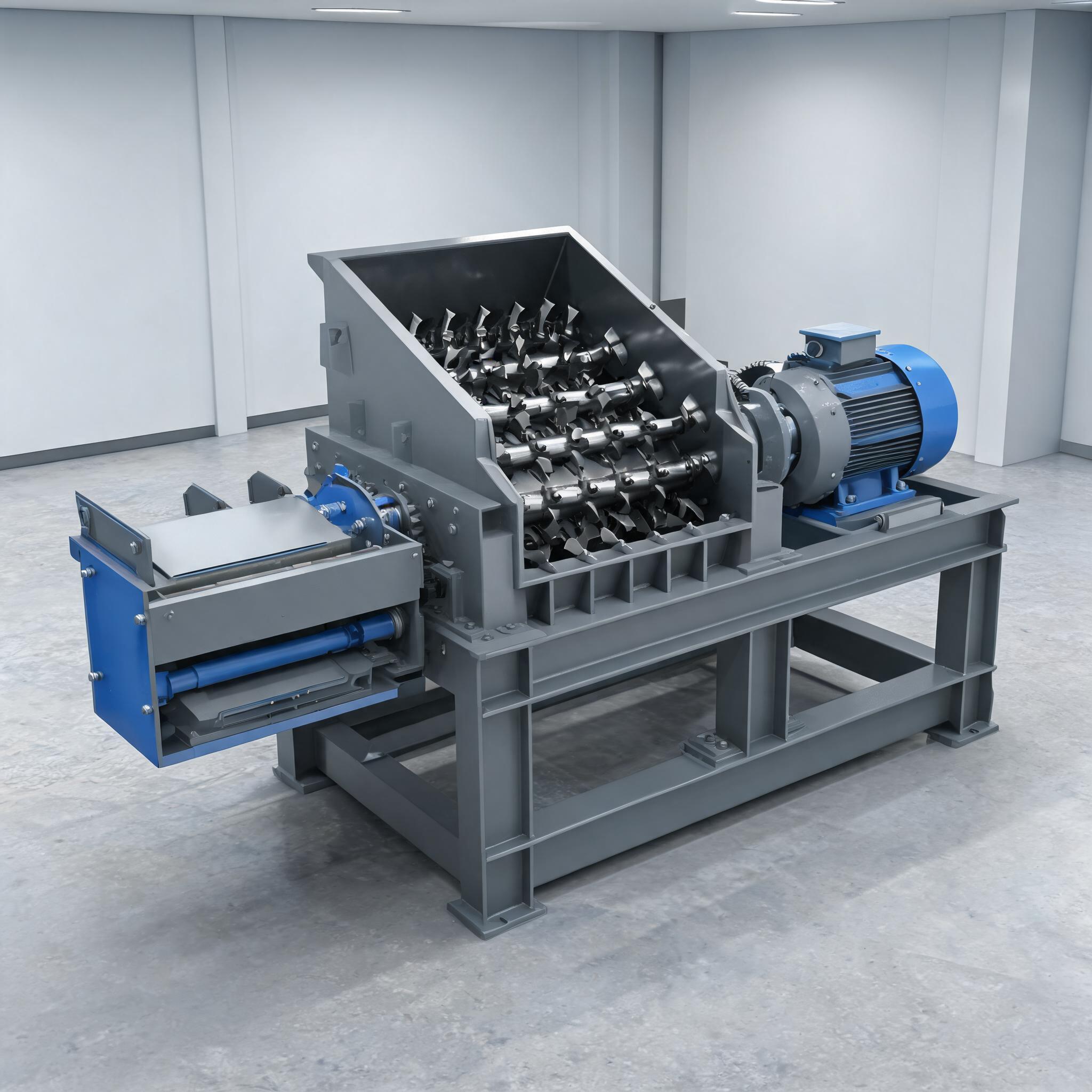
For pre-shredding or processing low-density materials like light sheet metal, the TG-SingleShaft 200 offers a slower-torque, high-torque shredding action that reduces wear on cutting tools. It is more forgiving on non-ferrous contaminants, but its throughput is lower than a hammer crusher. Use it as a primary stage before a hammer mill or as a standalone for thin-gauge scrap.
How to Choose the Right Scrap Metal Crusher: A Decision Matrix
To avoid costly mistakes, evaluate your operation against these questions:
- What is your feed type and density? Heavy ferrous (car bodies) requires a high-compression hammer crusher like the TG-Hammer 800. Light sheet or e-waste may be better served by a single-shaft or e-waste line.
- What is your required throughput (tons/hour)? The TG-Hammer 800 handles 40–60 t/h. If you need less than 20 t/h, a smaller model may be more economical.
- What output fragment size do you need? Adjustable grate bars allow you to change fragment size; confirm the range with the manufacturer.
- What are your local safety and electrical standards? For Europe, CE marking is essential. For North America, check for 60 Hz compatibility and OSHA guard requirements.
- What is your maintenance capacity? Reversible hammers and replaceable grate bars reduce downtime, but you still need skilled technicians.
Common Pitfalls When Buying a Scrap Metal Crusher
- Underpowered motor: A motor that is too small stalls on bulky feed, causing overheating and damage. Always size for your heaviest input.
- Ignoring wear-part costs: Hammer and grate replacement can exceed 30% of operating costs. Choose reversible hammers and standard grate sizes.
- Overlooking safety certifications: A CE-marked frame with a technical file is not just paperwork — it protects your workers and your liability.
- Assuming one machine fits all: A hammer crusher may not handle e-waste well. Match the machine to your specific scrap mix.
FAQ: Scrap Metal Crusher Durability
How long do manganese steel hammers last?
With reversible hammers, you can extend service life by up to 50% compared to non-reversible ones. Actual life depends on feed abrasiveness and throughput. The TG-Hammer 800's reversible design is a key durability feature.
Is a 750 kW motor necessary for a scrap yard?
If you process mixed ferrous scrap continuously, yes. A 750 kW motor provides the torque needed for heavy, bulky feed without stalling. Smaller operations may opt for lower power, but you risk downtime.
Can I process car bodies with a single-shaft shredder?
Not efficiently. Car bodies require a high-compression hammer crusher like the TG-Hammer 800. Single-shaft shredders are better for pre-shredding or light materials.
Sources and Verification
This ranking is based on verified product specifications for the TG-Hammer 800, including main motor power (750 kW), hydraulic compression force (500 tons), throughput (40–60 t/h), CE marking, and reversible hammers. Other models (TG-ScrapLine 150, TG-EWasteLine 150, TG-SingleShaft 200) are referenced from the manufacturer's product line. For detailed technical files and installation requirements, contact the manufacturer directly.
Ready to compare quotes? Request a detailed specification sheet for the TG-Hammer 800 Heavy-Duty Metal Crusher and explore the full range of metal crushers to find your best fit.