
If you search for "what is scrap metal prices today," you probably want a number. The honest answer is that there is no single scrap metal price today. The price you get depends on what you have, how it is sorted, and which yard you deliver it to. This article explains how daily pricing actually works, why posted prices are rarely what an unsorted load receives, and what you can do to get a fair settlement.
Key Takeaways
- Yards reprice daily against global benchmarks, not fixed public rates.
- Posted prices apply to clean, sorted grades—not mixed loads.
- Contamination deductions happen at the scale, not after you leave.
- Separating metals before delivery is the single biggest lever you control.
- Ask about deductions and grading before you load the truck.
Why there is no single price for "scrap metal today"
Scrap metal is a global commodity. Prices move with demand from steel mills, foundries, and export markets. Yards buy from the public, then sell to processors or directly to mills. Their buy price has to leave room for freight, processing, and a margin. That means the price a yard posts on its board is a starting point, not a guarantee.
When you call a yard and ask for "today's price," the person on the phone will usually ask you three questions: What metal? What grade? How much? Without those answers, any quote is meaningless. A yard might offer one rate for clean copper wire and a very different rate for mixed insulated cable. Both are "copper," but they are not the same product.
How daily pricing works at the yard
Most yards set their buy prices each morning based on a combination of factors:
- Global benchmarks: London Metal Exchange (LME) and COMEX prices for copper, aluminum, and other non-ferrous metals.
- Ferrous indices: Published scrap indices that track shredded, heavy melt, and plate and structural grades.
- Local supply and demand: How much material is already in the yard and how quickly it can be shipped.
- Freight and processing costs: What it costs to move and prepare the material for a mill.
Because benchmarks change daily, yard prices change daily. A price you were quoted yesterday may not hold today. Some yards update their boards every morning; others adjust only when the market moves beyond a certain threshold. This is why "today's price" is always a moving target.
The posted price is also grade-specific. A yard's board might list "#1 Copper" and "#2 Copper" separately, with a significant gap between them. The difference is not arbitrary—it reflects what the mill will pay for that exact specification. If your material does not meet the spec for #1, you will not get the #1 price.
Posted prices vs. what an unsorted mixed load receives
This is where most sellers get surprised. The price on the board is for clean, sorted material. If you back up a truck with a mix of steel, aluminum, copper, and miscellaneous junk, the yard cannot pay you the posted price for any single grade. They have to sort it, and sorting costs money.
Yards handle this in two ways: they either buy the load as a lower-grade "mixed" category, or they deduct for contamination and handling. Either way, the effective price per pound or per ton drops. The gap between the posted price and your actual check can be substantial on a poorly sorted load.
Here is a simple comparison of how the same material can be valued differently:
| Load Type | How Yard Values It | Typical Effective Price |
|---|---|---|
| Clean, sorted #1 copper wire | Posted #1 copper price | Highest |
| Copper wire with some insulation | Lower grade or deduction for insulation | Below the posted #1 price |
| Mixed ferrous (steel, iron, some non-magnetic) | Mixed grade or deduction for non-ferrous contamination | Significantly lower |
| Unsorted general scrap | Lowest category, often "light iron" or "shred" | Lowest |
Notice that no specific price numbers are given here. That is deliberate. Prices change daily, and any number printed in an article is out of date by the time you read it. What matters is understanding the structure: sorted, clean material commands the best price; mixed or contaminated material gets less.
Contamination deductions: where the money goes
Contamination is anything that is not the metal you are selling. It could be plastic insulation, rubber, dirt, moisture, bolts, or other metals mixed in. Yards do not guess—they weigh and inspect. Deductions are applied at the scale, and they are not negotiable after the fact.
Common deductions include:
- Insulation on wire: Copper wire with thick insulation may be valued on a "recovery" basis—you are paid for the copper content, not the total weight.
- Moisture: Wet material weighs more, but you are not selling water. Some yards deduct a moisture allowance.
- Non-magnetic residue: In ferrous loads, any non-magnetic material (aluminum, plastic, rubber) is deducted or downgraded.
- Attachments: Bolts, fittings, and other metals that are not part of the main grade can trigger deductions.
If you want to avoid surprises, ask the yard how they handle deductions before you deliver. A reputable yard will explain their grading and deduction policy upfront. If they will not, that is a red flag.
What sellers can do: a decision list
You cannot control the global market, but you can control how your material is presented. Here is a practical checklist to get the best possible price for your load:
- Separate metals before you load. Keep copper, aluminum, brass, and steel in separate containers. Even a rough separation improves your grade.
- Know your grades. Learn the difference between #1 and #2 copper, heavy melt and shred, and clean aluminum versus painted aluminum. Your yard can give you a grade sheet.
- Ask about deductions before delivery. Call ahead and ask: "What deductions do you apply for insulation, moisture, or mixed material?" Get it in writing if possible.
- Clean your material. Remove excess dirt, oil, and non-metal attachments. A quick cleanup can move you into a higher grade.
- Weigh and document. If you have a scale, weigh your load before delivery. Compare it to the yard's scale ticket. Discrepancies should be discussed immediately.
- Get quotes from more than one yard. Prices vary by location and buyer. A few phone calls can make a real difference.
- Consider processing your own material. If you regularly generate scrap, investing in sorting and processing equipment can increase your recovery rate and reduce deductions.
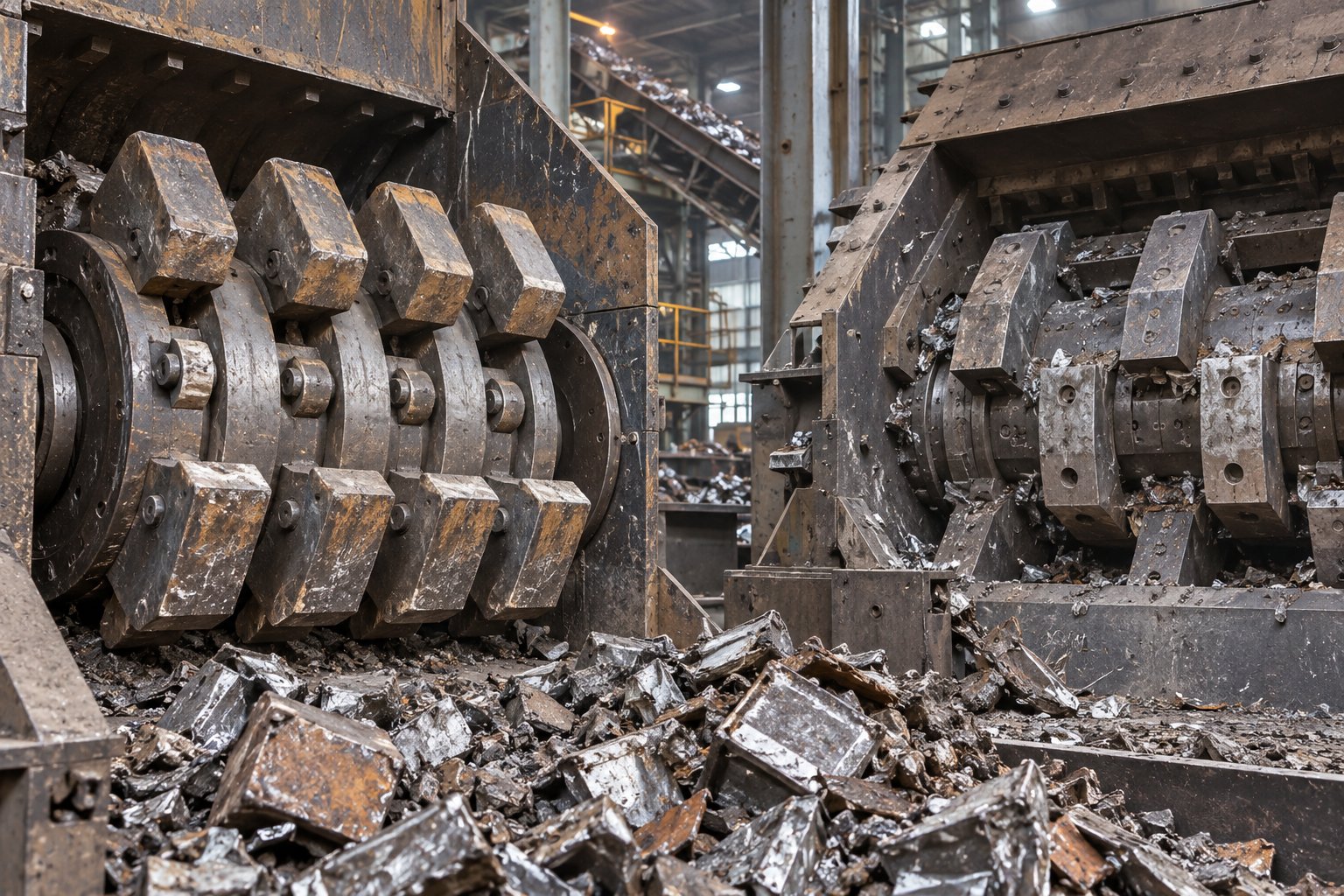
For operations that handle automobile scrap, light steel, or mixed ferrous on a continuous basis, a turnkey processing line can help standardize output and reduce contamination before the material ever reaches a yard. The TG-ScrapLine 150 Integrated Scrap Processing System is a 15 t/h line that combines a twin-shaft low-speed high-torque shredder, an overband magnetic separator, a hydraulic briquetting press, and PLC control. It is designed to handle automobile scrap, light steel, and mixed ferrous without pre-sorting, separating clean ferrous from non-magnetic residue. For sellers who generate large volumes, that kind of upfront processing can mean cleaner grades and fewer deductions at the scale.
FAQ: Scrap metal pricing questions
Because scrap is a commodity with many grades and daily price changes. Any published number is either a benchmark or a specific yard's posted price for a specific grade. Your actual price depends on what you have and how it is sorted.
They can be a useful reference, but they are rarely what you will be paid for an unsorted mixed load. Posted prices typically assume clean, sorted material delivered to a specific location. Always confirm with the yard that will actually buy your material.
Sort your metals, clean them, and know the grades. Ask about deductions before delivery. Get quotes from multiple yards. If you process large volumes, consider investing in sorting and separation equipment to improve your material quality.
Copper, brass, and other non-ferrous metals generally command higher prices than ferrous metals like steel and iron. However, the exact value depends on grade, cleanliness, and current market conditions.
Deductions are not a fee—they are a reduction in the price paid because your material contains non-valuable content or requires extra handling. The deduction reflects the cost of processing your material to a saleable grade.
What to do next
Before you deliver your next load, take an hour to sort and clean it. Call two or three local yards and ask for their current prices on the specific grades you have. Ask about their deduction policies. If you consistently generate mixed ferrous or automobile scrap, look into processing equipment that can separate clean ferrous from residue before the material reaches the scale. Cleaner material means fewer deductions and a better return. For more information on integrated processing solutions, explore the TG-ScrapLine 150.