
Scrap Metal Trading
Scrap metal dealers buy discarded metal from tradespeople, small businesses, and industrial sites, sort and grade it, weigh it, pay the seller, and then aggregate enough volume to sell onward to larger yards, mills, or exporters. They make money on the difference between what they pay for incoming material and what they receive when they sell it in bulk — a margin that depends entirely on accurate grading, tight logistics, and knowing where the next buyer is.
Key Takeaways
- Dealers are intermediaries: they buy small, sell large, and profit from the spread between buy and sell prices.
- Grading is the core skill — misjudge a load and the margin disappears.
- Weighing and payment happen on-site or at a yard, often same-day.
- Volume aggregation is what makes the business work; a dealer who cannot consolidate cannot sell to mills or exporters.
- Successful dealers manage logistics, paperwork, and market timing as carefully as they manage metal.
What Does a Scrap Metal Dealer Actually Do?
At its simplest, a scrap metal dealer is a middleman. They buy metal that someone else no longer wants — a plumber with leftover copper pipe, a factory with obsolete machinery, a contractor with aluminum offcuts — and sell it to someone who can turn it back into raw material. The dealer does not usually melt or refine the metal. They collect, sort, and move it.
The job breaks down into five recurring tasks:
- Sourcing. Finding sellers: trades, demolition firms, manufacturers, auto repair shops, and the general public.
- Grading and sorting. Separating metals by type and quality — copper, brass, aluminum, stainless steel, lead, zinc, and various alloys.
- Weighing and paying. Using calibrated scales to determine weight, then paying the seller based on the current grade price.
- Aggregating. Accumulating enough volume of a single grade to make a sale worthwhile to a larger buyer.
- Selling onward. Deciding whether to sell to a local yard, a smelter/mill, or an export buyer, depending on volume, grade, and market conditions.
The Dealer's Day-to-Day Workflow
Sourcing from trades and industry
Dealers do not wait for metal to walk through the door. They build relationships with the people who generate scrap regularly: electricians, plumbers, HVAC contractors, auto body shops, machine shops, and demolition crews. A dealer might offer a roll-off container to a factory, pick up scrap from a job site, or run a small retail counter where the public can bring in a few kilos.
The sourcing side is about reliability. A dealer who can promise a regular pickup and a fair price becomes the first call when a contractor has a load to move.
Grading and sorting incoming material
Grading is where the dealer earns or loses money. Copper wire with insulation is worth less than bare bright copper. Mixed aluminum extrusions are worth less than clean, sorted extrusions. A dealer must quickly identify what they are looking at — sometimes with a magnet, sometimes with a file or acid test, often just by experience.
Sorting happens at multiple stages: when the load arrives, when it is unloaded, and again before it is sold. Contamination — steel bolts in an aluminum pile, plastic fittings on copper pipe — can downgrade an entire load.
Weighing and paying
Most dealers weigh incoming material on platform scales or crane scales, then calculate payment based on the current price for that grade. Prices fluctuate with commodity markets, so a dealer might adjust their buy price daily or even hourly.
Payment is usually immediate — cash or bank transfer — because sellers expect it. That means the dealer needs enough working capital to buy material before they have sold it.
Aggregating volume
A single load from a small contractor might be a few hundred kilos. A mill or export buyer wants tonnes, not kilos. The dealer's job is to accumulate enough of a single grade to make a bulk sale. This means storage space, separate bays or containers for different metals, and the discipline to keep grades clean.
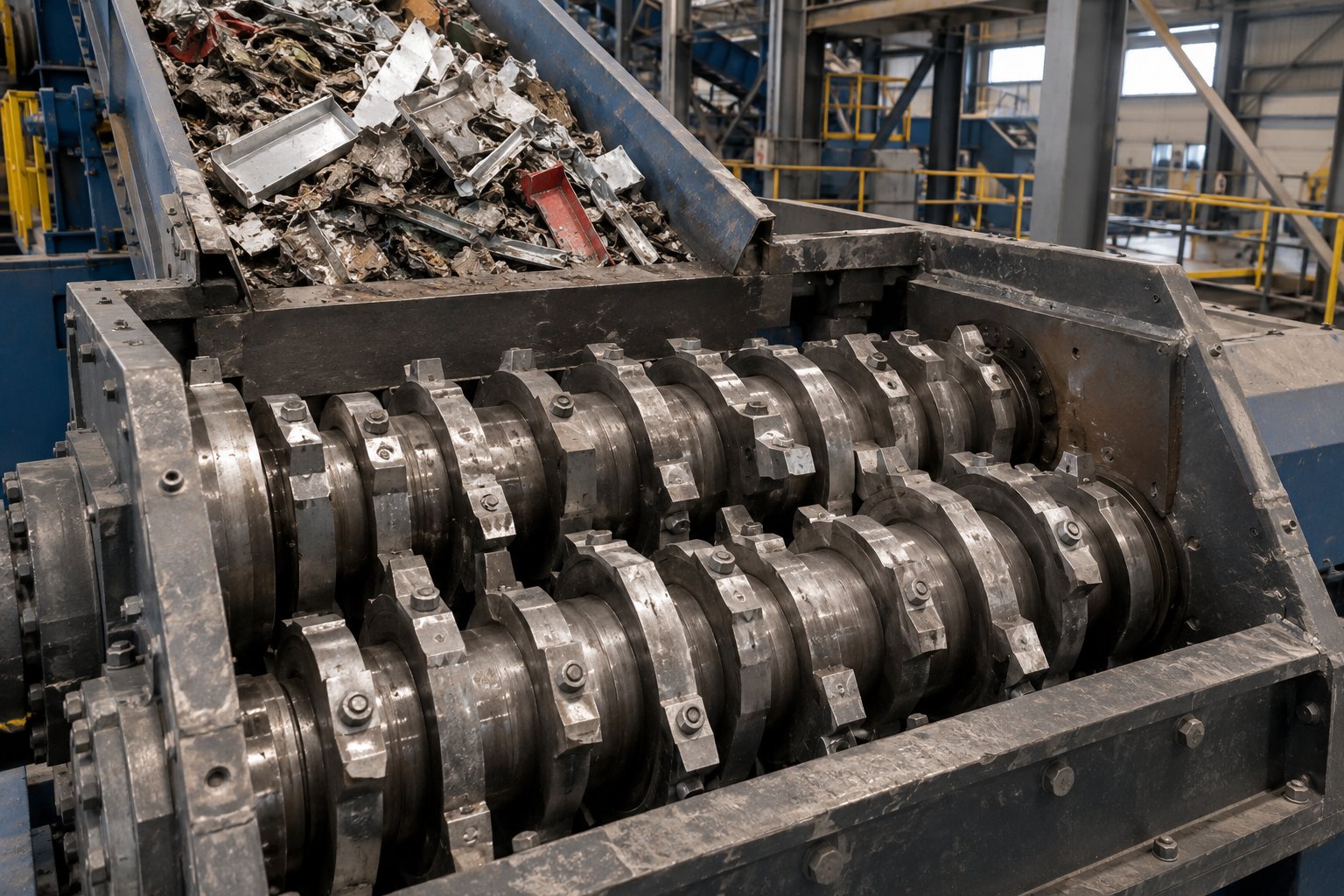
Some dealers process material further to increase its value. Shearing, baling, or shredding can make a load denser and more attractive to a mill. For example, the TG-ScrapLine 150 Integrated Scrap Processing System is a turnkey line built around a twin-shaft shredder, overband magnetic separator, and hydraulic briquetting press, with PLC control and a rated capacity of 15 t/h. It is CE certified and the manufacturing facility holds ISO 9001. Processing on-site can turn mixed light scrap into a more consistent, saleable product.
Deciding where to sell
Once a dealer has enough volume, they choose a sales channel. The decision usually comes down to three options:
- Local yard. Quick sale, lower price, minimal logistics.
- Mill or smelter. Better price for clean, sorted grades, but requires larger volumes and transport.
- Export. Often the highest price for certain grades, but involves shipping, documentation, and international market risk.
The choice depends on the dealer's volume, the grade of material, and current market demand. A dealer with 20 tonnes of clean copper might call an export broker; a dealer with 2 tonnes of mixed steel will likely sell locally.
How Dealers Make Margin
The margin is the difference between the buy price and the sell price, minus operating costs. That sounds simple, but several factors determine whether a dealer actually keeps any money.
| Factor | What it means for margin |
|---|---|
| Grading accuracy | Pay for the wrong grade and the load may sell for less than it cost. |
| Volume | Larger volumes attract better sell prices from mills and exporters. |
| Logistics | Transport, fuel, and labour eat into the spread; efficient routes matter. |
| Market timing | Holding material when prices are low and selling when they rise can help, but storage and cash flow carry risk. |
| Processing | Shredding, baling, or briquetting can raise the value per tonne and reduce shipping volume. |
| Overhead | Yard rent, equipment maintenance, insurance, and compliance costs all come out of the spread. |
Successful dealers focus on repeatable processes: consistent grading, reliable pickups, and clean loads that mills will accept without deductions. They also watch commodity markets closely, because a sudden drop in copper or aluminum prices can wipe out the margin on material already bought at a higher price.
What Dealers Need to Run the Business
Beyond capital and market knowledge, a scrap metal dealer needs:
- Space. A yard or warehouse with separate bays for different metals.
- Equipment. Scales, forklifts, material handlers, and often processing equipment such as balers or shredders.
- Licences and compliance. Many jurisdictions require scrap dealers to hold a licence, record transactions, and comply with environmental regulations. Requirements vary by location.
- Relationships. A network of suppliers on one side and buyers on the other.
Processing equipment can be a significant investment. For dealers looking to upgrade from simple baling to a more integrated setup, systems like the TG-ScrapLine 150 combine shredding, magnetic separation, and briquetting in one line. The 15 t/h capacity and PLC control are designed for operations that handle a steady flow of mixed scrap and want a more consistent output grade.
Frequently Asked Questions
Do scrap metal dealers make a lot of money?
Margins are typically thin and volume-driven. A dealer's profit depends on how well they grade, how efficiently they move material, and market prices. There is no standard income figure; it varies widely by region, scale, and commodity prices.
How do dealers decide what to pay for scrap?
They start with the current market price for that grade, then subtract their expected costs and target margin. Prices change daily, so dealers often update their buy prices frequently.
What is the difference between a scrap dealer and a scrap yard?
The terms are often used interchangeably. In practice, a dealer may operate a yard or work as a mobile buyer who collects material and brings it to a larger yard. Some dealers also process material before selling it on.
Do dealers sell directly to mills?
Larger dealers with sufficient volume and consistent grades may sell directly to mills or smelters. Smaller dealers often sell to larger yards or brokers who aggregate further.
What equipment do dealers use to process scrap?
Common equipment includes scales, balers, shears, and shredders. Some operations add magnetic separators and briquetting presses to improve density and separation. The right setup depends on the types and volumes of scrap handled.
The Bottom Line
Scrap metal dealers are the link between small-scale scrap generation and industrial recycling. They buy, sort, weigh, pay, aggregate, and sell — managing margin through careful grading, efficient logistics, and market awareness. It is a business of small spreads and large volumes, where the dealer who can consistently deliver clean, well-sorted material to the next buyer is the one who stays in business.