
Metal Recycling Equipment
A metal briquette machine is a hydraulic press that compacts loose machining waste — chips, turnings and swarf — into dense cylindrical briquettes. It is not a charcoal briquette press, and it does not make fuel. This article defines the machine, its main parts, the metals it handles, and how buyers should scope a purchase.
Key takeaways
- A briquette machine turns low-density metal scrap into a dense, stackable cylindrical form.
- Its core parts are a hopper, hydraulic ram, die chamber, ejection system and fluid recovery.
- Metal briquetting systems handle steel, cast iron, aluminum, copper and brass chips.
- Compaction recovers cutting fluid and can reduce transport costs 5–10x.
- It is distinct from a charcoal briquette press, which forms fuel briquettes from carbonized biomass or coal dust.
On this page
- Definition and the metal-vs-charcoal distinction
- Machine anatomy: what each part does
- Materials handled
- What the output briquette is used for
- How to scope a purchase
- FAQ
What a briquette machine is, and what it is not
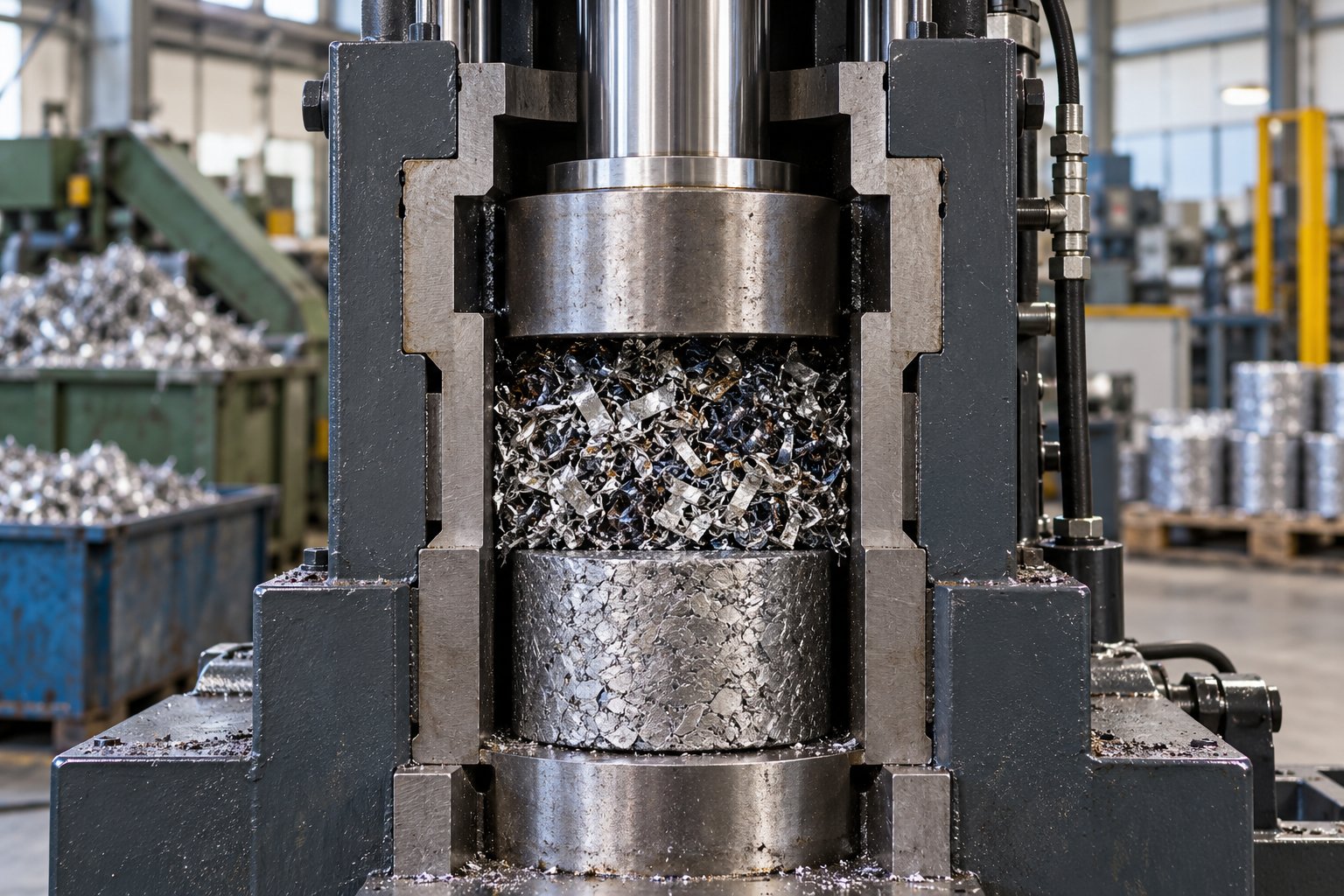
A briquette machine is defined by what it compacts and what comes out. In metalworking, it takes loose chips, turnings and swarf from machining operations and presses them into dense cylindrical briquettes. The machine is a standalone hydraulic briquetting system; the press force, die geometry and fluid handling are all designed around metal scrap rather than fuel feedstock.
The name overlaps with a different machine category, so the distinction matters before you compare quotations. A charcoal briquette press forms fuel briquettes from carbonized biomass or coal dust. Its output is burned for heat or energy. A metal briquetting machine processes metal chips so they can be handled, transported and remelted more efficiently. The two share a word, not a duty.
Machine anatomy: what each part does
The working cycle of a briquetting press is covered in the companion article, How Does a Briquette Machine Work? Here the focus is on what the machine is made of and what each component is for.
Hopper and feed section
The hopper receives loose chips and turnings and meters them toward the press. Because material arrives in irregular, low-density form, feed consistency has a direct effect on briquette quality. Some setups pair the briquetting system with a shredder to prepare long or tangled swarf before it reaches the hopper — for aluminum swarf, that feed-preparation role can be handled by equipment such as the TG-AluShred 120 aluminum swarf shredder.
Hydraulic ram
The hydraulic ram is the compacting force. It presses the loose charge into the die chamber under pressure. This is the part that converts a pile of chips into a solid form, and it is why the machine is described as a hydraulic briquetting system rather than a mechanical press.
Die chamber
The die chamber defines the shape and density of the finished briquette. In a metal briquetting system, the output is a dense cylindrical briquette — a form that stacks, stores and ships far more predictably than loose turnings.
Ejection system
Once a briquette is formed, the ejection system pushes it clear of the die so the next cycle can begin. Ejection is what makes the machine a continuous production unit rather than a batch press.
Fluid recovery
Machining chips usually carry cutting fluid. During compaction, the system recovers cutting fluid, which is one of the practical reasons metal recyclers and machine shops briquette rather than ship loose scrap. Recovered fluid is a process output in its own right, separate from the briquette.
Which materials a briquette machine handles
Metal briquetting systems are built to handle ferrous and non-ferrous machining scrap. The TG-BriqPress 250 metal briquetting system, for example, handles steel, cast iron, aluminum, copper and brass chips. That range covers the common chip types generated by turning, milling and similar operations.
Material choice affects several downstream decisions: how the chips are prepared, what the recovered fluid looks like, and how the briquette is sold or remelted. If your scrap stream is mixed, it is worth confirming with the supplier how the machine is set up for your specific material mix.
What the output briquette is used for
The briquette is a densified, transportable form of the same metal. Its main uses are straightforward:
- Transport and logistics. Compaction reduces transport costs 5–10x compared with moving loose chips, because loose turnings occupy large volumes for relatively little metal.
- Storage and handling. Cylindrical briquettes stack and load more predictably than fluffy swarf.
- Remelting and resale. Dense briquettes are a form foundries and smelters can charge more conveniently than loose material.
Because the briquette is still the same alloy, the value is largely in density and logistics, not in changing the metal itself.
How to scope a briquette machine purchase
Buyers evaluating a briquette machine are usually deciding between handling loose scrap as-is or investing in compaction. The scoping questions below reflect that decision.
| Decision point | What to establish |
|---|---|
| Material mix | Which metals — steel, cast iron, aluminum, copper, brass — and whether they are segregated or mixed. |
| Chip form and size | Whether chips are short and granular or long and tangled; long swarf may need shredding before briquetting. |
| Fluid content | How much cutting fluid the chips carry and how recovered fluid will be handled on site. |
| Downstream use | Whether briquettes go to your own foundry, to a smelter, or into resale. |
| Space and utilities | Footprint, hydraulic power requirements and how the machine fits the existing chip-handling flow. |
| Supplier support | Whether the supplier can support installation, spares and service for your material profile. |
The TG-BriqPress 250 is one example in this category: a standalone hydraulic briquetting system for loose metal chips, turnings and swarf. You can review its configuration here: TG-BriqPress 250 Metal Briquetting System.
Where the machine fits in a metal recycling line
Briquetting is usually not a standalone decision. In practice it sits between chip collection and the point where material leaves the site — whether to a foundry, a smelter or a scrap buyer. Feed preparation, fluid recovery and briquette handling are all part of the same flow, and the machine is sized around the volume and form of chips your operation actually produces.
Tian Gong has built metal briquetting and shredding equipment since 2008. Its facility holds ISO 9001 and its equipment carries CE marking, with a 12-month warranty on the machines it supplies. Buyers comparing suppliers should confirm that the quoted configuration matches their material mix, chip form and downstream use.
FAQ
Is a briquette machine the same as a charcoal briquette press?
No. A metal briquette machine compacts metal chips into dense cylindrical briquettes for transport and remelting. A charcoal briquette press forms fuel briquettes from carbonized biomass or coal dust. They are different machine categories.
Can one machine handle both ferrous and non-ferrous chips?
The TG-BriqPress 250 handles steel, cast iron, aluminum, copper and brass chips. If your scrap stream is mixed, confirm the setup with the supplier before ordering.
What happens to the cutting fluid on the chips?
The system recovers cutting fluid during compaction. How that fluid is collected and reused on site is an operational decision for the buyer.
Do I need a shredder as well?
It depends on chip form. Long or tangled swarf may need shredding before it feeds well into the briquetting press. Short chips often do not.
Next step
If you are evaluating metal briquetting for your shop or recycling operation, the most useful first step is to document your material mix, chip form and monthly volume, then ask the supplier to confirm which configuration fits. You can start with the TG-BriqPress 250 Metal Briquetting System and discuss your specific scrap profile with the team.