Crusher Basics for Buyers
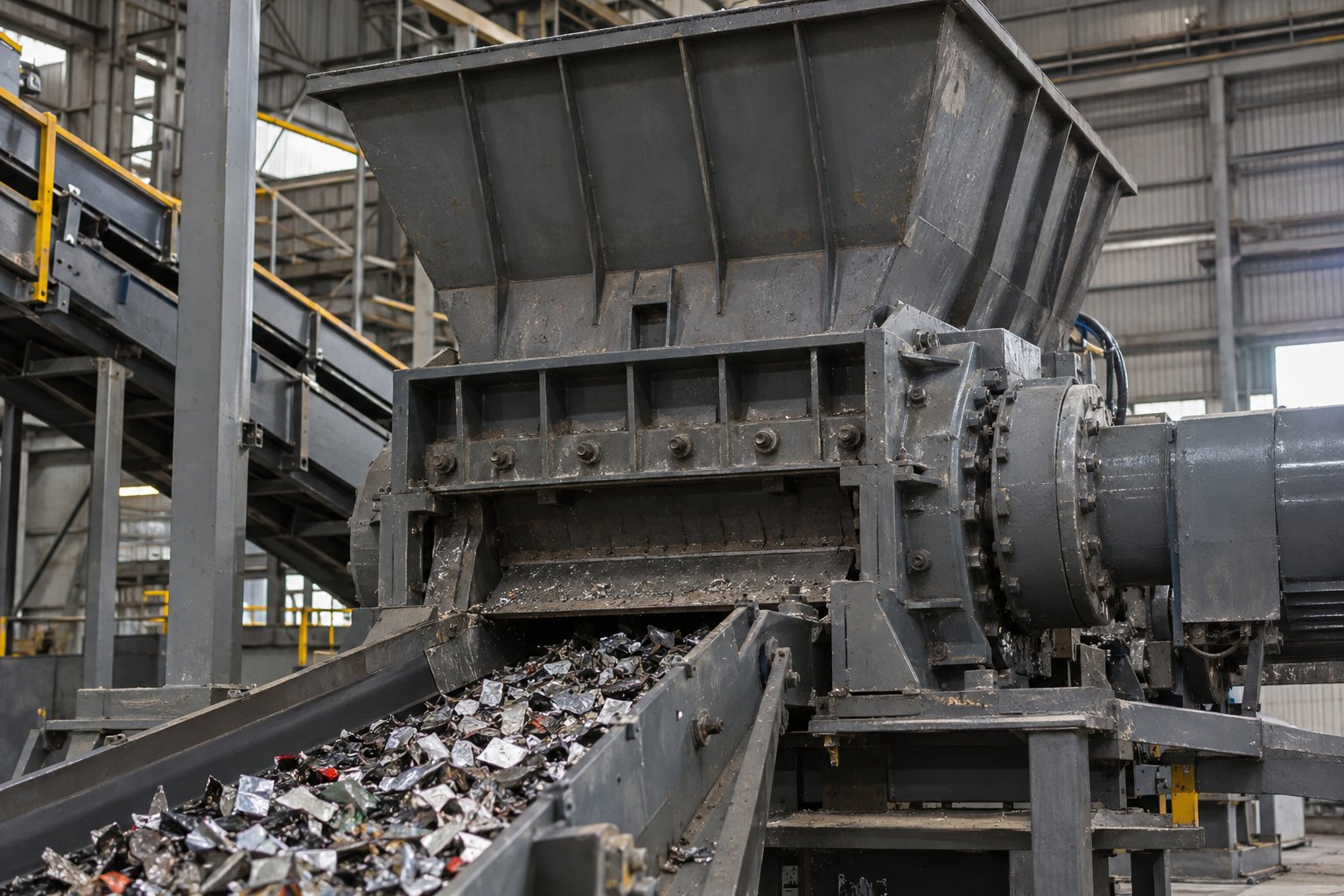
A crusher machine is equipment that reduces large rock, ore, or construction material into smaller, usable pieces. It sits at the front of a production line, and the choice of crusher determines the size, shape, and throughput of everything that follows.
If you are buying crushing equipment for the first time, the confusing part is not the definition — it is the number of machine types on the market. This guide answers what is a crusher machine in practical terms, then explains the main types and the feed and output each one suits, so you can narrow the field before you request quotes.
Key takeaways
- A crusher reduces feed material to a smaller, controlled output size.
- Stages matter: primary, secondary, and tertiary crushing use different machines.
- The six common types are jaw, impact, cone, hammer, roller, and VSI crushers.
- Feed size, hardness, moisture, and target output shape drive the choice more than price alone.
What this article covers
What a Crusher Machine Does
Crushing is a mechanical process. Material enters the machine through a feed opening, is squeezed, struck, or compressed between moving and fixed parts, and leaves at a smaller size through a discharge opening. The reduction ratio describes how much the material shrinks in a single pass.
Crushers are used in mining, quarrying, aggregates production, construction and demolition recycling, cement and mineral processing, and industrial material handling. They rarely work alone. An ore or rock processing line typically moves through three stages:
- Primary crushing — breaks run-of-mine or large feed down to a size that conveyors and screens can handle.
- Secondary crushing — reduces material further, often to a defined aggregate or product size.
- Tertiary crushing — produces finer output or a specific particle shape for the end product.
What a crusher does not do is make a product in one step. If a buyer asks for one machine to turn large rock into fine sand, the honest answer is usually that no single crusher does the whole job efficiently — a combination of stages is required.
The Main Types of Crusher Machine
Most industrial crushing equipment falls into one of six categories. Each uses a different mechanism to break material, and that mechanism is what makes it suited to specific feed and output conditions.
Jaw Crusher
A jaw crusher uses two jaws — one fixed and one moving — to compress material. It is the classic primary crusher, chosen for large feed sizes and hard, abrasive rock. Because it accepts big lumps, it is often the first machine after the mine or quarry face.
The feed opening is the key specification. A TG-Jaw 600 jaw crusher with a 600 x 900 mm feed opening is the kind of primary unit that defines a line's maximum acceptable feed. Jaw crushers produce a fairly uniform but more angular output, and they are simple, robust, and low-maintenance compared with impact machines.
Suits: hard and abrasive rock, primary stage, high-capacity lines. Does not suit: buyers who need a cubical, low-fines product in a single pass.
Impact Crusher (Horizontal Shaft)
An impact crusher breaks material by striking it with high-speed rotating blow bars rather than squeezing it. This is why impact machines are often preferred for secondary crushing when particle shape matters: the material fractures along natural weaknesses, giving a more cubical output.
The TG-Impact 500 horizontal impact crusher is a two-stage machine with a high-speed rotor and blow bars, plus adjustable impact curtains that control the output size. It is described as giving uniform output and carries CE and ISO 9001. Because output is controlled by rotor speed and curtain settings, an operator can adjust the product without changing screens.
Suits: limestone and medium-hard rock, recycling, buyers who care about shape. Does not suit: very hard or highly abrasive feed where blow bar wear becomes the dominant cost.
Cone Crusher
A cone crusher crushes material between a moving cone and a fixed bowl liner inside a chamber. It is a compression machine, and it is the standard choice for secondary and tertiary crushing of hard, abrasive material where a jaw or impact machine would wear too quickly.
The TG-Cone 350 uses manganese steel cone and bowl liners, offers hydraulic discharge adjustment, and includes a tramp iron release. Hydraulic adjustment means the closed-side setting — the main lever on output size — can be changed without manual shimming. Tramp iron release protects the machine when uncrushable metal enters the chamber. The unit carries CE.
Suits: hard rock, secondary and tertiary stages, high-reduction applications. Does not suit: sticky, wet, or clay-rich feed, which can block the chamber.
Hammer Mill
A hammer mill uses swinging or fixed hammers on a spinning rotor to break material by impact. It is often used for softer to medium-hard material and can produce a relatively fine output in a single unit. Because the hammers wear on the leading edge, reversible hammers extend service life by letting the operator rotate them before replacement.
The TG-Hammer 800 hammer mill runs a 750 kW main motor and uses reversible manganese steel hammers. Its stated output is 40–60 t/h, and it carries CE. The combination of a large motor and high throughput positions it for continuous production rather than intermittent work.
Suits: limestone, coal, gypsum, medium-hard brittle materials. Does not suit: very hard or highly abrasive rock, or feed with frequent uncrushable metal.
Roller Crusher
A roller crusher draws material between two rotating cylinders and breaks it by compression and shear. It is a compact, low-speed design, often used where fines must be minimized or where the feed is relatively soft and the required reduction is moderate.
The TG-RollCrush 300 roller crusher is the type of unit used for such duties. In practice, roller crushers are chosen when a flat, predictable output is more important than high throughput, and when a simpler, lower-energy machine fits the duty.
Suits: soft to medium-hard material, moderate reduction, low-fines requirements. Does not suit: large, hard feed or very high tonnage duties.
VSI Crusher (Vertical Shaft Impact)
A VSI crusher drops material into a spinning rotor and throws it outward to break on impact. Unlike a horizontal impact crusher, it produces a more cubical, evenly shaped particle and is widely used in the tertiary stage for sand and aggregate shaping.
The TG-VSI 200 vertical shaft impact crusher belongs to this class. VSI machines are commonly specified where the end product's shape or the production of manufactured sand is the priority, rather than raw reduction capacity.
Suits: tertiary shaping, manufactured sand, cubical aggregate. Does not suit: abrasive feed unless the wear-part economics are understood in advance.
Quick Comparison: Feed and Output by Type
The table below summarizes the practical role of each machine. Use it to shortlist, then confirm exact figures against the supplier's current specification — capacities depend on feed size, bulk density, moisture, and settings.
| Type | Crushing mechanism | Typical stage | Feed character | Output character |
|---|---|---|---|---|
| Jaw crusher | Compression between jaws | Primary | Large, hard, abrasive | Coarse, angular; sets top feed size |
| Impact crusher | High-speed blow bars | Secondary | Medium-hard, less abrasive | Cubical, uniform; adjustable by curtains |
| Cone crusher | Compression in a chamber | Secondary / tertiary | Hard, abrasive | Finer, controlled by closed-side setting |
| Hammer mill | Rotor hammers | Primary / secondary | Soft to medium-hard, brittle | Finer, single-unit reduction |
| Roller crusher | Compression between rolls | Secondary | Soft to medium-hard | Flat, low-fines, moderate reduction |
| VSI crusher | Rotor-thrown impact | Tertiary | Pre-crushed material | Cubical, sand and shaped aggregate |
How to Match a Crusher to Your Material
Buyers often start with a budget figure, but crushing equipment is selected in the opposite order: material first, then machine, then commercial terms. Work through these criteria with your supplier before comparing prices.
- Feed size and hardness. This decides whether you need a jaw or gyratory primary, or whether an impact or hammer machine can handle the feed directly. Very hard, abrasive rock pushes you toward compression crushers — jaw and cone — because impact wear costs rise quickly.
- Moisture and clay content. Sticky or wet feed blocks cone chambers and blinds screens. In those conditions, jaw and impact designs are usually more forgiving than cone crushers.
- Target output size and shape. If the product must be cubical or used as manufactured sand, plan for a VSI in the tertiary stage. If a flatter, low-fines output is acceptable, a roller crusher may be enough.
- Required throughput. Match the machine's stated capacity to your target tonnage per hour — and remember that capacity falls when feed is finer or wetter than the rated condition.
- Number of stages. Ask whether the line needs primary plus secondary, or three stages. A single machine rarely delivers a fine end product efficiently.
- Wear parts and maintenance access. Manganese liners on cone and jaw machines, blow bars on impact machines, hammers on hammer mills — each has a different replacement cost and downtime profile. Ask for the maintenance interval in your specific duty.
- Certification and documentation. For export projects, confirm which standards apply to your market. In this product line, the TG-Impact 500, TG-Cone 350, and TG-Hammer 800 carry CE, and the impact crusher also carries ISO 9001; confirm the certificates that apply to the exact model and destination you are buying.
A practical next step is to send the supplier three things: the material type, the maximum feed lump size, and the required output size and tonnage. With those, a supplier can recommend a machine or a stage combination instead of guessing from a catalog photo.
FAQ
What is a crusher machine in one sentence?
It is a machine that reduces large rock, ore, or construction material into smaller pieces by compression or impact, so the material can be handled, processed, or sold at a defined size.
Which crusher type should a first-time buyer choose?
Start with the material. Hard, abrasive rock usually points to a jaw crusher for primary crushing and a cone crusher for secondary or tertiary work. Medium-hard, less abrasive material with a shape requirement often suits an impact crusher. Soft, brittle material may suit a hammer mill or roller crusher.
Can one crusher do primary and secondary work?
Some machines can reduce material in one pass, but achieving both a large feed opening and a fine, well-shaped product in a single unit is usually a compromise. Most production lines use two or three crushers in sequence.
What information do I need before requesting a quote?
Material type and hardness, maximum feed size, required output size and shape, target tonnage per hour, and site conditions such as moisture and power supply. With these, a supplier can recommend a specific model and configuration.
Specifications cited above come from the current product line and are intended as a starting point for selection. Confirm the model, configuration, and applicable certification for your project with the supplier before ordering.