
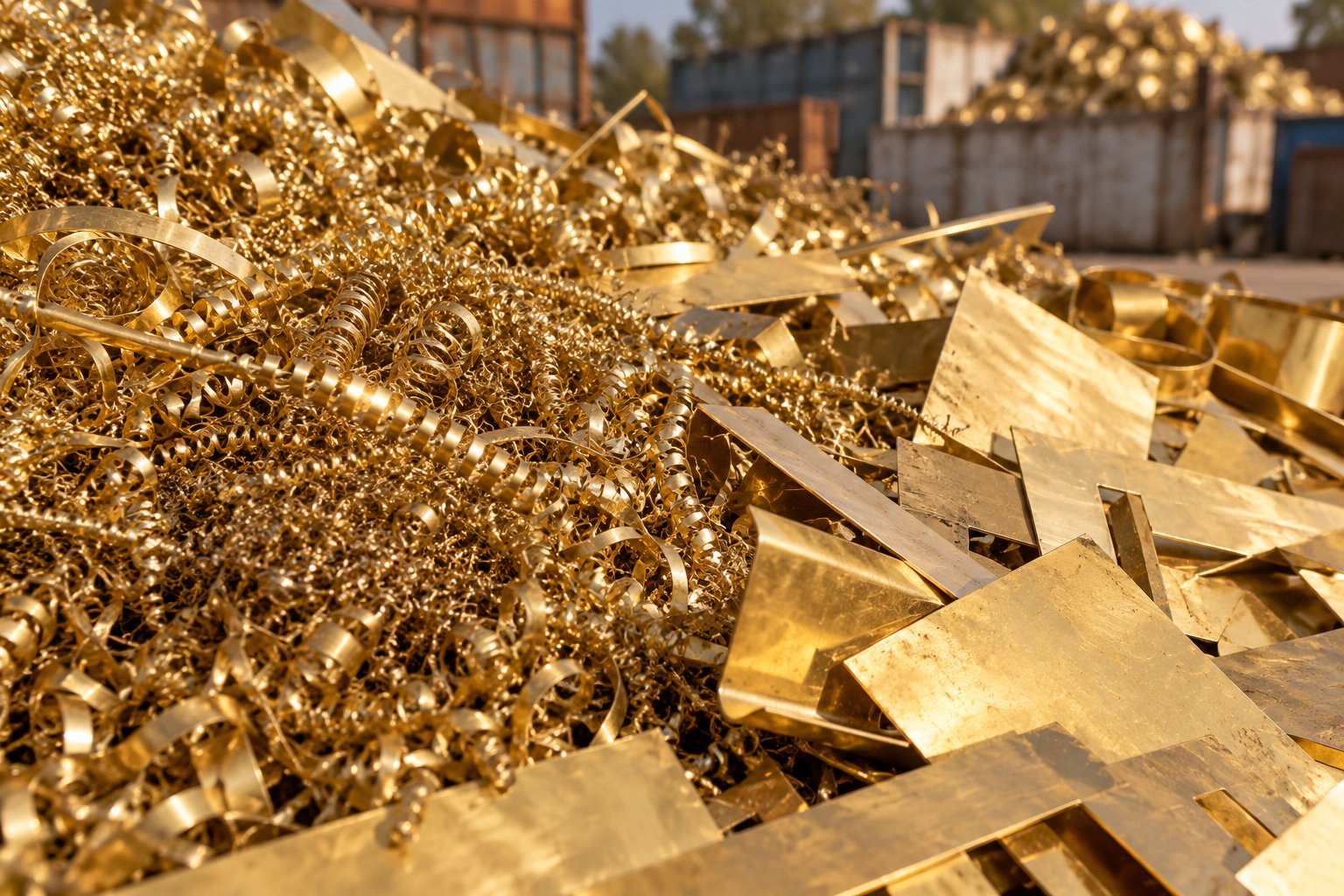
What is brass scrap price today? The short answer
There is no single public "today" price for brass scrap. Recyclers, yards, and smelters negotiate rates individually every day, and those rates depend on the specific alloy mix, how clean the material is, and what local buyers are willing to pay right now. If you search for a live brass scrap price, you will find generic ranges from industry publishers, but they are not the number your local yard will quote when you drive onto the scale. The real price is set at the point of sale, not on a public ticker.
Why there is no fixed brass scrap price today
Unlike copper, which has a widely quoted benchmark on the London Metal Exchange (LME) and COMEX, brass has no single exchange price. Brass is a copper-zinc alloy, and the exact proportions of copper and zinc vary by grade and source. A yellow brass faucet body, a red brass valve, and mixed brass turnings from a machine shop are three different materials with three different values. Because brass is a family of alloys rather than one commodity, the market prices it as a collection of grades, not as a unified contract.
Yards and smelters also price brass based on their own order books. When a foundry has a strong demand for a particular brass grade, nearby yards may bid up that grade. When demand is soft, the same material can sit and the price softens. This is why the phrase "what is brass scrap price today" has no universal answer. The best you can do is understand the variables that move the number, then verify with the buyers who will actually take your material.
What actually sets the rate today: four key variables
Brass alloy mix and grade
Brass is copper-zinc. Different grades contain different ratios of copper to zinc, and some contain lead or other elements for machinability. Common scrap categories include:
- Yellow brass: The most common scrap brass, typically from plumbing fixtures, fittings, and hardware. Higher zinc content than red brass.
- Red brass: Contains more copper and often some tin, giving it a reddish color. Often from valves, pumps, and older plumbing parts. Usually priced higher because of the higher copper content.
- Mixed brass: A blend of yellow, red, and other brass grades. Yards discount mixed loads because they require sorting and carry more risk of contamination.
- Brass turnings and chips: Machining scrap that is often oily, fine, and mixed with other metals. This is the lowest-value form unless it is processed or briquetted.
The alloy mix is the single biggest driver of what your brass is worth. A load of clean red brass will generally earn a higher rate than the same weight of yellow brass, and both will outperform a mixed pile. If you are a small recycler or a machine shop, separating grades before you go to the yard is the most direct way to improve your return.
Cleanliness and preparation
Clean separated brass earns more than mixed or dirty material. "Clean" usually means free of other metals, plastic, rubber, glass, and excessive oil or grease. Dirty brass might include painted or soldered pieces, brass with attached steel screws, or brass turnings soaked in cutting fluid. Yards and smelters must account for the cost of cleaning, sorting, and disposal, so they pay less for contaminated loads.
Practical preparation steps that typically improve your quote:
- Remove steel, aluminum, and plastic attachments.
- Separate yellow brass from red brass whenever possible.
- Keep painted, soldered, and filled brass in a separate lot.
- Drain or spin off excess oil from turnings before packing.
- Bag small fittings separately from large castings.
Cleanliness does not just affect the price per kilogram; it also affects whether a yard will accept the load at all. Many yards reject heavily contaminated brass because of the labor required to sort it.
Local yard demand and buyer network
Brass scrap is a local market. A yard in an area with several brass mills and foundries will generally pay more than a yard in a region with limited buyers. The distance to the end consumer matters because transportation is a real cost. When a yard has a buyer who needs red brass immediately, that yard can bid aggressively for red brass. When that buyer is full, the price can drop in days.
This is why calling three or four yards within a day's drive of your location is more useful than checking an online price index. Each yard will quote based on its own inventory, order book, and logistics. If you are a small recycler, building a relationship with two or three local yards gives you a better sense of the day-to-day range than any single source.
LME copper and zinc benchmarks
Brass is made primarily of copper and zinc, both of which trade on the London Metal Exchange. When the LME copper price moves, brass scrap prices tend to follow, though not in lockstep. Zinc also matters, especially for yellow brass with higher zinc content. Yards and smelters watch these benchmarks as a reference for what they can afford to pay for scrap while still selling finished brass at a profit.
The relationship is not mechanical. A yard may hold its brass price even if copper dips slightly, or may raise it quickly if copper spikes and they need to fill an order. But over weeks and months, the LME copper and zinc trends are a useful gauge of whether brass scrap is generally moving up or down.
Brass vs. bronze: not the same scrap
Brass and bronze are often confused, but they are different alloys with different scrap values and different yard handling. Brass is copper-zinc. Bronze is copper-tin, often with other elements added for specific properties. Bronze often carries a higher copper content and may be priced differently depending on the grade and the buyer.
For the purpose of "what is brass scrap price today," the important point is that you should not mix bronze into your brass load. A mixed brass-bronze load is likely to be downgraded or rejected because the yard has to separate the two. If you are unsure what you have, test a few pieces with a magnet (neither brass nor bronze is magnetic, but attached steel will be) and check the color and weight. When in doubt, ask your yard how they classify the material before you deliver.
How to get a real number for your brass today
Since no public price exists, you have to generate your own local quote. Use this checklist to make the process efficient:
- Prepare and sort: Separate red brass, yellow brass, and dirty or mixed brass into distinct lots.
- Weigh each lot: Knowing the exact weight helps the yard give you a firm number.
- Call local yards: Ask each one for a price on your specific grade and weight. Mention if you have a regular volume.
- Ask about deductions: Some yards apply deductions for oil, attachments, or moisture. Clarify how they handle that.
- Check LME trends: Knowing whether copper and zinc are up or down helps you judge whether a quote is reasonable.
- Compare net payment: Ask whether the quote is per gross kilogram or after deductions, and whether there are any fees.
Turning brass chips and turnings into a better-selling product
Machine shops and small recyclers often struggle with brass turnings and chips. They are bulky, oily, and low-value in their loose form. Many yards either reject them or offer a heavily discounted rate because of the oil content and the low density.
Briquetting is a widely used way to improve the economics of brass chip and turning sales. A briquetting system compacts loose chips into dense, uniform pucks, which reduces volume, makes transport more efficient, and allows the cutting fluid to be recovered. The denser briquettes can often be sold at a higher rate than loose turnings because they are easier to handle and melt. If your shop produces brass chips regularly, processing them on-site can change them from a disposal problem into a saleable product.
For example, the TG-BriqPress 250 is a metal briquetting system designed to compact brass chips and turnings into dense briquettes. According to the manufacturer, it can reduce transport cost by 5-10 times and recover cutting fluid. For shops with a steady stream of brass machining scrap, that combination can make a meaningful difference in what the material is worth at the scale.
Before you invest in briquetting, consider your volume. If you generate only a few kilograms of chips per month, the payback may not justify the equipment. If you produce drums of turnings regularly, briquetting is worth evaluating alongside your current scrap sale terms.
What about shredding and size reduction?
Some brass scrap arrives as large castings, extruded profiles, or assembled parts that need size reduction before sale. A metal shredder can reduce bulk and improve loading density. The TG-LightMetal 80 is a light-duty metal shredder designed to handle brass, aluminum, and similar non-ferrous metals. It uses two 15 kW motors and a PLC control system with automatic reverse to help manage jams. For a small recycler who wants to process brass components before shipping, a shredder can simplify handling and improve the consistency of the material presented to the yard.
Frequently asked questions
Is there a daily brass scrap price I can look up online?
No public daily price exists. Online sources may publish ranges, but they are not the price your local yard will pay. The only reliable number is a quote from a buyer who will accept your material today.
Why is red brass worth more than yellow brass?
Red brass contains more copper, which is the more valuable component in the alloy. Yellow brass has a higher zinc content. Since copper typically trades at a higher value than zinc, red brass scrap generally commands a higher price.
Does clean brass really earn more than dirty brass?
Yes. Clean separated brass earns more than mixed or contaminated material because the yard saves on sorting, cleaning, and disposal. Even a small amount of attached steel or plastic can reduce the grade and the price.
How often do yard prices change?
Prices can change daily or even intraday, depending on the yard's order book and the LME copper and zinc benchmarks. Some yards update quotes every morning; others adjust when they receive a new buying instruction.
Can I mix bronze with my brass scrap?
You can, but it will likely be downgraded or rejected. Bronze is copper-tin, not copper-zinc. Yards prefer to buy them separately because they have different values and different end uses.
Practical next steps
If you want to know what your brass scrap is worth today, start by preparing your material. Separate the grades, remove contaminants, and weigh each lot. Then call two or three local yards and ask for a quote on the specific grade and weight you have. If you generate brass turnings or chips, look into briquetting or shredding to improve density, reduce transport cost, and recover cutting fluid. The more consistent and clean your material, the more likely you are to get a competitive rate.
For shops evaluating metal processing equipment, Tian Gong has been manufacturing since 2008 and operates a 12,000 m² facility with CE marking and ISO 9001 certification. You can review the TG-LightMetal 80 shredder for size reduction or the TG-BriqPress 250 briquetting system for densifying brass chips and turnings.