
Why the Metal Shredder Motor Deserves More Attention Than the Cutting Chamber
Buyers comparing a metal shredder usually start with rotor diameter, knife material, and hourly throughput, then treat the drive unit as a black box. In practice, the metal shredder motor determines whether a TG-2200 Twin-Shaft Metal Shredder actually reaches its rated 80 TPH on mixed scrap, or whether the machine trips out every afternoon on overload. Power rating, starting torque, and drive electronics decide daily uptime more than any other single component, so the motor deserves an equal share of selection attention.
Match Metal Shredder Motor Power to Your Real Material Mix
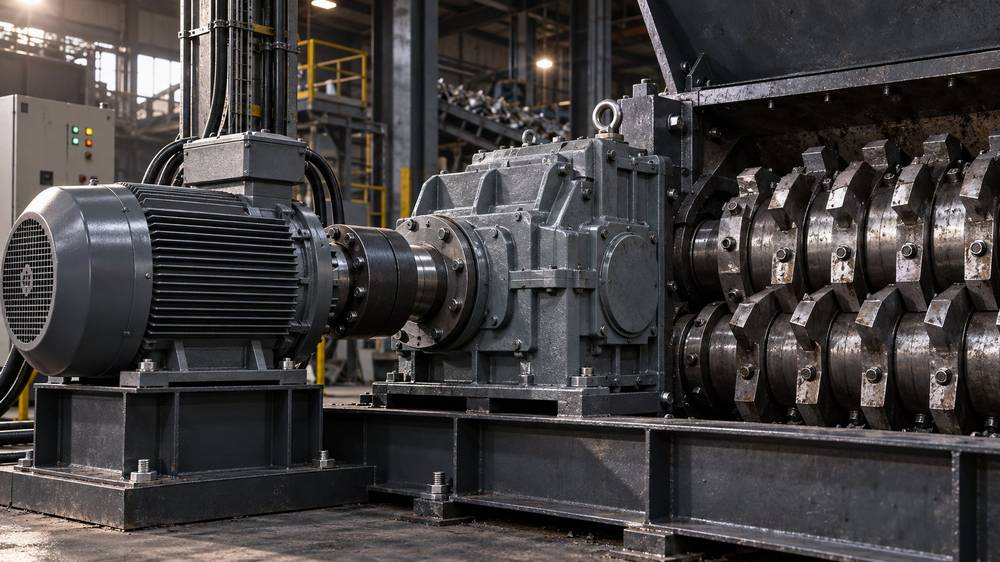
A metal shredder motor is rated in kilowatts or horsepower, but the number only means something against your actual feedstock. The TG-Hammer 800 Heavy-Duty Metal Crusher pairs its 750 kW drive with 500-ton hydraulic compression for automobile bodies and light steel, while the TG-LightMetal 80 Light-Duty Metal Shredder runs on a 2x15 kW twin-shaft drive for sheet steel, aluminum profiles, and cable. Sizing the metal shredder motor against the densest, toughest material you will feed, not your average material, prevents chronic overload and premature bearing wear.
Starting Torque: The Spec Sheet Line Most Buyers Skip
Shredding chambers rarely start empty. A jammed chamber full of dense steel demands extremely high starting torque, which is why heavy-duty machines use slip-ring motors, high-torque induction designs, or a soft-start ramp that lets the shafts reverse and clear the blockage. The TG-SingleShaft 200 Single-Shaft Metal Shredder includes PLC-controlled auto reverse for exactly this reason. Ask every supplier for the metal shredder motor starting torque curve, not just the nameplate rating, and confirm the reverse-clear function before you compare prices.
Variable Frequency Drives and 50/60 Hz Compatibility
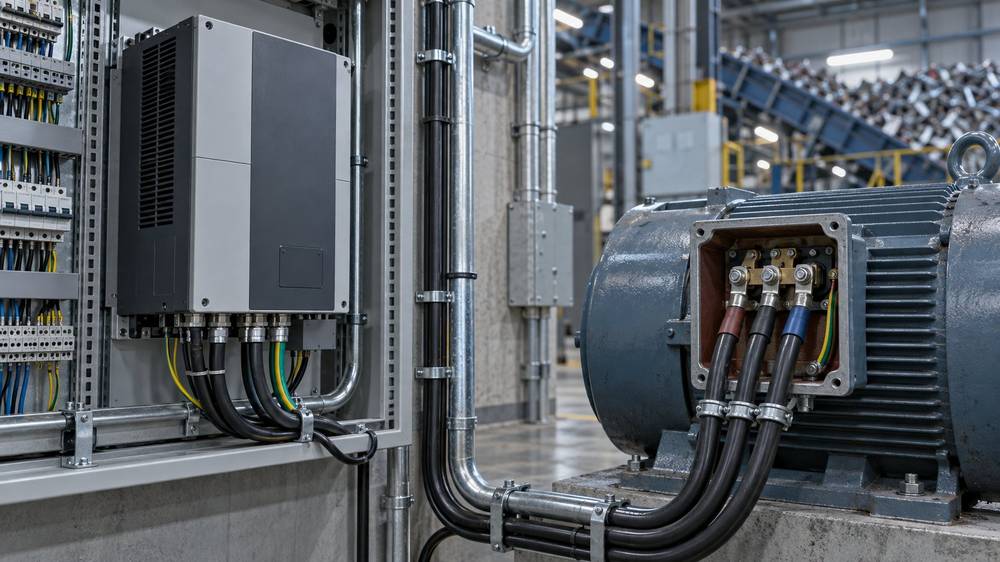
A variable frequency drive changes how a metal shredder motor behaves under load. Reducing shaft speed during a high-torque event lowers current draw and protects gear teeth, while a VFD also smooths inrush current on start-up. A VFD also has limits worth checking: below base frequency, cooling on a standard self-cooled motor drops while torque demand stays high, so sustained low-speed shredding may require a separately ventilated motor or an oversize frame. Ask whether the VFD is standard equipment or a chargeable option on the specific model. For export buyers, frequency compatibility is equally concrete: several TG machines, including the TG-DrumShred 60 Steel Drum and Container Shredder, ship configurable for both 50 Hz and 60 Hz plant electrical systems. Confirming frequency and voltage before the metal shredder motor is ordered avoids a costly on-site rework.
Cooling, Duty Cycle and Real-World Continuous Operation
A recycling yard rarely stops for eight hours, so duty cycle matters as much as peak power. Ask whether the metal shredder motor is specified for continuous duty (S1) and how the unit is cooled. Three concrete items give the answer shape: insulation class (Class F or Class H is typical for heavy-duty windings), the permitted ambient temperature range on the nameplate, and the protection rating (a sealed IP55 or higher enclosure keeps conductive metal dust out of the windings). If your workshop regularly exceeds 35°C, or the motor sits in an enclosed dust-heavy corner, ask the supplier to confirm the thermal margin in writing, and request forced ventilation or a larger frame when the margin is thin. A metal shredder motor that overheats by mid-shift will cost you more in lost tonnage than the price difference of the correct cooling option.
Practical Checklist Before You Order
- Confirm the metal shredder motor power against your densest feedstock, not your average scrap.
- Request the starting torque curve and verify auto-reverse clearing on twin-shaft machines such as the TG-2200 Twin-Shaft Metal Shredder.
- Match voltage and 50/60 Hz frequency to your plant supply before ordering.
- Check whether a variable frequency drive is included or available as an option, and what low-speed cooling limits apply.
- Verify S1 continuous duty rating, insulation class, IP rating and cooling method for your local ambient temperature.
Electrical data worth gathering before you ask for a configuration: supply voltage and phase, plant frequency, incoming capacity or transformer size, planned starting method, and the ambient temperature at the motor location. The TianGong (TG Crusher) engineering team uses these inputs, together with the five checks above, to confirm the correct metal shredder motor configuration for your yard. The TG-SingleShaft 200 Single-Shaft Metal Shredder and other TG machine pages list the drive options available for each model, so send your material mix, feed size, and electrical data to receive a configuration matched to your yard.