Single-Shaft Shredding for Homogeneous Metal Streams
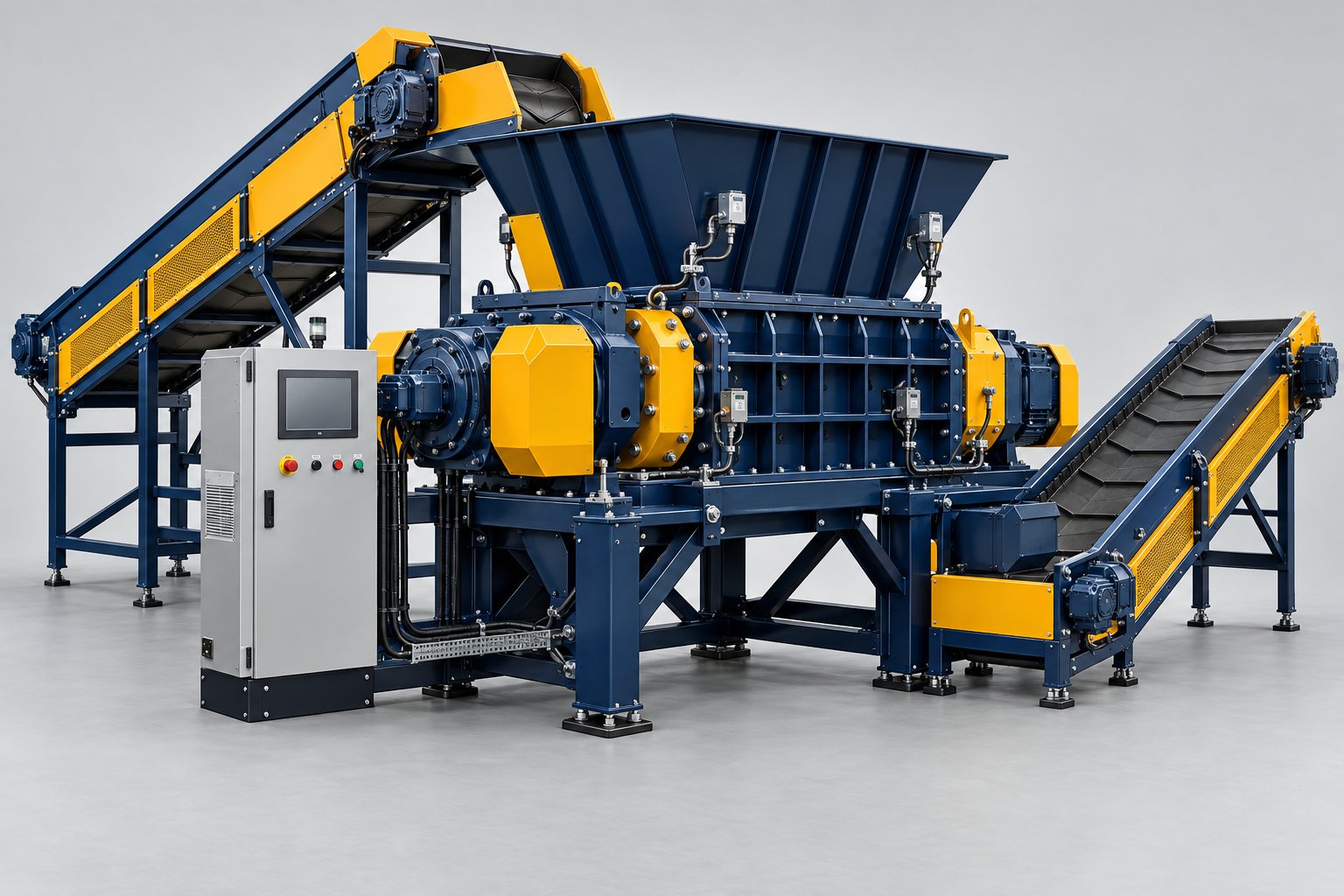
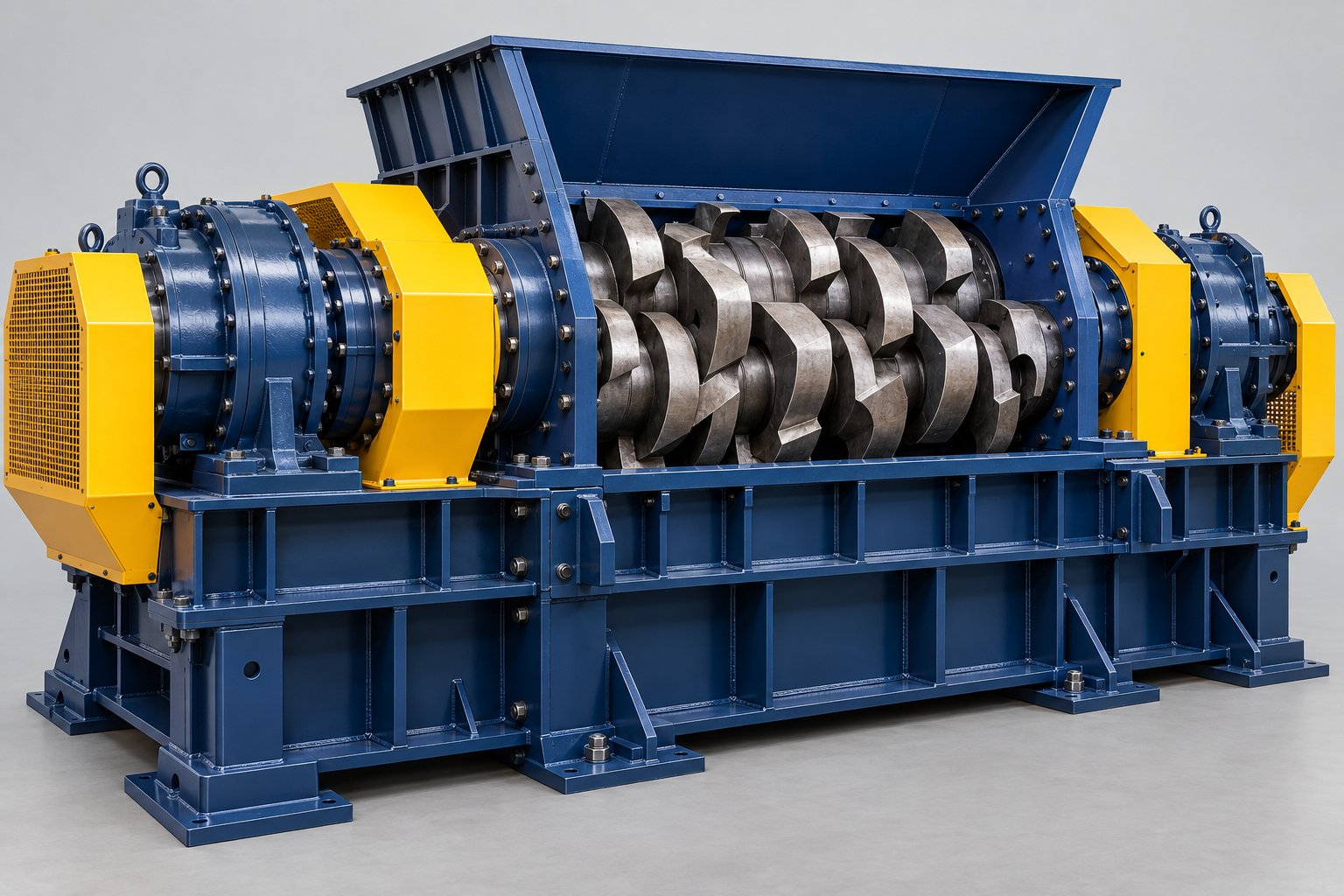
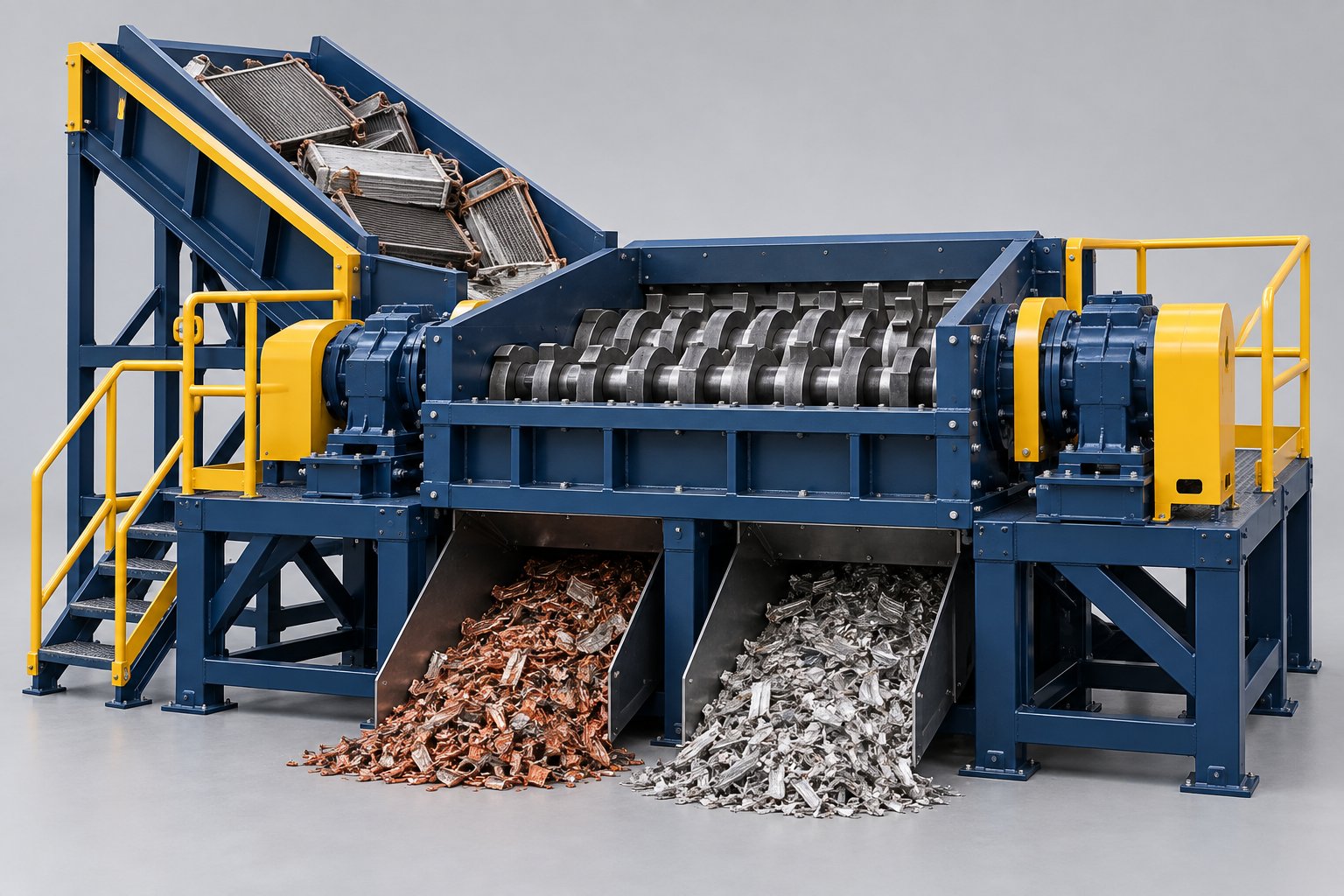
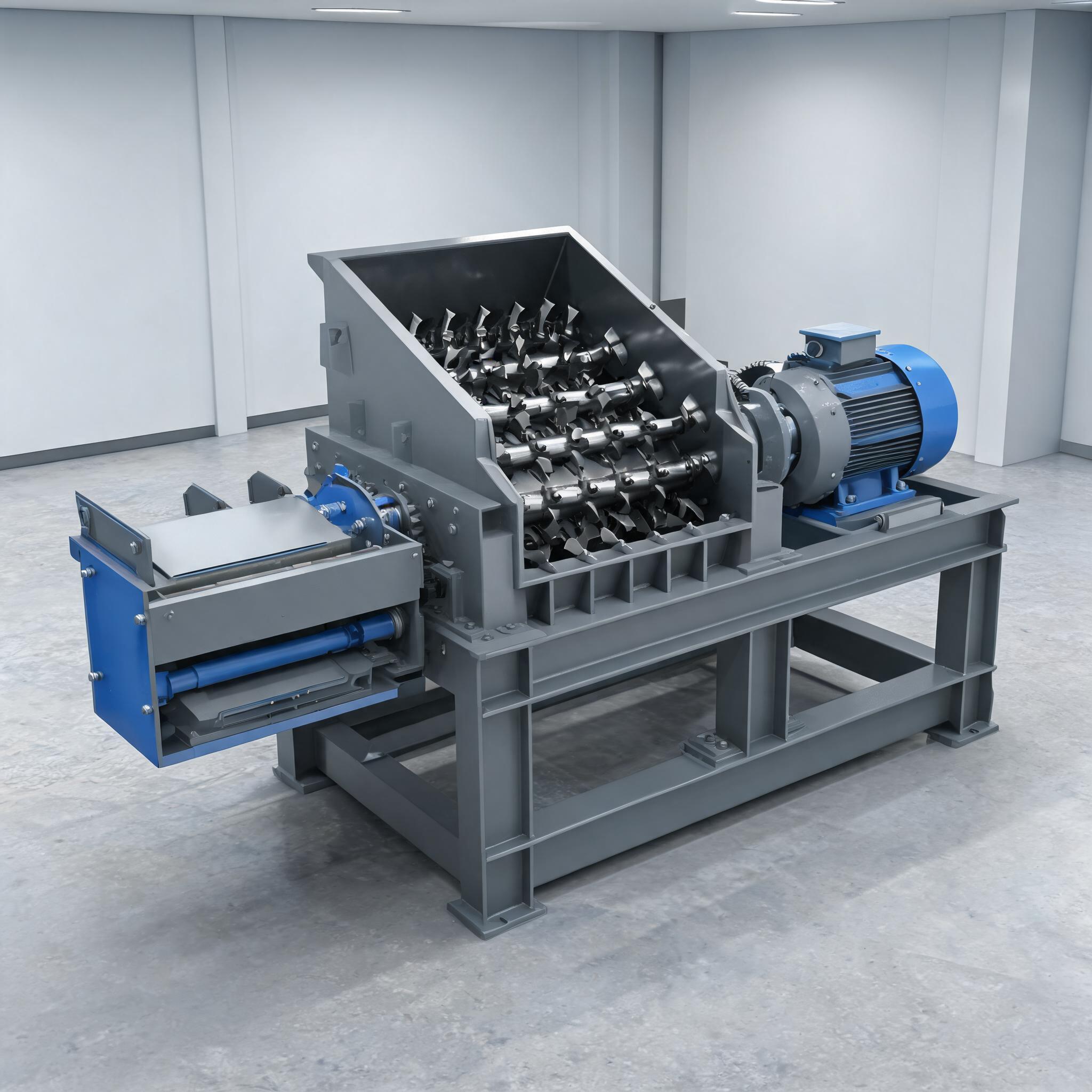
The TG-SingleShaft 200 is a single-shaft metal shredder designed for processors handling relatively homogeneous feed streams-light aluminum profiles, copper wire, brass turnings, thin sheet offcuts-where the priority is precise particle size control rather than the brute tearing capacity of a twin-shaft unit. A horizontal rotor carrying bolted cutting knives rotates against a fixed bed knife, shearing material that is pushed into the cutting zone by a hydraulic ram. A screen beneath the rotor controls discharge size, holding material in the chamber until it passes through the selected perforation.
Key Specifications
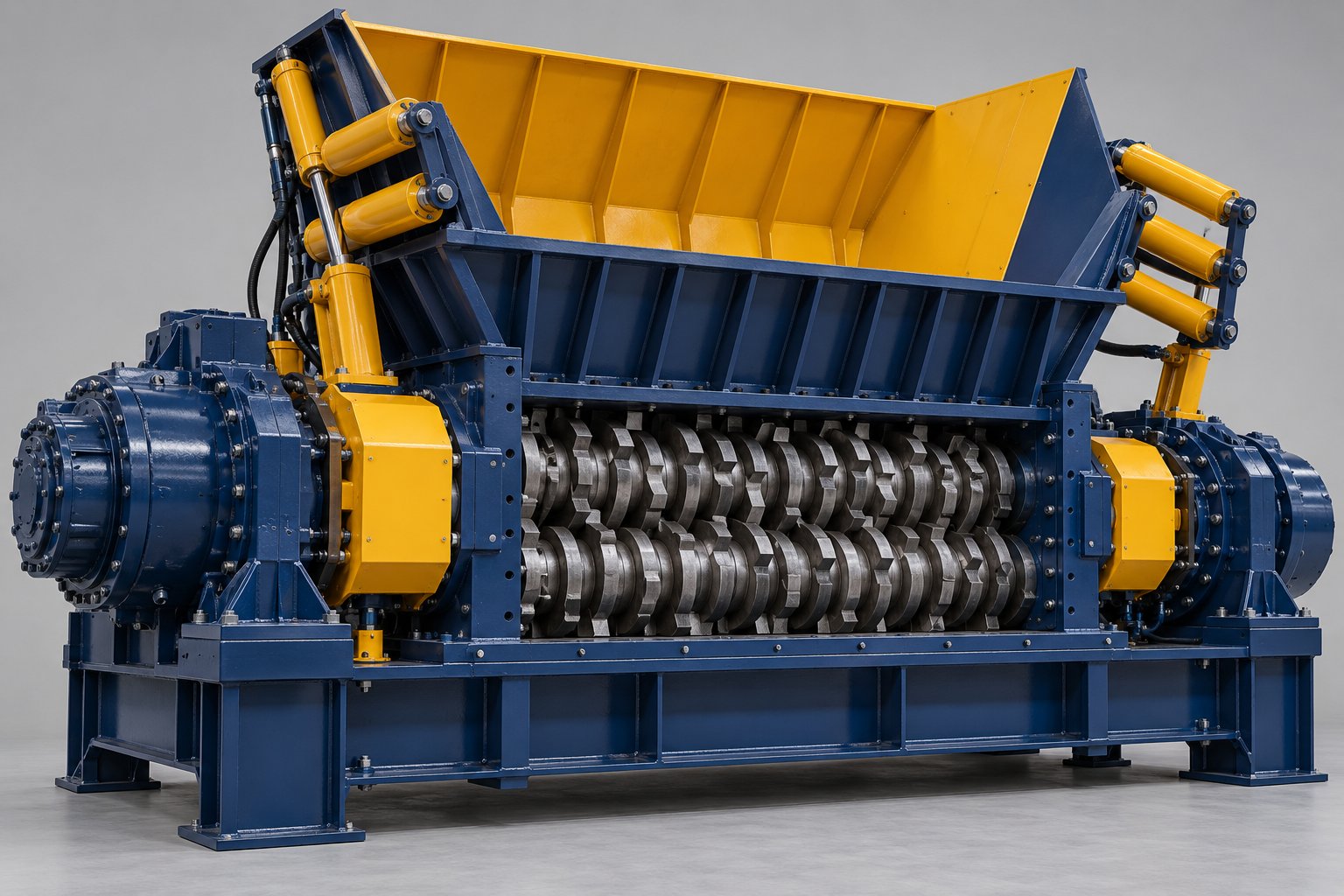
The hydraulic feed ram pushes material against the rotor at a controlled rate, which prevents the surge-loading that causes motor overloads on gravity-fed machines. The ram stroke is adjustable, allowing the operator to tune feed pressure for different material types-denser copper and brass require slower ram advance than light aluminum to avoid rotor stall.
When to Choose Single-Shaft Over Twin-Shaft
Single-shaft shredders occupy a different operating niche than twin-shaft units. The twin-shaft design excels at gripping and tearing mixed, irregular scrap such as auto bodies and white goods, where feed geometry varies unpredictably. The single-shaft design is better suited to processing streams that are already somewhat uniform in shape-aluminum extrusion offcuts from extrusion plants, copper wire bundles from cable recycling, brass turnings from machining shops, and stamped sheet skeletal waste from stamping operations.
The advantage of the single-shaft configuration is particle size consistency. Because material passes through a screen before discharge, the output fraction is controlled to a narrow range. Twin-shaft shredders discharge whatever falls through the shaft gap, producing wider size variation. For buyers feeding downstream equipment such as briquetting presses, granulators, or smelting furnaces that require consistent charge geometry, the single-shaft's screened output reduces the need for secondary sizing.
Cutting System and Maintenance
The rotor carries bolted D-type or V-type cutting knives made from hardened tool steel, depending on material type. The bed knife is adjustable for cutting clearance and is the primary wear item alongside the rotor knives. Both are bolt-on replacements that can be changed without removing the rotor assembly. Knife clearance should be checked weekly and reset after each sharpening cycle.
- Rotor knives: hardened tool steel, D-type or V-type profile, bolt-on replacement
- Bed knife: adjustable clearance, bolted, replaceable without rotor removal
- Screen: bolted perforated plate, available in 10, 15, 20, 30, and 40 mm
- Side liners: Hardox wear plates, bolted, no welding needed
Hydraulic Feed Ram and Material Handling
The hydraulic ram is the key difference between this machine and a gravity-fed granulator. With light materials such as aluminum profiles and copper wire, gravity feed often results in material floating or bridging above the rotor without engaging the cutting knives. The ram applies positive downward and lateral pressure, keeping the feedstock in continuous contact with the rotor. Ram pressure and stroke speed are set through the PLC based on material density and feed rate.
For wire and cable bundles, the ram also prevents the rotor from grabbing and wrapping long strands around the shaft-a common failure mode on machines without controlled feed. If wrapping does occur, the ram reverses automatically to release the tangle before resuming forward feed.
Application Boundaries
The TG-SingleShaft 200 is rated for non-ferrous and light-gauge materials. It is not designed for dense ferrous stock such as engine blocks, railway rail, or thick-walled structural sections-these exceed the rotor torque rating and will stall the machine or damage cutting knives. For mixed scrap streams containing ferrous and non-ferrous, a twin-shaft shredder such as the TG-2200 is more appropriate as the primary size-reduction stage, with the single-shaft unit positioned downstream for final sizing.
Confirm your material hardness, maximum stock thickness, and whether the feed contains tramp ferrous before ordering. A magnetic separator upstream of the single-shaft feed is recommended if the material stream may contain ferrous contamination.
Drive and Electrical Configuration
The 55 kW motor is available in 50 Hz or 60 Hz configuration. The machine includes a PLC control system that manages ram stroke, rotor speed, and automatic reverse on overload. Soft-start is standard; VFD is available as an option for applications requiring variable rotor speed to optimize cutting performance across different material types. The control panel can be configured to CE or UL standards depending on the destination market.
Compliance and Certification
The frame and guarding carry CE marking per the Machinery Directive. The manufacturing facility operates under ISO 9001 quality management. For North American installations, UL-listed control panel and ANSI/OSHA guarding configuration are available on request. Confirm local electrical code requirements and any language-specific documentation needs at inquiry.
Buyer FAQ
Request a Detailed Proposal
To prepare an accurate quotation, include your typical feed material type and hardness, maximum stock thickness, target output particle size, required throughput, site power supply (voltage and frequency, 50 Hz or 60 Hz), and whether your feed stream may contain ferrous contamination. Mention any specific certification requirements for your region.
Request product details