Purpose-Built Shredding for Aluminum Swarf and Turnings
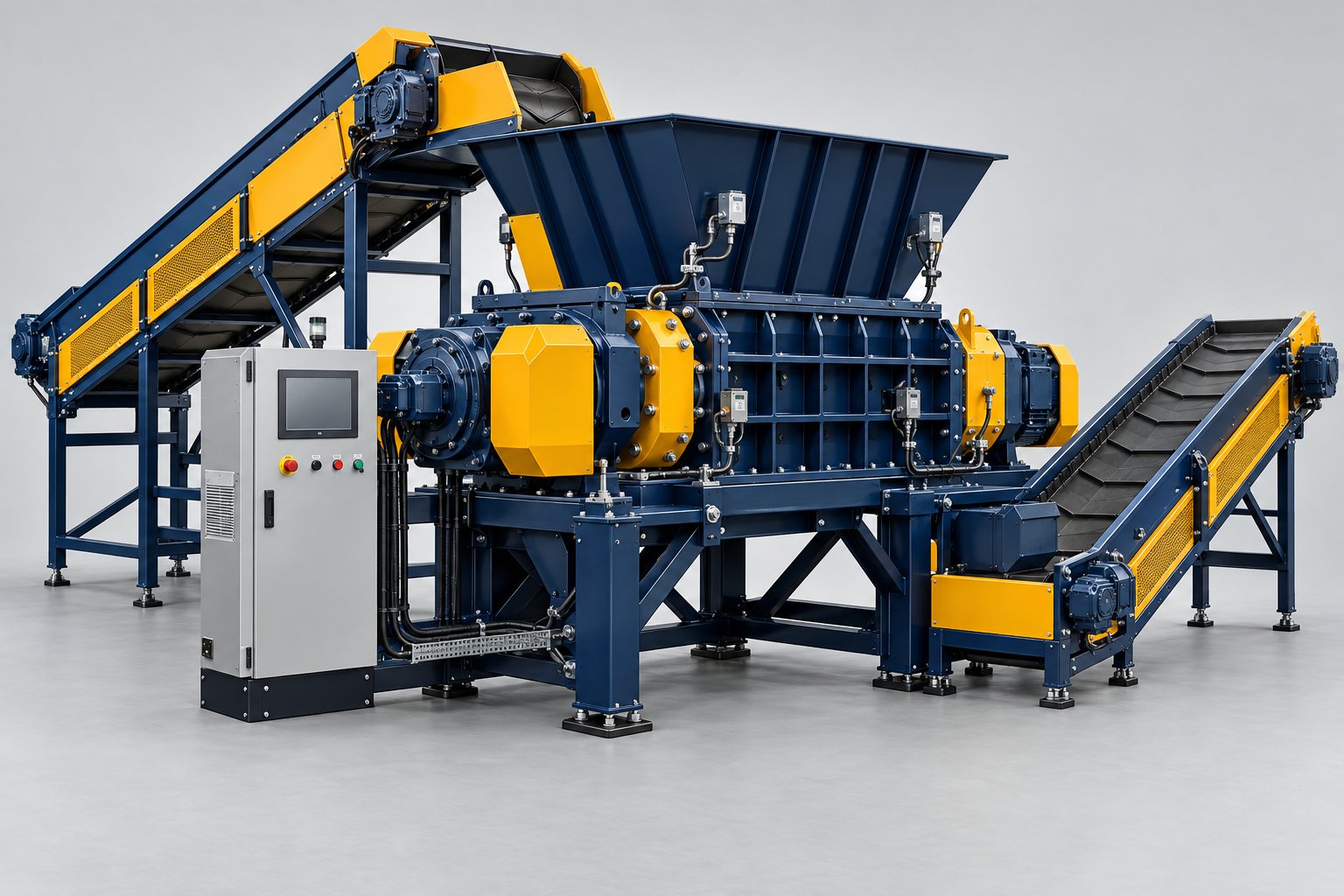
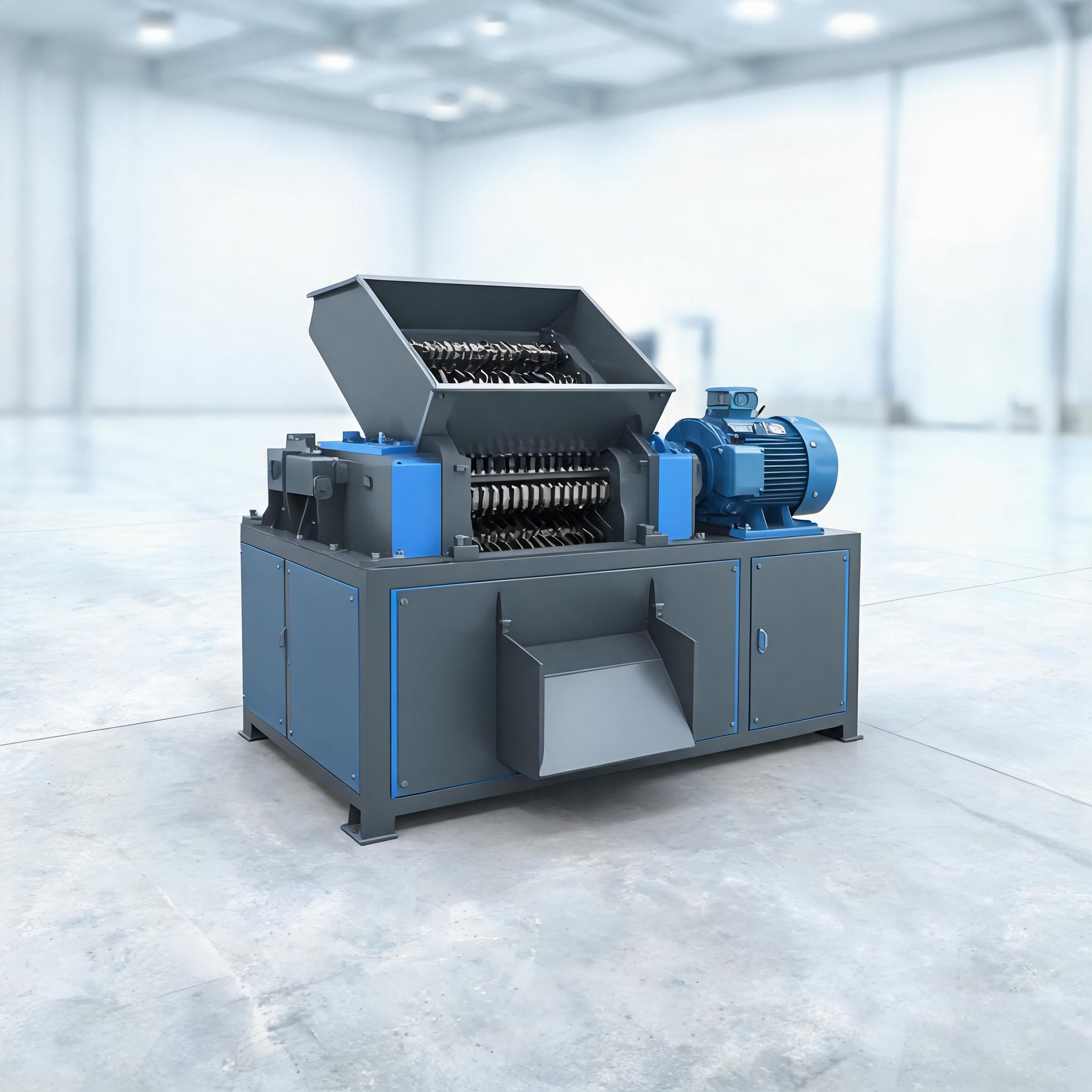
The TG-AluShred 120 is a twin-shaft shredder engineered specifically for aluminum machining waste-aluminum turnings, borings, chips, and swarf generated by CNC machining centers, milling operations, and metalworking facilities. Unlike general-purpose scrap shredders designed for bulky mixed feed, this machine is optimized for the flow characteristics of loose, stringy, and nest-forming aluminum swarf that tends to bridge, tangle, and compact unevenly in standard shredder hoppers.
Key Specifications
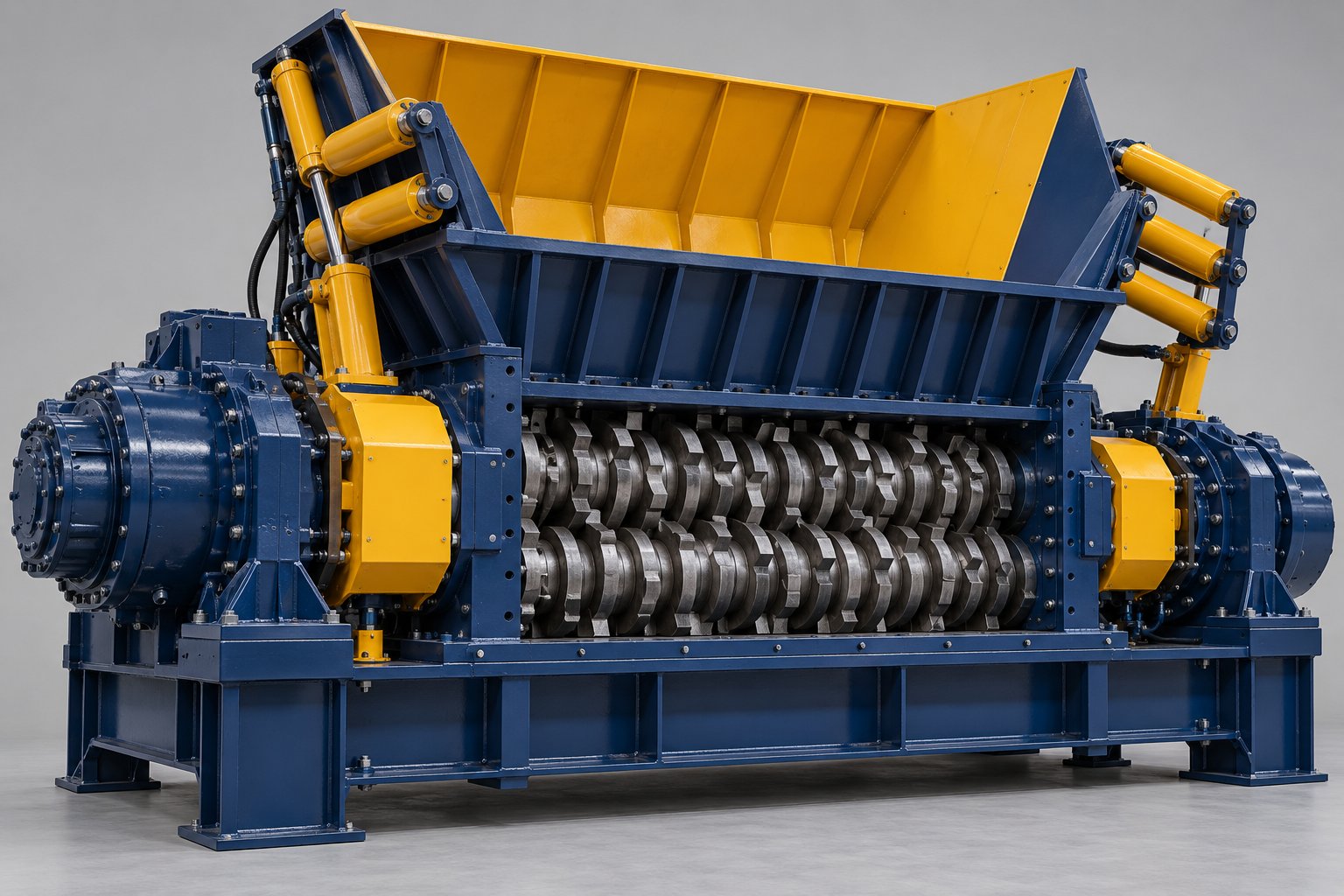
The inclined hopper design uses gravity assist to move loose chips and turnings into the cutting chamber without the bridging that occurs in vertical hoppers. The twin shafts rotate at low speed with high torque, shearing rather than impact-cutting, which prevents the aluminum from work-hardening and welding-a common problem when high-speed cutting tools generate frictional heat that fuses aluminum chips into solid masses.
Why Aluminum Swarf Needs a Dedicated Shredder
Aluminum machining waste presents unique handling challenges that general-purpose scrap shredders are not designed to address:
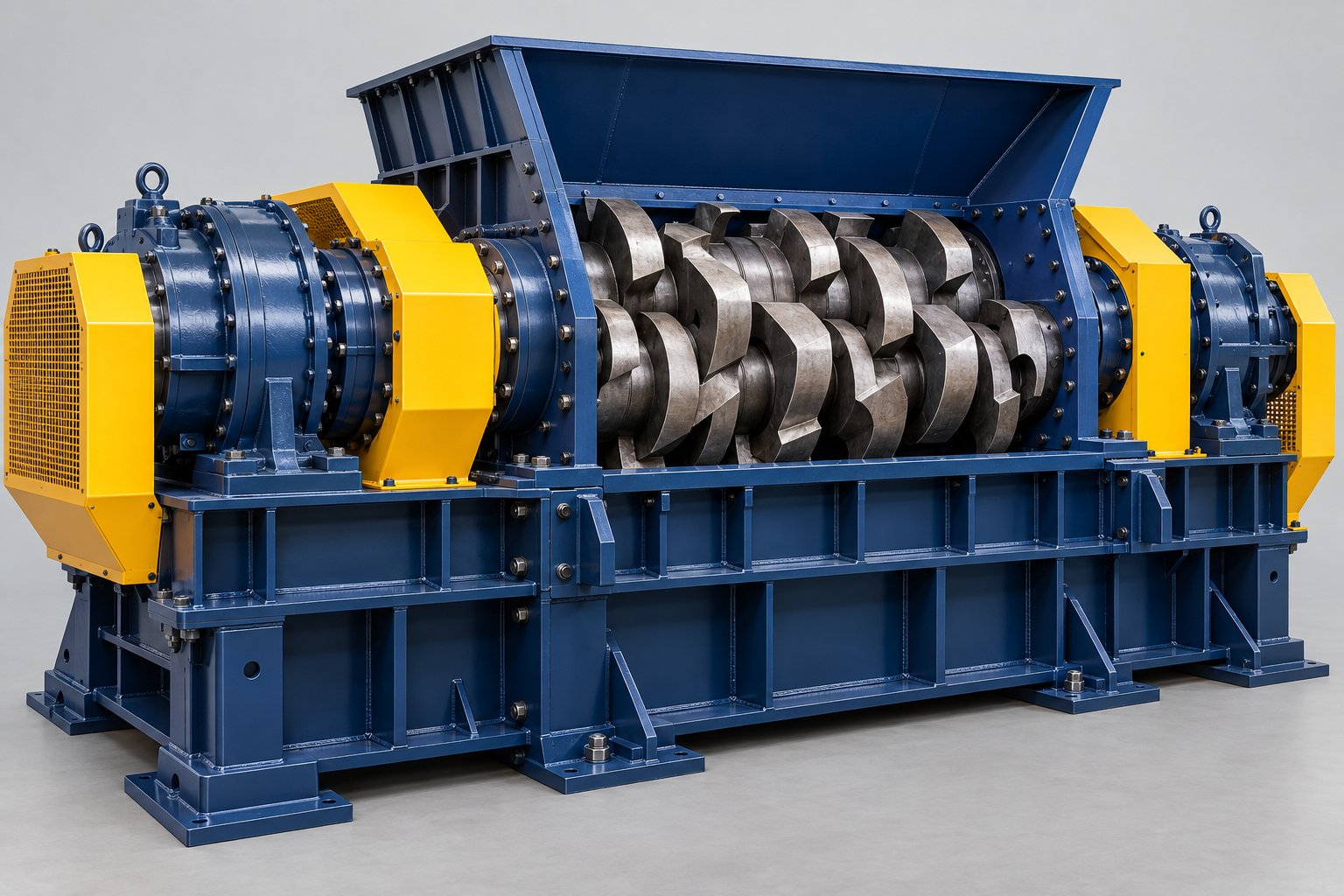
- Nesting and tangling: Long, stringy turnings from lathe operations wrap around shafts and rotors, causing jams. The TG-AluShred 120 uses hooked cutting discs that grip and sever long strands before they can wrap.
- Compaction and welding: Under high-speed impact, aluminum chips generate frictional heat that causes them to weld together into solid lumps. The low-speed shearing action of the twin shafts keeps heat generation low.
- Contamination: Swarf from machining operations often carries cutting fluid, coolant residue, and tramp steel from tooling. The machine's cutting discs handle contaminated feed without clogging, and a discharge screen ensures output is uniform for downstream processing.
- Bulk density variation: Loose aluminum chips have very low bulk density (0.2–0.5 t/m³). The shredder densifies the material through size reduction, making it easier to handle, transport, and charge into remelting furnaces.
Cutting System Design
The cutting shafts carry bolted hook-style cutting discs manufactured from hardened alloy steel. The hook profile is specifically shaped to grab and pull stringy turnings into the cutting gap rather than letting them ride on top of the shafts. Discs are individually replaceable, and the shaft design allows tool changes without removing the shaft assemblies from the machine.
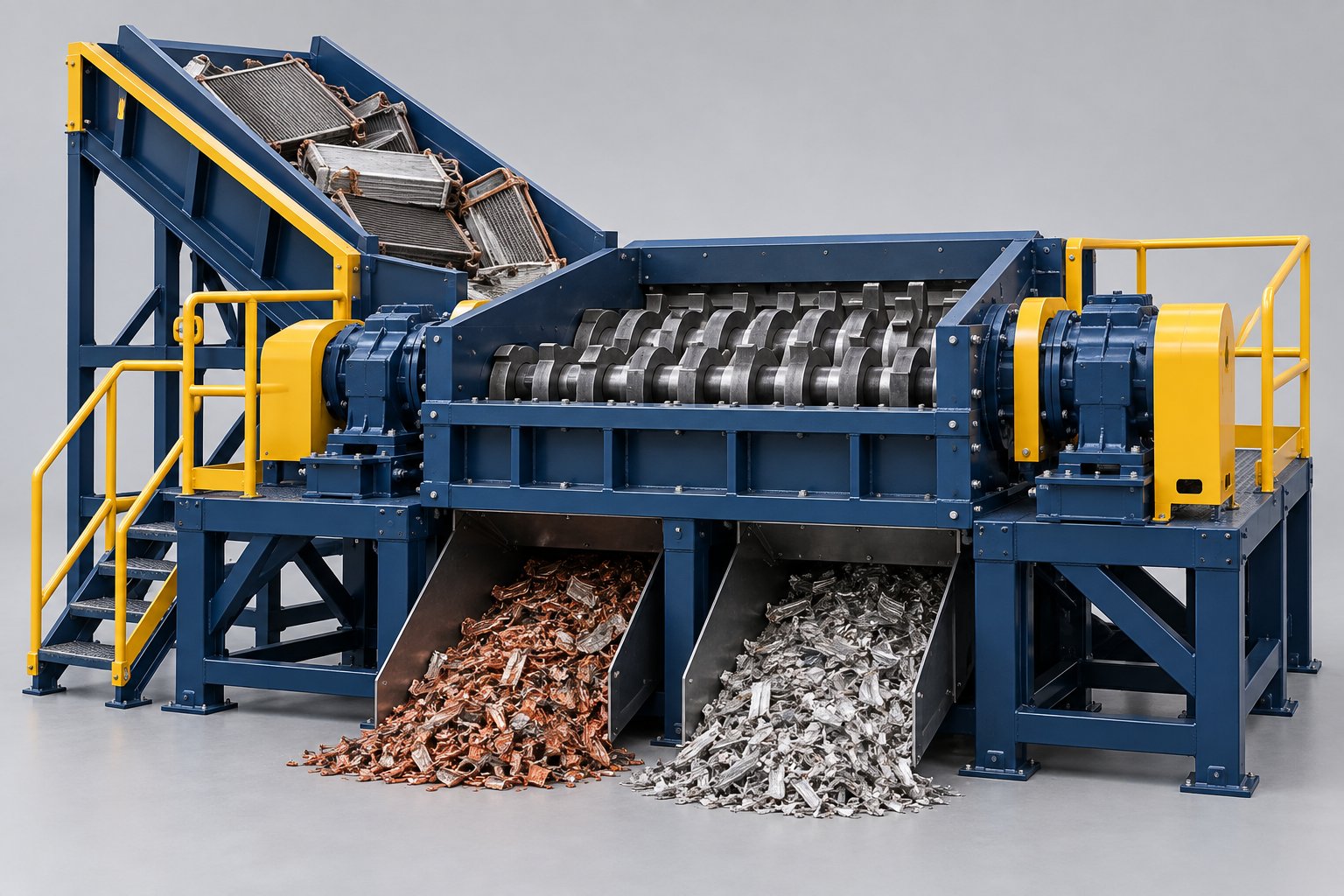
A discharge screen beneath the cutting chamber controls output particle size. For aluminum swarf destined for briquetting, a finer screen produces uniform chips that press cleanly. For direct remelting, a coarser screen is used since the furnace accepts a wider size range. Screens are bolted and can be changed in under 30 minutes.
Coolant and Contaminant Management
Aluminum swarf from machining operations typically arrives wet with cutting fluid or coolant. The TG-AluShred 120 is designed with sealed shaft bearings and a drain point in the cutting chamber base to allow liquid drainage during processing. For facilities that recover cutting fluid, the drained liquid can be collected and recycled through a filtration system.
Tramp ferrous contamination-wear inserts, broken tool tips, steel chips from mixed machining-is a common issue in aluminum swarf. The low-speed shearing action does not generate sparks that could ignite residual coolant vapors, but a magnetic separator should still be installed downstream to remove ferrous contaminants before the aluminum enters briquetting or remelting.
Application Scope
The TG-AluShred 120 handles:
- Aluminum turnings and borings from CNC lathe and milling operations
- Aluminum chips and swarf from drilling, tapping, and grinding
- Aluminum plate and sheet offcuts up to 4 mm thickness
- Aluminum extrusion short ends and cutoff waste
The machine is not rated for solid aluminum ingots, large castings, or dense aluminum blocks-these should be processed on a heavier-duty shredder. Similarly, magnesium turnings present a fire hazard and should not be processed on this machine without prior hazard assessment and appropriate fire suppression systems.
Drive and Electrical Configuration
The two 18.5 kW motors are available in 50 Hz or 60 Hz configuration. The PLC control system monitors motor load and automatically reverses shaft rotation when torque exceeds the set threshold, clearing jams without operator intervention. Soft-start is standard. The control panel can be configured to CE or UL standards.
Compliance and Certification
The machine frame and guarding carry CE marking per the Machinery Directive. The manufacturing facility operates under ISO 9001 quality management. UL-listed control panel configuration is available for North American buyers on request.
Buyer FAQ
Request a Detailed Proposal
To prepare an accurate quotation, include your typical swarf type (turnings, chips, mixed), estimated monthly volume, moisture/coolant content, target output particle size, site power supply (50 Hz or 60 Hz), and whether you need the shredder integrated with a briquetting press or magnetic separator. Mention any specific certification requirements for your region.
Request product details