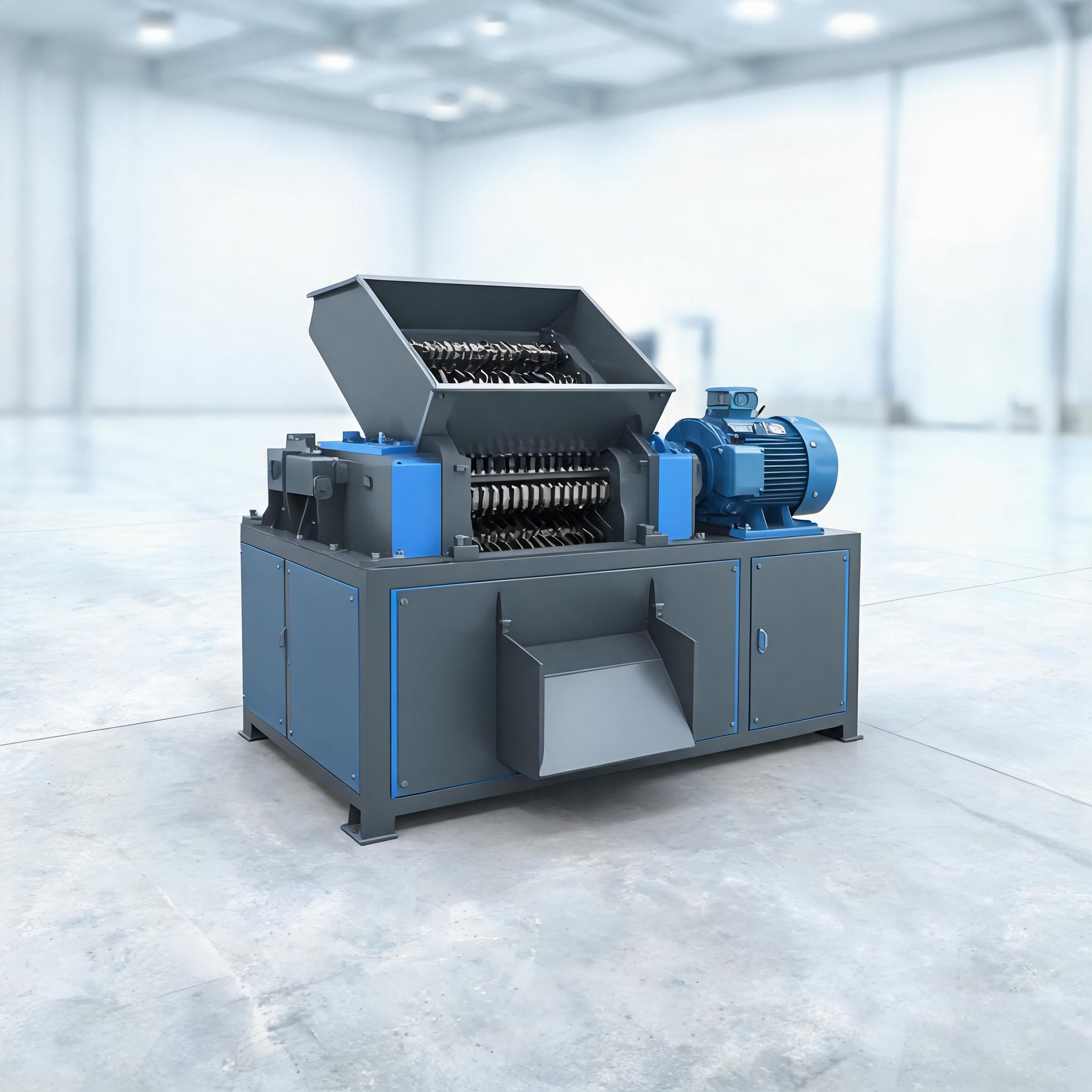
Pencincangan Khusus untuk Skrap dan Tatal Aluminium
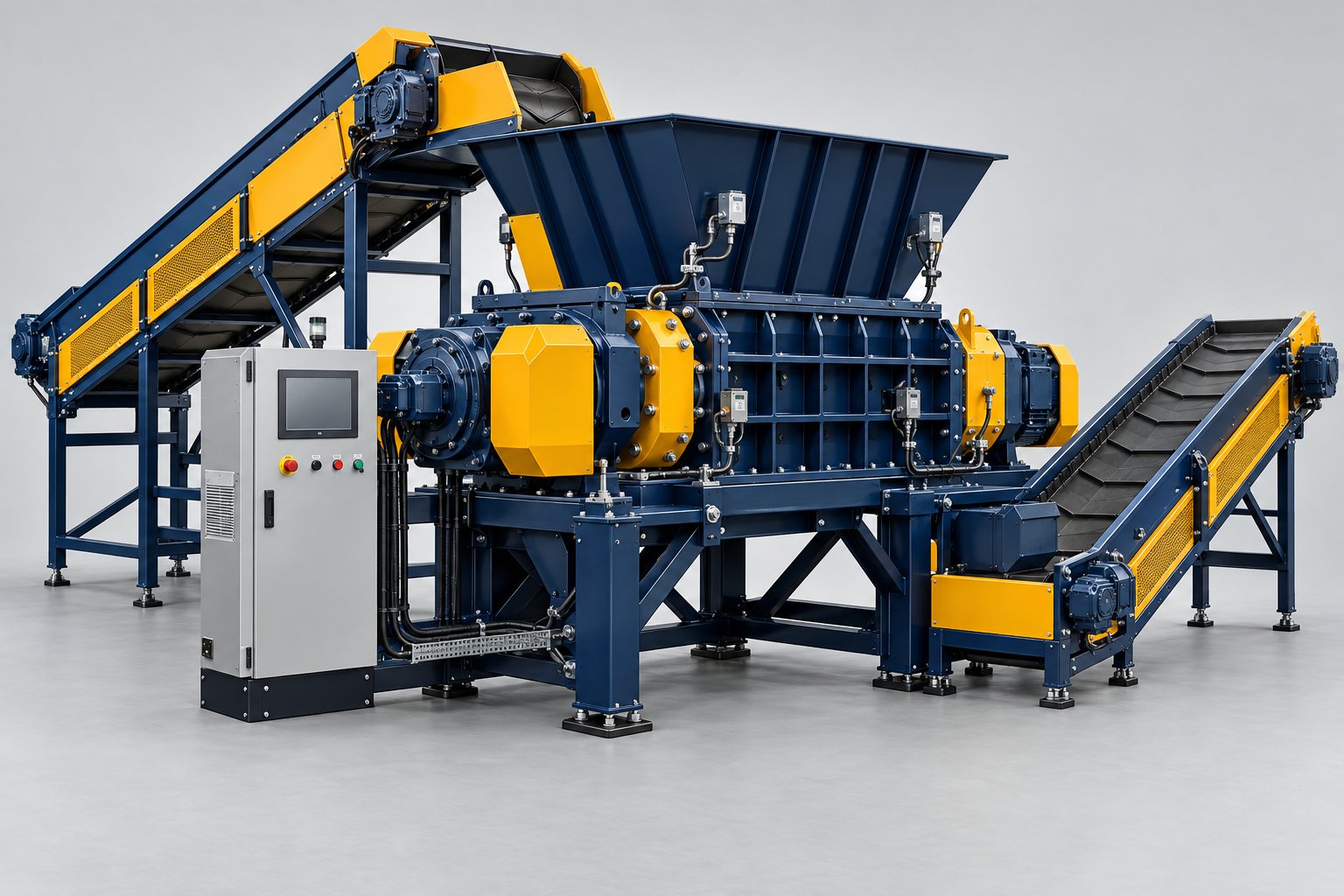
TG-AluShred 120 ialah pencincang dwi-aci yang direka khusus untuk sisa pemesinan aluminium - tatal, gerudi, cip, dan skrap yang dihasilkan oleh pusat pemesinan CNC, operasi pengilangan, dan kemudahan kerja logam. Tidak seperti pencincang skrap tujuan umum yang direka untuk suapan bercampur besar, mesin ini dioptimumkan untuk ciri aliran skrap aluminium longgar, berserabut, dan membentuk sarang yang cenderung untuk membentuk jambatan, tersangkut, dan memadat tidak sekata dalam corong pencincang standard.
Spesifikasi Utama
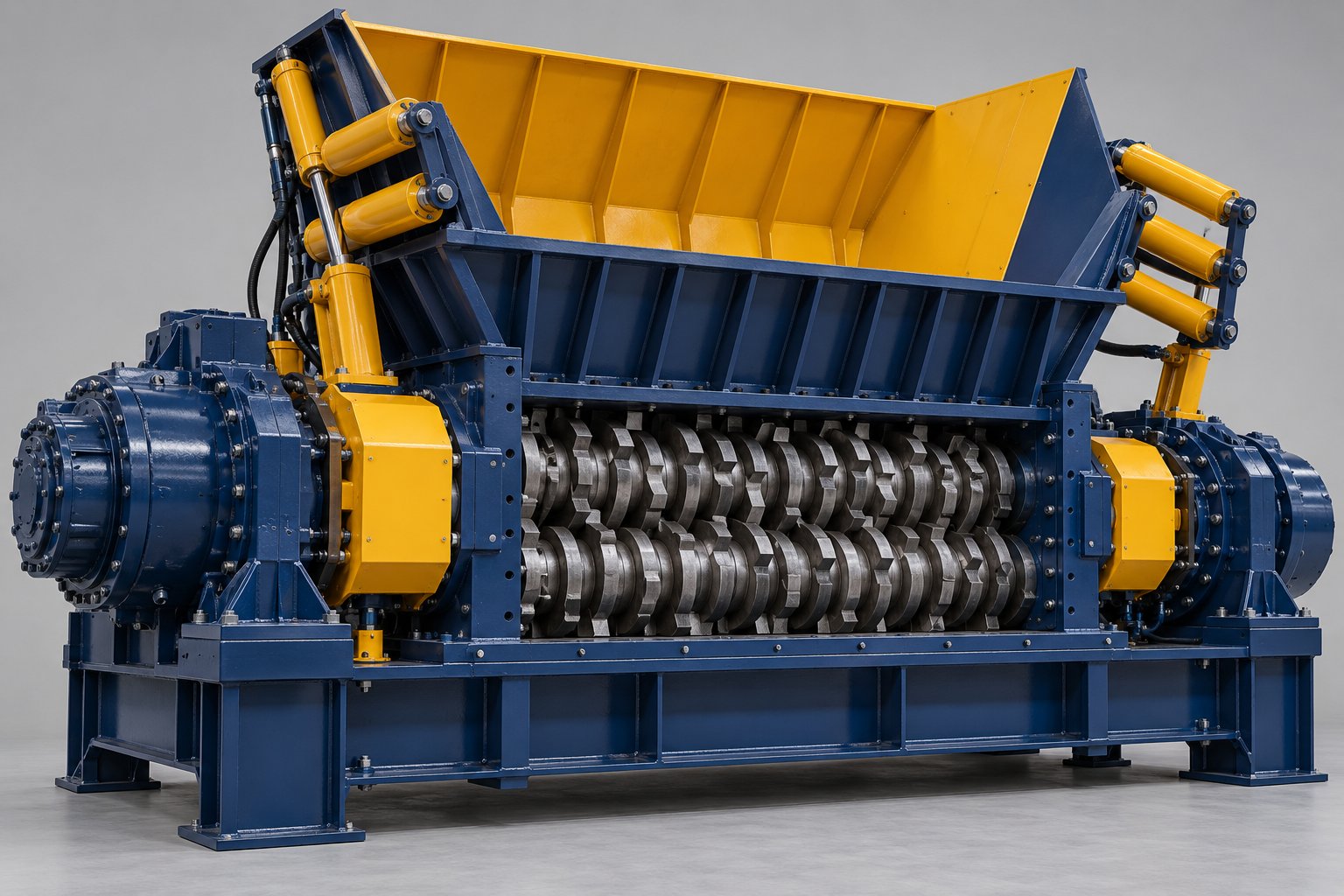
Reka bentuk corong condong menggunakan bantuan graviti untuk menggerakkan cip dan tatal longgar ke dalam ruang pemotongan tanpa pembentukan jambatan yang berlaku dalam corong menegak. Dwi aci berputar pada kelajuan rendah dengan tork tinggi, mencukur daripada memotong hentaman, yang menghalang aluminium daripada pengerasan kerja dan melekat - masalah biasa apabila alat pemotong berkelajuan tinggi menjana haba geseran yang mencantumkan cip aluminium menjadi jisim pepejal.
Mengapa Skrap Aluminium Memerlukan Pencincang Khusus
Sisa pemesinan aluminium menimbulkan cabaran pengendalian unik yang tidak direka untuk ditangani oleh pencincang skrap tujuan umum:
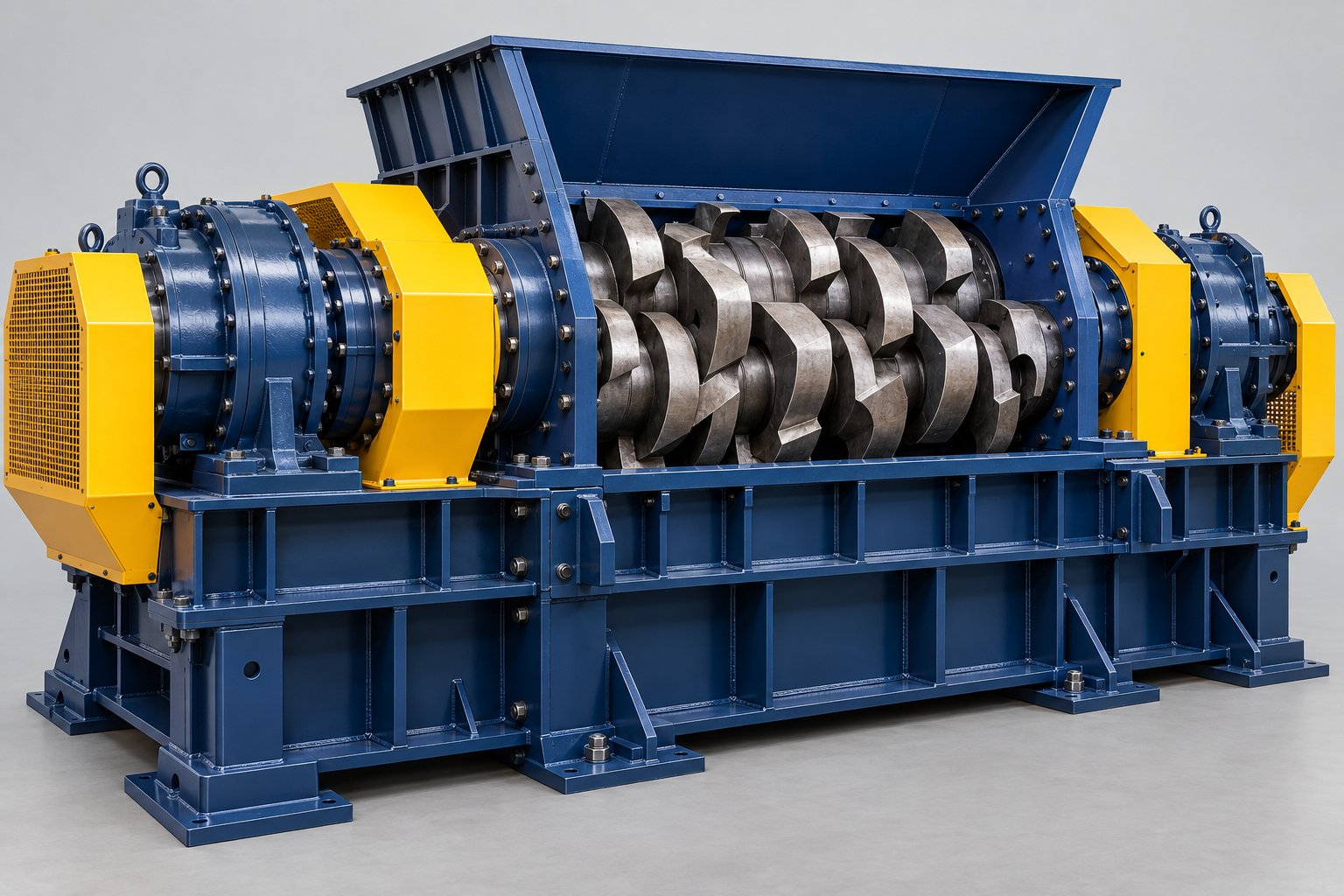
- Pembentukan sarang dan pembalutan: Tatal panjang berserabut daripada operasi pelarik membalut sekitar aci dan rotor, menyebabkan kesesakan. TG-AluShred 120 menggunakan cakera pemotong bercangkuk yang mencengkam dan memotong helaian panjang sebelum ia boleh membalut.
- Pemadatan dan pelekatan: Di bawah hentaman kelajuan tinggi, cip aluminium menjana haba geseran yang menyebabkan ia melekat bersama menjadi ketulan pepejal. Tindakan ricih kelajuan rendah dwi aci mengekalkan penjanaan haba rendah.
- Pencemaran: Skrap daripada operasi pemesinan selalunya membawa cecair pemotong, sisa penyejuk, dan keluli asing daripada perkakas. Cakera pemotong mesin mengendalikan suapan tercemar tanpa tersumbat, dan skrin pelepasan memastikan keluaran seragam untuk pemprosesan hiliran.
- Variasi ketumpatan pukal: Cip aluminium longgar mempunyai ketumpatan pukal yang sangat rendah (0.2–0.5 t/m³). Pencincang memadatkan bahan melalui pengurangan saiz, menjadikannya lebih mudah dikendalikan, diangkut, dan dimasukkan ke dalam relau lebur semula.
Reka Bentuk Sistem Pemotongan
Aci pemotong membawa cakera pemotong jenis cangkuk yang dibolt diperbuat daripada keluli aloi dikeraskan. Profil cangkuk dibentuk khusus untuk mencengkam dan menarik tatal berserabut ke dalam jurang pemotongan daripada membiarkannya berada di atas aci. Cakera boleh diganti secara individu, dan reka bentuk aci membolehkan pertukaran alat tanpa mengeluarkan pemasangan aci daripada mesin.
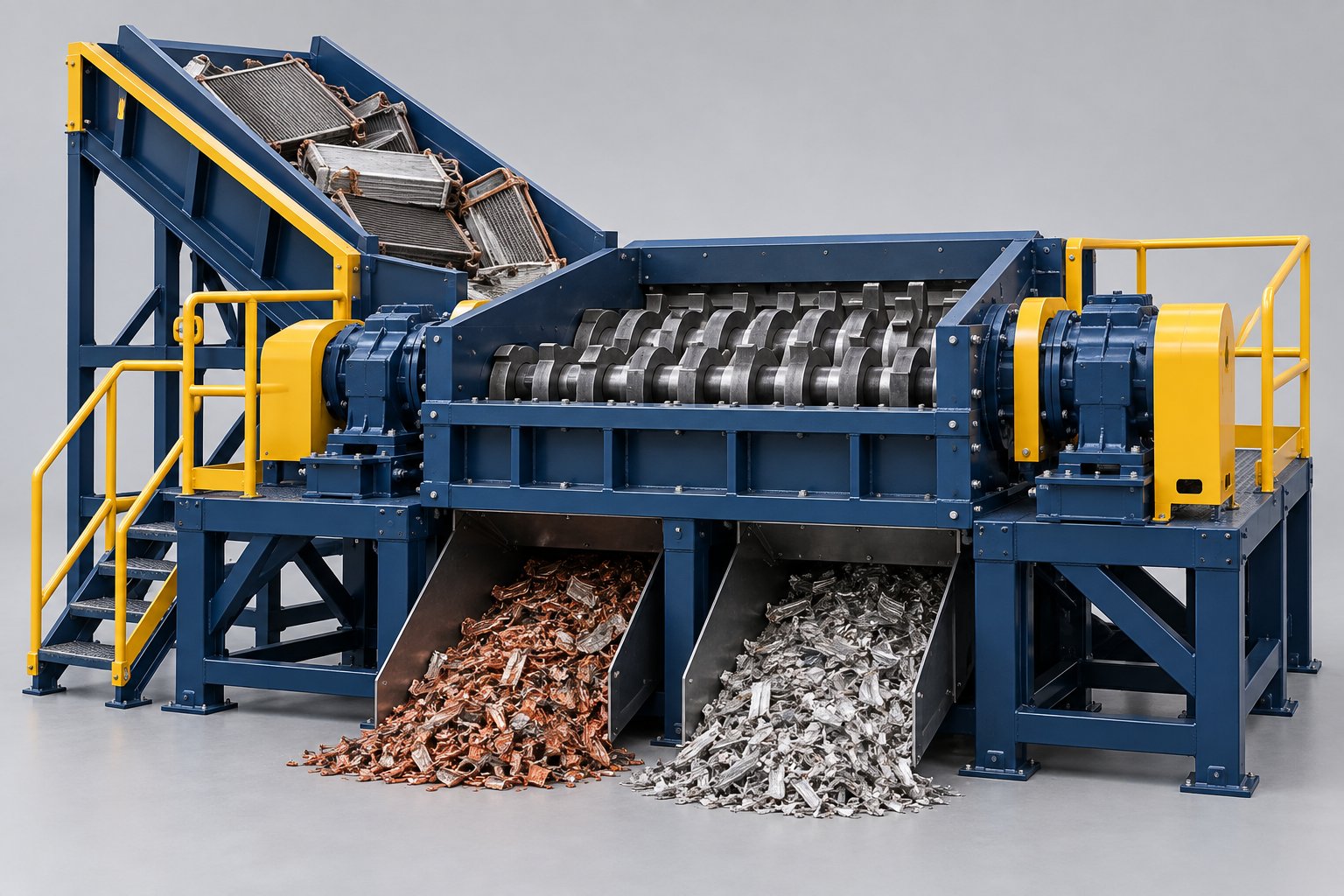
Skrin pelepasan di bawah ruang pemotongan mengawal saiz zarah keluaran. Untuk skrap aluminium yang ditujukan untuk pembriketan, skrin yang lebih halus menghasilkan cip seragam yang menekan dengan bersih. Untuk peleburan semula langsung, skrin yang lebih kasar digunakan kerana relau menerima julat saiz yang lebih luas. Skrin dibolt dan boleh ditukar dalam masa kurang 30 minit.
Pengurusan Penyejuk dan Bahan Pencemar
Skrap aluminium daripada operasi pemesinan biasanya tiba basah dengan cecair pemotong atau penyejuk. TG-AluShred 120 direka dengan galas aci tertutup dan titik saliran di dasar ruang pemotongan untuk membolehkan pengaliran cecair semasa pemprosesan. Untuk kemudahan yang memulihkan cecair pemotong, cecair yang disalirkan boleh dikumpul dan dikitar semula melalui sistem penapisan.
Pencemaran ferus asing - sisipan haus, hujung alat pecah, cip keluli daripada pemesinan bercampur - adalah isu biasa dalam skrap aluminium. Tindakan ricih kelajuan rendah tidak menjana percikan yang boleh menyalakan wap penyejuk sisa, tetapi pemisah magnet masih perlu dipasang di hiliran untuk membuang bahan pencemar ferus sebelum aluminium memasuki pembriketan atau peleburan semula.
Skop Aplikasi
TG-AluShred 120 mengendalikan:
- Tatal dan gerudi aluminium daripada operasi pelarik dan pengilangan CNC
- Cip dan skrap aluminium daripada penggerudian, penorehan, dan pengisaran
- Potongan plat dan kepingan aluminium sehingga ketebalan 4 mm
- Hujung pendek penyemperitan aluminium dan sisa pemotongan
Mesin ini tidak dinilai untuk jongkong aluminium pepejal, tuangan besar, atau blok aluminium padat - ini harus diproses pada pencincang tugas berat. Begitu juga, tatal magnesium menimbulkan bahaya kebakaran dan tidak boleh diproses pada mesin ini tanpa penilaian bahaya terlebih dahulu dan sistem pemadam kebakaran yang sesuai.
Konfigurasi Pemacu dan Elektrik
Dua motor 18.5 kW tersedia dalam konfigurasi 50 Hz atau 60 Hz. Sistem kawalan PLC memantau beban motor dan secara automatik membalikkan putaran aci apabila tork melebihi ambang yang ditetapkan, membersihkan kesesakan tanpa campur tangan pengendali. Pemula lembut adalah standard. Panel kawalan boleh dikonfigurasikan mengikut piawaian CE atau UL.
Pematuhan dan Pensijilan
Rangka mesin dan pelindung membawa tanda CE mengikut Arahan Jentera. Kemudahan pembuatan beroperasi di bawah pengurusan kualiti ISO 9001. Konfigurasi panel kawalan tersenarai UL tersedia untuk pembeli Amerika Utara atas permintaan.
Soalan Lazim Pembeli
Minta Cadangan Terperinci
Untuk menyediakan sebut harga yang tepat, sertakan jenis tatal biasa anda (tatal, cip, campuran), anggaran isipadu bulanan, kandungan lembapan/penyejuk, saiz zarah keluaran sasaran, bekalan kuasa tapak (50 Hz atau 60 Hz), dan sama ada anda memerlukan pencincang disepadukan dengan penekan briket atau pemisah magnetik. Nyatakan sebarang keperluan pensijilan khusus untuk rantau anda.
Minta butiran produk