Pencincangan Aci Tunggal untuk Aliran Logam Homogen
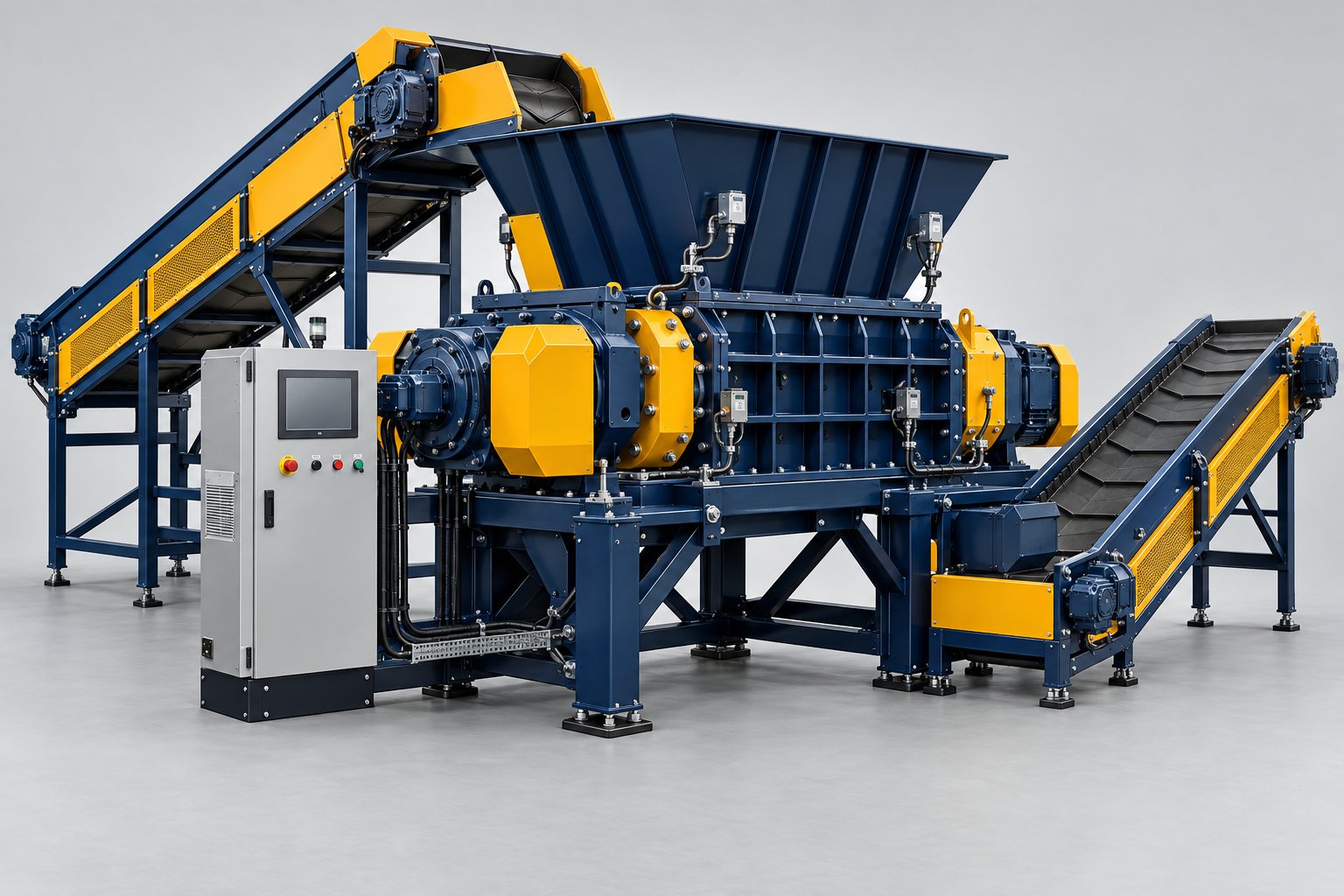
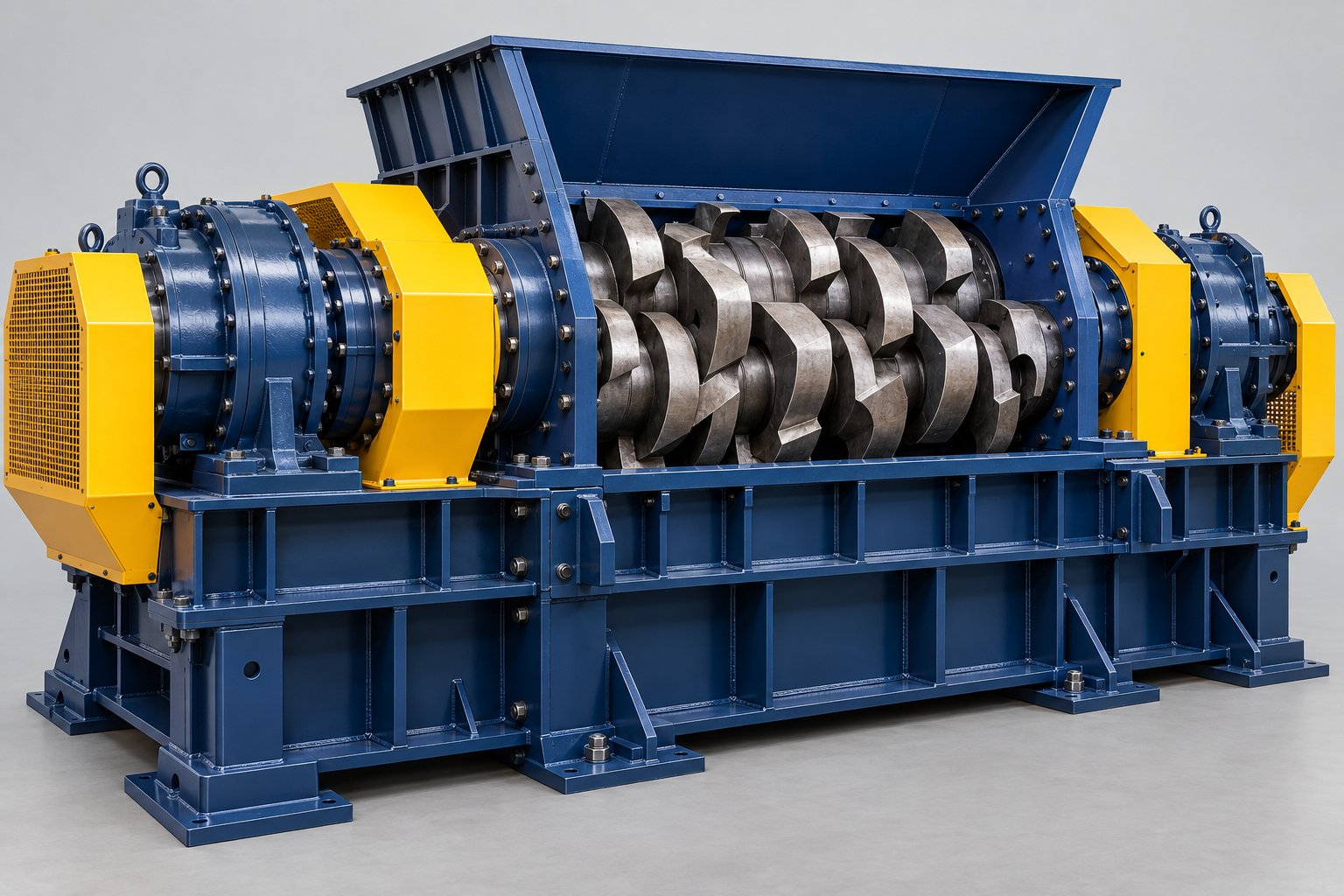
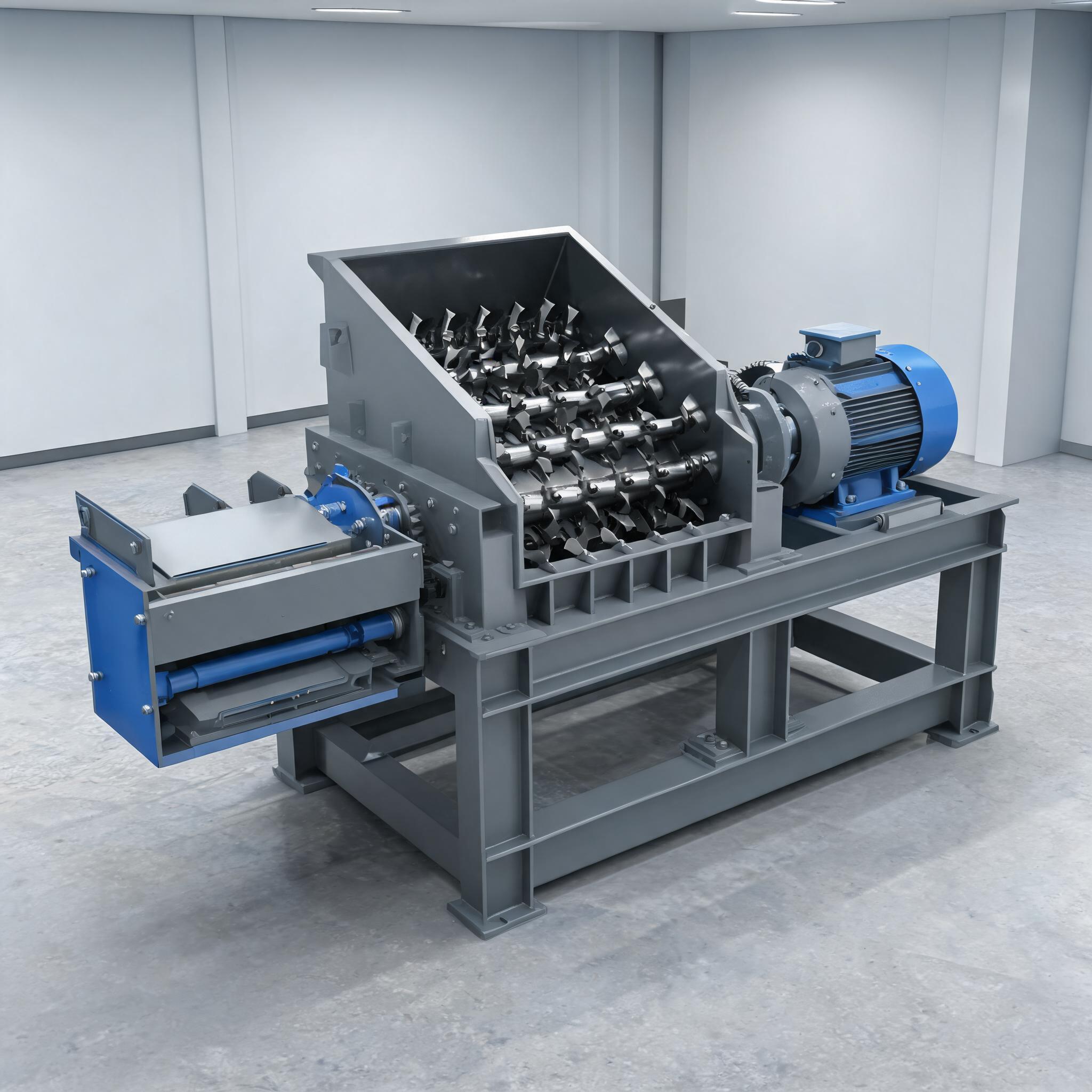
TG-SingleShaft 200 ialah pencincang logam aci tunggal yang direka untuk pemproses yang mengendalikan aliran suapan yang agak homogen - profil aluminium ringan, wayar tembaga, tatal loyang, potongan kepingan nipis - di mana keutamaan ialah kawalan saiz zarah yang tepat dan bukannya kapasiti koyakan kasar unit aci berkembar. Rotor mendatar yang membawa pisau pemotong berbolted berputar terhadap pisau katil tetap, mericih bahan yang ditolak ke zon pemotongan oleh ram hidraulik. Skrin di bawah rotor mengawal saiz nyahcas, menahan bahan dalam ruang sehingga ia melalui perforasi yang dipilih.
Spesifikasi Utama
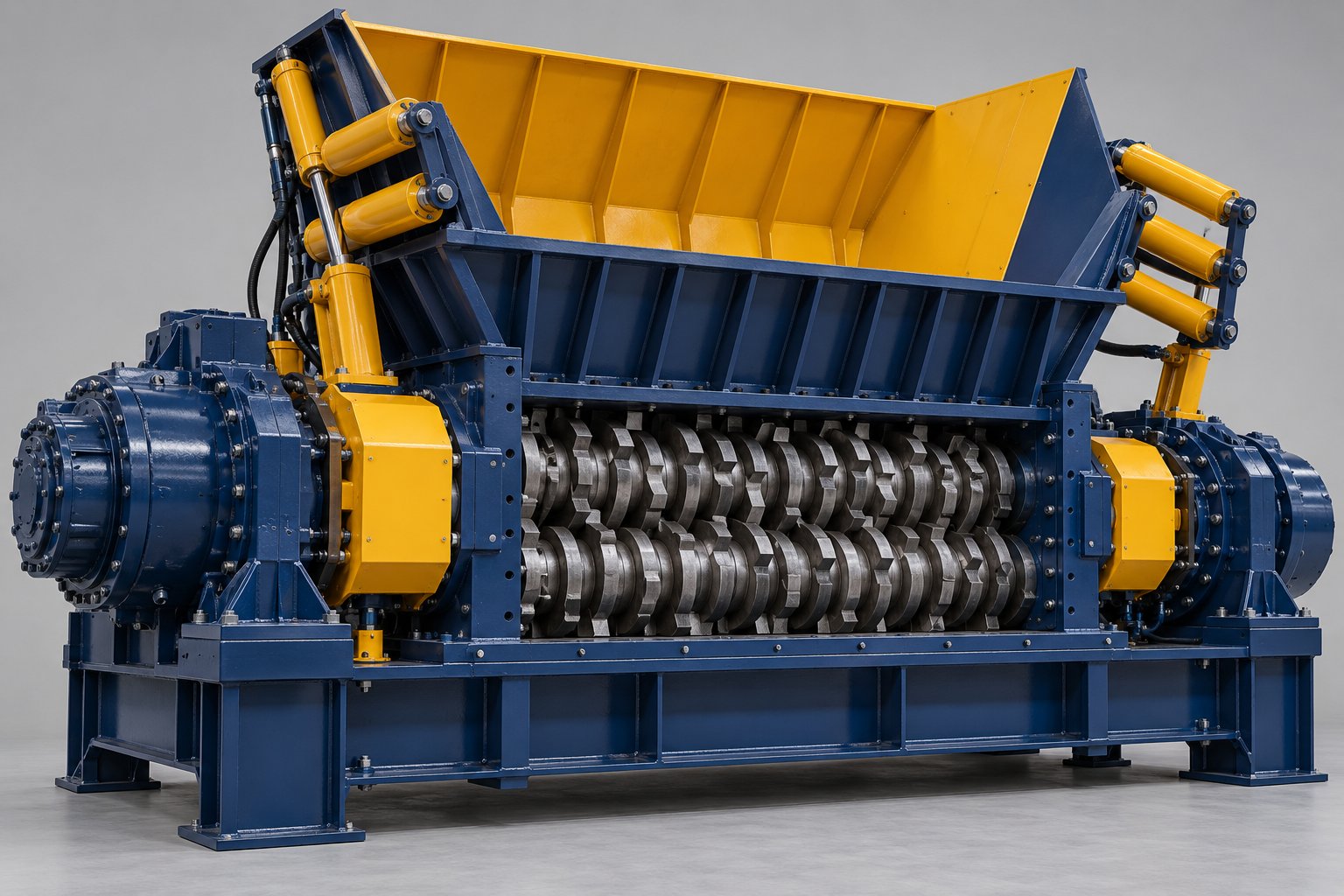
Ramban suapan hidraulik menolak bahan terhadap pemutar pada kadar terkawal, yang menghalang beban lonjakan yang menyebabkan motor terlebih beban pada mesin suapan graviti. Lejang ram boleh laras, membolehkan pengendali menala tekanan suapan untuk pelbagai jenis bahan—tembaga dan loyang yang lebih padat memerlukan kemajuan ram yang lebih perlahan daripada aluminium ringan untuk mengelakkan pemutar tersekat.
Bila Memilih Aci Tunggal Berbanding Aci Kembar
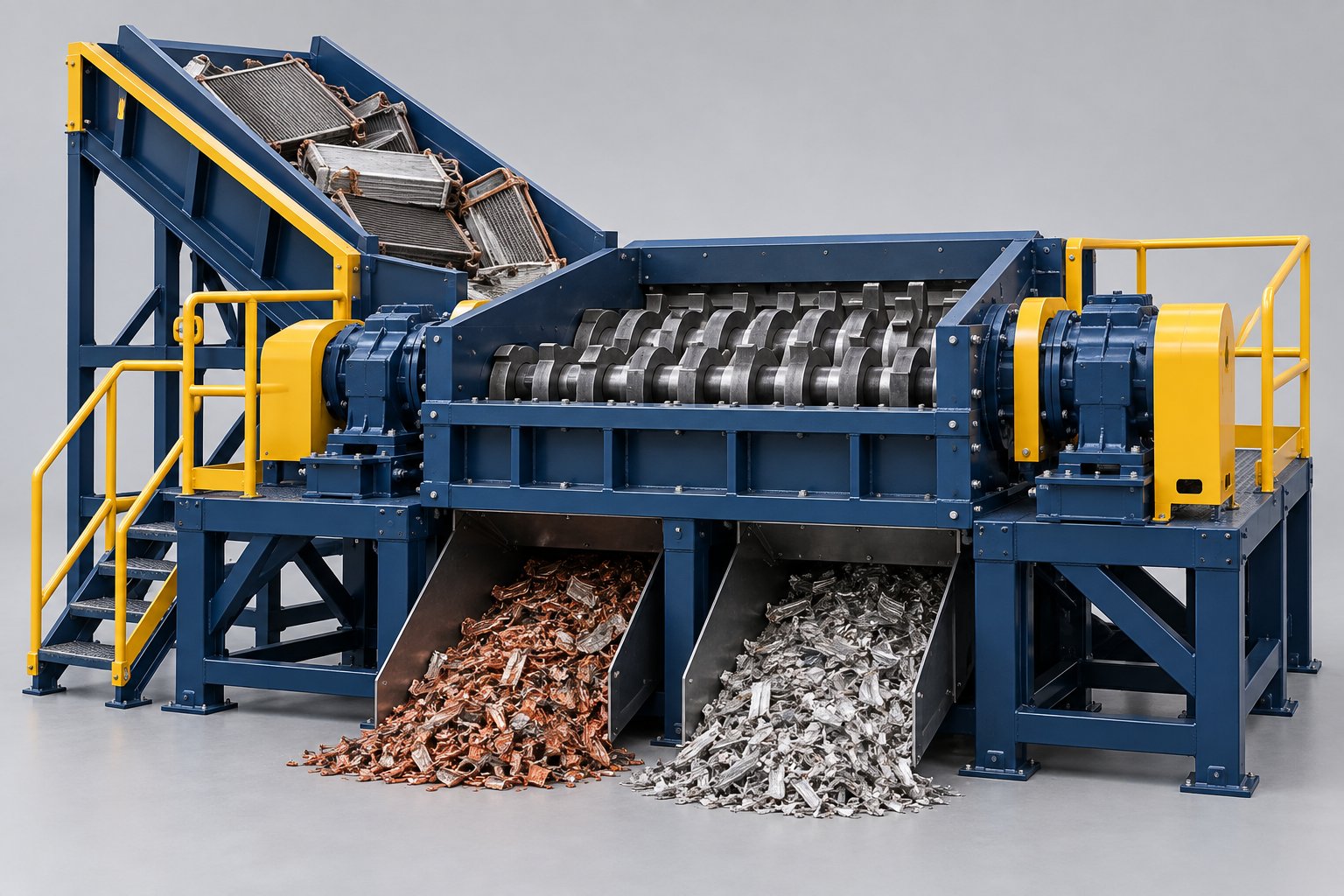
Pencincang aci tunggal menduduki niche operasi yang berbeza daripada unit aci kembar. Reka bentuk aci kembar cemerlang dalam mencengkam dan mengoyak sekerap bercampur dan tidak sekata seperti badan kereta dan barangan putih, di mana geometri suapan berubah-ubah tanpa diduga. Reka bentuk aci tunggal lebih sesuai untuk memproses aliran yang sudah agak seragam dalam bentuk—keratan penyemperitan aluminium dari loji penyemperitan, berkas wayar tembaga dari kitar semula kabel, tatal loyang dari kedai pemesinan, dan sisa rangka kepingan bercop dari operasi pengecapan.
Kelebihan konfigurasi aci tunggal ialah konsistensi saiz zarah. Kerana bahan melalui skrin sebelum discaj, pecahan keluaran dikawal kepada julat yang sempit. Pencincang aci kembar discaj apa sahaja yang jatuh melalui celah aci, menghasilkan variasi saiz yang lebih luas. Bagi pembeli yang memberi makan peralatan hiliran seperti penekan briket, granulator, atau relau lebur yang memerlukan geometri cas yang konsisten, keluaran berskrin aci tunggal mengurangkan keperluan untuk pensaizan sekunder.
Sistem Pemotongan dan Penyelenggaraan
Pemutar membawa pisau pemotong jenis D atau jenis V yang dibolt diperbuat daripada keluli alat keras, bergantung pada jenis bahan. Pisau katil boleh laras untuk kelegaan pemotongan dan merupakan item haus utama di samping pisau pemutar. Kedua-duanya adalah penggantian bolt-on yang boleh ditukar tanpa mengeluarkan pemasangan pemutar. Kelegaan pisau perlu diperiksa setiap minggu dan ditetapkan semula selepas setiap kitaran pengasahan.
- Pisau pemutar: keluli alat keras, profil jenis D atau V, penggantian bolt-on
- Pisau katil: kelegaan boleh laras, dibolt, boleh diganti tanpa mengeluarkan pemutar
- Skrin: plat berlubang dibolt, tersedia dalam 10, 15, 20, 30, dan 40 mm
- Pelapik sisi: plat haus Hardox, dibolt, tiada kimpalan diperlukan
Ramban Suapan Hidraulik dan Pengendalian Bahan
Ramban hidraulik ialah perbezaan utama antara mesin ini dan granulator suapan graviti. Dengan bahan ringan seperti profil aluminium dan wayar tembaga, suapan graviti selalunya mengakibatkan bahan terapung atau jambatan di atas pemutar tanpa melibatkan pisau pemotong. Ramban menggunakan tekanan positif ke bawah dan sisi, memastikan bahan suapan sentiasa bersentuhan dengan pemutar. Tekanan ram dan kelajuan lejang ditetapkan melalui PLC berdasarkan ketumpatan bahan dan kadar suapan.
Untuk berkas wayar dan kabel, ram juga menghalang pemutar daripada mencengkam dan membalut helai panjang di sekeliling aci—mod kegagalan biasa pada mesin tanpa suapan terkawal. Jika pembalutan berlaku, ram berundur secara automatik untuk melepaskan kekusutan sebelum menyambung semula suapan ke hadapan.
Sempadan Aplikasi
TG-SingleShaft 200 dinilai untuk bahan bukan ferus dan tolok ringan. Ia tidak direka untuk stok ferus padat seperti blok enjin, rel kereta api, atau bahagian struktur berdinding tebal—ini melebihi penarafan tork pemutar dan akan menyebabkan mesin tersekat atau merosakkan pisau pemotong. Untuk aliran sekerap bercampur yang mengandungi ferus dan bukan ferus, pencincang aci kembar seperti TG-2200 lebih sesuai sebagai peringkat pengurangan saiz utama, dengan unit aci tunggal diletakkan di hiliran untuk pensaizan akhir.
Sahkan kekerasan bahan anda, ketebalan stok maksimum, dan sama ada suapan mengandungi ferus sesat sebelum membuat pesanan. Pemisah magnet di hulu suapan aci tunggal disyorkan jika aliran bahan mungkin mengandungi pencemaran ferus.
Konfigurasi Pemacu dan Elektrik
Motor 55 kW tersedia dalam konfigurasi 50 Hz atau 60 Hz. Mesin termasuk sistem kawalan PLC yang menguruskan lejang ram, kelajuan pemutar, dan undur automatik pada beban lampau. Pemula lembut adalah standard; VFD tersedia sebagai pilihan untuk aplikasi yang memerlukan kelajuan pemutar berubah untuk mengoptimumkan prestasi pemotongan merentas pelbagai jenis bahan. Panel kawalan boleh dikonfigurasikan mengikut piawaian CE atau UL bergantung pada pasaran destinasi.
Pematuhan dan Pensijilan
Rangka dan pelindung membawa tanda CE mengikut Arahan Jentera. Kemudahan pembuatan beroperasi di bawah pengurusan kualiti ISO 9001. Untuk pemasangan Amerika Utara, panel kawalan tersenarai UL dan konfigurasi pelindung ANSI/OSHA tersedia atas permintaan. Sahkan keperluan kod elektrik tempatan dan sebarang keperluan dokumentasi khusus bahasa semasa pertanyaan.
Soalan Lazim Pembeli
Minta Cadangan Terperinci
Untuk menyediakan sebut harga yang tepat, sertakan jenis bahan suapan biasa anda dan kekerasan, ketebalan stok maksimum, saiz zarah keluaran sasaran, daya pemprosesan yang diperlukan, bekalan kuasa tapak (voltan dan frekuensi, 50 Hz atau 60 Hz), dan sama ada aliran suapan anda mungkin mengandungi pencemaran ferus. Nyatakan sebarang keperluan pensijilan khusus untuk rantau anda.
Minta butiran produk