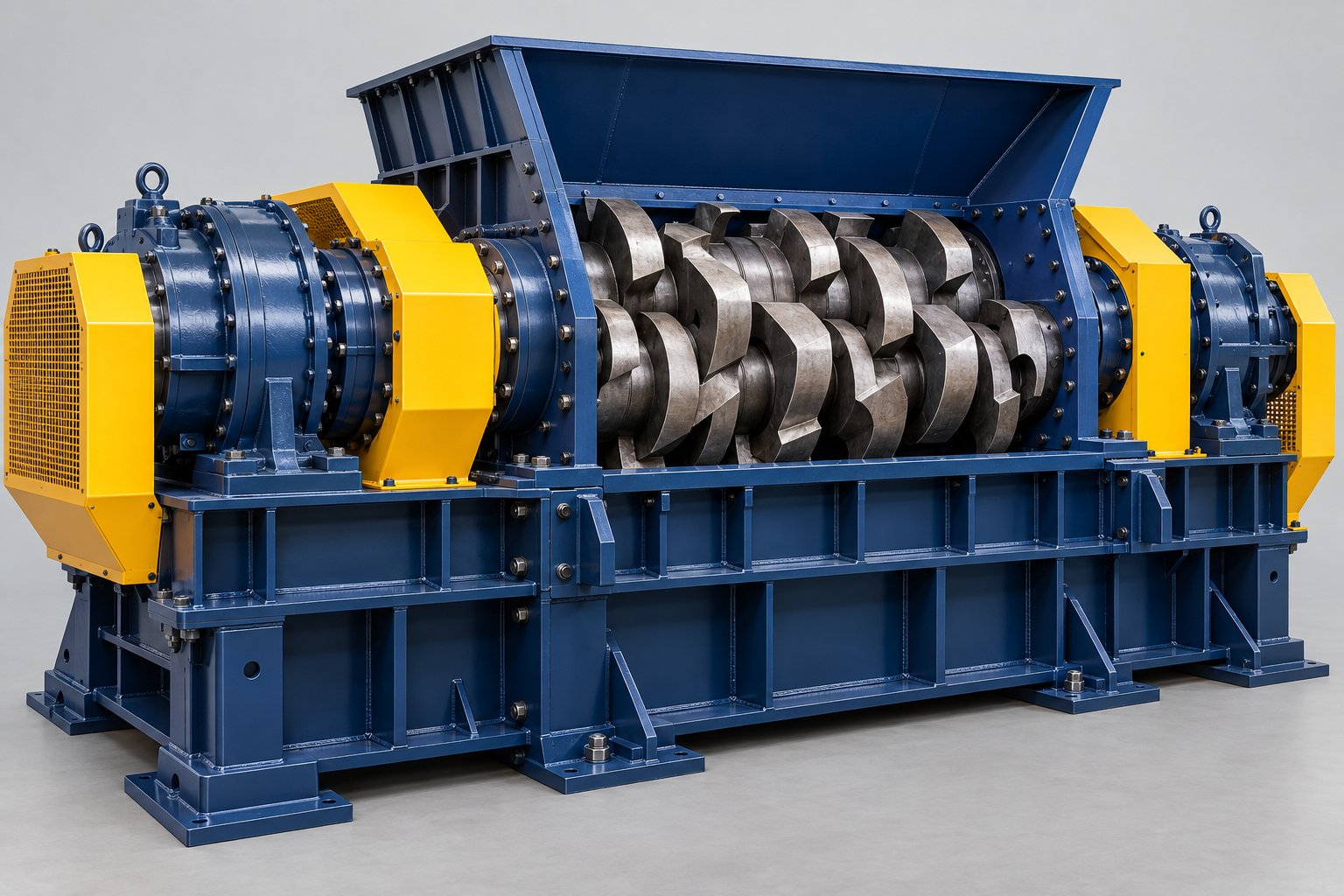
Breaking Cast Iron and Aluminum Castings Without Fighting the Machine
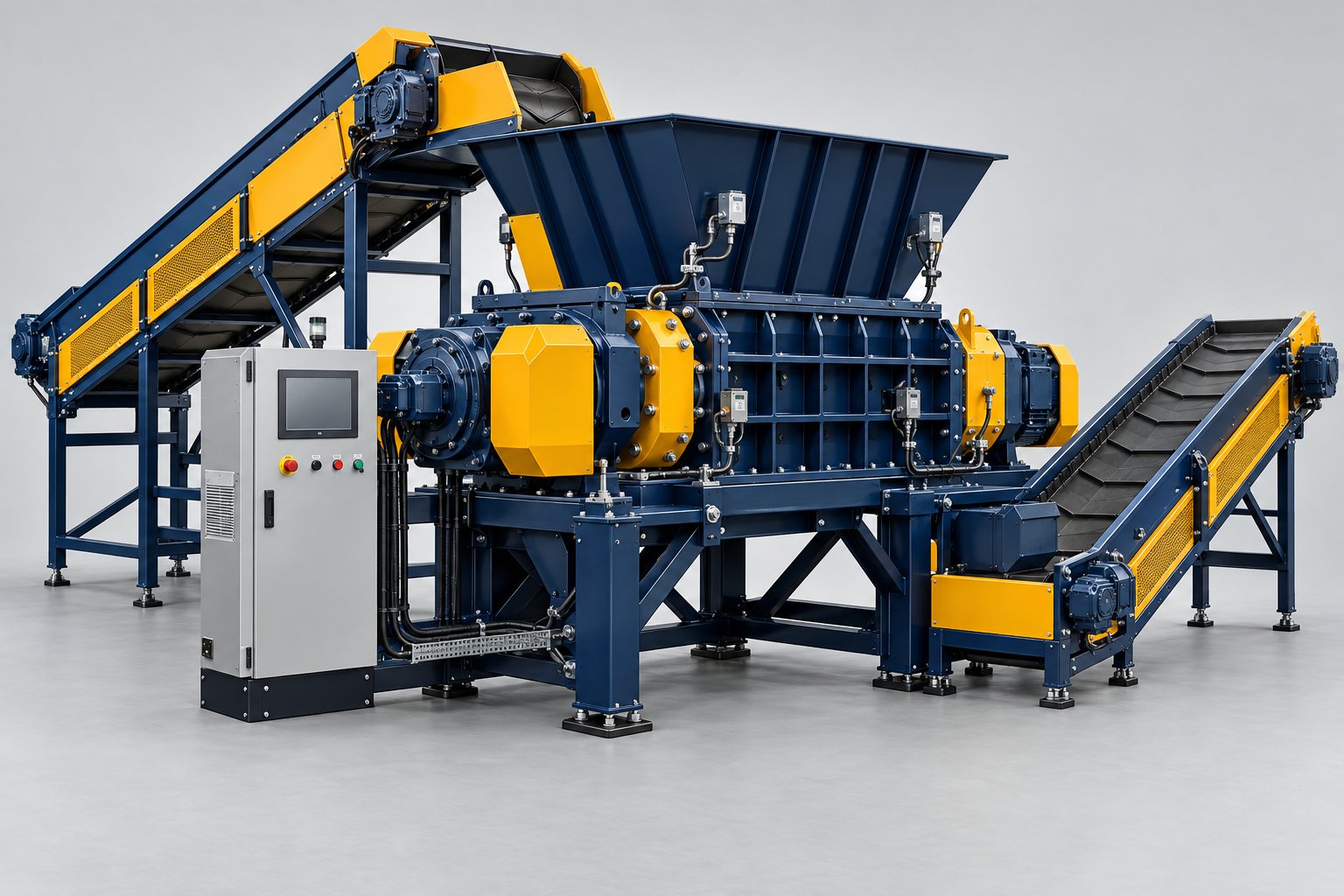
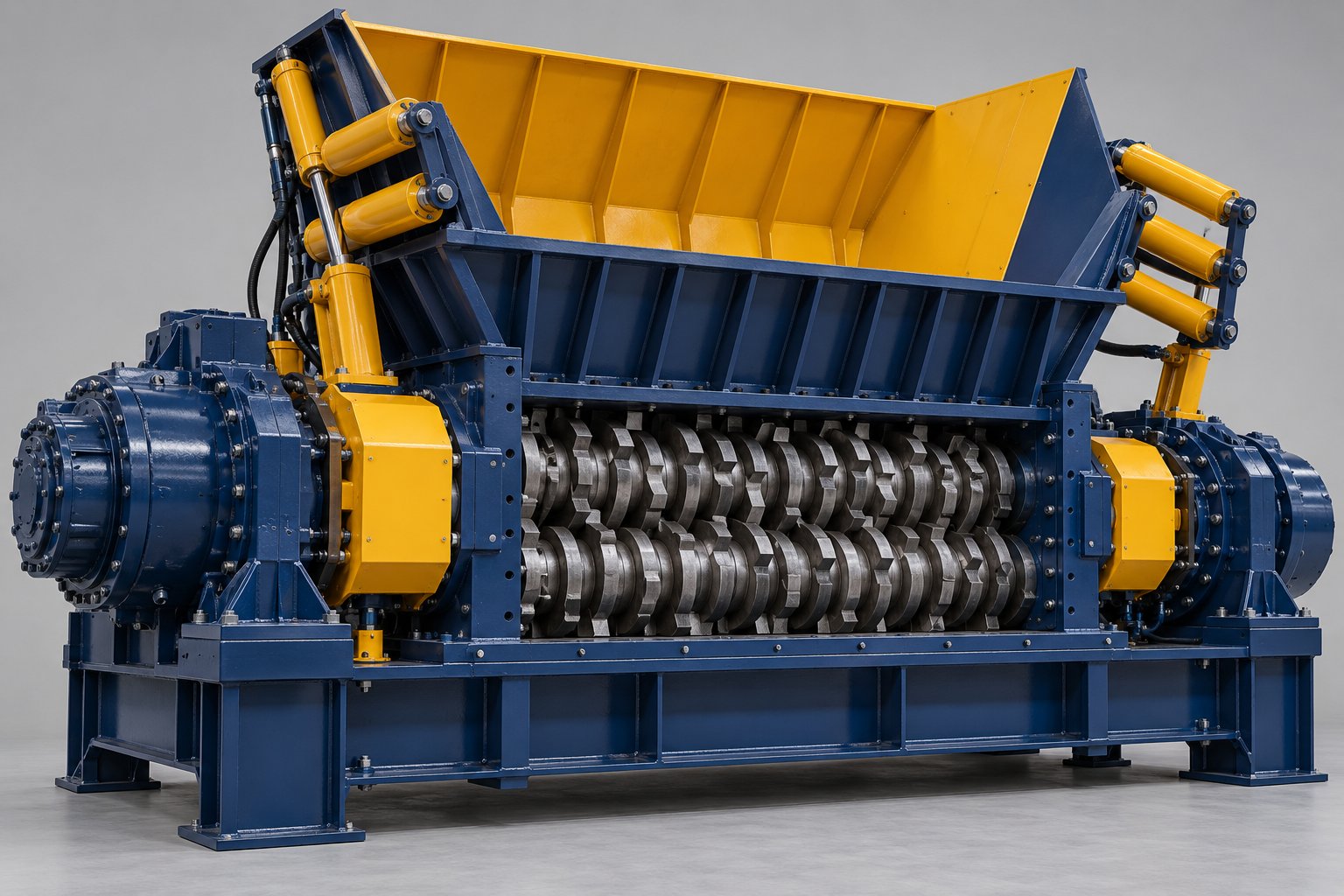
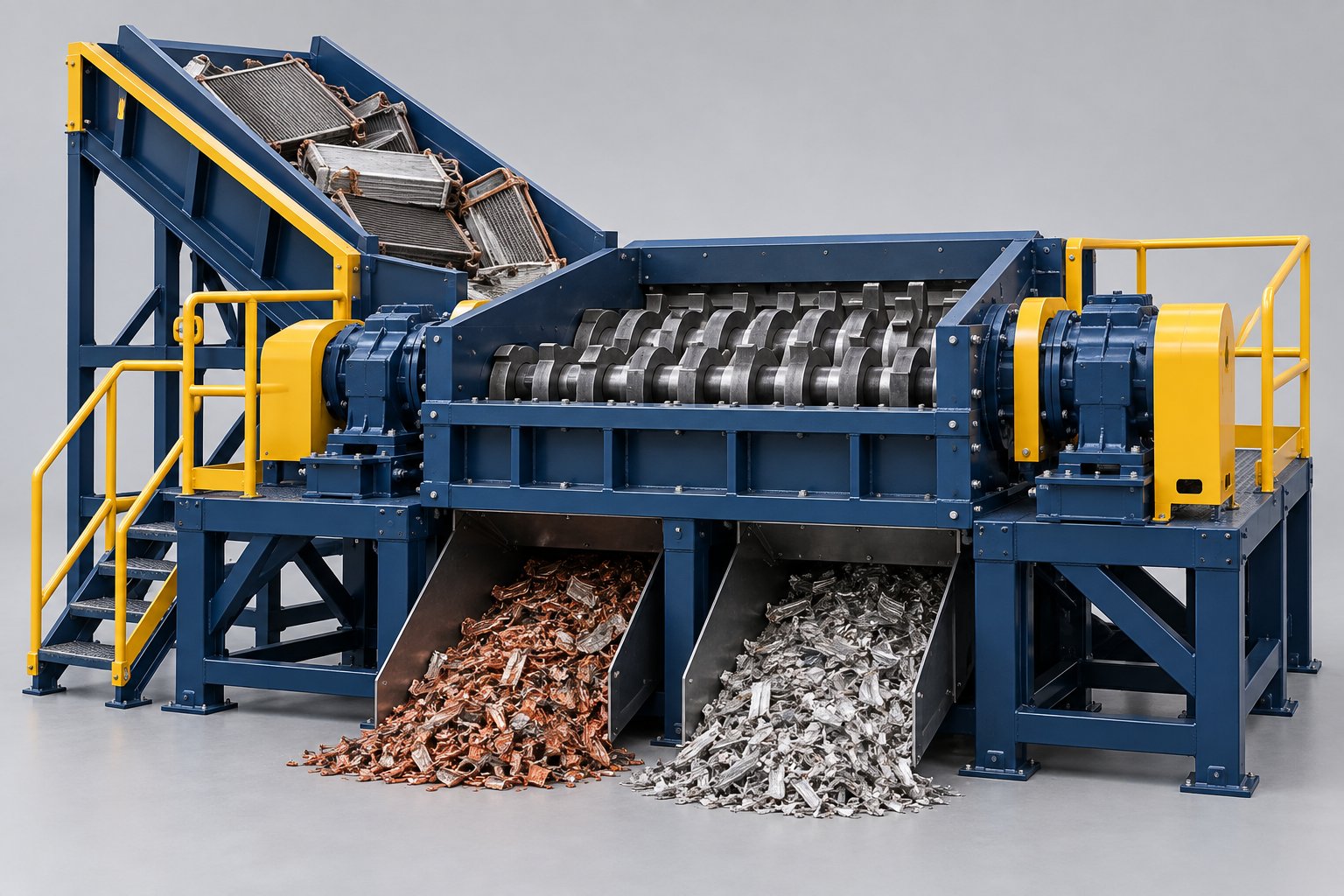
Foundry returns, gate runners, and reject castings are dense, irregular, and often brittle in exactly the wrong way. Feed them to a light-duty shredder and the machine bounces, stalls, and eats knives; hand-break them and you pay labor for what a machine should do. The TG-CastShred 600 is an extra-heavy-duty low-speed twin-shaft shredder designed around the physics of castings: 2 x 160 kW drives delivering high torque through oversized gear reducers, a 1,000 x 800 mm chamber, and massive hook-style cutters that grip a heavy casting and pull it into the cut instead of deflecting off it. Rated output is 8 to 12 tons per hour on cast iron and aluminum castings.
The buyer problem this machine solves is the cost of mismatch. Casting scrap is often the highest-value feed a yard handles per ton, but only when it is reduced and cleaned efficiently. A shredder that stalls on every thick section turns a premium material into a labor sink, and burned-out cutters turn it into a wear-parts budget line.
Cutter System Built for Density
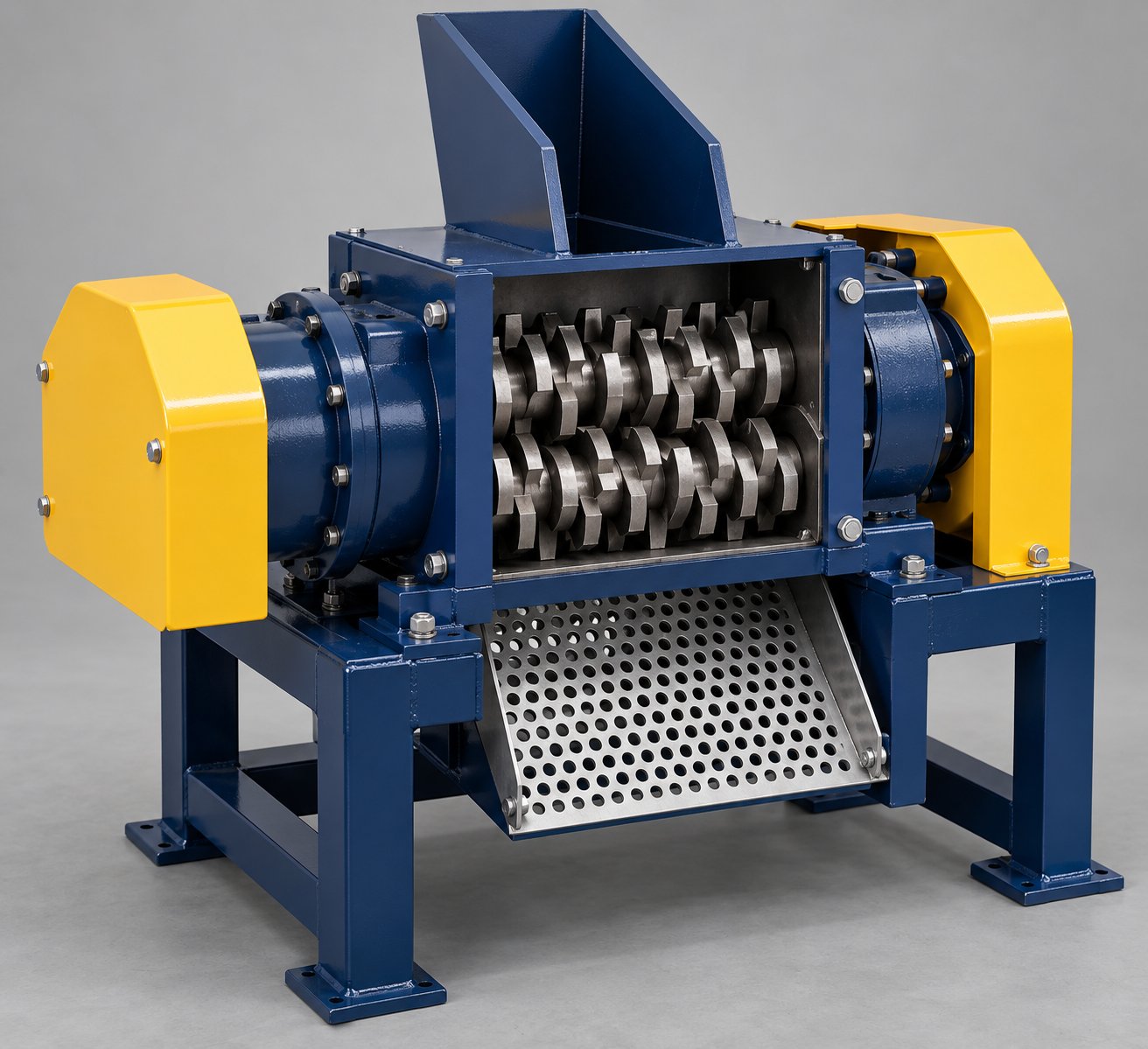
- Massive hook-style bolt-on cutters: the hook profile bites into a dense casting and uses machine weight and torque to pull it down, rather than relying on high speed to crack it. Each cutter is individually replaceable.
- Very low shaft speed, high torque: torque reaches the shafts through oversized gear reducers rather than high speed, so dense sections are sheared under control instead of bounced off the cut.
- Reinforced bed and chamber: the frame and chamber walls are sized for point loads from thick sections, protecting alignment over years of heavy feed.
- Auto-reverse on unshreddable pieces: a trapped thick section or tramp bar triggers automatic reversal instead of a stall; the piece is re-angled and re-attacked without an operator intervening.
- Outboard sealed bearings: kept outside the cutting zone where casting fragments and abrasive dust cannot reach the seals.
Specifications
| Item | TG-CastShred 600 |
|---|---|
| Type | Extra-heavy-duty low-speed twin-shaft shredder |
| Drive | 2 x 160 kW geared motors (320 kW total installed) |
| Cutting chamber | 1,000 x 800 mm |
| Cutters | Massive hook-style bolt-on alloy cutters |
| Shaft speed | Very low speed, high torque |
| Rated throughput | 8 - 12 t/h on cast iron and aluminum castings |
| Power supply | 380 V / 50 Hz or 460 V / 60 Hz, configurable |
| Control | PLC with auto-reverse and motor protection |
| Certification | CE marked; manufactured in an ISO 9001 facility |
Where the Value Shows Up
Casting scrap pricing rewards clean, furnace-ready feed. The TG-CastShred 600's slow, high-torque cutting reduces gate runners and reject castings to uniform pieces without smearing aluminum or shattering brittle iron unpredictably, which keeps your melt-loss profile predictable for the buyer. Because the cutters grip rather than deflect, machine hours stay productive instead of being lost to stalls; and because cutters are bolt-on and individually replaceable, a single damaged cutter is a half-day service item rather than a shaft rebuild. Installed power of 2 x 160 kW is deliberate: the duty needs torque more than speed, and lower shaft speed means the electricity goes into cutting, not into throwing material around the chamber.
Typical Applications
- Foundry gate runners, risers, and reject castings
- Aluminum die casting returns and dross-containing chunks
- Gray and ductile iron scrap in thick sections
- Heavy non-ferrous castings ahead of remelt or sorting
Before You Order
Confirm the heaviest single casting and thickest section in your feed, weekly tonnage, and the output size your remelt buyer requires. Rated throughput assumes typical foundry returns; oversized blocks above the chamber opening need pre-breaking. Our engineers confirm cutter profile, chamber geometry, and feed conveyor height for your material before the machine is built.
Frequently Asked Questions
Will it take a solid casting heavier than the chamber opening?
Pieces must fit the 1,000 x 800 mm working area. Larger blocks need pre-breaking with shears or a breaker; our engineers confirm the size limit for your feed at quotation.
How does slow speed handle brittle iron?
Low-speed shearing with gripping cutters controls how the material breaks, producing more uniform pieces than high-speed impact. The output profile also depends on the cutter configuration selected for your order.
How are cutters replaced and serviced?
Hook-style cutters are bolted on and replaced individually. Rotation and re-sharpening intervals are established with your material during commissioning, so the wear-parts budget becomes a scheduled line item instead of a surprise.
Can it also run mixed scrap on quiet days?
Yes. Low-speed shearing with gripping cutters controls how mixed heavy scrap breaks, producing more uniform pieces than high-speed impact. Throughput depends on the feed mix, and the output profile depends on the cutter configuration selected for your order.
Request Product Details
Tell us the heaviest casting and thickest section in your feed, your weekly tonnage, and your remelt buyer's output requirement, and our engineers will confirm the cutter profile and chamber geometry for your material.
Request Product Details