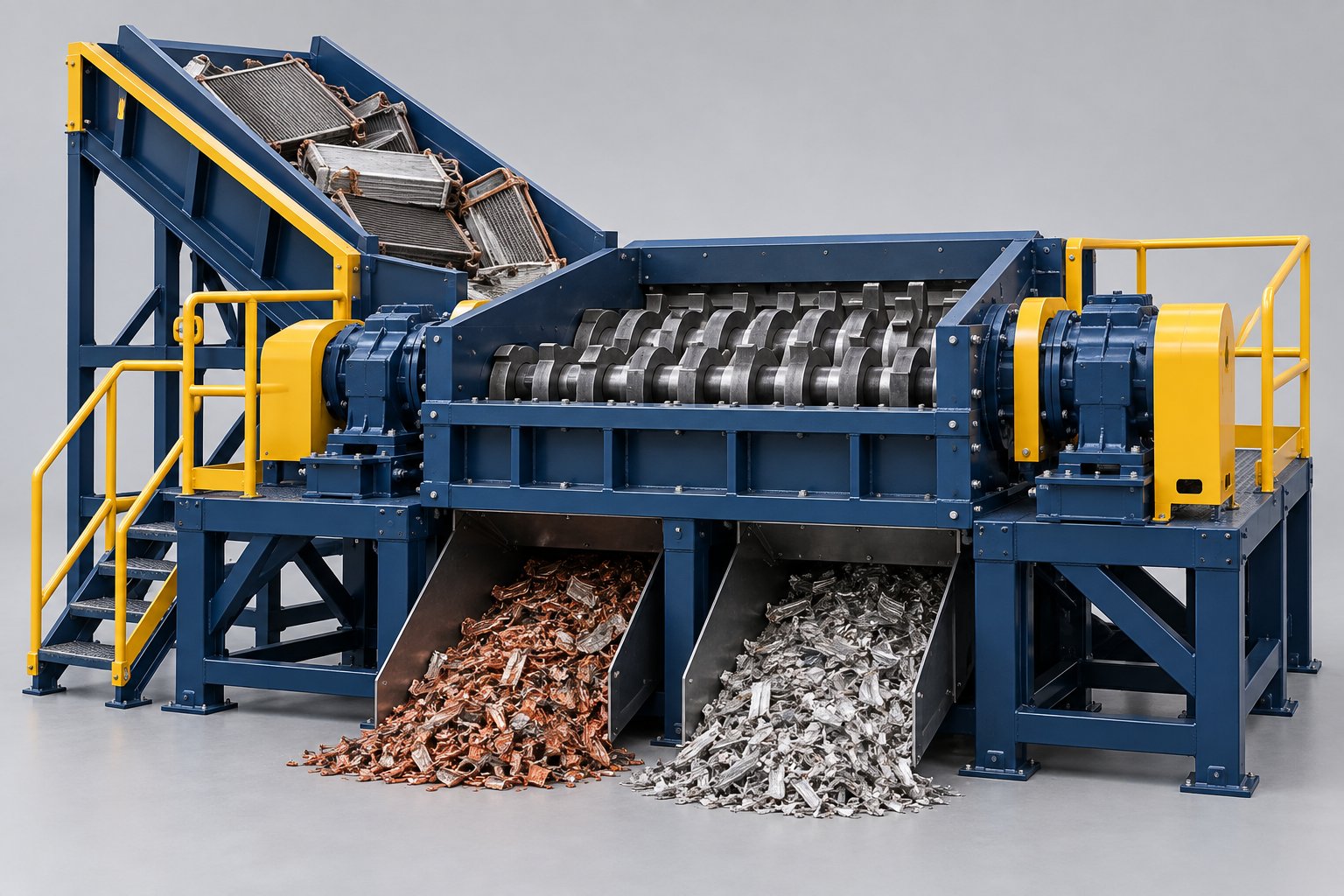
Freeing Copper from Aluminum Fins Without Grinding Your Value Away
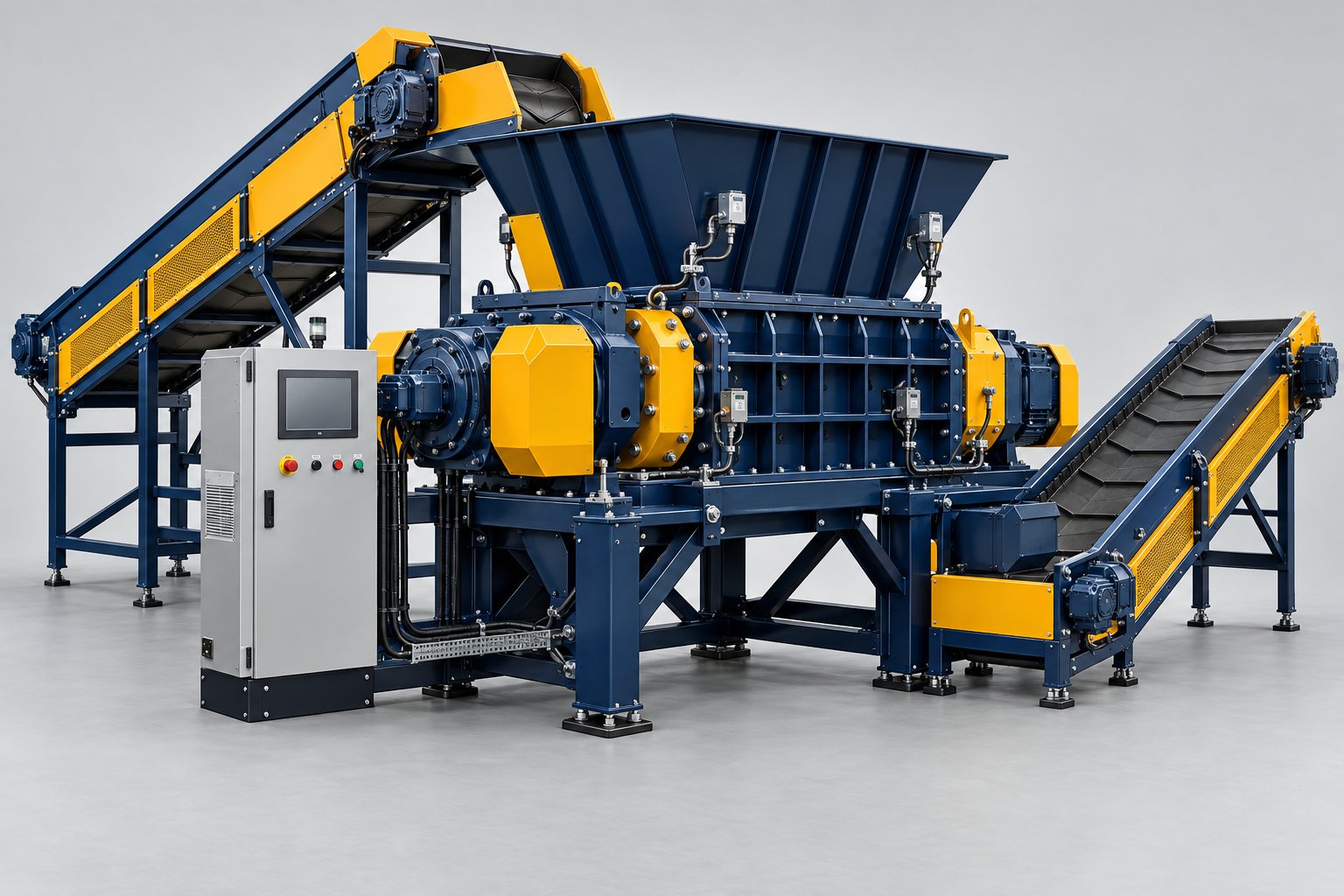
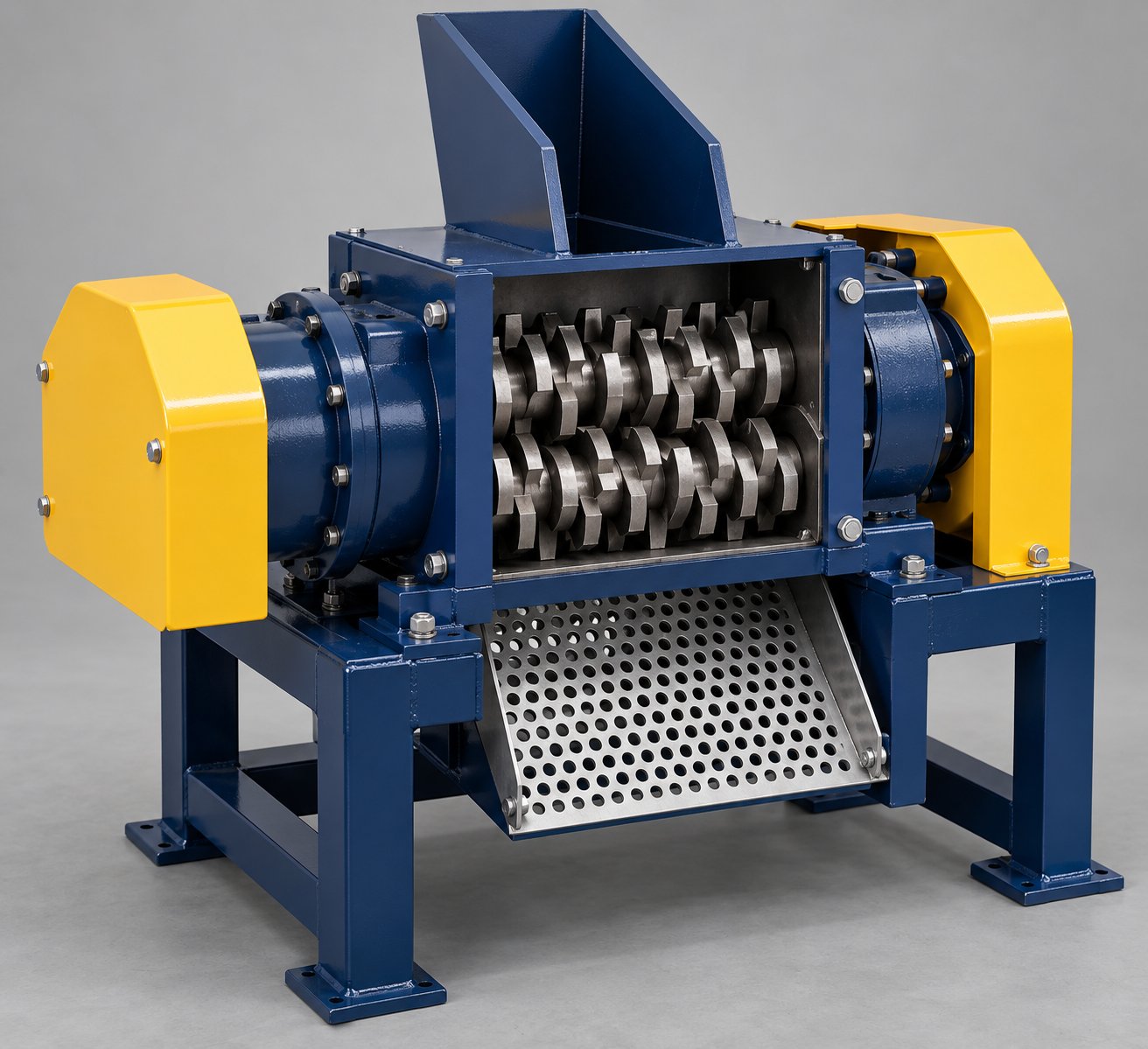
Radiators and heat exchangers hold two metals with very different prices, and the wrong shredder turns that premium spread into mixed fines. Hammer it too hard and the soft copper tubes fragment into fluff that mixes with aluminum dust; run it too gently and the fins stay attached and the load gets downgraded. The TG-RadShred 90 is a low-speed radiator shredder built around this exact trade-off: 2 x 11 kW geared drives, a wide flat 600 x 400 mm cutting chamber, and a gentle shear-and-peel cutting action that opens the fin packs and frees the tubes while keeping both metals in recoverable piece sizes.
Buyers of radiator scrap lose money in a specific way: when a generic shredder mangles radiators into mixed shredded fraction, the material sells at mixed-grade prices and the copper value is stranded inside it. This machine's job is to keep the two metals separable - in the machine and after it - so the downstream sorting step, whether manual picking or a separation line, can actually earn the copper premium.
Cutting Action Designed for Bimetal Scrap
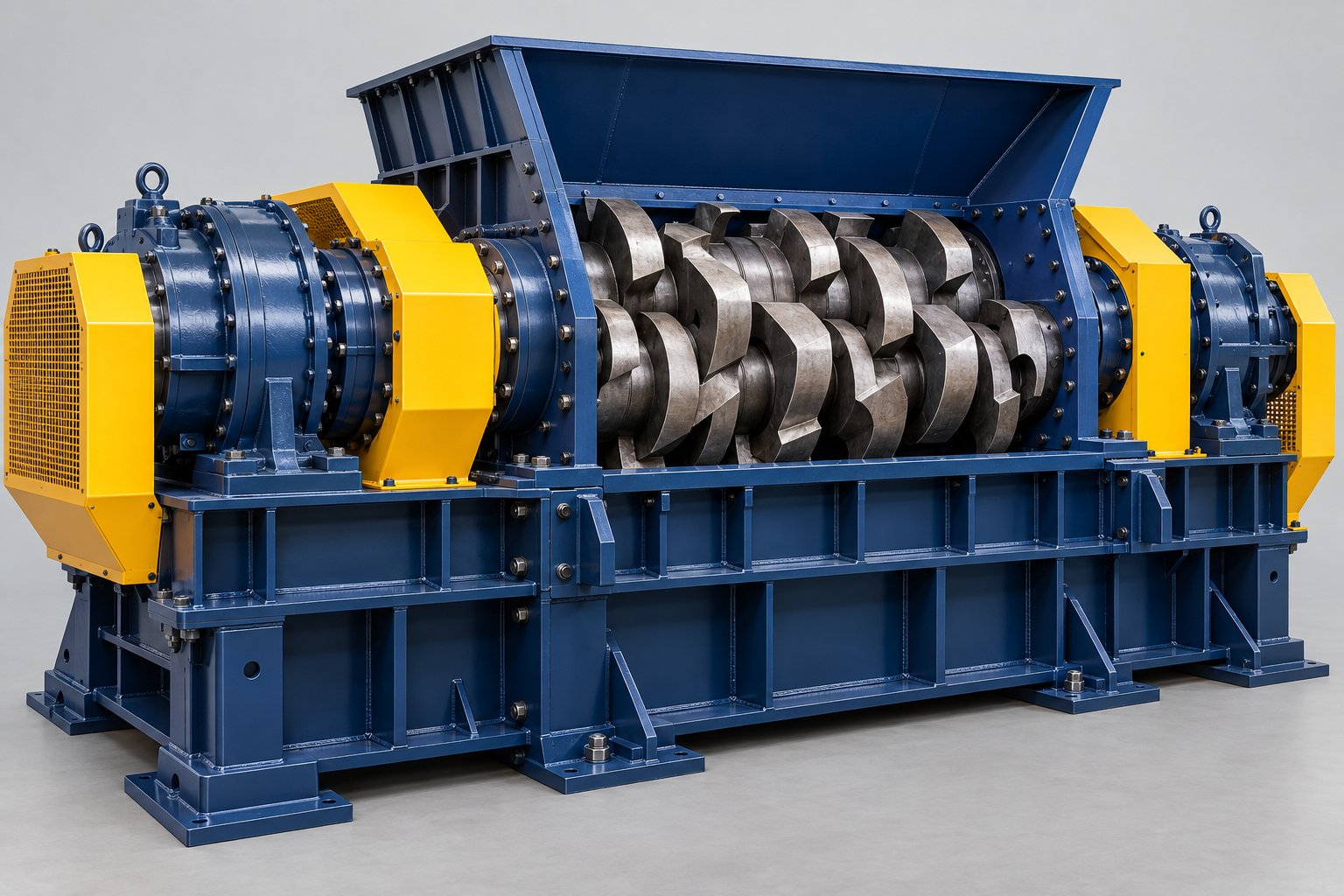
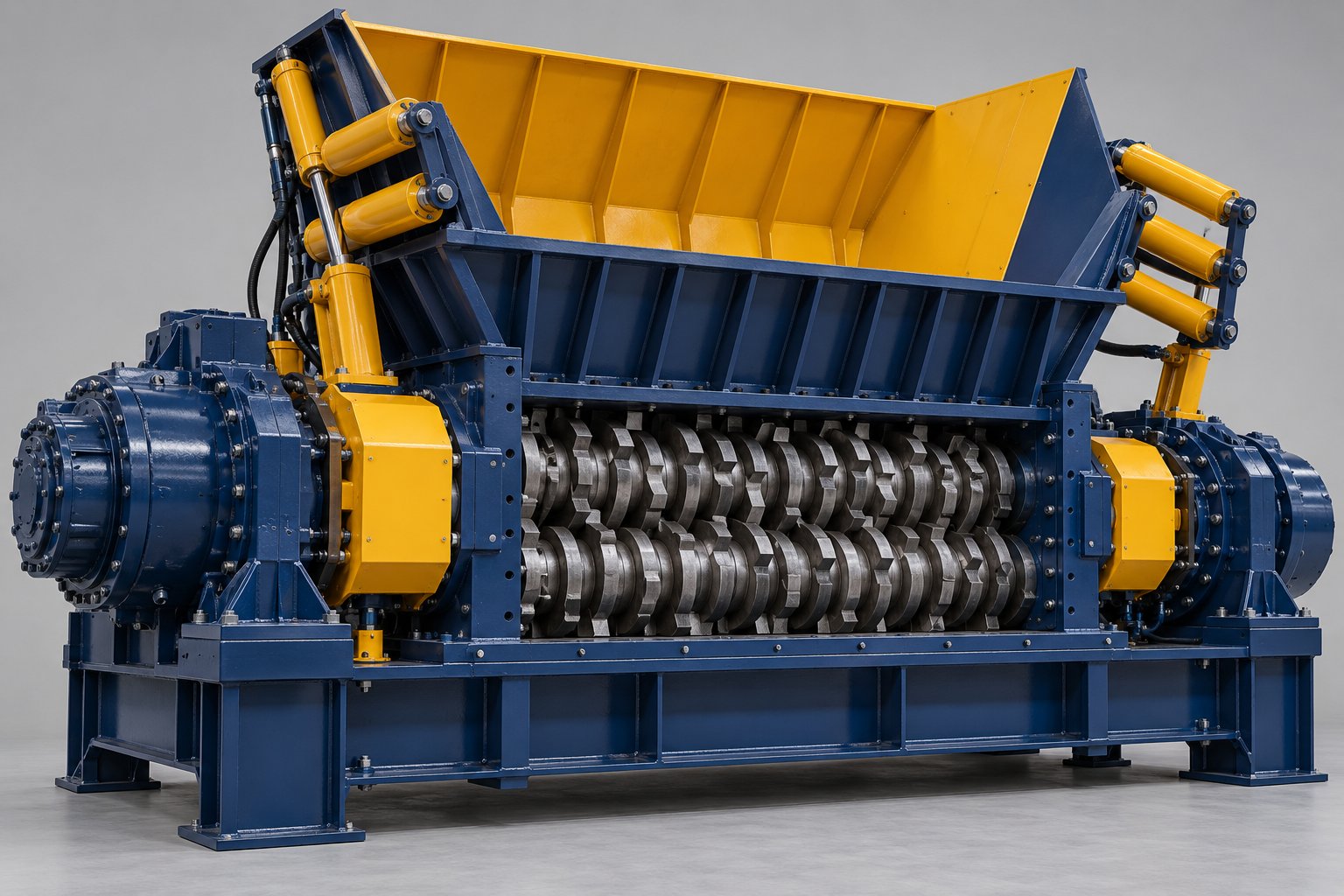
- Low-speed wide-spaced shear blades: the shafts turn slowly with generous blade overlap, shearing fin packs open along their length instead of hammering them into fluff. Piece integrity is what preserves sorting value.
- Wide flat chamber geometry: the low, wide cutting zone lets flat radiators lie into the cut instead of standing on edge, which is how fin packs get peeled open cleanly.
- Peeling tooth profile: blade teeth are profiled to pull tubes out of fin stock as the cut opens, rather than chopping tube walls into short flakes.
- Adjustable counter combs: comb clearance sets how aggressively the cut tears versus shears, so the setting can be tuned between freeing tubes and protecting fin value.
- Sealed drives, low speed: the 2 x 11 kW drives run cool on a steady cut, and the slow shafts keep noise low enough for indoor workshop duty.
Specifications
| Item | TG-RadShred 90 |
|---|---|
| Type | Low-speed radiator and heat exchanger shredder |
| Drive | 2 x 11 kW geared motors |
| Cutting chamber | 600 x 400 mm, wide flat geometry |
| Blades | Peeling tooth profile, bolt-on |
| Counter combs | Adjustable tear/shear setting |
| Rated throughput | 0.6 - 1.2 t/h on radiators and heat exchangers |
| Power supply | 380 V / 50 Hz or 460 V / 60 Hz |
| Control | PLC with auto-reverse |
| Certification | CE marked; manufactured in an ISO 9001 facility |
What Good Preparation Is Worth
A ton of radiators processed into a separable, hand-sortable fraction is a different commodity from a ton of radiator shred hammered into mixed fines. The first keeps the copper fraction saleable at tube-grade prices and the aluminum fins clean enough for their own buyer; the second sells at mixed grade and donates the price spread to whoever separates it downstream. Because this machine cuts slowly and keeps pieces whole, your sorting labor or separation line gets material it can actually work with, and the spread between mixed grade and separated grades stays in your yard.
Typical Applications
- Copper tube and aluminum fin radiators from HVAC demolition
- Automotive heaters and condensers
- Heat exchanger plates and coil stock
- Pre-processing ahead of manual sorting or separation lines
Before You Order
Tell us your radiator types, weekly volume, and how you plan to separate copper from aluminum afterward. Throughput is rated on typical HVAC radiator stock; dense plate exchangers and heavy automotive units process slower. Our engineers confirm the comb setting and discharge arrangement for your sorting method during quotation.
Frequently Asked Questions
Does the output come out copper-free?
No shredder fully separates bimetal scrap mechanically. What this machine does is keep pieces large and intact enough that your sorting step - manual or automated - can separate the metals cleanly. Final separation happens after the machine.
Can it take steel-cased radiators?
Light steel-cased units are within range, but throughput drops and blade wear rises with steel content. For steel-dominant feed, a general twin-shaft shredder is the better match.
Why only 2 x 11 kW?
Radiators shear easily at low speed; the duty needs control and the right tooth geometry, not raw power. Lower installed power also means lower running cost on a low-margin material.
What discharge arrangement do you offer?
Gravity discharge to a bin or belt discharge to a sorting table are both common. The arrangement is matched to your sorting setup during quotation.
Request Product Details
Describe your radiator feed and downstream sorting method, and our engineers will confirm the blade profile, comb setting, and discharge configuration for your yard.
Request Product Details