
Copper Wire Pricing Guide
No single number answers the question. Copper wire is bought by weight, but the price paid per pound reflects the metal actually recoverable from that weight. A pound of clean, uncoated bright copper and a pound of thin, plastic-insulated harness wire are not the same product to a yard. One is nearly ready for the smelter; the other is a blend of copper and insulation that has to be separated before the copper can be sold.
Understanding how buyers grade, test, and quote copper wire tells you where your material sits, why quotes move, and what you can do before selling to improve the per-pound offer.
Key takeaways
- Grade is the biggest single factor in the per-pound price: bare bright, No. 1 and No. 2 copper, insulated wire, and mixed scrap are valued differently.
- Copper content of insulated wire is usually lower than wire weight, and the recovery percentage drives the offer.
- Yard quotes can differ on the same day because of local demand, freight distance to the mill, volume commitments, and testing methods.
- Preparation — stripping, sorting, and removing attachments — raises the grade and the recoverable copper share.
- For larger volumes, mechanical processing can separate conductor from insulation before sale rather than selling the insulation weight at a discount.
Why copper wire is graded before it is priced
Recyclers and yards do not buy "copper wire" as a single category. They buy it against a grade scale that describes how clean the copper is and how much of the weight is actually copper. Two bales of wire that weigh the same can be quoted at very different per-pound rates.
The trade does not publicly list a universal price. Prices move with the copper market and with each buyer's own logistics and margins, so any per-pound figure is an offer from a specific buyer at a specific time, not a fixed market rate.
The main grades and what drives their value
| Grade / type | Typical description | What affects its per-pound value |
|---|---|---|
| Bare bright copper | Clean, uncoated, unalloyed copper wire, no insulation, no solder, no paint | Highest grade; minimal processing; sensitive to oxidation, moisture, and any coating or attachment |
| No. 1 copper | Clean copper with minor allowable variations such as slight oxidation, no heavy coatings | Still high value; small contamination can drop it to No. 2 |
| No. 2 copper | Cleaner for re-melting but may include solder, paint, or heavier oxidation | Lower than No. 1; grading depends on visible condition and buyer standards |
| Insulated wire | Copper conductor with plastic or rubber insulation still attached | Value tracks recoverable copper content, insulation type, and thickness |
| Mixed / low-grade wire | Tangled harness, mixed gauges, attachments, connectors, or mixed metals | Lowest grade; sorting and separation cost is passed back in the offer |
Grade names and acceptance rules vary by buyer and region. Always confirm the receiving yard's current definition before you prepare a load.
Copper content vs. total weight
For insulated wire, the number that matters is not the weight on the scale but the weight of copper inside. Insulation adds weight without adding copper value. A yard will estimate the copper yield of a batch and set the per-pound offer accordingly. If the recovery percentage is low, the offer per total pound is lower, even though the copper itself is the same metal.
This is why thin, heavily insulated, or multi-conductor wire often receives a much lower offer than the same weight of clean conductor. The buyer is effectively paying for copper and charging for the separation work and the insulation they have to deal with.
Contamination and preparation
Small problems change grades:
- Attached connectors, terminals, screws, or steel and aluminum components that are not removed.
- Solder, paint, lacquer, or heavy oxidation on the copper surface.
- Moisture, dirt, or oil that adds weight but not value.
- Mixed metals in the same load, which may force re-grading of the whole batch.
Preparation raises value. Stripping insulation, sorting by grade, removing attachments, and keeping copper dry and clean all make the load easier to buy and easier to price. Many yards will pay more for material that arrives already separated because it reduces their handling and processing cost.
Why two yards quote differently on the same day
There is no single posted copper wire price, and even within one city offers can differ. Factors include:
- Downstream demand and mill distance. A yard selling to a nearby smelter or processor has lower freight exposure than one shipping long distance.
- Volume and contract terms. Committed tonnage or repeat supply may earn different terms than a one-off drop-off.
- Testing and sampling method. Buyers may estimate copper content by sampling, visual grading, or measured recovery, and their confidence in the yield affects the offer.
- Local competition. Yards in denser scrap markets often quote tighter margins than isolated buyers.
- Copper market movement. Because copper is traded globally, offers can move day to day with the underlying market and with the buyer's position.
Getting multiple quotes on the same prepared material is the only reliable way to know your local spread. Compare offers on the same grade definition and the same weight basis so you are comparing like with like.
How processing raises per-pound value
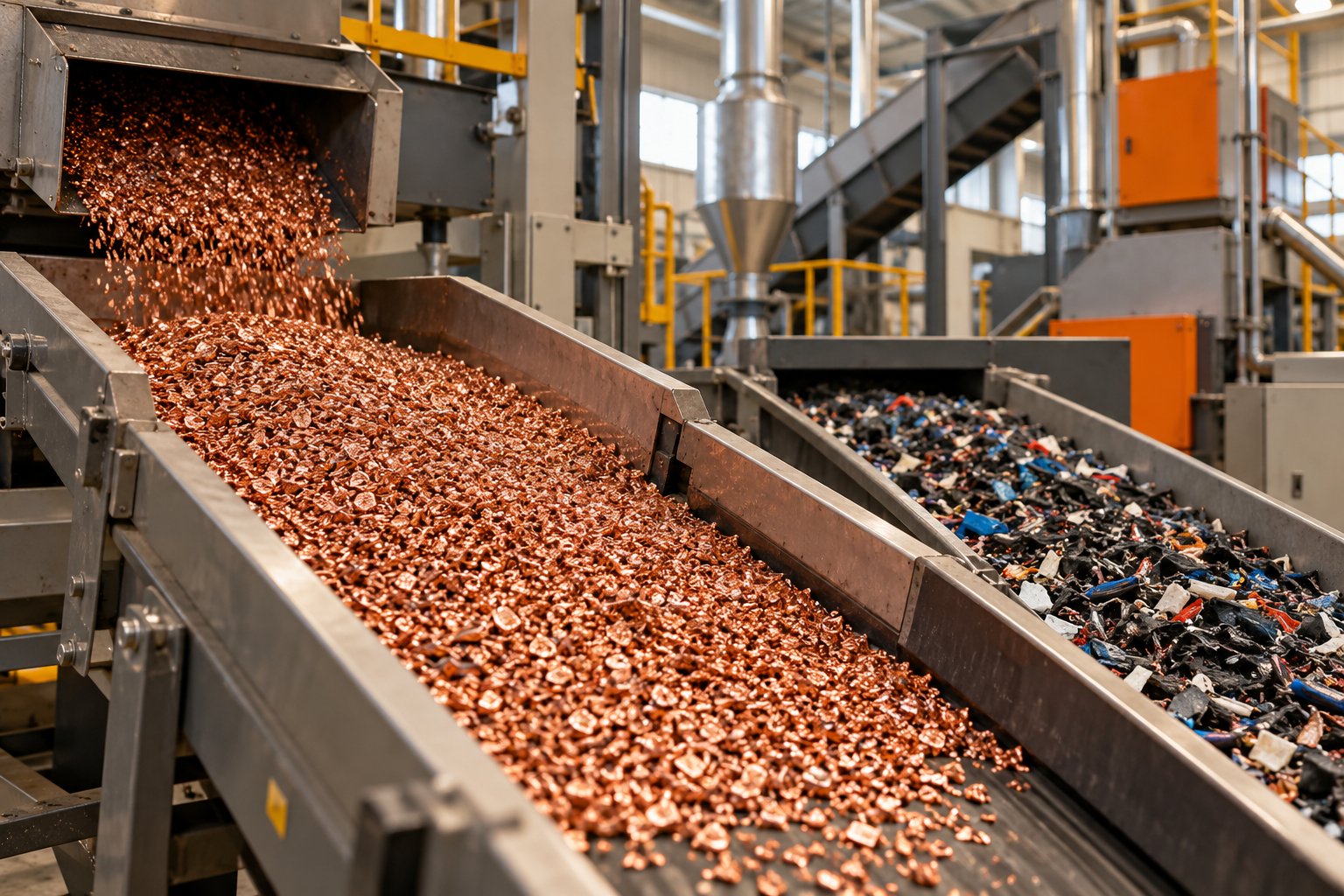
If you handle enough volume, you have a choice: sell insulated wire at its insulated per-pound offer, or separate the copper first and sell clean metal granules. Separation typically improves the grade and removes the insulation weight that buyers discount.
Cable and wire processing lines are built for exactly this. The TG-CableLine 100 Cable and Wire Recycling Line integrates a twin-shaft shredder, granulator, air separation, and vibration table to separate copper or aluminum conductor from plastic and rubber insulation into clean metal granules suitable for smelting. Tian Gong has built this equipment since 2008 at a 12,000 m² facility, with CE-marked equipment, a 12-month warranty, and typical throughput of 2–30 t/h depending on the model and configuration.
Whether processing pays off depends on your volume, the wire types you receive, labor and power costs, and the spread between insulated and clean copper offers in your market. For a mixed or high-insulation feed, separating first often changes which grade you are selling.
What to confirm before you sell
- Ask the yard for its current grade definitions in writing, including what it counts as bare bright, No. 1, and No. 2.
- Ask how it measures copper content in insulated wire — sampling, visual grading, or measured recovery.
- Confirm whether the price is per pound of total weight or per pound of recoverable copper.
- Ask about deductions for moisture, attachments, or mixed loads.
- Compare at least two or three buyers on the same prepared material.
- If you are considering processing, ask suppliers for throughput figures on your actual wire mix, not just a headline range.
FAQ
Is copper wire always priced per pound?
In many markets, yes — offers are quoted per pound (or per kilogram elsewhere). But the quote is usually based on an estimated copper yield, so the effective price for the copper content can be higher than the headline per-pound number.
Does stripping wire always increase the price?
It raises the grade, but the gain depends on the wire and the market. Thin wire with low copper content may not justify the labor of stripping by hand; mechanical processing is more practical at volume.
Why did my quote change between two visits?
Copper is a traded commodity and yard offers reflect current market conditions, freight, and local demand. A different grade classification on arrival can also change the offer.
Can I sell mixed wire without sorting?
Most buyers accept it, but at a lower grade. Sorting and separating before sale usually produces a better overall return.
The bottom line
The per-pound price of copper wire is a function of grade, recoverable copper content, contamination, preparation, and the specific buyer. There is no universal number to look up. What you can control is the condition of your material and which grade you present it as. Prepare, sort, and quote multiple yards; at scale, consider whether separating conductor from insulation before sale is worth the investment for your wire mix.