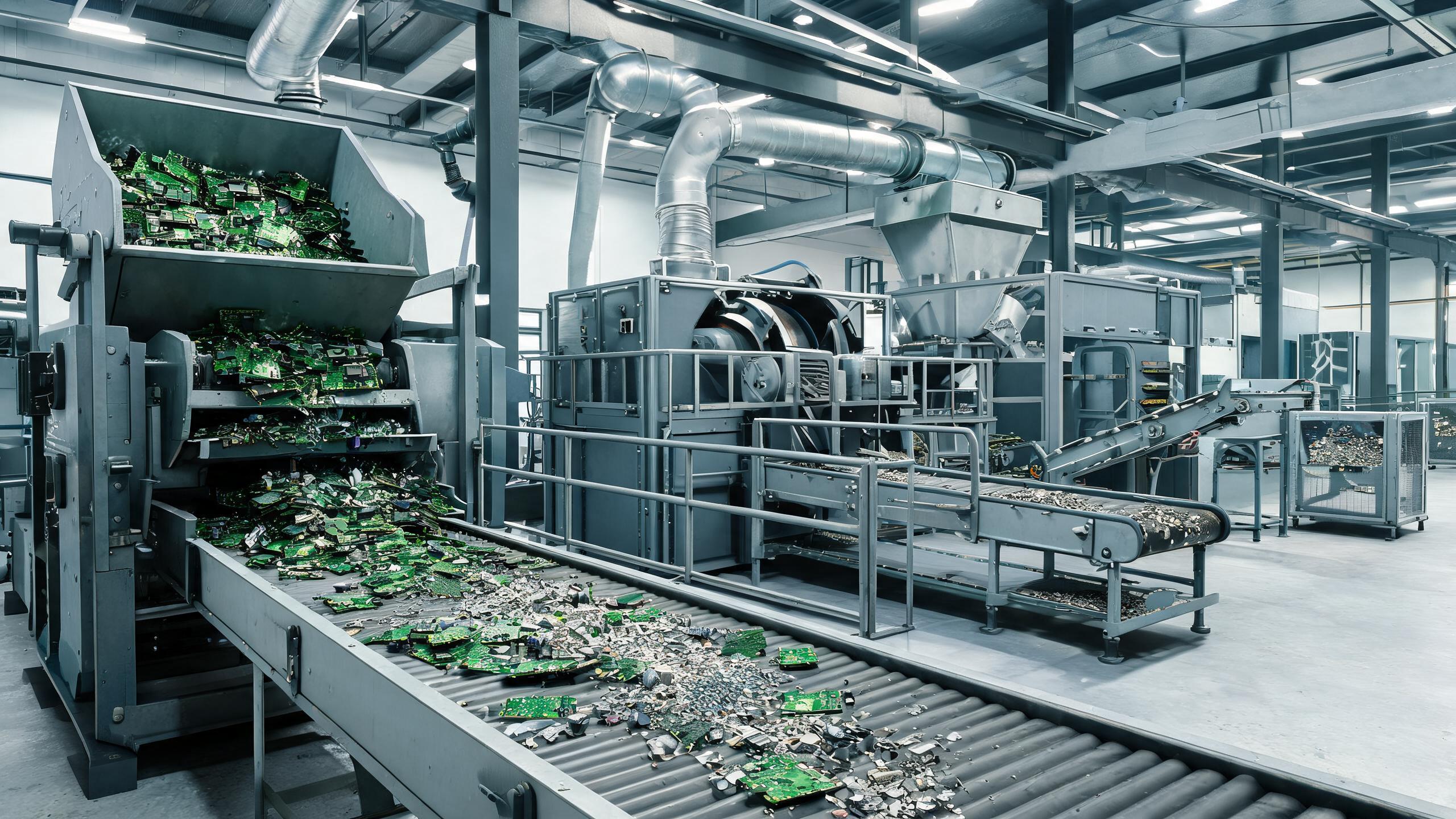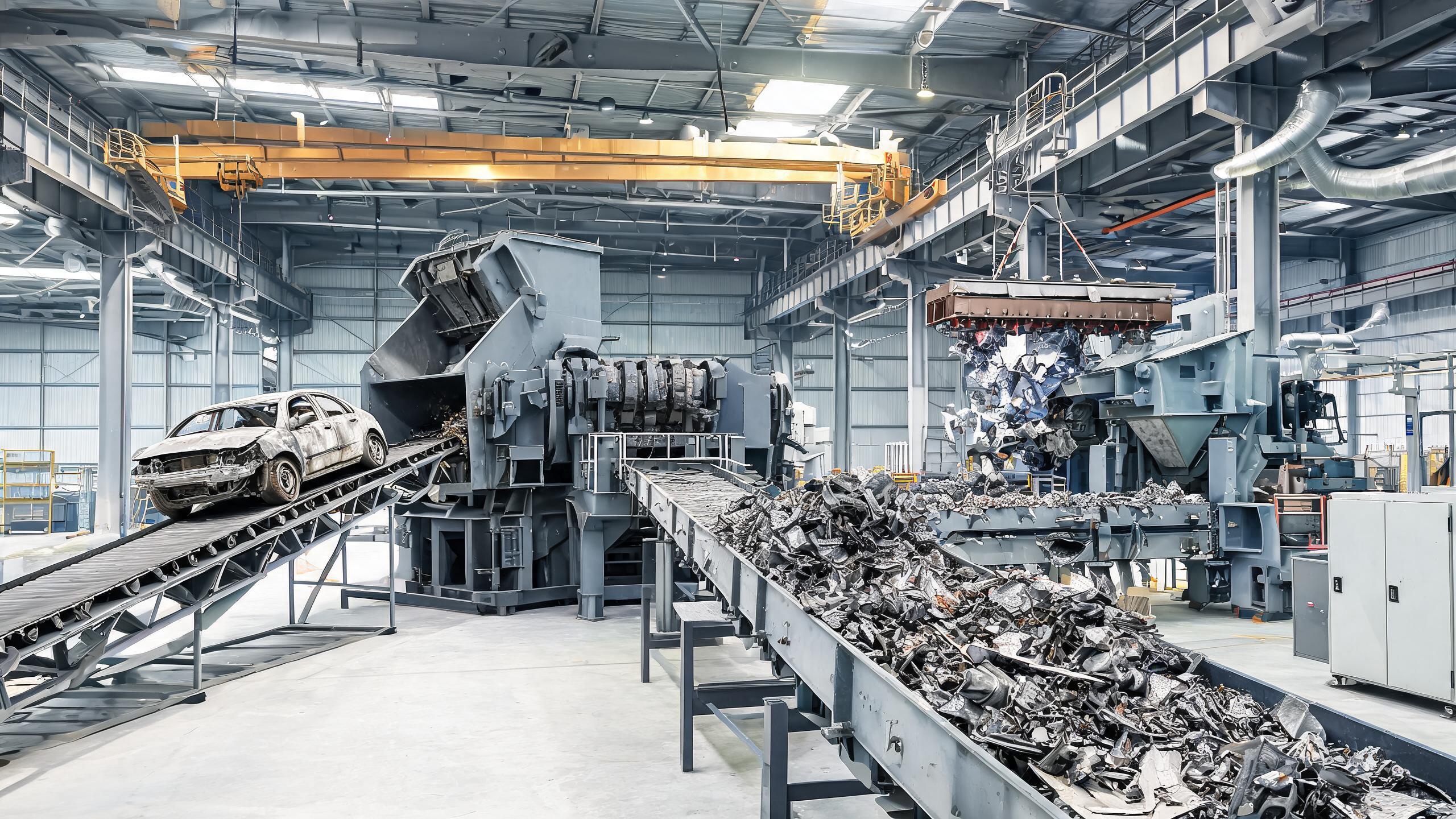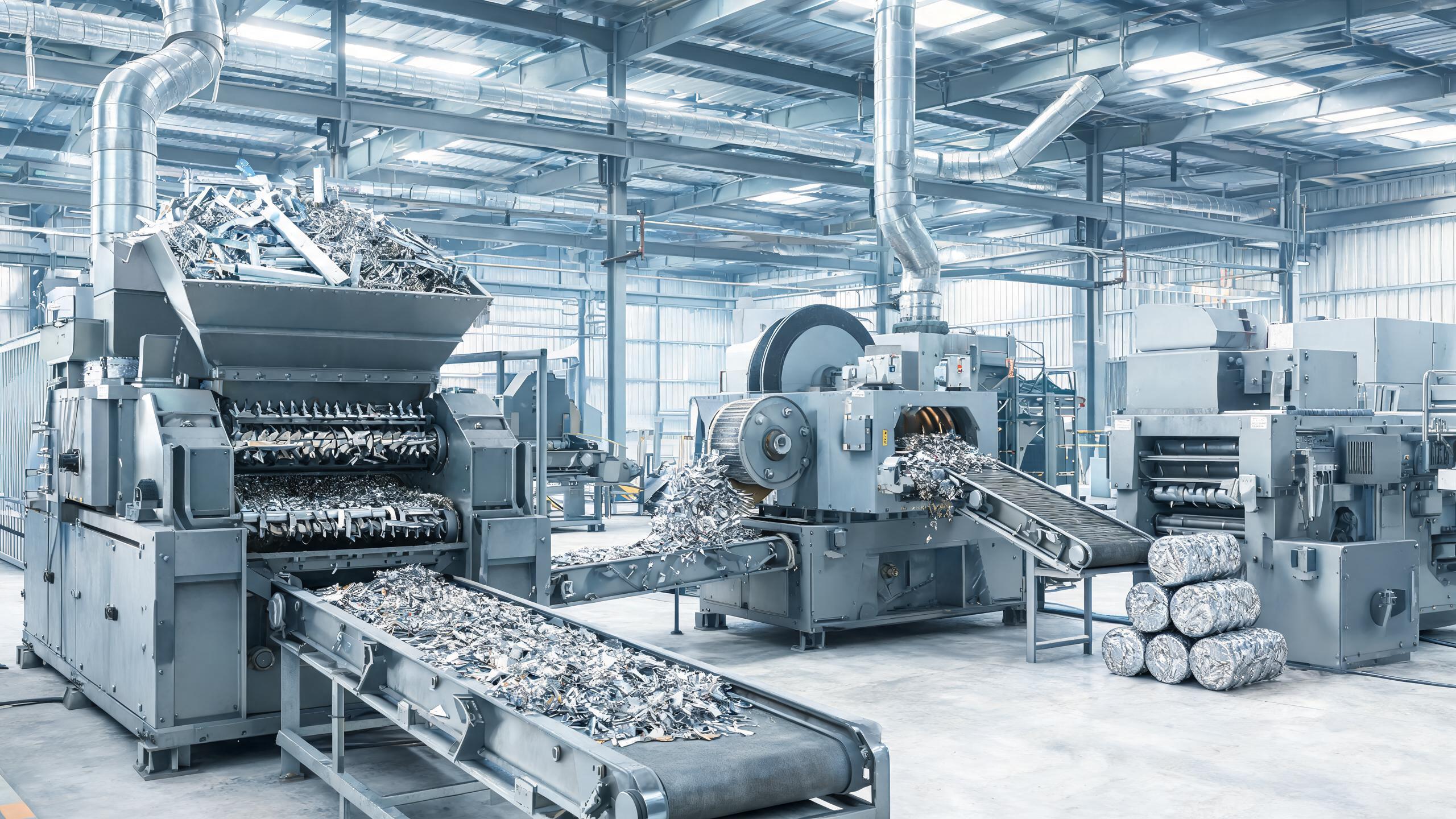
Complete Cable-to-Granule Processing with Copper and Plastic Recovery
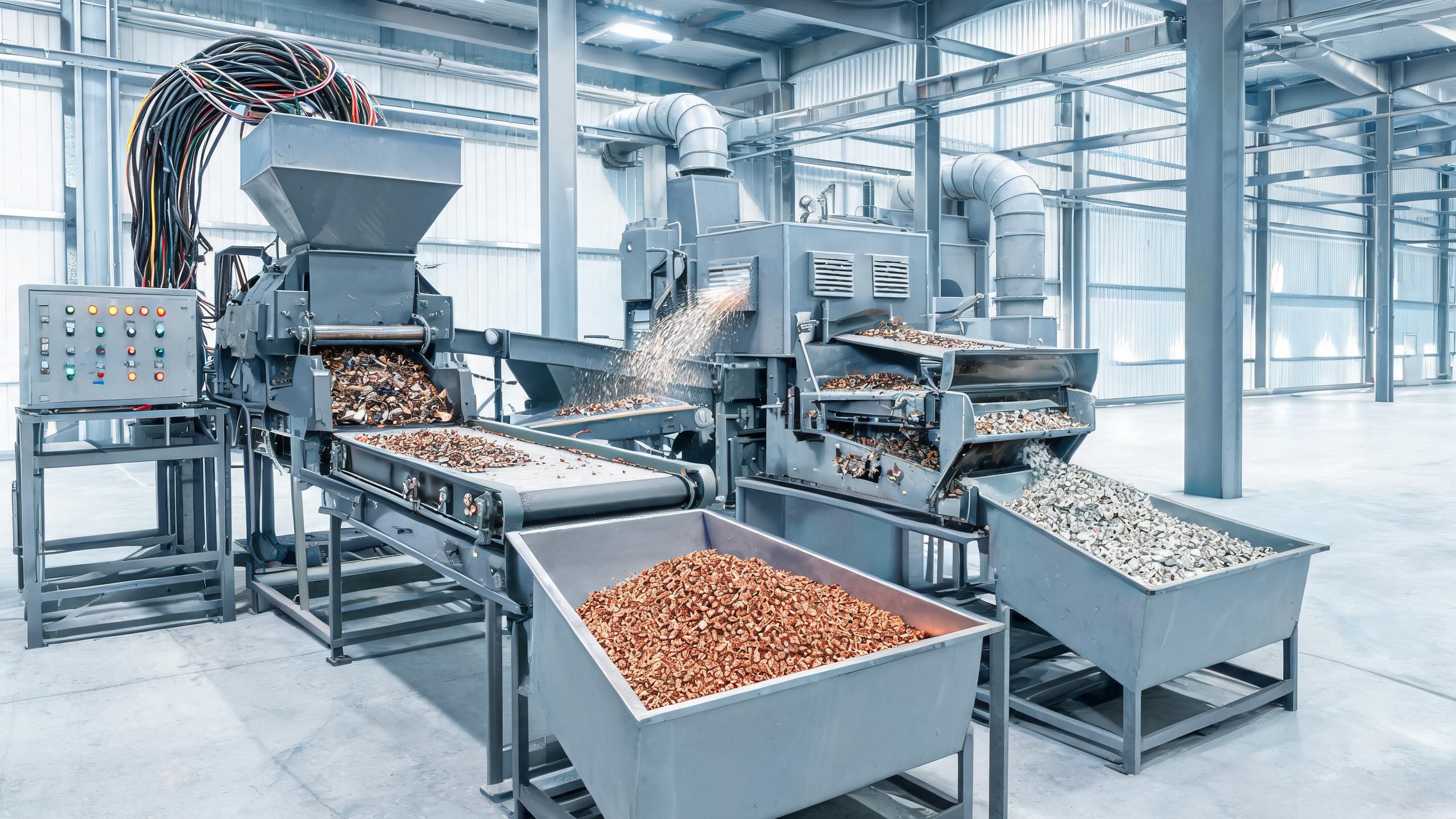
The TG-CableLine 100 is an integrated cable and wire recycling line engineered for metal recyclers, e-waste processors, and cable manufacturers who need to recover clean copper or aluminum metal from insulated electrical cables. The line connects shredding, granulation, air separation, and vibration table sorting into a continuous process that separates conductive metal from plastic and rubber insulation, producing clean metal granules ready for smelting or resale.
The target buyer is a scrap metal dealer, electronics recycling facility, or cable manufacturer processing 100 to 500 kg of cable per hour. The line handles copper-bearing cables (communication wire, power cable, building wire) and aluminum-bearing cables. It is not designed for steel-armored cable or cable with lead sheathing without pre-processing to remove the armor or sheath.
Line Configuration: Five Processing Stages
Primary Cable Shredder
Twin-shaft shredder reduces cable bundles to 20-40 mm strips, severing multi-core cables into manageable lengths for the granulator. Low-speed shearing prevents copper smearing and insulation melting.
Granulator
High-speed knife granulator chops shredded cable strips into 3-8 mm granules, liberating copper or aluminum conductor from insulation. Screen controls maximum granule size for downstream separation.
Air Separation
Air knife or air-density table separates light insulation fragments from heavier metal granules based on specific gravity differential. Light fraction (plastic, rubber) is collected for disposal or recycling.
Vibration Separation Table
Vibrating deck with density-based separation further purifies the metal granule stream. Remaining insulation particles and non-metallic contaminants are ejected, producing clean metal granules.
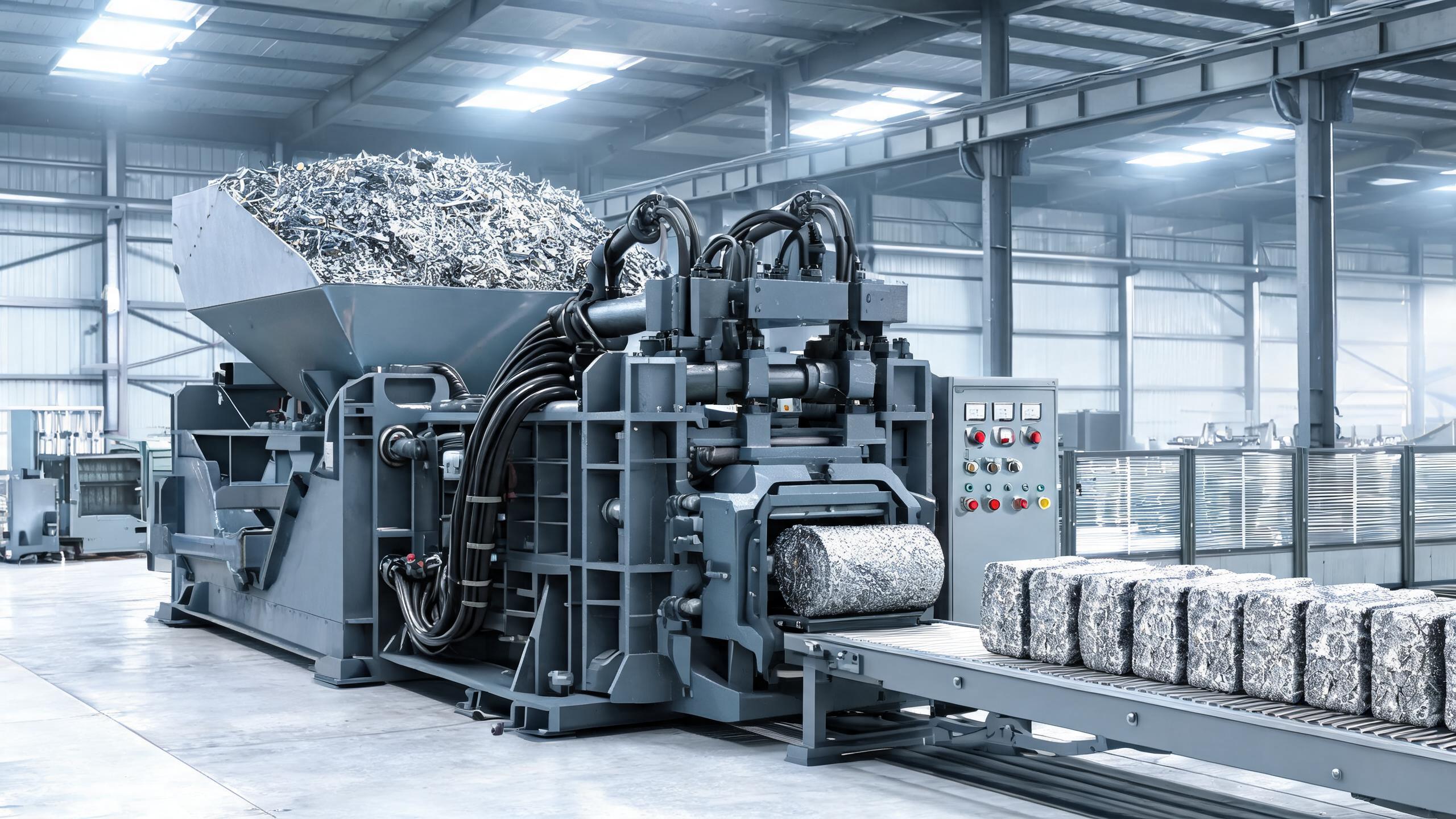
Metal Collection and Baling
Clean copper or aluminum granules are collected in holding bins. Optional baling press compacts granules into dense bales for transport to smelters or metal traders.
Why cable recycling needs dedicated equipment
Electrical cables consist of conductive metal (copper or aluminum) encased in insulating material (PVC, PE, XLPE, rubber). Recovering the metal requires liberating it from the insulation at a granule size where physical separation becomes effective. General-purpose shredders cannot achieve this liberation; a dedicated granulator with precise knife clearance and screen sizing is required to chop cable into granules small enough for the conductor to separate from the insulation.
The separation stages exploit the density difference between metal and insulation. Copper has a density of 8.96 g/cm3, aluminum 2.70 g/cm3, while common insulation materials range from 0.9 to 1.4 g/cm3. This large density differential allows air separation and vibration tables to effectively sort metal granules from insulation particles.
System Configuration
Processing Flow and Stage Function
The twin-shaft shredder is the first stage. Cable bundles enter the hopper and are drawn into the cutting chamber where counter-rotating shafts with hook-style cutting discs sever multi-core cables into 20-40 mm strips. The low-speed shearing action prevents the frictional heat that causes copper to smear and insulation to melt and adhere to the conductor, which would reduce downstream separation efficiency.
The granulator is the second stage and the heart of the liberation process. Strips from the shredder enter the granulator chamber where high-speed rotating knives chop them against fixed bed knives, producing 3-8 mm granules. At this size, the conductor metal is physically liberated from the insulation. The screen beneath the knives controls maximum granule size, which affects separation efficiency downstream.
Air separation is the third stage. The granule mixture falls onto an air-density table or passes through an air knife. The large specific gravity differential between metal and insulation allows the air stream to carry light insulation particles away while heavier metal granules fall through. Light fraction is collected in a separate bin for plastic recycling or disposal.
The vibration separation table is the fourth stage. The metal-enriched stream from air separation passes over a vibrating deck with an inclined surface and density-based separation mechanism. Residual insulation particles and non-metallic contaminants are ejected, producing clean metal granules ready for collection.
Metal collection and optional baling is the final stage. Clean copper or aluminum granules are collected in holding bins. An optional baling press can compact the granules into dense bales for more efficient transport to smelters or metal traders.
Product Advantages
- Metal liberation precision: Dedicated granulator with adjustable knife clearance and screen sizing achieves clean metal-insulation separation at granule level
- Density-based multi-stage separation: Air separation plus vibration table double-stage sorting maximizes metal recovery and purity
- Low-speed primary shredding: Prevents copper smearing and insulation melting that reduce separation efficiency in high-speed systems
- Integrated dust collection: Cyclone separator and filter cartridge system captures fine particles generated during granulation and separation
- Cable type flexibility: Handles copper and aluminum cables, communication wire, power cable, and building wire without equipment changeover
Application Scenarios
- Scrap metal dealers processing recovered cable from demolition and electrical contracting waste
- Electronics recycling facilities recovering copper from computer and appliance cables
- Cable manufacturers processing production offcuts and quality control rejects
- Auto recyclers recovering wiring harness copper from end-of-life vehicles
- Demolition contractors processing building wiring and power cable from structural demolition
Cable Types and Processing Boundaries
The line handles a wide range of cable types: copper communication wire (Cat5, Cat6), power cable (up to medium voltage), building wire (THHN, Romex), appliance cords, automotive wiring harnesses, and aluminum conductor cable. Cable diameter from 1 mm fine wire to 50 mm multi-core power cable can be processed.
Cables that require pre-processing before feeding include steel-armored cable (armor must be stripped), lead-sheathed cable (lead sheath must be removed), and cable with heavy steel conduit attached. These materials damage the shredder and granulator if fed intact. Confirm your cable types and any armor or sheathing at inquiry.
The line does not process fiber optic cable, which contains glass fiber rather than metal conductor. If your feed stream includes significant fiber optic content, discuss this with our engineering team, as the separation principles do not apply to non-conductive fiber.
Compliance and Certification
The line components carry CE marking per the Machinery Directive. The manufacturing facility operates under ISO 9001 quality management. UL-listed control panel configuration is available for North American buyers on request. Dust collection system meets standard workplace air quality requirements; confirm your local ventilation and emission regulations.
Buyer FAQ
Request a Detailed Proposal
To prepare an accurate quotation, include your typical cable types and conductor material (copper, aluminum, or mixed), cable diameter range, estimated hourly or daily volume, whether cables include armor or sheathing, target metal purity, site power supply (50 Hz or 60 Hz), and whether you need the optional baling press for metal granule output.
Request product details