From Loose Aluminum Swarf to Furnace-Ready Briquettes in One Line
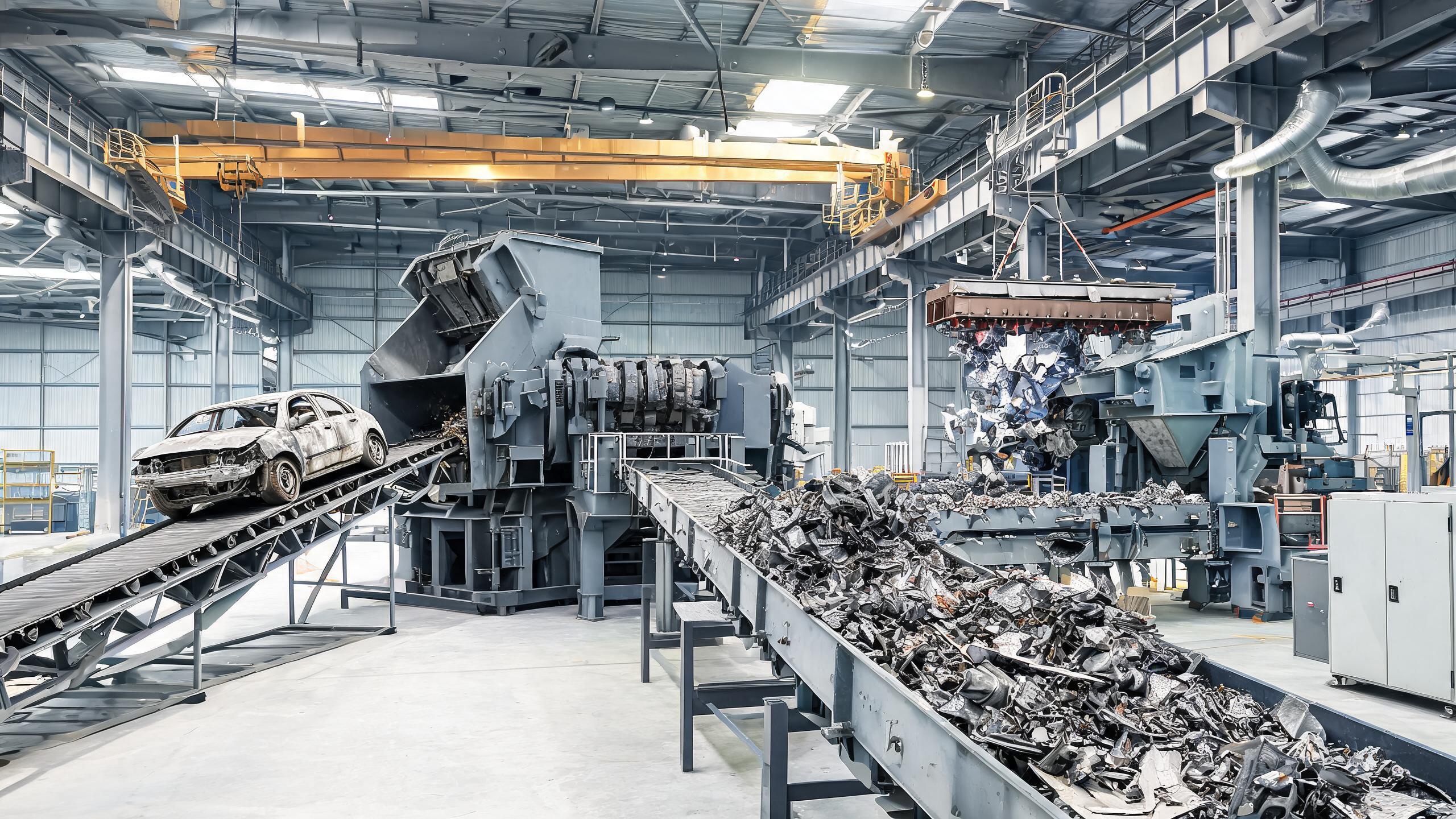
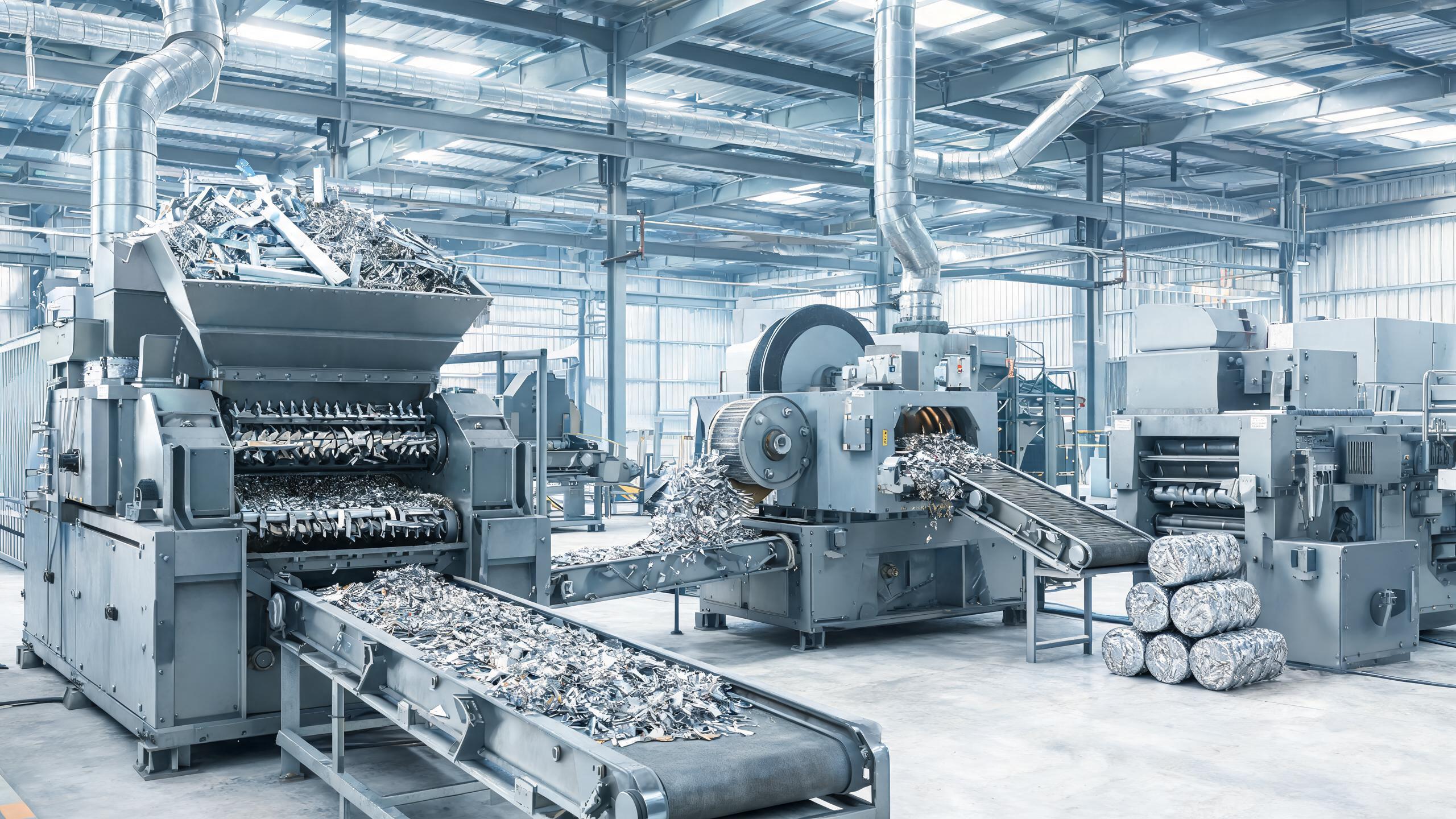
The TG-AluLine 200 connects shredding, magnetic contaminant removal, eddy current separation, and briquetting into a continuous process that transforms low-bulk-density aluminum waste into dense, furnace-ready briquettes. It is engineered for aluminum machining facilities, extrusion plants, and non-ferrous scrap dealers processing 3 to 15 tonnes of aluminum scrap per day-turnings with cutting fluid residue, extrusion offcuts, sheet scrap, and aluminum castings. The buyer receives a pre-engineered line with a unified PLC control system and single commissioning, rather than sourcing each unit separately and managing throughput matching across vendors.
The line is designed for aluminum scrap only. Magnesium turnings present a fire hazard and must not be processed without a prior hazard assessment and appropriate fire suppression systems. If your feed stream contains magnesium, discuss this with our engineering team before ordering.
Four Processing Stages
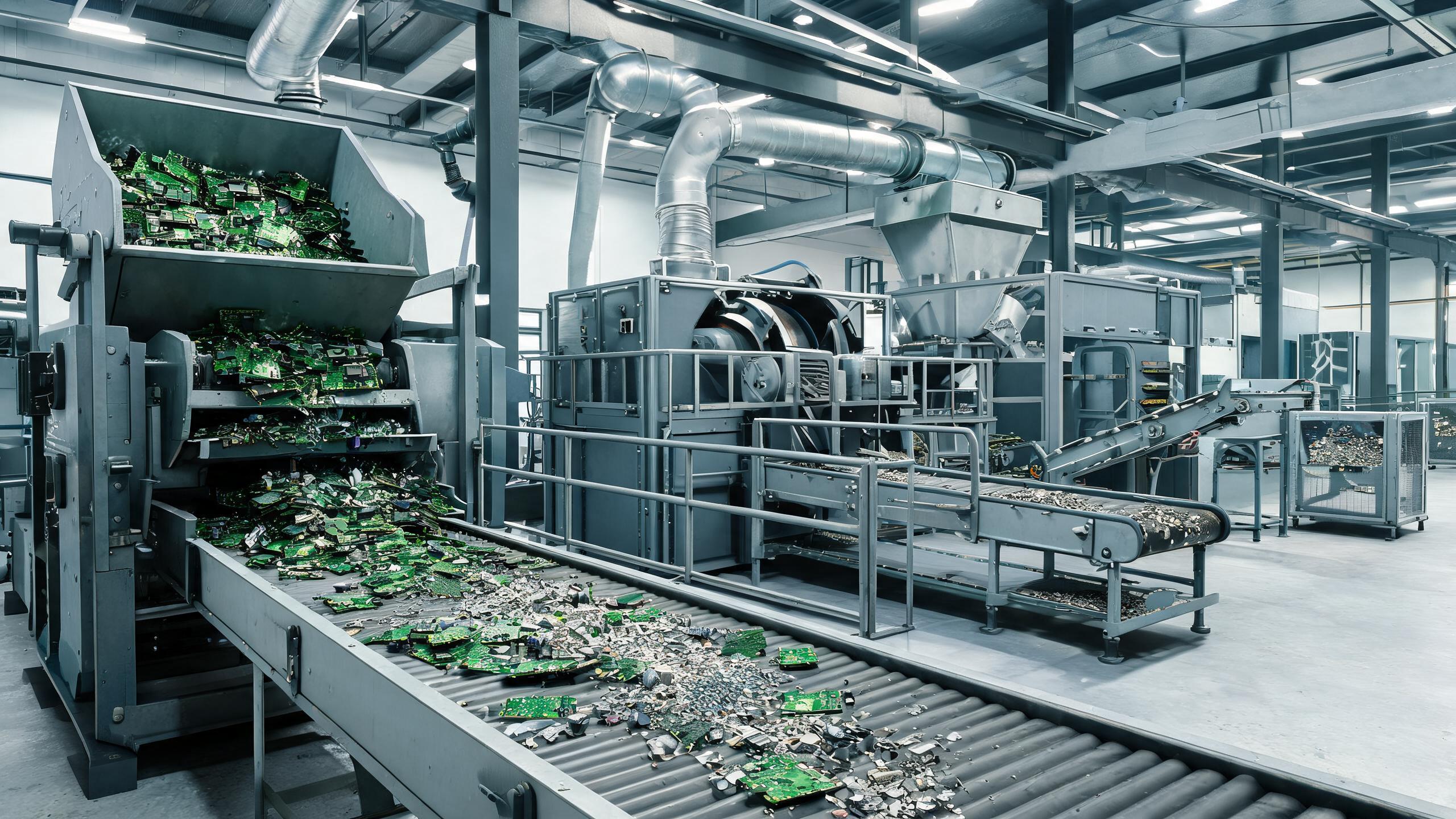
Twin-Shaft Aluminum Shredder
Low-speed, high-torque twin-shaft shredder with hook-style cutting discs handles stringy turnings without wrapping. Inclined hopper prevents bridging of loose chips. Discharge screen controls particle size for uniform downstream feed.
Magnetic Contaminant Removal
Drum or overband magnetic separator removes tramp ferrous (broken tool tips, steel chips, wear inserts) from the shredded aluminum stream. Critical before remelting to prevent iron pickup in the alloy.
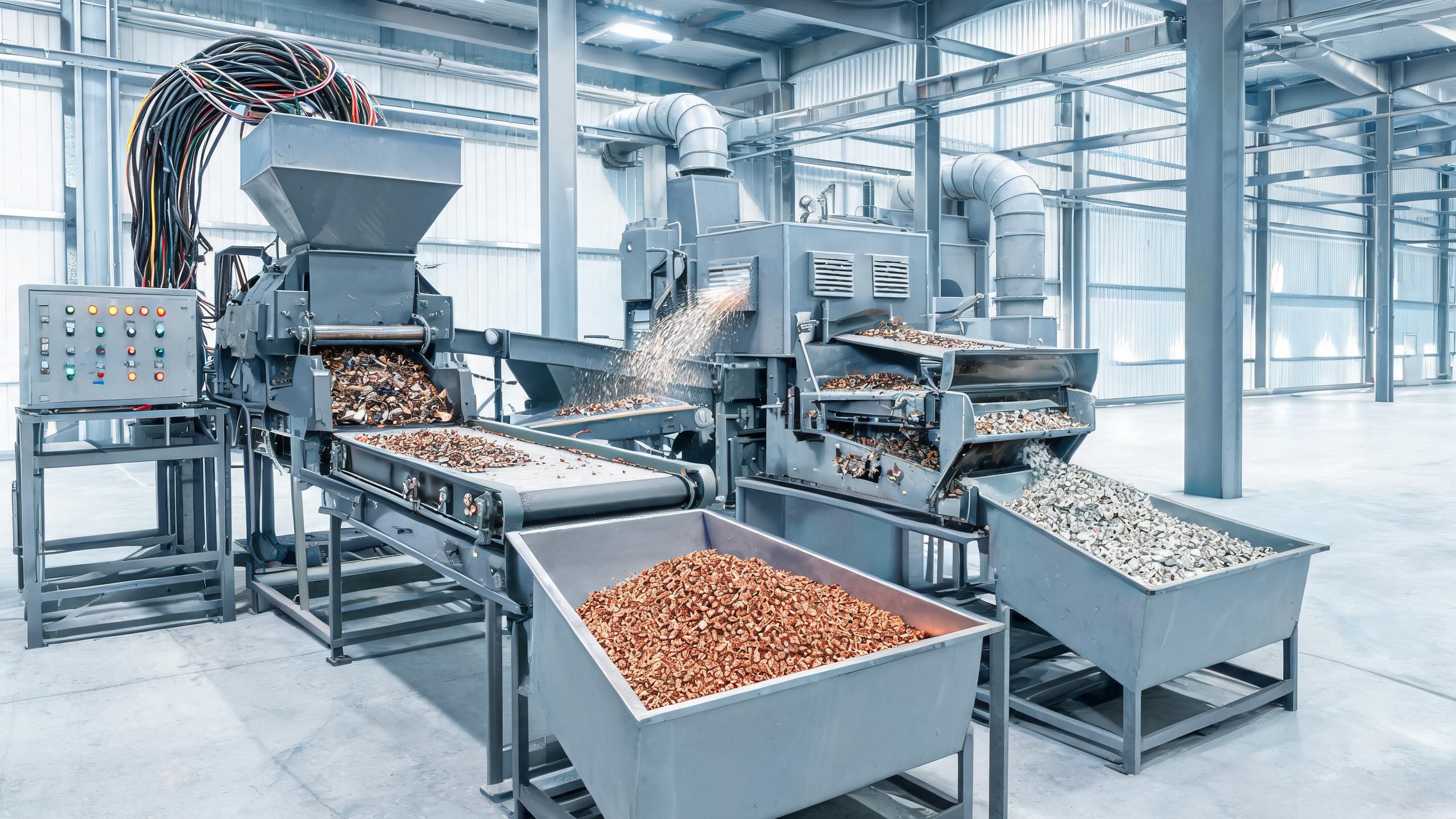
Eddy Current Separator
Rotating magnetic field repels conductive aluminum, ejecting it from non-metallic residue (plastic, rubber, packaging). Clean aluminum is collected for briquetting.
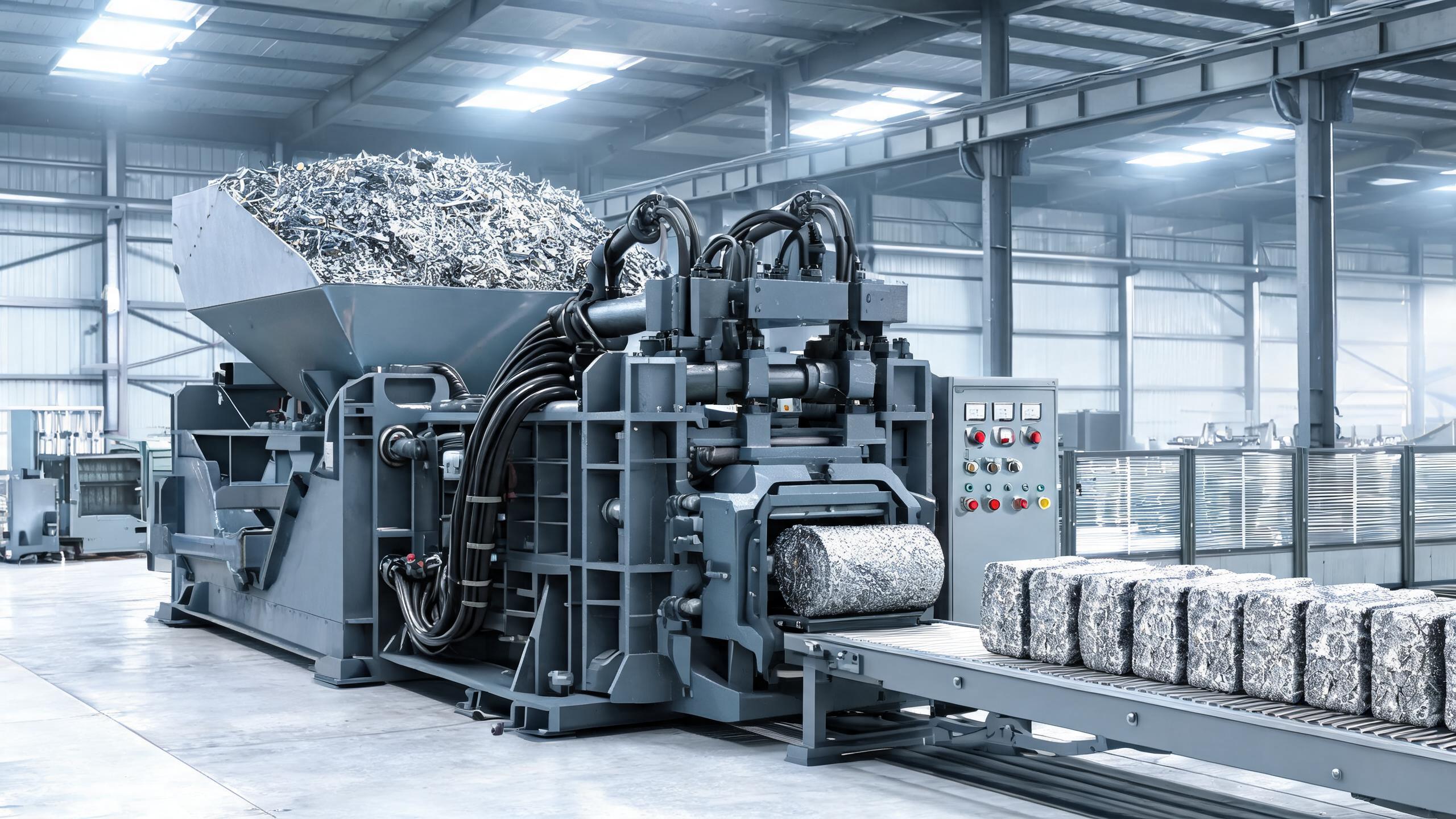
Hydraulic Briquetting Press
Compacts clean aluminum chips into dense cylindrical briquettes (2.0–2.5 t/m³ vs. 0.2–0.5 t/m³ for loose chips). Residual cutting fluid is squeezed out during compaction and can be collected for recycling.
System Configuration
| Stage | Equipment |
|---|---|
| Primary Shredding | Twin-shaft, low-speed high-torque |
| Contaminant Removal | Magnetic separator (drum or overband) |
| Metal Recovery | Eddy current separator |
| Densification | Hydraulic briquetting press |
| Control System | Unified PLC with stage interlocks |
| Coolant Management | Drain points at shredder + briquetting press |
| Power Supply | 50 Hz / 60 Hz configurable |
The PLC system manages stage sequencing and interlocks across the entire line. If the eddy current separator pauses, upstream feeding automatically stops-preventing material spillage and belt fouling that occurs when stages are controlled independently.
Why Aluminum Scrap Needs a Dedicated Line
Loose aluminum turnings have a bulk density of 0.2–0.5 t/m³, making transport and storage inefficient. The material often carries cutting fluid and coolant residue that must be managed during processing. Stringy turnings from lathe operations tend to wrap around shafts and tangle in conveyors. Tramp ferrous from tooling contamination must be removed before remelting to prevent iron pickup in the aluminum alloy.
Each stage addresses a specific challenge: the shredder densifies loose chips and severs stringy turnings; the magnetic separator removes ferrous contamination; the eddy current separator recovers aluminum from non-metallic residue; the briquetting press compacts clean aluminum into dense briquettes ready for furnace charging. Briquetting raises bulk density 5–8x, reducing transport cost per tonne and improving furnace charging efficiency.
Coolant and Contaminant Management
The shredder chamber has sealed shaft bearings and a drain point for cutting fluid drainage during processing. The briquetting press squeezes residual fluid from chips during compaction. Both drain points can be connected to a facility filtration and recycling system if cutting fluid recovery is part of your process. Confirm your coolant type and volume at inquiry so the drainage and sealing configuration is correctly specified.
Engineering and Support
Our engineering team configures shredder disc profiles, screen mesh openings, and hopper dimensions to match each buyer's input material and downstream separation requirements. The line ships with installation supervision, operator training, and a 12-month warranty. Each machine includes a spare-parts kit, and standard lead time for replacement wear parts is under 45 days. The manufacturing facility operates under ISO 9001 quality management.
Frequently Asked Questions
Request a Detailed Proposal
To prepare an accurate quotation, include your typical aluminum scrap types (turnings, profiles, sheet, castings), estimated daily volume, coolant/moisture content, target briquette output, site power supply (50 Hz or 60 Hz), and whether you need coolant recovery integration. Mention any specific material contamination concerns or certification requirements for your region.
Request product details