
Scrap Copper Buying Guide
Anyone searching for how much copper wire is worth right now usually wants one number. Reputable yards will not post a single figure that applies to every load, because two bales of cable sitting side by side can be worth very different amounts depending on what is inside. What a yard can do, reliably, is tell you its buying price on a given day for a clearly identified grade.
That means the useful question is not only "what is the price today" but "what grade is my material, and how does this yard quote it". Once you understand grading, you can read any quote in context and ask better questions.
- Scrap copper prices are set daily by the yard, tied to the copper market and adjusted for grade and recovery.
- Bare bright, #1, #2, and insulated wire are the four categories most yards quote.
- Cleanliness, coating, and insulation content drive the difference between grades.
- The same material can be quoted as a gross weight price or a recovered-copper price — always ask which.
What this guide covers
How a scrap yard actually quotes wire
A yard's copper wire price is not a fixed number on a website that applies to everyone. It is a buying decision refreshed as the market moves. Several factors go into it:
- The daily copper price. Consumer and scrap prices track the copper market, so a quote from last week may be out of date today.
- The grade you deliver. Bare bright copper commands a different price from mixed insulated cable.
- Recovery rate. For insulated wire, the yard cares about how many kilograms of copper come out of a tonne of cable.
- Contamination and moisture. Solder, plastic, steel, or water in the load lowers the usable copper content.
- Volume and relationship. Larger, repeat, well-sorted loads are easier to process and are often quoted more favorably.
Because of this, most yards quote "price per pound or per kilogram, for grade X, on today's market". If a quote does not name a grade, treat it as provisional.
The main scrap copper grades and what separates them
Grading is based on how much pure copper is present and how easily it can be recovered. The four categories below cover most wire and cable a buyer is likely to handle.
| Grade | Typical material | What separates it |
|---|---|---|
| Bare bright | Stripped, uncoated, unalloyed copper wire — often from heavy power cable | Shiny, clean, no insulation, no solder, no paint, no corrosion. The highest-value wire grade. |
| #1 copper | Clean copper wire and tubing, sometimes with light oxidation or a thin coating | Still high-purity copper, but may have slight surface oxidation, paint, or be thinner gauge. No heavy solder or fittings. |
| #2 copper | Soldered, painted, oxidized, or mixed copper wire and pipe | Lower purity. Solder, paint, corrosion, or attached fittings reduce the recoverable clean copper. |
| Insulated wire | Wire and cable still covered by plastic or rubber insulation | Priced on estimated copper recovery. The yard pays for the copper content, not the total weight. |
Grade names and acceptance rules vary by yard and region. Confirm the exact definition with the buyer before you ship.
Why bare bright is not simply "the best wire"
Bare bright has to be genuinely clean. A single length of tinned or soldered wire in a bale of bare bright can pull the whole lot down to #1 or #2 in the yard's eyes. Yards inspect, and they grade by the worst material in the load, not the best.
Why insulated wire prices look low by weight
Insulated cable is mostly insulation. If a cable contains roughly 60% copper by weight, the yard is paying for the copper portion and handling the rest. This is why insulated wire is quoted lower per gross kilogram than bare bright, even when the copper inside is identical. The relevant figure is the recovery rate, sometimes called the copper yield.
How to grade your own material before you call
- Separate by insulation status. Stripped wire and insulated cable should never be mixed in one pile.
- Separate bare bright from other stripped copper. Set aside anything with solder, paint, tinning, or visible oxidation.
- Remove attachments. Cut off steel connectors, brass fittings, and any non-copper parts that are easy to remove.
- Estimate copper yield on insulated cable. If you can, strip a representative sample and weigh the copper versus the insulation. This gives you a realistic recovery percentage.
- Keep the load dry and clean. Moisture, dirt, and mixed scrap reduce the price you will be offered.
- Photograph and label each lot. Clear photos and a short description help when you request a quote.
Grading your own material gives you leverage. Instead of asking "what will you give me", you can present a sorted lot and ask for a price against a named grade.
Questions that get you a usable price
- Is this quote per gross weight or per recovered copper weight?
- What grade are you quoting, and what is your definition of that grade?
- Is the price fixed for the day, or will it be adjusted on arrival?
- How do you handle contamination, moisture, or mixed loads?
- Do you require the copper to be stripped, or do you buy insulated cable as-is?
- What is the minimum load for this price?
Ask these before you commit material to a shipment. A quote that changes on the scale is normal; a quote that changes without an explanation is a problem.
When processing instead of selling raw makes sense
Selling insulated cable as-is trades convenience for a lower price, because the yard carries the cost of separating copper from insulation. If you handle large and consistent volumes, mechanical recovery can change your economics.
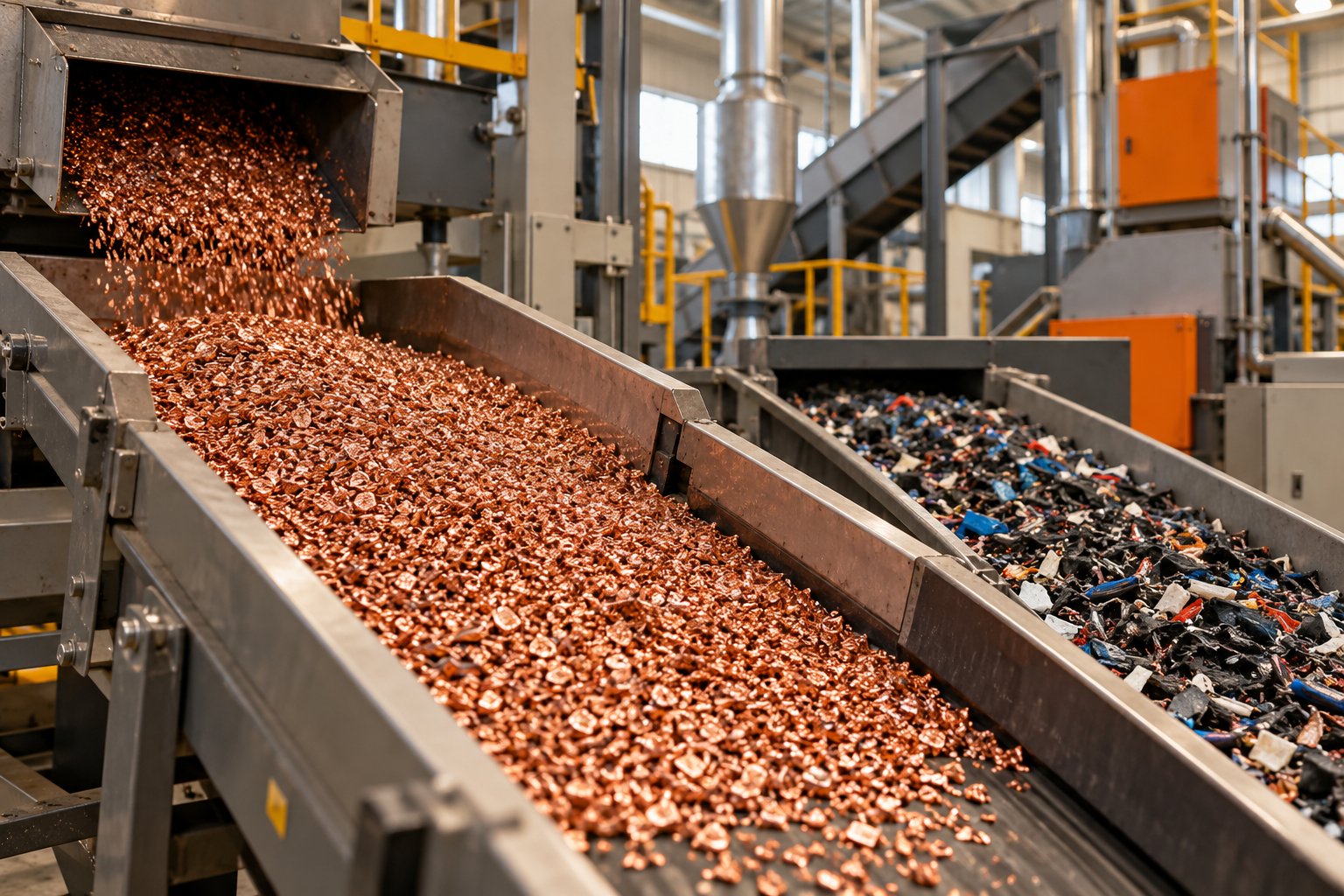
A cable and wire recycling line such as the TG-CableLine 100 is designed to recover clean copper granules from mixed cable. The output is a higher-grade product that can be graded and sold more like bare bright or #1 copper than like mixed insulated wire. Whether that route pays for you depends on your volume, cable mix, and local prices for granules versus insulated wire — compare both before deciding.
If you are unsure which grade your material falls into, the safest step is to send clear photos and a description to your buyer or equipment supplier and ask for a grading opinion before pricing. That single step often changes the number you are quoted.