Equipment Selection Guide
If you process scrap cable, e-waste, or aluminum scrap, the granulator is the heart of your recovery line. It is the machine that turns mixed waste into clean, sellable metal granules. Choosing the wrong one means lower metal yield, contaminated output, and more reprocessing. This guide explains what a metal granulator does, what to check before you buy, and how granulation fits into a complete recovery line.
Key Takeaways
- A granulator size-reduces material to liberate copper or aluminum from insulation and other contaminants.
- Match the granulator to your input material, not just to a target output tonnage.
- Downstream separation, not the granulator alone, determines final granule purity.
- Check rotor design, screen size, and maintenance access before you compare prices.
What Does a Granulator Do in a Metal Recovery Line?
A metal granulator is a high-speed size-reduction machine. It uses rotating blades to cut scrap cable, e-waste, or aluminum scrap into small, uniform granules. The goal is not simply to make material smaller. It is to liberate the metal from the insulation, plastic, or other attached materials. Once liberated, the metal and non-metal fractions can be separated using air, vibration, or magnetic and eddy current systems.
In a typical cable recycling line, for example, the process works like this:
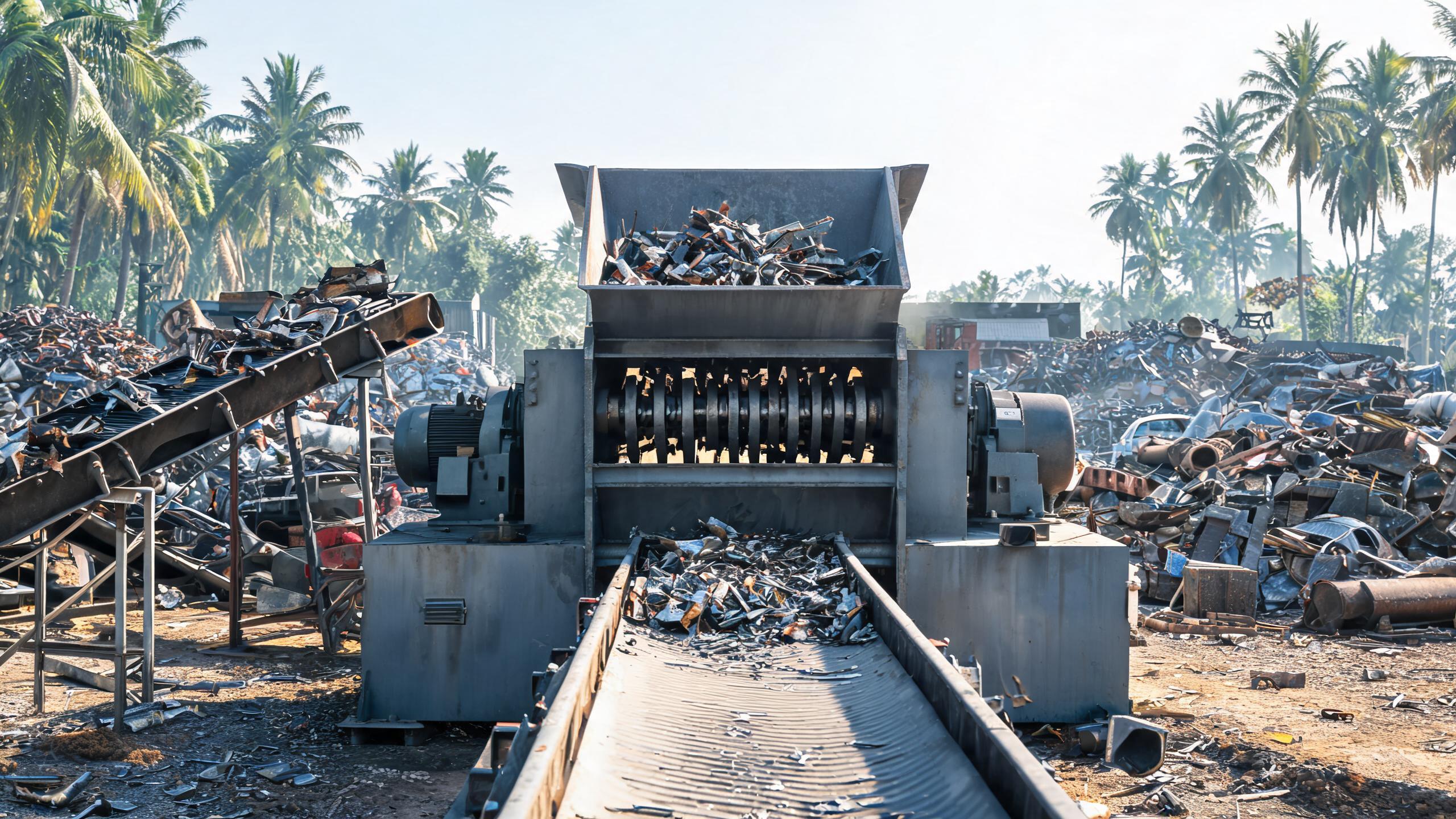
- Shredding: A twin-shaft shredder breaks down long or bulky cable into shorter pieces.
- Granulation: The granulator cuts the shredded material into small granules, freeing the copper or aluminum conductor from the plastic or rubber insulation.
- Separation: Air separation and a vibration table sort the metal granules from the plastic fluff.
The result is clean metal granules ready for smelting. The same principle applies to e-waste and aluminum scrap, though the downstream separation equipment differs based on the material mix.
What to Check When Selecting a Granulator
Choosing a China granulator for your operation is not just about picking a machine with the right motor power. You need to evaluate how it handles your specific feed material and how it integrates with the rest of your line. Work through these five checks.
Input Material Characteristics
What you feed into the granulator determines the machine design you need. Consider these questions:
- Is your feed clean copper cable, or mixed cable with steel armor? Clean cable is easier to process. Mixed or armored cable may need more pre-shredding.
- Is your feed mostly aluminum? Aluminum is softer and more ductile than copper. The granulator must be configured to cut it cleanly without smearing or creating long, stringy pieces.
- Is your feed e-waste? E-waste contains a mix of plastics, ferrous metals, and non-ferrous metals. You will need magnetic separation and eddy current separation after granulation, not just air separation.
Be specific about your input mix when you ask suppliers for a quote. A machine sized for clean copper wire may not perform well on shredded aluminum scrap or populated circuit boards.
Downstream Separation Equipment
The granulator produces a mixture. The separation equipment after it determines how pure your final metal granules are. A good granulator makes separation easier by producing a consistent particle size, but it cannot remove contamination by itself.
For cable, a combination of air separation and a vibration table is standard. For e-waste, you typically need a magnetic separator to pull out ferrous metals and an eddy current separator to recover non-ferrous metals. The TG-EWasteLine 150, for instance, uses a twin-shaft shredder, granulator, magnetic separator, eddy current separator, and air classification to recover ferrous metals, non-ferrous metals, and concentrated metal-bearing fractions from discarded electronics after battery removal.
Make sure the granulator you choose produces a particle size that matches your downstream equipment. If the granules are too large, the separator may not be able to sort them effectively. If they are too fine, you may lose metal as dust.
Output Granule Quality
The quality of your output granules directly affects your selling price. Smelters pay a premium for clean, uniform metal with minimal contamination. Check what the granulator's output looks like:
- Consistency: Are the granules uniform in size, or is there a wide range of particle sizes?
- Cleanliness: After separation, is the metal free of plastic and rubber residue?
- Metal loss: Does the system capture fine metal particles, or do they end up in the waste stream?
A well-designed granulator with the correct screen size will produce a consistent granule that separates cleanly.
Rotor Design and Screen Configuration
Two components define a granulator's cutting performance: the rotor and the screen.
The rotor holds the blades that do the cutting. Look for a rotor design that matches your material. A heavy-duty rotor with robust blades is essential for processing tough materials like armored cable or e-waste.
The screen controls the output particle size. Screens are interchangeable, so you can adjust the granule size by changing the screen mesh. Ask the supplier which screen sizes are available and how long it takes to change them.
Maintenance and Access
A granulator works under high stress. Blades wear out and need replacement. Screens clog and need cleaning. Choose a machine that is designed for easy maintenance:
- Can you access the blades quickly for replacement?
- Are spare parts readily available?
- Is the machine built with safety interlocks to protect operators during maintenance?
Downtime is expensive. A machine that is difficult to service will cost you more in lost production than the price difference between suppliers.
How Granulation Fits into Different Recovery Lines
The role of the granulator varies slightly depending on whether you process cable, e-waste, or aluminum scrap. Here is what to expect.
Cable Recycling Lines
For cable, the granulator is the primary liberation machine. A complete cable line typically includes a twin-shaft shredder, a granulator, air separation, and a vibration table. This combination separates the copper or aluminum conductor from the plastic and rubber insulation, producing clean metal granules for smelting.
The TG-CableLine 100 Cable and Wire Recycling Line is an example of this configuration. It uses a twin-shaft shredder, granulator, air separation, and vibration table to separate copper or aluminum conductor from plastic and rubber insulation. If your operation processes both copper and aluminum cable, confirm the granulator can handle both materials without significant changeover time.
E-Waste Processing Lines
E-waste is more complex than cable. It contains ferrous metals, non-ferrous metals, and a wide variety of plastics. After granulation, you need a multi-stage separation system. Magnetic separators remove iron and steel. Eddy current separators recover aluminum and other non-ferrous metals. Air classification removes light plastic fractions.
The key difference for e-waste is that the granulator must handle a more heterogeneous feed. It needs to be robust enough to process connectors, small components, and other dense materials without jamming.
Aluminum Recovery Lines
Aluminum scrap, such as aluminum profiles or UBCs (used beverage cans), presents a different challenge. Aluminum is ductile, so it can be difficult to cut cleanly. A granulator for aluminum must have sharp, properly configured blades to produce clean cuts rather than smeared or elongated pieces.
Ask the supplier how the granulator is configured for aluminum and whether the rotor speed and blade geometry are optimized for this material.
Matching Machine Size to Your Throughput
Granulators and complete recycling lines are rated by throughput. The equipment manufacturer Tiangong, for example, builds systems with typical throughput of 2–30 t/h. Your required throughput depends on how much material you process per shift.
Do not oversize the machine. A larger granulator costs more to buy and to operate. But do not undersize it either. An undersized machine will become a bottleneck, forcing you to run extra shifts or send material to a competitor.
Work out your daily or weekly input volume and discuss it with the supplier. They can recommend a line size that matches your actual production needs.
Evaluating the Supplier
When comparing suppliers, look beyond the brochure. Ask these questions:
- What is the machine's construction quality? Look at the thickness of the steel, the quality of the welding, and the brand of the motor and bearings.
- What certifications does the equipment carry? CE marking and ISO 9001 certification indicate that the manufacturer follows recognized standards for safety and quality management.
- What warranty is offered? A standard 12-month warranty is common, but confirm what it covers and how spare parts are supplied.
- Can the manufacturer provide a complete line, or only the granulator? Buying a complete line from one supplier simplifies integration and responsibility.
Tiangong, which was founded in 2008 and operates a 12,000 m² facility, is one example of a manufacturer that provides complete recycling lines with CE marking and ISO 9001 certification. A 12-month warranty is included on their equipment.
Common Mistakes to Avoid
Buyers often make the same mistakes when purchasing a granulator. Avoid these:
- Focusing only on price per ton: A cheaper machine that produces lower-quality granules or breaks down often is not a bargain.
- Ignoring the separation system: The granulator is only half the line. Budget for the right separation equipment.
- Not testing with your own material: Ask the supplier if they can run a sample of your scrap through their equipment to verify performance.
- Overlooking power consumption: Granulators use significant energy. Check the motor power and estimated energy cost per ton of output.
Next Steps
Choosing a metal granulator is a technical decision. Start by defining your input material, your required output purity, and your target throughput. Then compare equipment specifications and supplier capabilities against those requirements.
If you process cable, ask specifically about a complete cable recycling line that includes shredding, granulation, and separation. If you process e-waste, ensure the line includes magnetic and eddy current separation. If you process aluminum, confirm the granulator is configured for that material.
For more details on a complete cable and wire recycling solution, review the TG-CableLine 100 Cable and Wire Recycling Line. It demonstrates how a twin-shaft shredder, granulator, air separation, and vibration table work together to produce clean copper and aluminum granules.