BUYER GUIDE
If you run a scrap yard or recycling plant in Vietnam, Indonesia, Thailand, Malaysia, or the Philippines, choosing the right metal shredder is a capital decision that affects your throughput, operating cost, and uptime for years. Get it wrong, and you either underutilize the machine or choke on maintenance. This article walks through the three decisions that matter most: matching capacity to your actual feedstock, picking the right shredder type, and understanding blade and wear-part costs. We'll also look at the total cost picture beyond the purchase price.
- Match shredder throughput to your daily input tonnage and material type—2–30 t/h is a realistic range depending on feedstock.
- Twin-shaft shredders handle mixed scrap and bulky items; single-shaft units give more consistent output size with a screen; hammer mills suit brittle and lighter materials.
- Blade design and wear parts drive long-term cost—look for bolt-on alloy cutting discs or tool steel knives that can be replaced without replacing the whole rotor.
- Don't buy on price alone—consider lead time, warranty, installation supervision, and operator training in the total cost.
Start With Your Feedstock, Not the Machine
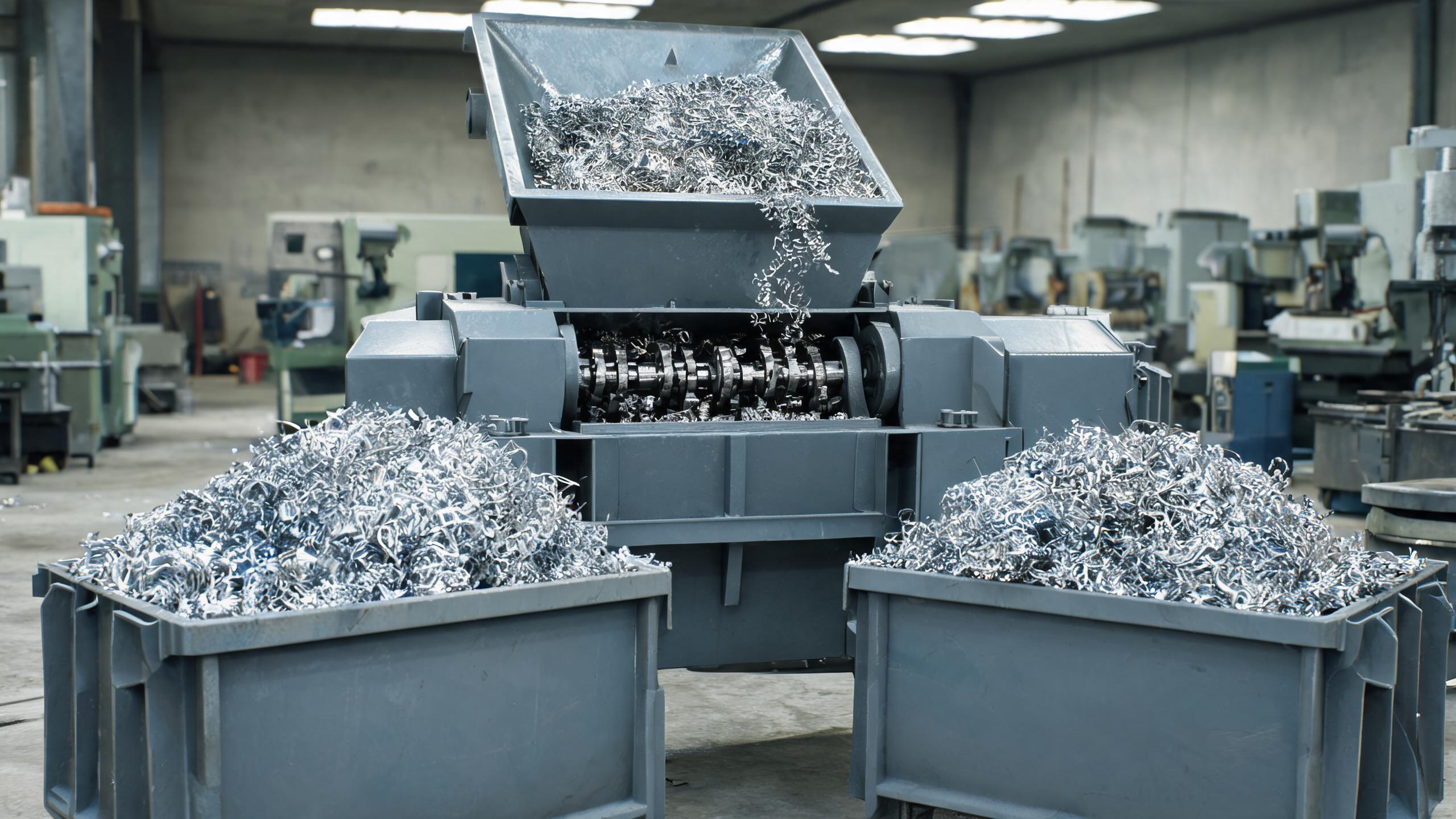
The first question is not “which shredder is best” but “what exactly are you feeding it every day?” A metal shredder is sized by throughput (tonnes per hour) and by the physical characteristics of the input:
- Material type: mixed scrap (cars, appliances, drums), light gauge sheet, aluminium profiles, copper wire, or heavy structural steel all behave differently.
- Particle size in: large bulky items need a shredder with enough throat opening and torque to pull them in.
- Desired output size: downstream separation (magnetic, eddy current) and briquetting often require a consistent particle size.
- Daily volume: your target tonnes per day divided by operating hours gives the required throughput.
For example, a plant processing 80 tonnes of mixed scrap per shift needs a machine rated around that throughput, not a smaller unit that forces overtime or bottlenecks. TIANGONG's TG-2200 Twin-Shaft Metal Shredder is rated at 80 TPH on mixed scrap with a 2000 HP (1492 kW) drive—a high-capacity option for large yards. On the other end, a smaller operation feeding light sheet and cans might only need a few tonnes per hour. The right capacity is the one that matches your actual input without oversizing your capital spend.
Twin-Shaft vs Single-Shaft vs Hammer Mill: What Each Does Well
Once you know your feedstock, the next step is choosing the shredder type. Each design has a clear sweet spot.
Twin-Shaft Shredders for Mixed and Bulky Scrap
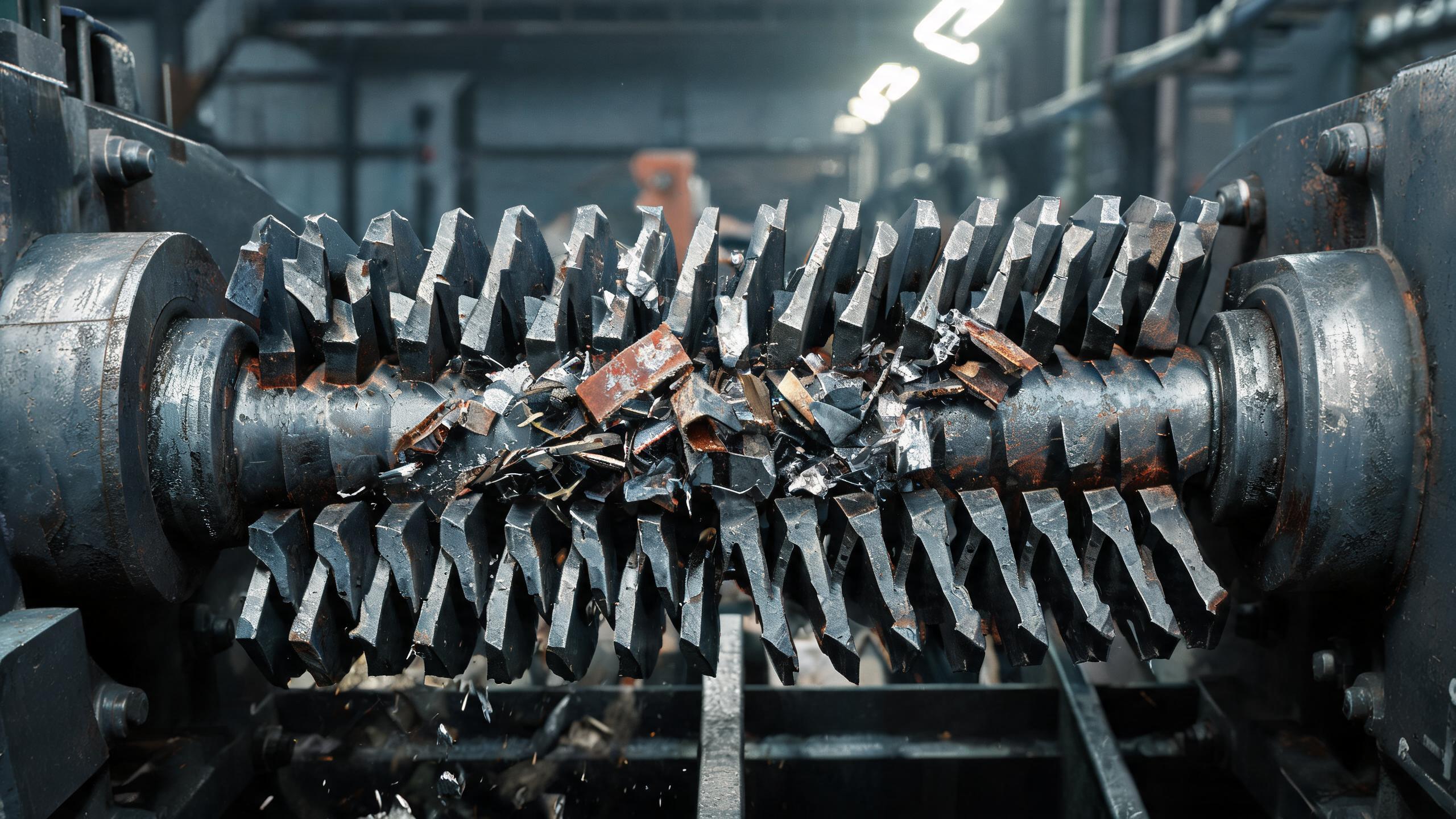
Twin-shaft shredders use two counter-rotating shafts with cutting discs that tear and shear material. They handle mixed scrap, bulky items, and materials with some toughness—things like whole appliances, drums, and light structural steel. The low rotor speed (typically 12–22 RPM) means high torque, which is what you need to pull in and break down large pieces without stalling.
The TG-2200 is a good example: twin counter-rotating shafts, 12–22 RPM rotor speed, and bolt-on alloy cutting discs. The bolt-on design is a key detail—it means you replace the cutting discs individually rather than the entire rotor assembly when they wear. That directly affects your maintenance budget.
Single-Shaft Shredders for Consistent Output Size
Single-shaft shredders use one rotor with knives and a hydraulic feed ram that pushes material against the rotor. They typically have an interchangeable screen underneath that controls output particle size. If your downstream process requires a uniform fraction—for example, to feed a briquetting press or a magnetic separator efficiently—a single-shaft unit gives you that control.
TIANGONG's TG-SingleShaft 200 is a 55 kW machine with a hydraulic feed ram, interchangeable screen, and PLC-controlled auto reverse to prevent jams. The bolt-on tool steel knives are replaceable, so you don't scrap the rotor when knives dull. This type suits plants that need a consistent output size from lighter and more uniform feeds.
Hammer Mills for Brittle and Lighter Materials
Hammer mills crush material using high-speed swinging hammers. They work well on brittle materials—cast aluminium, engines, and light gauge scrap—but they generate more fines and dust, and they are not ideal for tough, ductile metals that can wrap around the rotor. TIANGONG offers the TG-Hammer 800 Heavy-Duty Metal Crusher for this category. If your feedstock is mostly brittle or light, a hammer mill can be a lower-cost option, but be aware of its limitations with ductile materials.
Four-Shaft Shredders for Finer, More Uniform Output
Four-shaft shredders add a second pair of shafts to further reduce particle size in one pass. They produce a finer, more uniform output than twin-shaft units, at the cost of lower throughput and higher wear. The TG-FourShaft 400 is an example. Use this when your downstream process demands a small, consistent particle size and you can accept lower throughput.
| Type | Best For | Throughput | Output Size Control | Typical Drive Power |
|---|---|---|---|---|
| Twin-Shaft | Mixed scrap, bulky items, high torque | High (up to 80 TPH) | Moderate (coarse) | Large (e.g., 2000 HP) |
| Single-Shaft | Uniform output, lighter feeds | Medium (e.g., 55 kW) | Good (screen controlled) | Medium |
| Hammer Mill | Brittle, light materials | Medium | Limited (fines) | Medium-High |
| Four-Shaft | Finer, uniform output | Lower | Excellent | Medium |
Blade Types and Wear Parts: Where the Real Cost Lives
The purchase price of a metal shredder is only the beginning. Over the machine's life, the biggest recurring cost is wear parts—especially the cutting blades or discs. Here's what to look for:
- Bolt-on cutting discs or knives: These can be replaced individually when worn. If the cutting edges are integral to the rotor, you may have to replace the entire rotor assembly—a much larger expense. The TG-2200 uses bolt-on alloy cutting discs; the TG-SingleShaft 200 uses bolt-on tool steel knives. Both are designed for replaceable wear parts.
- Alloy vs tool steel: Alloy discs are typically harder and more wear-resistant for abrasive materials like mixed scrap. Tool steel knives hold an edge well and are suited for cutting ductile materials. Match the blade material to your feedstock.
- Screen wear: In single-shaft shredders, the screen is a wear part that controls output size. Interchangeable screens let you adjust particle size, but they also wear and need replacement. Factor that into cost.
- Rotor speed and torque balance: Low-speed, high-torque designs (like twin-shaft) generally produce less wear and dust than high-speed hammer mills. If you process tough materials, a lower-speed machine may save on blade replacement costs over time.
“A machine that costs less upfront but requires frequent, expensive blade changes can cost more per tonne in the first year alone.”
Cost Factors Beyond the Purchase Price
When comparing quotes, look beyond the base price. These factors determine the total cost of ownership:
- Throughput vs. price: A higher-capacity machine costs more but may process more tonnes per hour, reducing cost per tonne. Calculate your required throughput first, then compare prices per tonne per hour.
- Energy consumption: The drive motor power (kW) directly affects electricity cost. A 55 kW single-shaft shredder uses far less energy than a 1492 kW twin-shaft unit, but it also processes less. Match power to your volume.
- Maintenance and spare parts: Availability of spare blades, screens, and bearings locally matters. Ask about spare parts stock and delivery time.
- Installation and training: Proper installation and operator training reduce downtime and premature wear. TIANGONG provides installation supervision and operator training with its equipment.
- Warranty and support: A 12-month warranty is standard from TIANGONG. Check what's covered and for how long.
- Lead time: If you need the machine quickly, lead time matters. TIANGONG offers lead times under 45 days for standard models, which can be critical when you're losing money on unprocessed scrap.
Integrated Systems: When Shredding Alone Isn't Enough
Some operations need more than a shredder. If you're producing scrap that must be transported or sold at a premium, an integrated system that shreds, separates, and densifies can improve your margins. TIANGONG's TG-ScrapLine 150 is an example: it processes up to 15 t/h with a 250 kW main shredder drive, includes an overband magnetic separator to pull out ferrous metals, and has a briquetting press that raises bulk density above 4.0 t/m³. Denser briquettes mean lower transport costs and often a better price from mills. The system is PLC-controlled and CE marked.
If your operation is larger or more complex, consider whether a complete line makes more sense than a standalone shredder. It's a bigger investment, but the separation and densification steps add value that a single machine can't.
Questions to Ask Any Supplier Before You Buy
Use this checklist when evaluating a metal shredder supplier:
- What is the machine's rated throughput on my specific material? (Not just the brochure number.)
- Are the cutting blades bolt-on and replaceable individually? What is the typical wear life on my material?
- What is the lead time for the machine and for spare parts?
- Is installation supervision and operator training included?
- What does the warranty cover, and for how long?
- Is the machine CE marked? Does the manufacturer hold ISO 9001?
- Can I visit the factory or see a reference installation?
TIANGONG, a manufacturer founded in 2008, builds metal shredders and crushers in a 12,000 m² facility. Its product line covers throughputs from around 2 t/h to 30 t/h depending on material, and it offers CE-marked machines with ISO 9001 certification. Lead times are under 45 days for standard models, and a 12-month warranty is included. If you're evaluating suppliers, ask for specific throughput data on your feed material—that's the number that matters.
Next Steps
Choosing a metal shredder is about matching the machine to your real-world feedstock and operating goals. Start by defining your daily tonnage and material type, then compare shredder types and wear-part designs. Factor in energy, maintenance, and support costs, not just the purchase price.
If you're in Southeast Asia and want to discuss your specific application, contact TIANGONG with your material details and target throughput. They can help you select the right model from their range—from the high-capacity TG-2200 twin-shaft shredder to the versatile TG-SingleShaft 200 or the integrated TG-ScrapLine 150 system.