
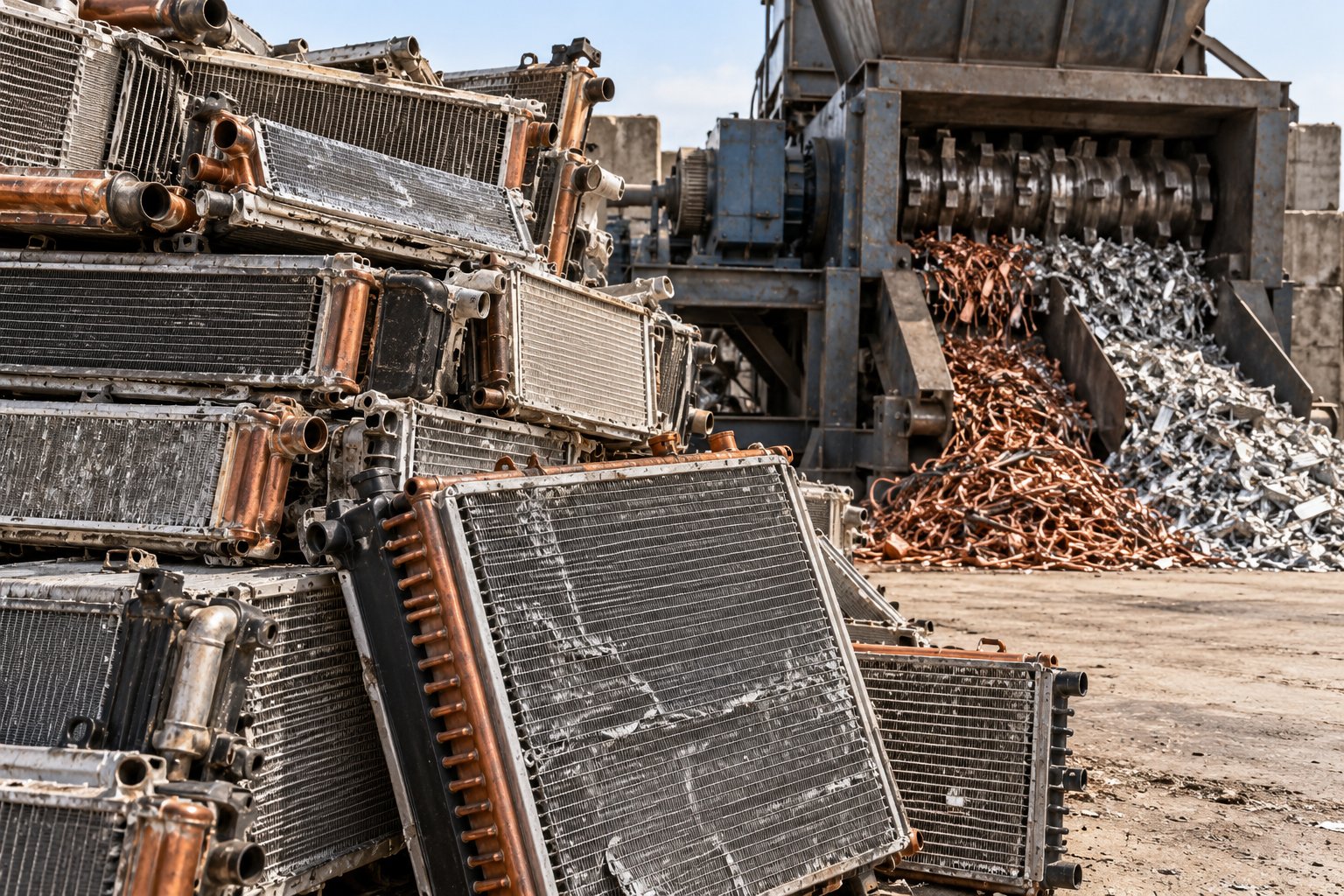
The #1 copper scrap price is the amount a recycler pays for clean, uncoated, unalloyed copper—most often bare bright wire, but also clean copper pipe and bus bar that meet the same criteria. It sits at the top of the scrap copper ladder because it needs the least processing before it can be melted and remade into new copper. When a yard quotes a #1 copper price, it is quoting a grade that assumes almost no contamination, no coating, and no alloying elements. If any of those assumptions fail, the load is reclassified—usually as #2 copper or lower—and the price drops accordingly.
What #1 copper actually means
The #1 copper grade is defined by what is absent as much as by what is present. To qualify, the copper must be:
- Bare—no insulation, no paint, no lacquer, no plastic or rubber coating.
- Uncoated—no tin, nickel, silver, or other plating.
- Unalloyed—no brass, bronze, or other copper alloys mixed in.
- Clean and bright—free of heavy oxidation, corrosion, solder, and attachments.
Bare bright is the most familiar form of #1 copper: bright, shiny wire, typically stripped from communication cable, power cable, or automotive harness. Clean copper pipe and tubing can also grade as #1 if it has no solder joints, no fittings, and no paint or corrosion. Bus bar and clean copper sheet fall in the same family when they meet the same conditions. The common thread is that the material is essentially ready for the furnace with minimal preparation.
Two things follow from that definition. First, the #1 copper scrap price reflects the value of copper that a refiner can charge directly, so yards pay a premium for it. Second, anything that forces extra sorting, stripping, or refining before melting reduces that premium. That is the whole logic of scrap copper grading.
How recyclers grade bare bright copper
Most yards inspect a load against a short, practical checklist. The exact criteria vary by yard and by the mill buying the material, but the questions are consistent:
- Is there any insulation, coating, or paint? If yes, it is not bare bright unless the coating is removed.
- Is there any solder, plating, or fitting? Solder joints on pipe, tinned wire ends, and brass valves or connectors all count against the grade.
- Is there visible corrosion or heavy oxidation? Light surface tarnish is usually tolerated; green or black corrosion is not.
- Is the wire or pipe of a consistent, identifiable type? Mixed or unknown material is graded more conservatively.
- Are there attachments? Screws, clamps, tape, rubber grommets, and plastic ties must be removed.
Yard staff may also consider wire gauge. Thin, hair-like wire is harder to sort and can carry more surface oxidation relative to its volume, so some yards grade it separately even when it is technically bare. Thick, clean conductor is easier to verify and easier to feed into a furnace, which supports the top grade.
- #1 copper means bare, uncoated, unalloyed, and clean—no insulation, plating, solder, or corrosion.
- Bare bright wire is the classic #1 copper; clean pipe and bus bar can qualify too.
- Contamination, attachments, and mixed alloys are the main reasons a load is downgraded.
- Processing that removes insulation and separates metals cleanly helps material hold a higher grade.
Contamination factors that move a load down
Contamination is the single biggest driver of grade movement. The following factors are the ones recyclers check most often:
| Factor | Why it matters | Typical grade impact |
|---|---|---|
| Solder | Solder contains tin and often lead, which must be removed or diluted during refining. | Usually pushes to #2 or lower |
| Paint, lacquer, or plastic coating | Coating burns off or contaminates the melt and adds handling cost. | Downgrade unless stripped |
| Plating (tin, nickel, silver) | Plating changes the melt chemistry and requires extra treatment. | Downgrade or separate grade |
| Corrosion or heavy oxidation | Oxidized copper yields less recoverable metal and can hide further contamination. | Downgrade depending on severity |
| Attachments (fittings, screws, tape, rubber) | Non-copper material must be removed before melting; it also signals poor sorting. | Downgrade until removed |
| Alloy mixing (brass, bronze) | Different melt chemistry; not #1 copper at all. | Reclassified as alloy scrap |
| Moisture or oil | Adds weight that is not copper and can cause safety issues in the furnace. | Reduces payable weight |
The pattern is straightforward: the more a yard has to do to make the copper furnace-ready, the lower the grade and the lower the price. Clean, stripped, single-type conductor commands the top of the range. Mixed, coated, or dirty material sits lower.
#1 vs #2 copper and other common grades
The difference between #1 and #2 copper is not a single test—it is a threshold of cleanliness and uniformity. #2 copper is still valuable copper, but it carries conditions that require more processing:
- #1 copper: bare, bright, uncoated, unalloyed, clean wire or pipe. Minimal preparation before melting.
- #2 copper: copper that has solder, paint, light oxidation, or minor attachments; may include thinner or mixed wire. Still mostly copper, but not clean enough for the top grade.
- #1 insulated wire: copper conductor still covered by insulation. The copper is good, but the insulation must be removed—so it is priced as insulated scrap, not bare bright.
- #2 insulated wire: lower-grade or mixed insulated wire with a lower expected copper yield.
- Copper alloy scrap: brass, bronze, and other alloys fall outside the #1 and #2 copper categories entirely.
In practice, the line between #1 and #2 often comes down to how much solder, coating, or attachment is present and how consistent the material is. A load of clean, bright, single-gauge wire is clearly #1. A load of pipe with soldered joints and painted sections is clearly #2 or lower. Most loads sit somewhere between, and the yard's inspection decides.
How processing affects grade value
Because the #1 copper scrap price depends on cleanliness and uniformity, the way material is prepared before it reaches the yard directly affects the grade it earns. Two processing approaches matter most:
Mechanical stripping and separation. Insulated cable and wire can be processed to recover clean copper conductor. A line such as the TG-CableLine 100 Cable and Wire Recycling Line combines a twin-shaft shredder, granulator, air separation, and vibration table to separate copper or aluminum conductor from plastic and rubber insulation, producing clean metal granules. That kind of separation removes the insulation factor that would otherwise push material into an insulated-wire grade.
Integrated scrap processing. Mixed scrap streams benefit from a line that can handle both size reduction and metal separation. The TG-ScrapLine 150 Integrated Scrap Processing System is a 15 t/h turnkey line with a twin-shaft low-speed, high-torque shredder, overband and drum magnetic separators, a hydraulic briquetting press, and PLC control. It is CE certified and ISO 9001.
Neither line changes the definition of #1 copper. What they do is remove the variables—insulation, attachments, mixed materials—that cause a load to be downgraded. Cleaner, more uniform output is easier for a yard to verify and easier for a mill to melt, which is what supports a higher grade.
It is worth being precise about what processing can and cannot fix. Mechanical separation can remove insulation, plastic, rubber, and magnetic attachments. It cannot remove solder from a pipe joint, undo plating, or reverse corrosion. Those are material conditions that must be managed by sorting and preparation before processing, not by the line itself.
FAQ
Is bare bright copper the same as #1 copper?
Bare bright is the most common form of #1 copper, and the terms are often used interchangeably. Strictly, #1 copper can also include clean copper pipe, bus bar, and sheet that meet the same bare, uncoated, unalloyed, clean criteria. Bare bright specifically describes bright, uncoated wire.
What makes copper drop from #1 to #2?
The usual causes are solder, paint or coating, plating, corrosion, and attachments such as fittings, screws, or tape. Mixed or unknown material is also graded more conservatively. Any of these can move a load from #1 to #2 or lower.
Does wire gauge affect the #1 copper grade?
Gauge can matter. Very thin wire is harder to sort and carries proportionally more surface oxidation, so some yards grade it separately even when it is bare. Thick, clean conductor is easier to verify and is more consistently accepted as #1.
Can insulated wire ever be #1 copper?
No. Insulated wire is graded as insulated scrap because the insulation must be removed before melting. Once the insulation is mechanically stripped and the copper is clean, the recovered conductor can be presented as bare bright or #1 copper, depending on its condition.
Why do different yards quote different #1 copper prices?
Local yard pricing reflects the yard's own costs, the mills it sells to, freight, volume, and its inspection standards. A yard with a nearby smelter and high throughput may pay differently than a small yard that ships material long distances. The grade definition is broadly consistent, but the price attached to it is local and changes with the market.
How can I tell if my copper is clean enough for #1?
Inspect for insulation, paint, solder, plating, corrosion, and attachments. If the copper is bright, bare, and free of those, it is likely #1. If you are unsure, separate the load by type and ask the yard to confirm the grade before delivery—grading is ultimately decided by the buyer's inspection.
Understanding the #1 copper grade is mostly about understanding what contaminates it. Clean, bare, uncoated, unalloyed copper holds the top position because it requires the least work to become new copper again. Everything else—solder, paint, plating, corrosion, attachments—moves the load down the ladder and changes what a yard can offer.