
Aluminum can scrap price is the amount a scrap yard, aggregator, or smelter will pay for used beverage cans (UBC) delivered in a condition that meets their intake specification. It is not a fixed public number. It is a grade-based valuation: the underlying aluminum benchmark sets the starting point, then deductions are applied for coatings, moisture, dirt, mixed metals, and how the material is baled or processed. Two loads of the same weight can earn different rates because they are not the same grade.
This article explains the mechanics behind UBC pricing without quoting any specific rates. It covers what buyers and sellers of UBC scrap should understand about grade determination, the benchmark aluminum price that anchors the market, and why processing condition—not just can count—drives the final figure.
In this article
The pricing mechanics: benchmark plus grade adjustment
Aluminum is a globally traded commodity. Its price moves on exchanges and is published as a benchmark—sometimes called the LME or a regional reference. Scrap prices are derived from that benchmark, not invented independently by a single yard. When the benchmark rises, scrap rates tend to follow; when it falls, they soften.
But UBC scrap does not trade at the full benchmark value of pure aluminum. Three layers of adjustment separate the two:
- Recovery yield. A used beverage can is not 100% aluminum. It carries lacquer and paint on the outside, a liner inside, and residual moisture or product. The smelter must melt it and recover the metal. The gap between the can's gross weight and the recoverable aluminum weight is a core reason UBC pays less than a clean, uncoated aluminum grade.
- Grade classification. Yards sort incoming aluminum into defined grades. UBC is a recognized grade, but within it there are quality tiers. A load of whole, dry, clean cans is not the same as a load of crushed cans mixed with steel lids, plastic, or glass.
- Processing and handling cost. The yard or smelter must sort, de-contaminate, shred, bale, and transport the material. Those costs are subtracted from the benchmark to arrive at what can be paid at the gate.
The published benchmark is the anchor. The grade is the multiplier. Contamination and processing condition are the deductions. Aluminum can scrap price is the result of all three applied together.
Cleanliness, contamination, and deductions
Contamination is the most common reason a UBC load is downgraded or rejected. Because smelters work to tight chemistry specifications, foreign material either has to be removed before melting or it becomes a cost that gets passed back to the seller.
Typical deductions come from:
- Moisture and liquid. Cans holding water, syrup, or other liquids add dead weight and create safety and furnace issues. Wet material is routinely discounted or refused.
- Non-aluminum attachments. Steel lids, tin ends, plastic caps, straws, and labels that have not been separated reduce the aluminum fraction of the load.
- Dirt, sand, and debris. Cans collected from streets or mixed waste streams carry grit that is weighed as aluminum but is not aluminum.
- Mixed metals and other scrap. If UBC is baled with other aluminum grades or with non-aluminum scrap, the whole bale may be treated as a lower mixed grade.
- Excessive fines. Crushed or shredded material that generates a high proportion of fine particles can be harder to handle and may be priced accordingly.
Cleanliness is not a slogan—it is a measurable input. A seller who bales only dry, sorted cans and keeps the bale free of dirt and mixed metals is delivering a higher grade of UBC and is more likely to receive the top end of the prevailing range.
Baling and processing condition
How UBC is presented to the buyer affects both logistics and price. Loose cans take up enormous volume relative to their weight, which raises transport cost per ton and makes handling inefficient. Baled or densified material is easier to load, store, and feed into a furnace.
Processing condition is judged on several practical points:
- Density and bale integrity. A well-formed bale that holds together is easier to handle than a loose or crumbly one.
- Uniformity. Consistent bale size and shape lets the buyer plan logistics and melt charges predictably.
- Absence of excess fines. Shredded or crushed material that is too fine can blow away or clog handling equipment; screened output is preferred.
- Size reduction before baling. Reducing can size before baling can improve bale density and make the load more consistent.
In other words, the same weight of aluminum can command a different rate depending on whether it arrives as loose cans, a clean bale, or a screened, baler-ready product. Processing is part of the pricing formula.
UBC versus other aluminum grades
UBC sits in the lower-middle tier of aluminum scrap grades. It is a light aluminum packaging material, and its value reflects the coatings, lacquer, and alloy mix that beverage cans carry. Clean, sorted, uncoated aluminum—such as certain extrusion, sheet, or profile scrap—generally earns more per unit because it requires less processing to reach a specification.
| Material | Relative grade position | Why it prices differently |
|---|---|---|
| Clean sorted aluminum (e.g., certain sheet or profile scrap) | Higher | Low coating, predictable chemistry, less processing to meet spec |
| Used beverage cans (UBC) | Lower-middle | Lacquer, liner, moisture, and mixed alloys; requires de-coating and melting |
| Mixed aluminum with attachments | Lower | Steel, plastic, and other contaminants reduce recoverable aluminum |
The practical takeaway is that UBC pricing is a function of how much of the load is truly recoverable aluminum, not how much it weighs on the scale. The closer a UBC load comes to a clean, sorted, dry condition, the closer it moves toward the higher end of its grade band.
Regional yard variation
There is no single national or global aluminum can scrap price. Rates vary by region because of:
- Distance to a smelter or consuming mill. Freight is a real cost, and it is subtracted from the benchmark. Material far from a consumer pays less.
- Local supply and demand. A region with many yards competing for UBC may pay more than one with a single buyer.
- Local grade specifications. Different yards publish different acceptable contamination limits and may classify the same cans differently.
- Volume and contract terms. A regular supplier delivering consistent bales may negotiate different terms than a one-off drop-off.
For anyone buying or selling UBC, the correct rate is always the one quoted by a specific counterparty for a specific specification at a specific time. That is why price-explainer content should describe the mechanics rather than publish a rate that will be stale within days.
Preparing UBC for better grading
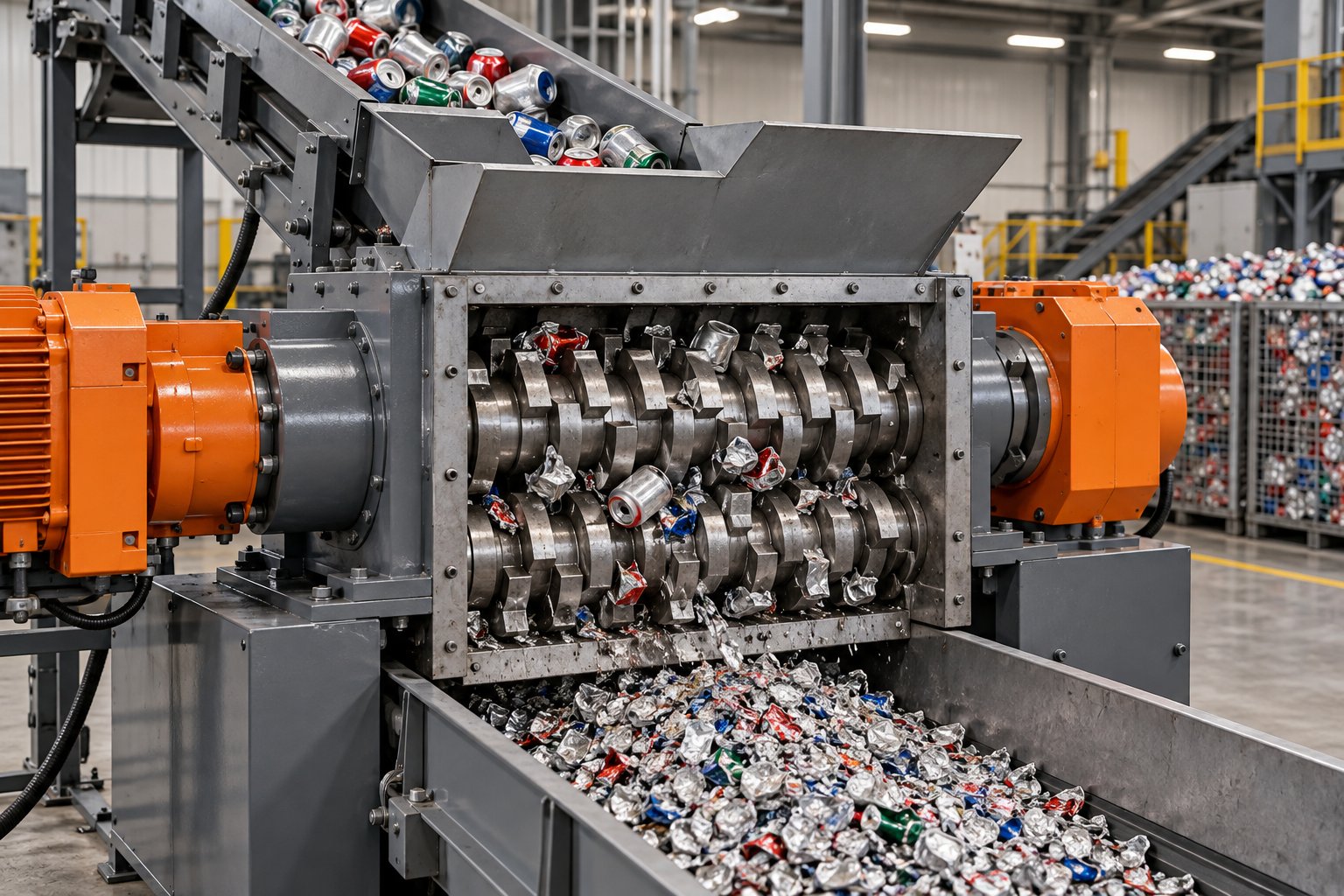
Because processing condition feeds directly into grade and therefore into the achievable rate, the equipment used to prepare UBC matters. A can shredder reduces whole cans to a consistent, screened output that can be baled more densely and handled more predictably than loose material.
Tian Gong has manufactured metal shredders since 2008, and its CE-marked equipment includes the TG-CanShred 200 Can Shredder. It is a compact twin-shaft can shredder built for UBC and light aluminum packaging. Key specifications include:
| Specification | Detail |
|---|---|
| Feed chute | 300 x 400 mm |
| Drive | 2 x 7.5 kW on standard workshop power |
| Rated capacity | 0.4–1.0 t/h on UBC and light aluminum packaging |
| Output | Screened discharge for baler-ready material |
| Operating feature | Auto-reverse for jam clearing |
| Certification | CE marked |
The screened discharge is significant for grading. A consistent, controlled particle size helps produce denser, more uniform bales and reduces the proportion of fines that can cause handling problems. Since bale quality is one of the factors a yard assesses, a shredder that produces baler-ready output supports a cleaner presentation of the UBC load.
The 2 x 7.5 kW drive is designed for standard workshop power, which suits operations that do not have heavy industrial electrical supply. The auto-reverse function helps clear jams without manual intervention, and the CE mark indicates conformity with applicable European requirements.
Frequently asked questions
Is there a single official aluminum can scrap price?
No. There is a published aluminum benchmark that anchors the market, but the actual rate paid for UBC is set by each yard based on grade, contamination, baling condition, freight distance, and local demand. The benchmark moves daily, and yard specifications differ.
Why do clean cans earn more than dirty cans?
Because price is based on recoverable aluminum, not gross weight. Moisture, dirt, steel lids, plastic, and other contamination add weight that is not aluminum. Yards deduct or downgrade for these materials, so a cleaner load represents more aluminum per ton and is valued higher.
Does baling change the price?
Baled UBC is easier and cheaper to transport and handle than loose cans, and a well-formed bale signals a more processed, consistent grade. Baling and shredding therefore support better grading and more efficient logistics, which can be reflected in the rate offered.
How does UBC compare with other aluminum scrap?
UBC is a lower-grade light aluminum because beverage cans carry lacquer, liners, and mixed alloys. Clean, sorted, uncoated aluminum typically earns more per unit because it needs less processing to meet a smelter specification.
The bottom line
Aluminum can scrap price is a derived value: an aluminum benchmark, adjusted for grade, cleaned of contamination deductions, and shaped by processing and logistics. For sellers, the leverage lies in what can be controlled—keeping cans dry and sorted, removing non-aluminum attachments, and baling or shredding to a consistent, screened output. For buyers and processors, the same factors determine what a UBC load is actually worth.
If you process UBC or light aluminum packaging and want to improve bale consistency, the TG-CanShred 200 Can Shredder is a compact twin-shaft option rated for 0.4–1.0 t/h with screened, baler-ready discharge. Contact Tian Gong to confirm whether its specifications suit your material and power supply.