
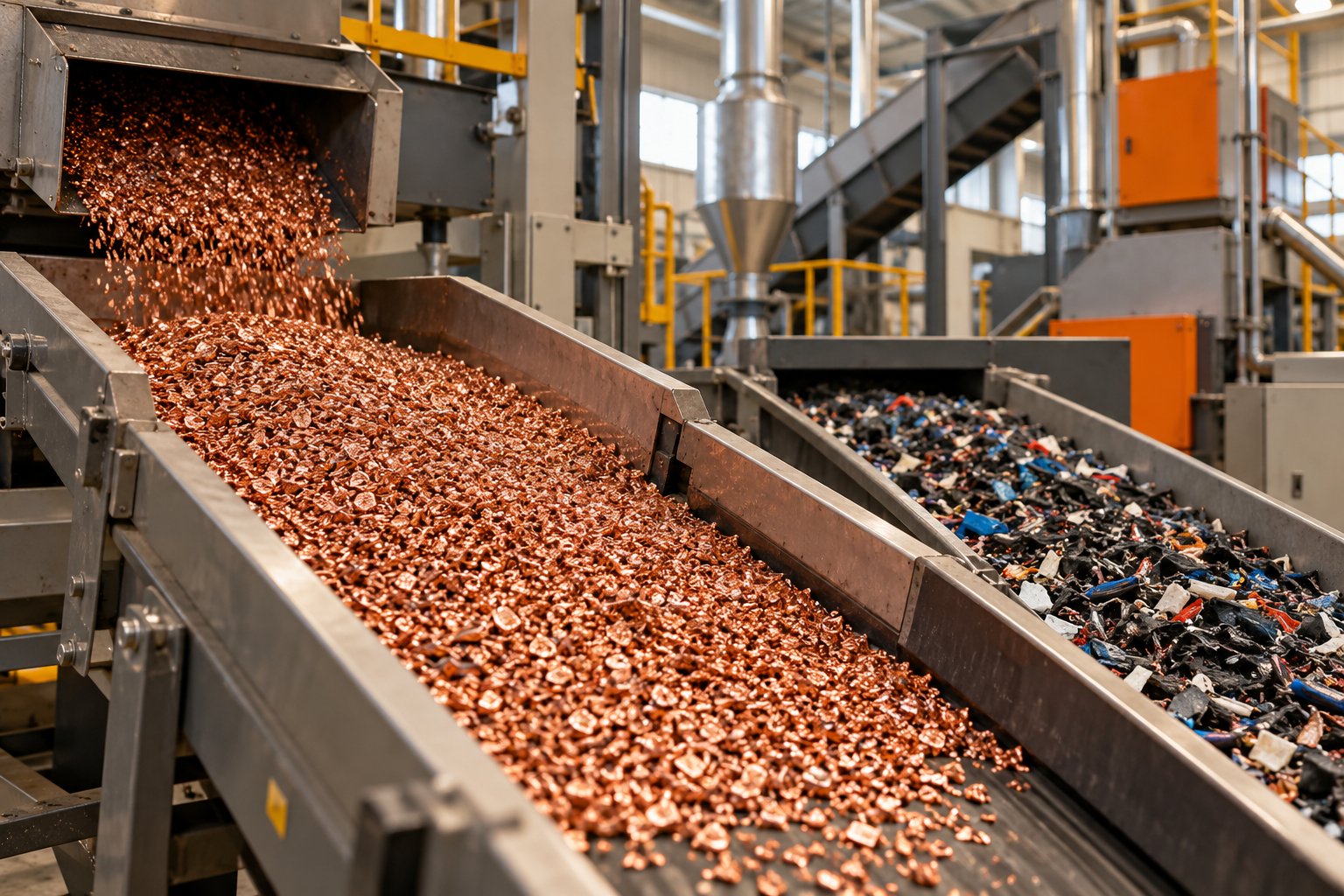
If you sell or buy copper scrap, you have probably noticed that two shipments of similar weight can settle at very different values. The gap rarely comes from the metal itself — it comes from what is still attached to it. That is why the keyword buyers search for, what is clean copper scrap price, is really a question about purity, not just about copper.
Key takeaways
- Clean copper scrap is essentially free of insulation, solder, attachments, and mixed metals.
- Smelters and yards pay a premium because clean material lowers their refining cost and metal loss.
- Contamination is handled through deductions, not by rejecting the load.
- Mechanical separation, such as cable granulation, produces clean copper and aluminum granules for smelting.
On this page
What counts as clean copper scrap
In the scrap trade, “clean” is a purity statement. A clean lot contains copper that has been stripped of the materials that interfere with melting or add worthless weight. Common examples include bare bright wire, clean copper tubing with fittings removed, and sorted copper granules separated from plastic insulation.
What makes a lot unclean is anything that is not copper:
- Insulation and plastic — cable jacketing, wire coating, and sheathing.
- Solder and brazing alloys — tin and lead that alter melt chemistry.
- Attachments — steel screws, brass fittings, terminals, and connectors.
- Mixed metals — aluminum strands, iron, or shredded fractions blended into the load.
Purity is usually described by the proportion of recoverable copper or by how the material is prepared. When a seller and buyer agree on a lot classification, they are agreeing on how much of that weight the smelter can actually turn into refined copper.
Why smelters and yards pay a premium for purity
A smelter’s cost is not the copper alone. It is the energy, flux, labor, and yield loss required to turn a mixed feed into saleable metal. Clean scrap reduces all four.
Insulation and plastic burn off or form slag. Solder introduces unwanted elements that must be removed. Steel and brass attachments dilute the copper content and can damage equipment or change the composition of the finished metal. Every one of these issues costs the smelter money, and that cost is passed back to the scrap supplier as a lower price.
Yards apply the same logic. A clean lot is faster to sort, easier to verify, and cheaper to store and ship. Clean granulate, for example, can be sampled and graded with far less handling than tangled insulated cable. That operational saving is another reason clean material earns a premium.
How contamination discounts work
Most yards do not reject a contaminated load. They price it, then subtract for the parts that are not copper. The discount can take several forms:
| Contamination type | Typical effect on settlement |
|---|---|
| Insulation or plastic | Weight deduction based on the insulation percentage; the plastic is not paid as copper. |
| Solder or brazing | Deduction for alloy content and possible downgrading of the lot classification. |
| Steel, brass, or other metals | Deduction for the foreign metal weight, often with a further penalty because the load is now mixed. |
| Moisture, dirt, or oil | Weight deduction after drying or sampling. |
The exact deduction depends on the agreement, the sampling method, and the smelter’s own limits. Because those terms vary, the practical lesson for suppliers is simple: the cleaner the material you deliver, the fewer deduction lines appear on the settlement, and the closer the paid price gets to the headline clean copper scrap price.
How mechanical separation produces clean granulate
The most reliable way to turn mixed cable into clean copper is mechanical separation. A cable and wire recycling line cuts, shreds, and then separates the copper or aluminum from the plastic insulation by density and size, producing granules that are largely free of insulation. Those granules can then be sampled, graded, and sent to a smelter without the handling problems of baled insulated cable.
One example is the TG-CableLine 100 cable and wire recycling line, which produces clean copper and aluminum granules separated from insulation for smelting. The output is a prepared, smelter-ready material rather than a mixed cable stream, which matters when buyers are deciding whether a lot qualifies for a clean-scrap premium.
Mechanical separation is not a guarantee of any particular price. It is a preparation method: it reduces insulation and attachments, which in turn reduces the deductions a yard or smelter would otherwise apply. For suppliers, the value is in controlling purity before the material reaches the scale.
Practical checklist for evaluating a clean lot
- Inspect for visible insulation, tape, and plastic before baling or bagging.
- Remove steel screws, brass fittings, and terminals.
- Keep copper and aluminum fractions separate.
- Ask how the buyer samples and grades the material, since that determines the deduction method.
FAQ
Is clean copper scrap the same as bare bright copper?
No. Bare bright is a specific grade of clean, uncoated copper wire. “Clean” is a broader description that can apply to stripped wire, sorted tubing, or granulated copper that is free of insulation and attachments.
Does clean copper scrap price change with the form of the scrap?
Yes. Form affects how easily the material can be sampled, handled, and melted. Clean granulate and stripped wire are generally easier to grade than tangled insulated cable, which is one reason preparation matters to the final settlement.
Can contaminated scrap still be sold?
Usually yes, but the load is priced with deductions for insulation, solder, mixed metals, or moisture. The seller receives the copper value minus those deductions.
If you handle cable and wire and want to improve the purity of what you sell, mechanical separation is the step that turns mixed feed into clean granulate. Buyers can review the TG-CableLine 100 line for cable and wire recycling details, or contact the supplier with your material type and target output so the right configuration can be confirmed.