
Scrap Market Guide
If you are holding a load of copper and asking what is copper scrap price right now, the honest answer is that no static page can give you the number you will actually be paid. Copper scrap is not sold at a single published figure. It is bought at a local yard price that moves every working day, and that price depends on where you are, what grade you have, how clean it is, and how much you are delivering. What this article can do is show you what is behind the quote, and exactly how to get a real number today.
What this page covers
Why no article can print a live copper scrap price
Copper scrap changes hands in an over-the-counter market. There is an exchange-traded base for the metal itself, but the price a yard pays for your material is the exchange reference minus a treatment, refining, and handling deduction, adjusted again for local supply and demand. Those deductions are negotiated at the yard level and are not published anywhere on a schedule.
A figure written into an article goes stale within days. Worse, it can mislead you: a number quoted for bare bright wire in one country means little for painted pipe in another. Reputable buyers will not publish a single global scrap price, and you should be cautious with any source that does. Treat every outdated figure as a starting point for a conversation, never as the amount on your settlement slip.
Key takeaways
- There is no single copper scrap price; there is a local yard quote that changes daily.
- The quote reflects the exchange reference, your region's supply and demand, grade and cleanliness, and volume.
- The fastest accurate number comes from calling two or three local yards on the same day with the same description.
- Clean, sorted, dry material at a consistent grade is what earns the top band of any quote.
What moves copper scrap prices
Four factors explain almost all of the day-to-day movement in the quote you are offered. Understanding them lets you judge whether a quote is reasonable, and when to hold material instead of selling.
Exchange benchmarking
Scrap is priced at a discount to the primary copper price set on major metals exchanges such as the LME or COMEX. When the exchange moves, yard buying prices usually follow within a day or two. This is why the market feels volatile: your material is tied to a financial market that trades while you sleep. Yards typically apply a percentage of the exchange price for each grade rather than a fixed cash amount, which keeps their margin stable while your payout moves.
Regional supply and demand
Two yards fifty kilometres apart can pay different prices on the same morning. A region with active construction, demolition, and manufacturing generates steady scrap flow, and local yards may be well supplied and less aggressive. A region with fewer yards or strong demand from a nearby smelter or mill may pay a premium to attract material. Shipping cost is part of this: the further your material must travel, the more is deducted from the price.
Grade and contamination
This is where the widest spreads appear, and it is the factor you control most directly. Copper is bought by grade, from bare bright wire down through heavy and light copper to insulated wire and mixed low-grade material. Anything that is not copper — insulation, paint, solder, fittings, oil, moisture, dirt, or attached steel — adds weight the yard must pay for and then remove. Even a small amount of contamination or moisture can push a load into a lower grade and change the price meaningfully.
Volume
Small loads are often quoted at a lower rate because the fixed cost of handling, sampling, and paperwork is spread over fewer kilograms. Larger, consistent, well-sorted deliveries give a yard predictable throughput, and buyers frequently reward that with a better unit price. If you generate scrap continuously, negotiating a standing arrangement for regular volumes is usually more valuable than chasing a few cents on a single load.
Grade and contamination: the biggest spread
The table below shows the factors that separate one quote from another for the same weight of material. It is not a price list — it is a list of the questions a yard is answering when it looks at your load.
| Factor | What the yard is assessing | Effect on the quote |
|---|---|---|
| Grade | Bare bright, heavy, light, insulated wire, mixed | Higher-purity grades are paid closer to the exchange reference |
| Contamination | Insulation, paint, solder, steel fittings, dirt | Reduces payable metal and may reclassify the load |
| Moisture | Wet material, trapped water in pipe or containers | Pays for water rather than copper |
| Presentation | Sorted, cut, baled, or loose and mixed | Affects handling cost and the grade you are offered |
| Volume | Weight per delivery and frequency | Larger, regular loads typically attract a better rate |
Because insulation and mixed attachments are a common reason for a downgraded quote, many yards and recyclers process insulated cable before selling. A cable and wire recycling line such as the TG-CableLine 100 Cable and Wire Recycling Line separates conductor from insulation to produce clean metal granules, which can move a mixed wire load toward a higher, more predictable grade. Whether that is worthwhile depends on your monthly cable volume and the spread your local yard applies between insulated wire and bare conductor.
How to get an accurate local quote today
You do not need a published index to get a real number. You need a repeatable method that takes an hour and gives you a defensible answer.
- Describe the load the same way to everyone. Write down grade, approximate weight, whether it is sorted, and whether it is dry and free of attachments. Give every yard the identical description so the quotes are comparable.
- Call at least two or three local yards on the same day. Prices move, so quotes from different days are not comparable. Ask each yard for the current buying price for your specific grade, not a general range.
- Ask what deductions apply. Clarify whether the quote assumes clean material, whether moisture or contamination will be deducted, and whether there is a minimum weight for that price.
- Confirm the settlement basis. Ask how the material will be weighed, when payment is made, and whether the price is locked at drop-off or at a later assay. These terms can matter as much as the headline price.
- Prepare and weigh the load before you commit. A clean, sorted, accurately weighed load removes the yard's uncertainty and gives you a stronger position.
Preparing a clean load that earns top grade
The gap between a low and a high quote for the same metal is usually presentation, not market conditions. Three habits consistently pay off:
- Sort by grade. Keep bare bright wire, heavy copper, and light copper in separate containers. Mixed loads are graded to the lowest common denominator.
- Remove everything that is not copper. Strip insulation where it is practical, cut off steel fittings and brass valves, and remove paint or solder where you can.
- Keep material dry. Water and oil are paid at copper prices and then deducted. A covered, drained container avoids this.
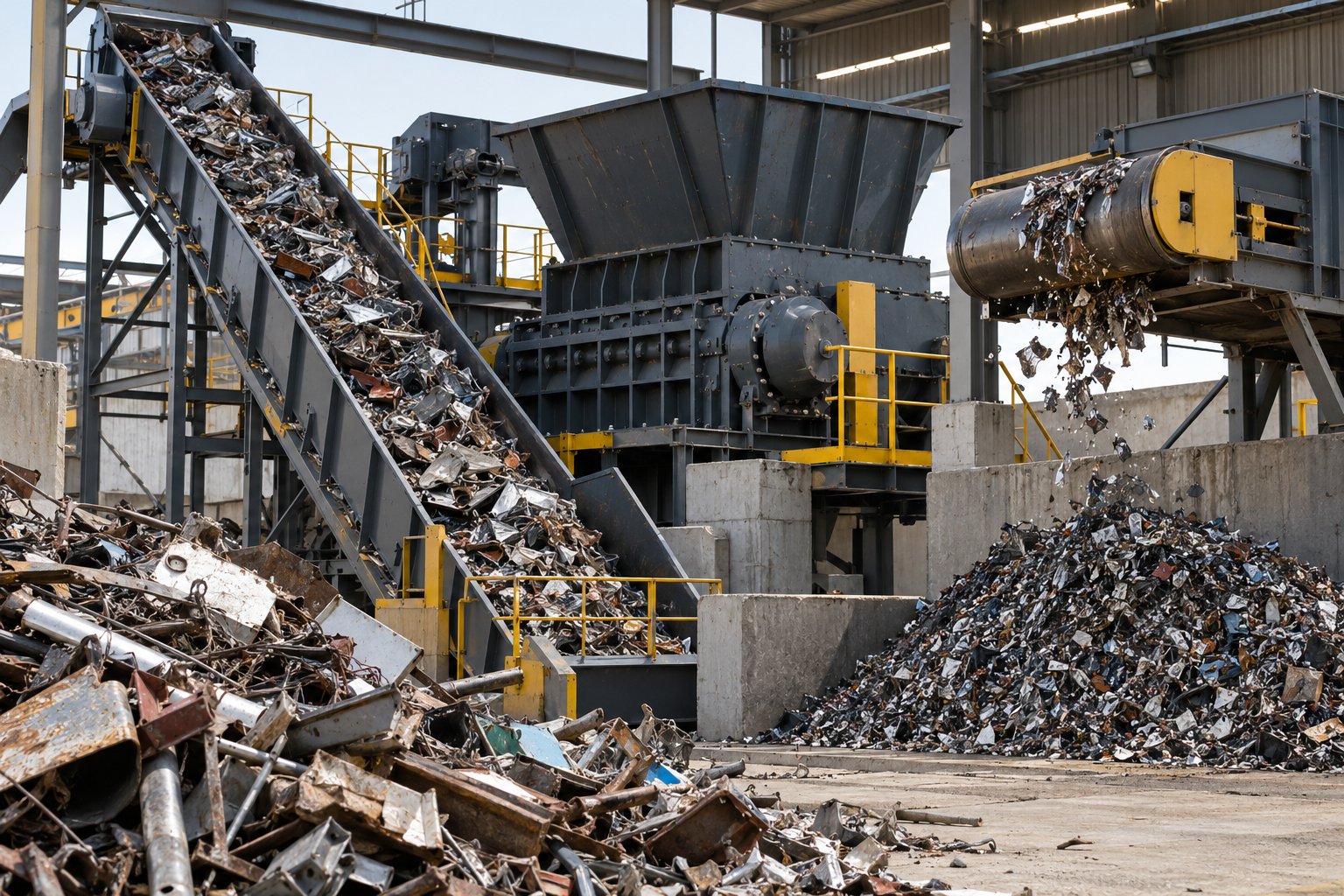
For operations that handle mixed scrap at volume, densifying material before sale changes both logistics and grading. A turnkey line such as the TG-ScrapLine 150 Integrated Scrap Processing System combines a twin-shaft low-speed, high-torque shredder, an overband magnetic separator, and a hydraulic briquetting press that raises bulk density above 4.0 t/m3, with PLC control and a capacity of 15 t/h. Higher bulk density means more payable metal per truckload and a more consistent load for the buyer — both of which support better pricing and lower freight cost per tonne.
FAQ
Can I find today's copper scrap price online?
You can find exchange reference prices and commentary online, and these are useful for context. They are not the price a yard will pay you, because the yard price includes local deductions for treatment, handling, grade, and freight. Use online figures to sense the direction of the market, and call local yards for the number that applies to you.
Why is the price different between two yards in the same city?
Each yard has its own supply, demand, processing capacity, and freight position. One may be well stocked and cautious; another may need material and pay more. This is normal, and it is exactly why collecting more than one quote on the same day is worth the effort.
Does a larger load always get a better price?
Larger and more regular loads often do, because handling and sampling costs are spread over more weight. The effect depends on the yard's minimum thresholds and its current demand. Ask directly what weight band your load falls into before you accept a rate.
How much does contamination really affect the quote?
It depends on the grade and the type of contamination, but it can move a load into a lower category entirely. Insulation, moisture, and attached steel are the most common causes. Sorting and stripping before delivery is the most reliable way to protect your price.
How often should I check prices if I sell regularly?
If you generate scrap continuously, check with your regular yards weekly and keep a simple log of grades and rates. A short written record shows you the trend and gives you real data when you negotiate a standing arrangement.
If your volumes justify processing cable or mixed scrap before sale, we can help you work out whether a recycling or briquetting line fits your material mix. Tell us your grades, approximate monthly tonnage, and how you currently deliver material, and we will respond with the relevant specifications.