Turnkey Scrap Processing at 15 t/h
The TG-ScrapLine 150 is a complete integrated scrap processing system engineered for ferrous and mixed-metal recycling yards that need a continuous, single-operator line handling up to 15 tonnes per hour. Rather than sourcing a shredder, conveyor, magnetic separator, and briquetting press separately and managing the integration risk themselves, buyers get one pre-engineered line with matched capacities, a unified electrical control system, and a single commissioning timeline. 天工 delivers the line configured, installed, and brought to first production run as a turnkey package.
The target buyer is a medium-capacity scrap yard or metals recycler in Europe or North America processing automobile scrap, light steel scrap, mixed light iron, or sheet metal off-cuts. The 15 t/h throughput sits in the practical range for yards feeding electric arc furnaces or exporting densified briquettes to steel mills. Facilities running one to two shifts per day will find the capacity matches a steady inbound flow of scrap deliveries without creating a bottleneck at the infeed or discharge.
Line Configuration: Four Processing Stages
The TG-ScrapLine 150 connects four stages in sequence. Material flows from infeed to finished briquette without manual handling between stages:
Twin-Shaft Primary Shredder
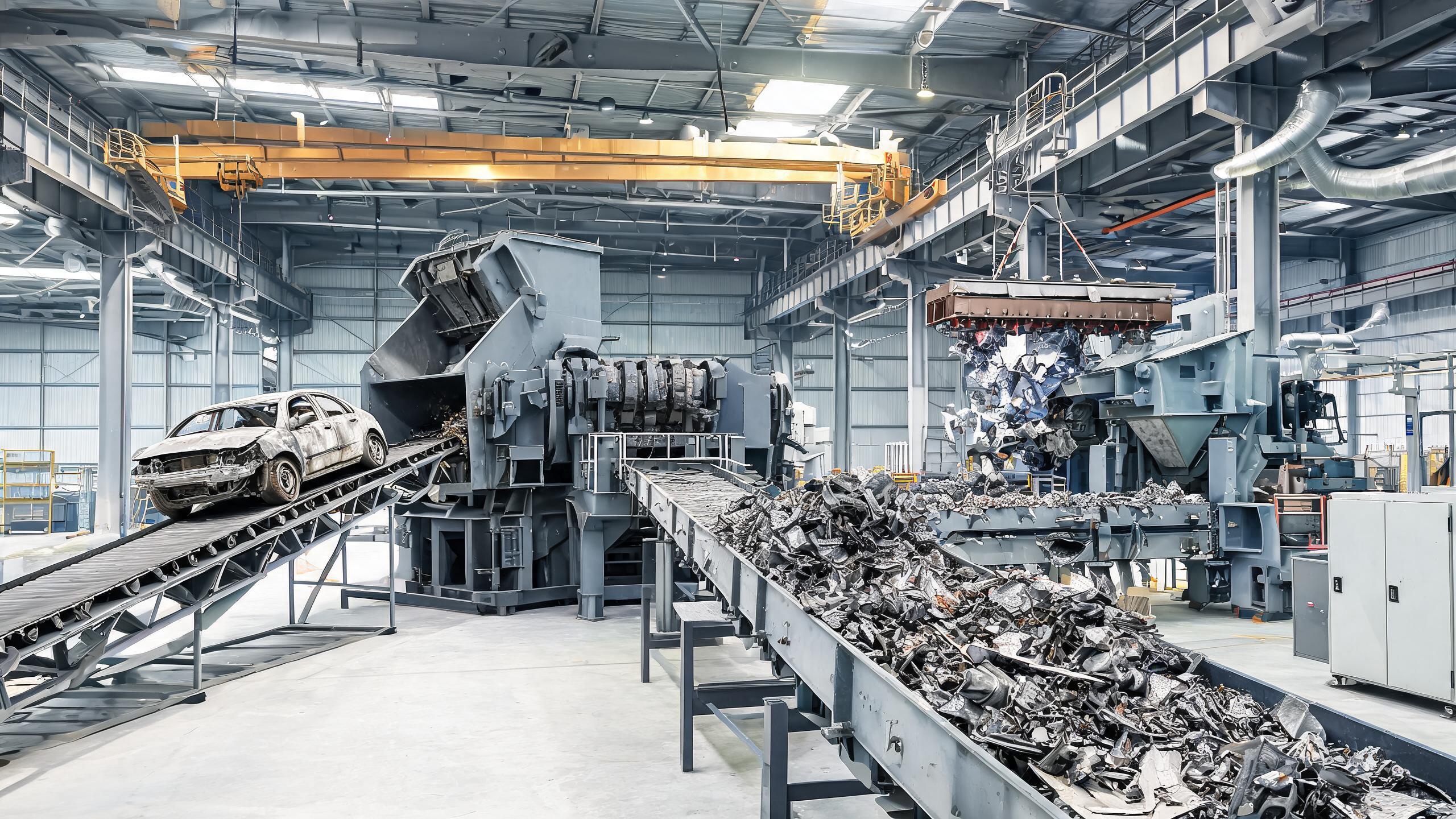
Low-speed, high-torque twin-shaft shredder reduces automobile scrap, light steel, and mixed ferrous to a workable fragment size for downstream separation. Hardened cutting shafts handle mixed feed without pre-sorting.
Belt Conveyor with Oversize Return
Discharge conveyor transports shredded material to the magnetic separator. Oversize pieces are screened and returned to the shredder for a second pass, keeping discharge fragment size consistent.
Magnetic Separator
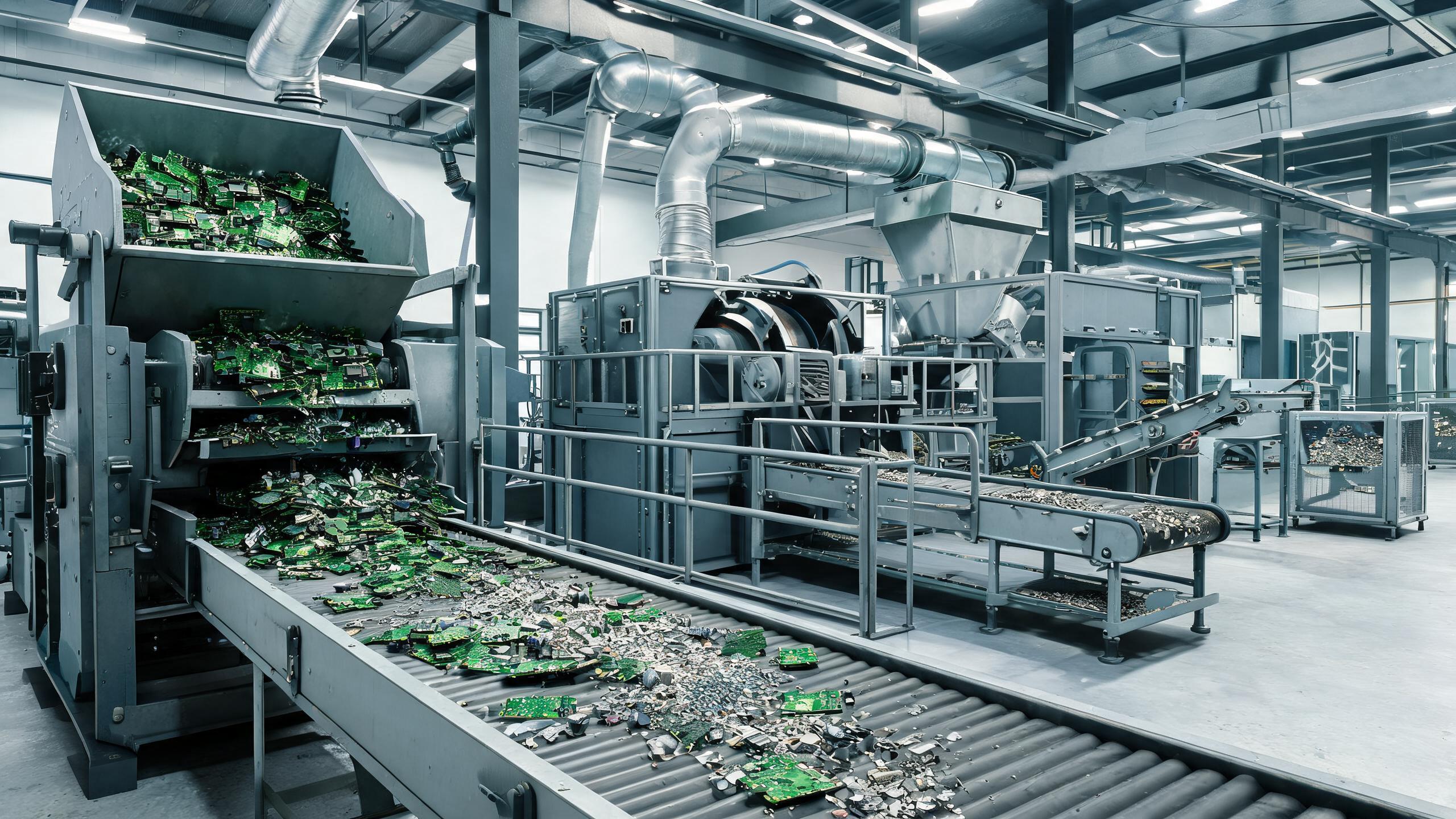
Overband or drum magnetic separator pulls ferrous fragments from the shredder discharge stream, separating clean steel from non-magnetic residue, plastics, and non-ferrous metals for downstream recovery.
Briquetting Press
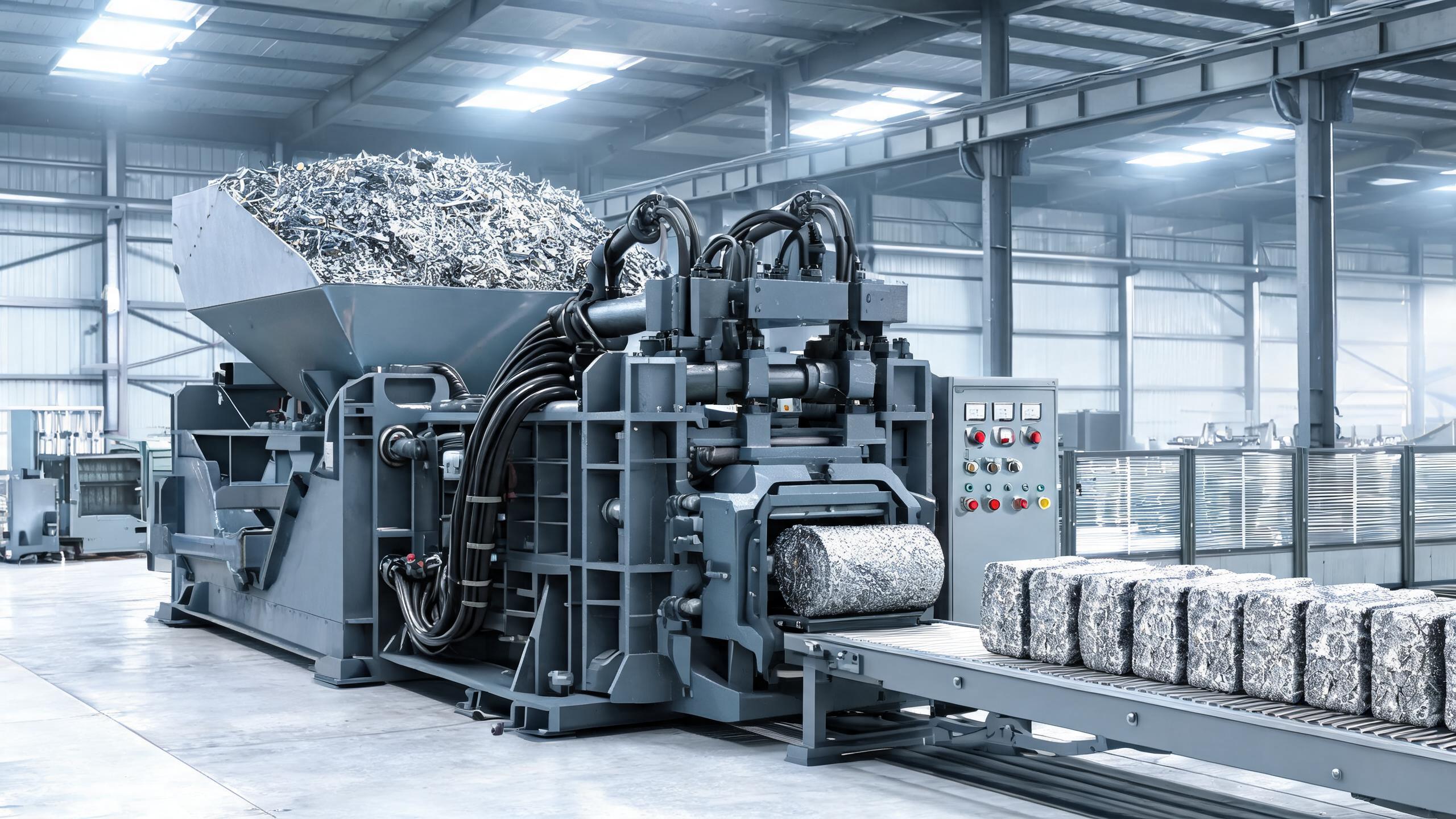
Hydraulic briquetting press compacts the separated ferrous material into dense, uniform briquettes. Briquettes are easier to transport, charge into furnaces, and command a higher per-tonne price than loose shredded scrap.
Why a matched line matters
When a shredder, separator, and briquetter are sourced from different manufacturers, the buyer absorbs the integration burden: matching throughput rates, aligning discharge heights, coordinating motor control, and commissioning each unit independently. The TG-ScrapLine 150 ships with all stages pre-matched on throughput, electrical load, and control logic. The PLC system manages stage sequencing and interlocks across the entire line, so an overload or jam at the briquetter automatically pauses upstream feeding rather than causing material spillage.
Buyer Decision Factors
Is 15 t/h the right capacity tier?
The 15 t/h rating positions the TG-ScrapLine 150 between entry-level single-shaft lines (3 to 8 t/h) and heavy industrial hammer-mill systems (40 t/h and above). Yards processing 80 to 120 tonnes per day across one or two shifts are the core fit. If your inbound scrap volume regularly exceeds 150 tonnes per day, a higher-capacity line with a larger infeed hopper and heavier shredder shafts would be more appropriate. Confirm your daily tonnage, shift pattern, and expected growth with the 天工 engineering team so the motor sizing and hopper volume are correctly specified.
Material suitability
The twin-shaft shredder handles automobile scrap (bodies stripped of engine and drivetrain), light steel scrap, sheet off-cuts, white goods, and mixed light iron. Heavy solid sections such as railway rail, thick-walled pipe, or large castings may exceed the shaft torque rating and should be pre-cut or processed on a separate heavy-duty shears. Non-ferrous separation is limited to magnetic removal; if your feedstock contains significant aluminum, copper, or brass, an eddy-current separator stage can be added to the line. Discuss your material mix so the cutting shaft configuration and screen mesh are selected for your dominant scrap type.
Densification and downstream value
The briquetting press is the value-capture stage of the line. Loose shredded steel scrap sells at a discount to steel mills because of low bulk density and oxidation during storage. Briquetting raises bulk density from approximately 0.8 t/m³ for loose shred to 4.0 t/m³ or higher, reducing transport cost per tonne and improving furnace charging efficiency. For yards exporting to European steel mills or North American foundries, the density improvement directly affects the negotiated per-tonne price.
Compliance and Certifications
The TG-ScrapLine 150 is CE certified for European market compliance, covering the electrical system, machine guarding, emergency stop circuits, and noise levels per applicable EU machinery directives. The manufacturing facility operates under ISO 9001 quality management, with process controls on welding, machining, and assembly. North American buyers should confirm with 天工 whether UL-listed electrical components and a NEC-compliant control panel are required for their jurisdiction, as the standard configuration follows IEC conventions.
Guarding and safety interlocks are engineered to meet the expectations of European and North American workplace safety inspectors. All access doors on the shredder housing and drive enclosures are interlocked to the PLC; opening a guard door during operation triggers an immediate controlled stop. Buyers should still conduct a site-specific risk assessment per their local regulations, as installation layout, ventilation, and noise exposure levels vary by facility.
Installation, Commissioning, and Lead Time
The system ships as a turnkey package including mechanical assembly, electrical wiring within each unit, the PLC control panel, and the inter-stage conveyors. 天工 provides installation supervision and commissioning support on site: the engineering technician oversees line assembly, performs the PLC stage-sequencing test, runs the first material load, and trains the operator on routine maintenance and safety procedures. Typical commissioning takes 7 to 14 days after mechanical installation, depending on site readiness and utility connections.
Civil works (concrete foundation, cable trenches, ventilation ducting) are the buyer's responsibility and must be completed before the 天工 team arrives. Foundation drawings are provided in advance so the site can be prepared during manufacturing. Confirm your available three-phase power supply, compressed air capacity, and floor load rating with the 天工 team before ordering, as these affect motor specification and foundation design.