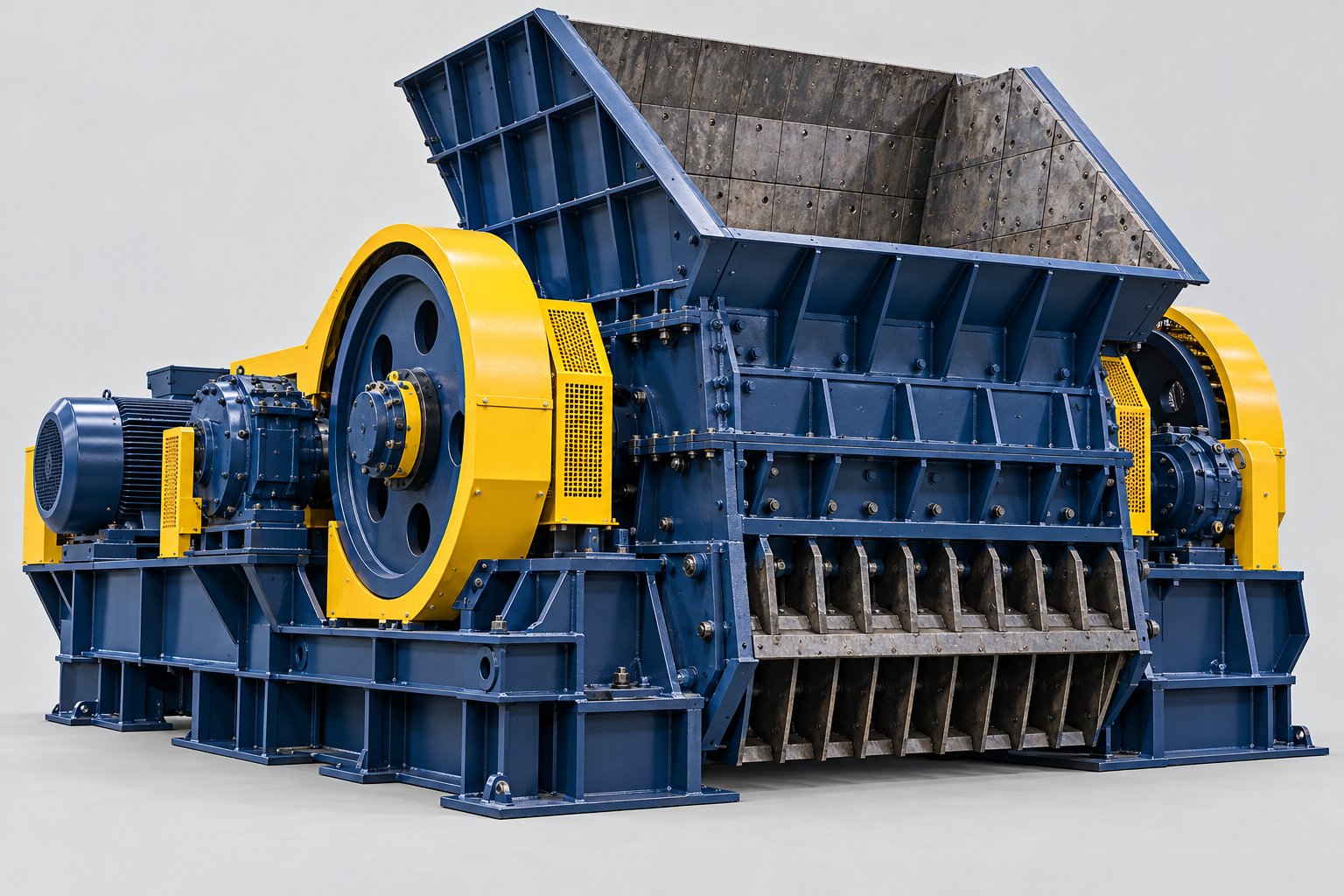
Fragmentation for Depolluted Vehicle Bodies at Mid-Plant Scale
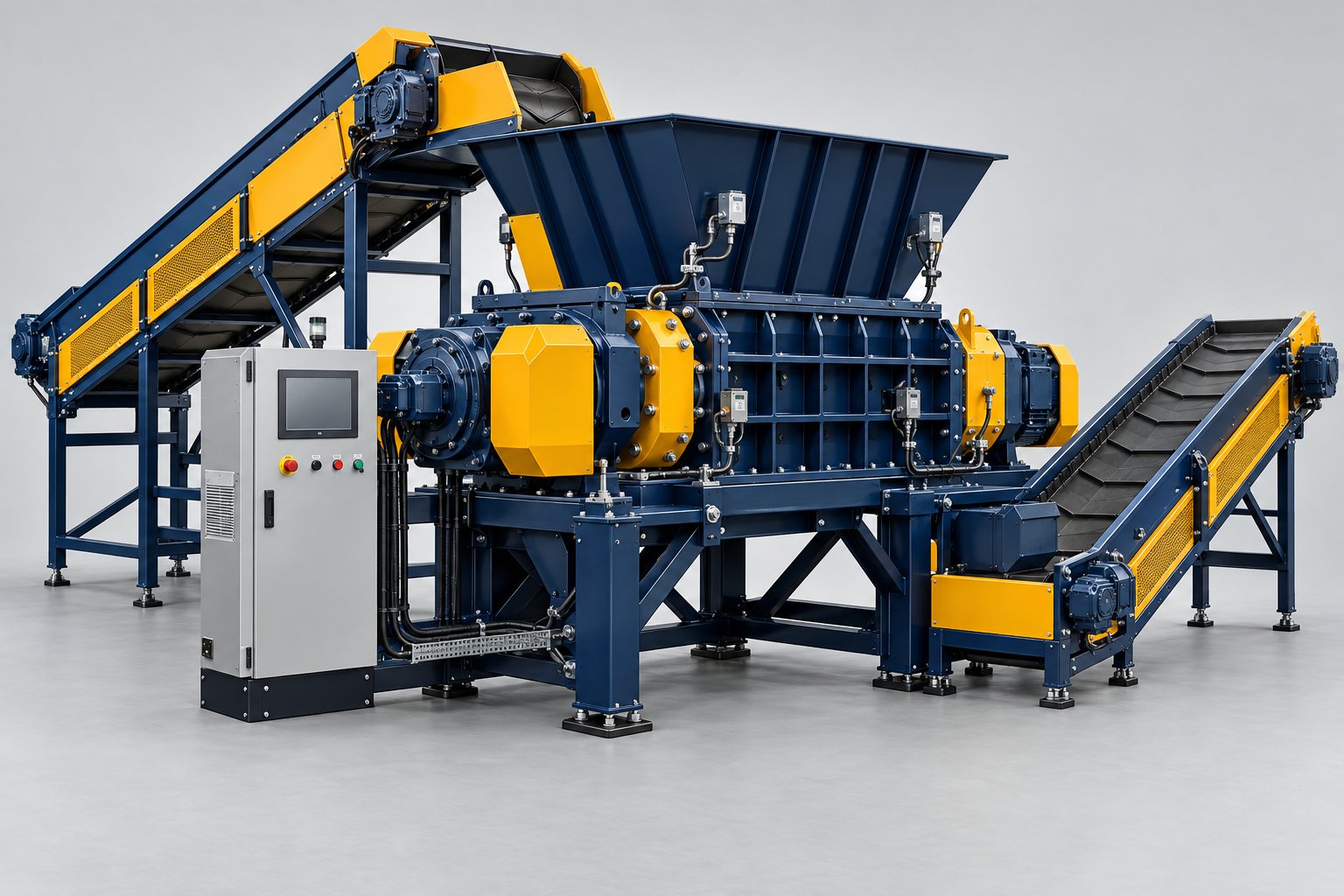
Not every scrap yard needs an 80-ton-per-hour auto shredder, and none should buy one for 15 tons of weekly feed. The TG-VehShred 800 is a hammer mill vehicle body shredder sized for the yard in between: an 800 kW electric drive, a 1,800 x 1,200 mm charging chute, and a rated 15 to 25 tons per hour on depolluted end-of-life vehicle hulks and light steel scrap. It gives mid-size recyclers true whole-car fragmentation without the capital, cranes, and foundation works of a full plant-scale shredder.
The buyer problem this machine answers is specific: hulks that arrive whole cannot be stored compactly, cannot be weighed cleanly, and cannot be sorted by any downstream equipment until they are fragmented. Pre-cutting hulks with shears and torches costs labor hours and puts operators near cutting sparks. Fragmenting whole hulks in one pass converts that labor cost into machine hours and produces the dense, mixed fragment stream that magnetic and eddy-current separation plants are designed around.
Hammer Mill Architecture
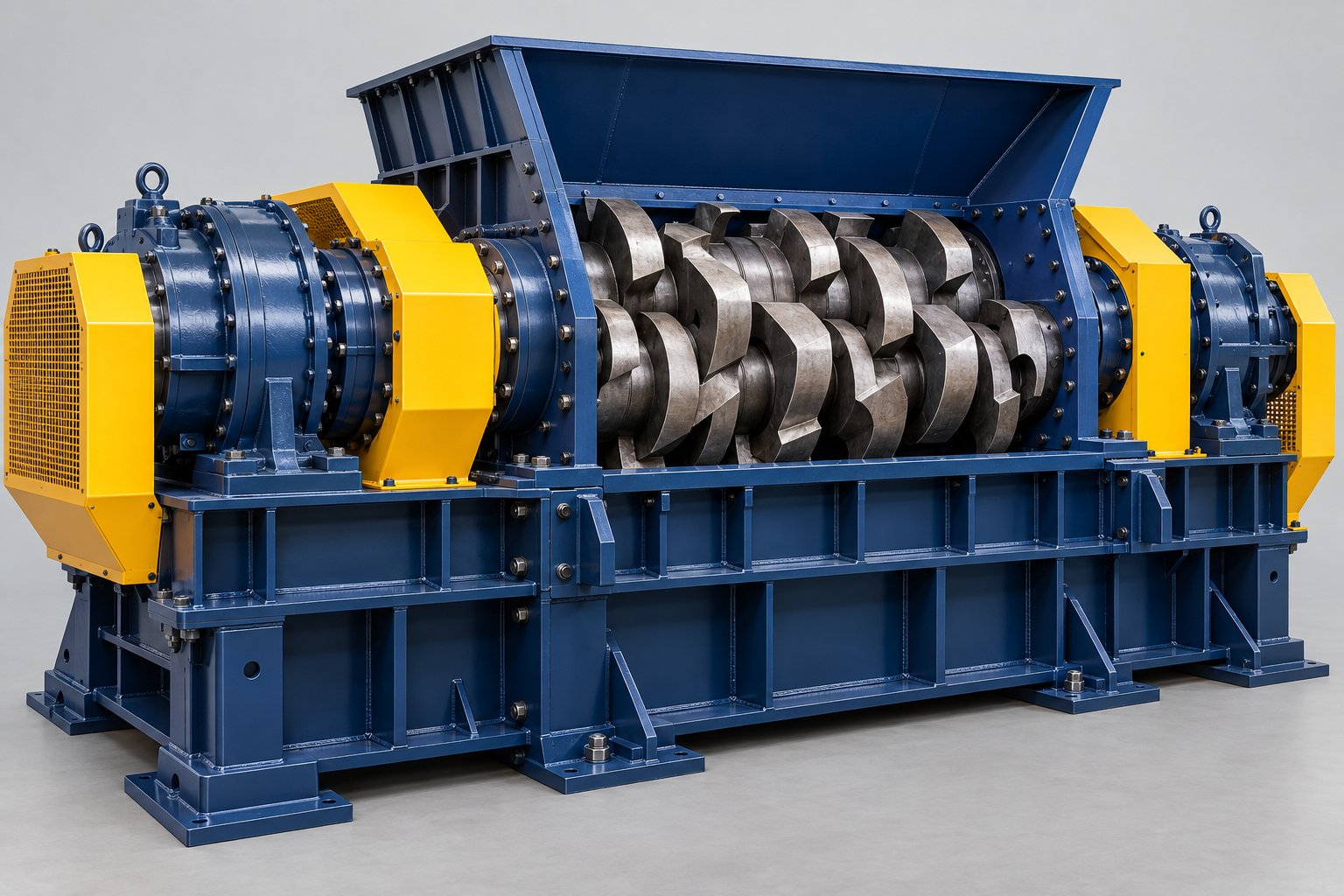
The rotor carries free-swinging hammers that shatter hulks against replaceable impact liners, rather than shearing between shafts. This impact principle is what lets one machine take whole vehicle bodies: the material breaks along its own weak points instead of needing to fit between cutters.
- Chromium-molybdenum hammers: arranged in balanced rows so rotor vibration stays stable as individual hammers wear; worn hammers are turned or replaced without re-balancing the whole set from scratch.
- Replaceable impact liners: the chamber walls that absorb impact are segmented wear plates, so lining replacement is a planned shift job rather than chamber repair.
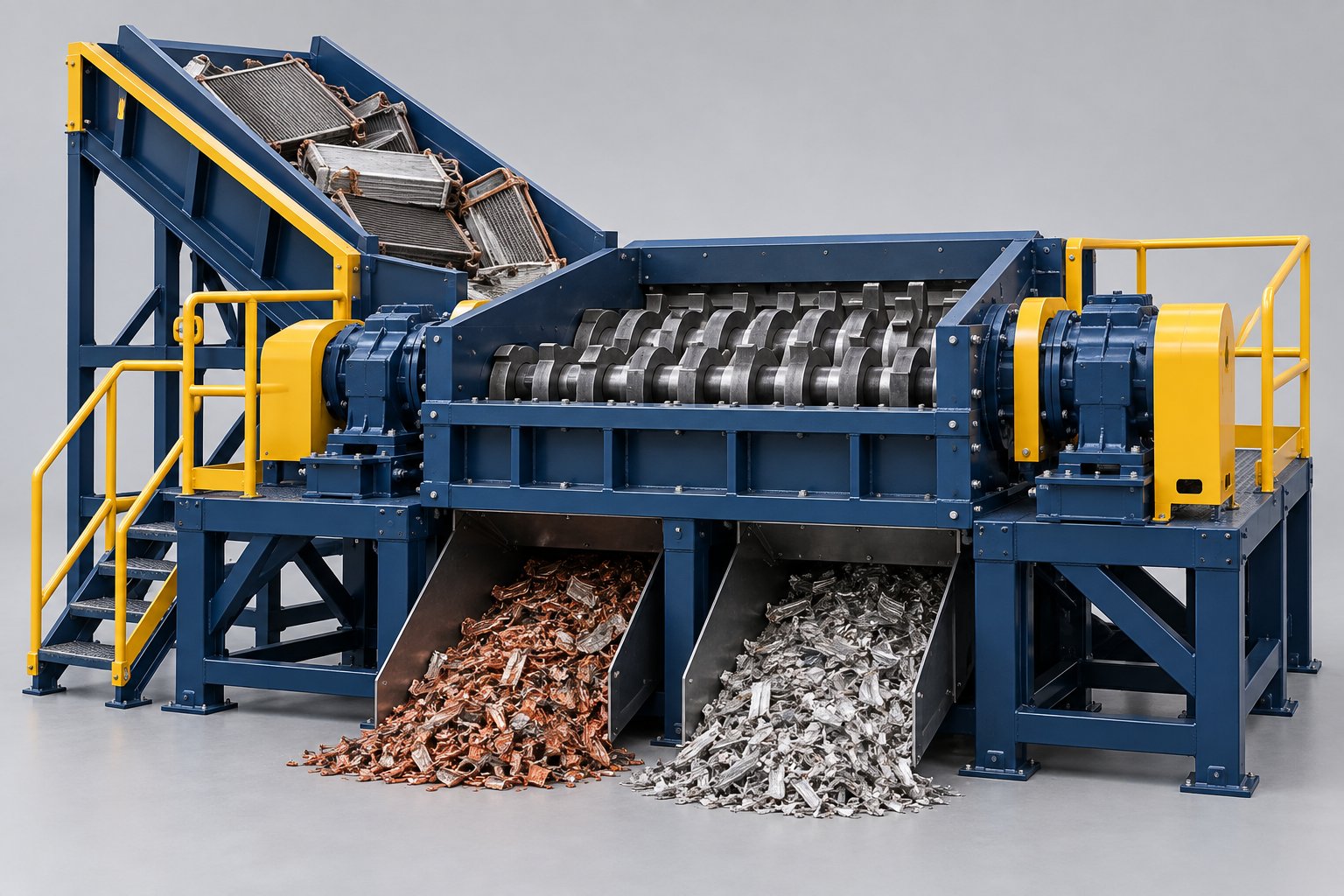
- Adjustable discharge grate: grate bar spacing sets fragment size and can be changed when downstream separation equipment or furnace specifications change.
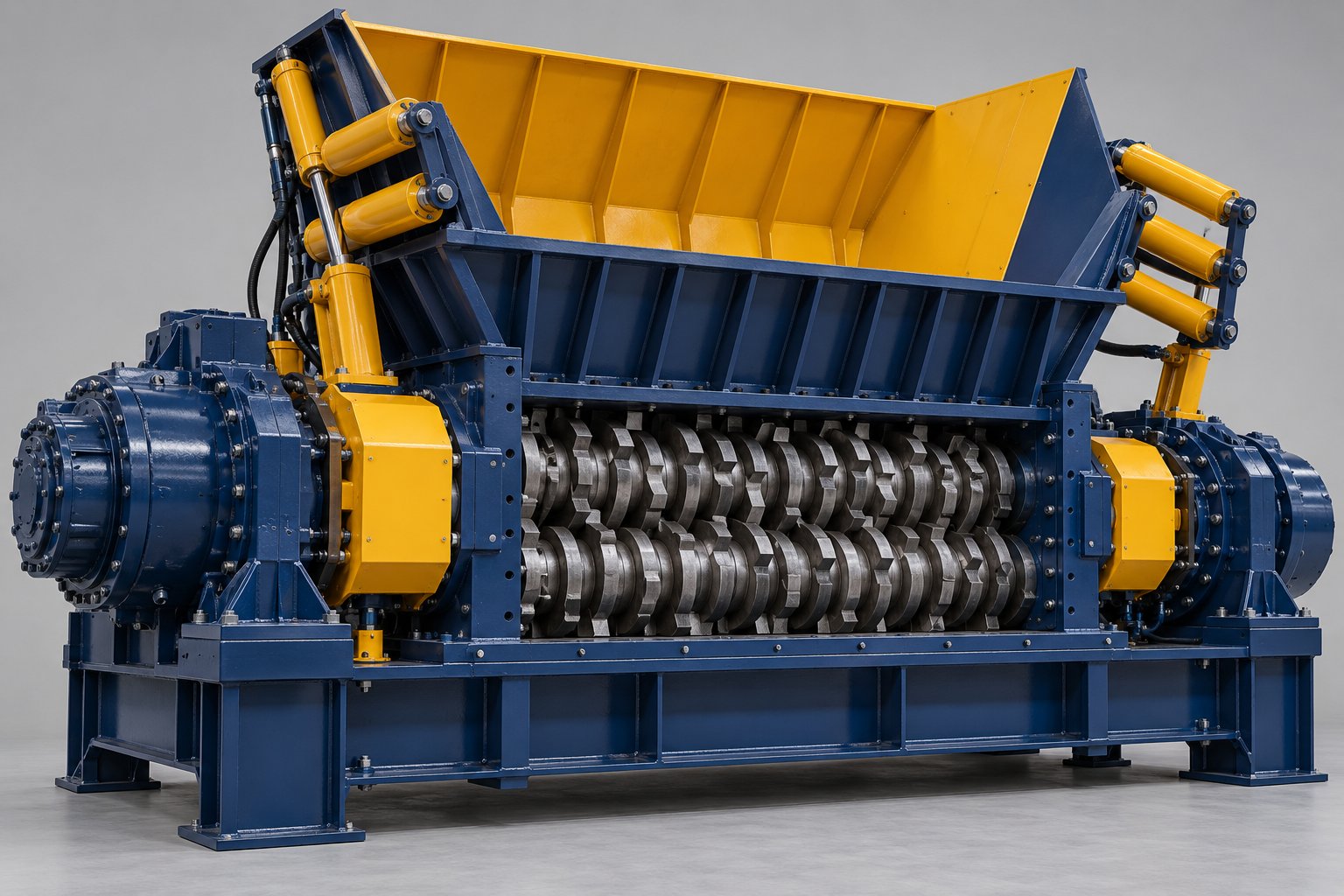
- Hydraulic access doors: the upper housing opens for rotor and liner service, keeping hammer changes out of cramped internal work.
- Heavy flywheels: store rotational energy to smooth the load spikes of uncut hulks entering the chamber, reducing motor peak demand and electrical stress.
Specifications
| Item | TG-VehShred 800 |
|---|---|
| Type | Hammer mill vehicle body shredder |
| Drive | 800 kW electric motor |
| Charging chute | 1,800 x 1,200 mm |
| Hammers | Chromium-molybdenum, free-swinging, turnable |
| Discharge grate | Adjustable bar spacing |
| Rated throughput | 15 - 25 t/h on depolluted ELV hulks and light steel |
| Power supply | High-voltage options configured to site grid |
| Control | PLC with load monitoring and feed control |
| Certification | CE marked; manufactured in an ISO 9001 facility |
Economics the Buyer Should Check
Hammer mill shredding is an impact business, and its costs concentrate in three places: hammer and liner consumption, absorbed power per ton, and downstream fragment quality. The TG-VehShred 800's balanced hammer rows and segmented liners keep wear-part replacement predictable; the flywheel-smoothed drive avoids the demand spikes that inflate electricity contracts; and the adjustable grate lets the yard hold fragment size to what its separator and furnace buyers actually require, instead of shipping fines or oversize that get discounted. Feed must be depolluted - fluids, batteries, and fuel tanks removed - both for safety and for output purity, and the machine is sized on that assumption.
Typical Applications
- Depolluted end-of-life vehicle hulks
- Light steel scrap and household appliance bodies
- Mixed thin-gauge ferrous feed ahead of magnetic separation
- Downstream feed preparation for eddy current and air classification plants
Before You Order
Confirm the average and heaviest hulk weight in your feed, weekly tonnage, site power supply, and the fragment size your downstream plant requires. Rated throughput reflects depolluted ELV feed; heavier industrial steel changes hammer consumption and duty cycle. Our engineers review the feed analysis and propose the grate configuration and conveyor set before the machine is built.
Frequently Asked Questions
Does the feed need to be depolluted first?
Yes. Fluids, batteries, and fuel tanks must be removed before hulks enter the chamber. This is standard ELV practice, protects output purity, and prevents fire and explosion risk in the chamber.
How often are hammers serviced?
Hammers are turnable, so each set serves multiple wear positions before replacement. Actual intervals depend on feed composition and are established during commissioning with your material.
Can it run on appliances instead of cars?
Yes, within the same duty class. Whole large appliances and thin-gauge steel are within the rated application range; the grate setting may be adjusted for the different fragment profile.
What supporting equipment does a complete line need?
A feed conveyor, discharge conveyor, and downstream magnetic separation are typical. Our engineers match the conveyor set to the chamber and your plant layout during quotation.
Request Product Details
Tell us your weekly hulk volume, average feed weight, and downstream separation setup, and our engineers will size the drive, grate, and conveyor configuration for your plant.
Request Product Details