What mixed-scrap buyers face
Yards processing mixed ferrous and non-ferrous scrap report the same three cost drivers: unpremeditated stoppages when bulky items bridge the hopper, uneven output that overloads downstream sorting, and cutter wear that is priced per ton without being tracked. Each stoppage idles loaders and staff; each uneven fraction lowers the value of sorted output.
How the equipment answers it
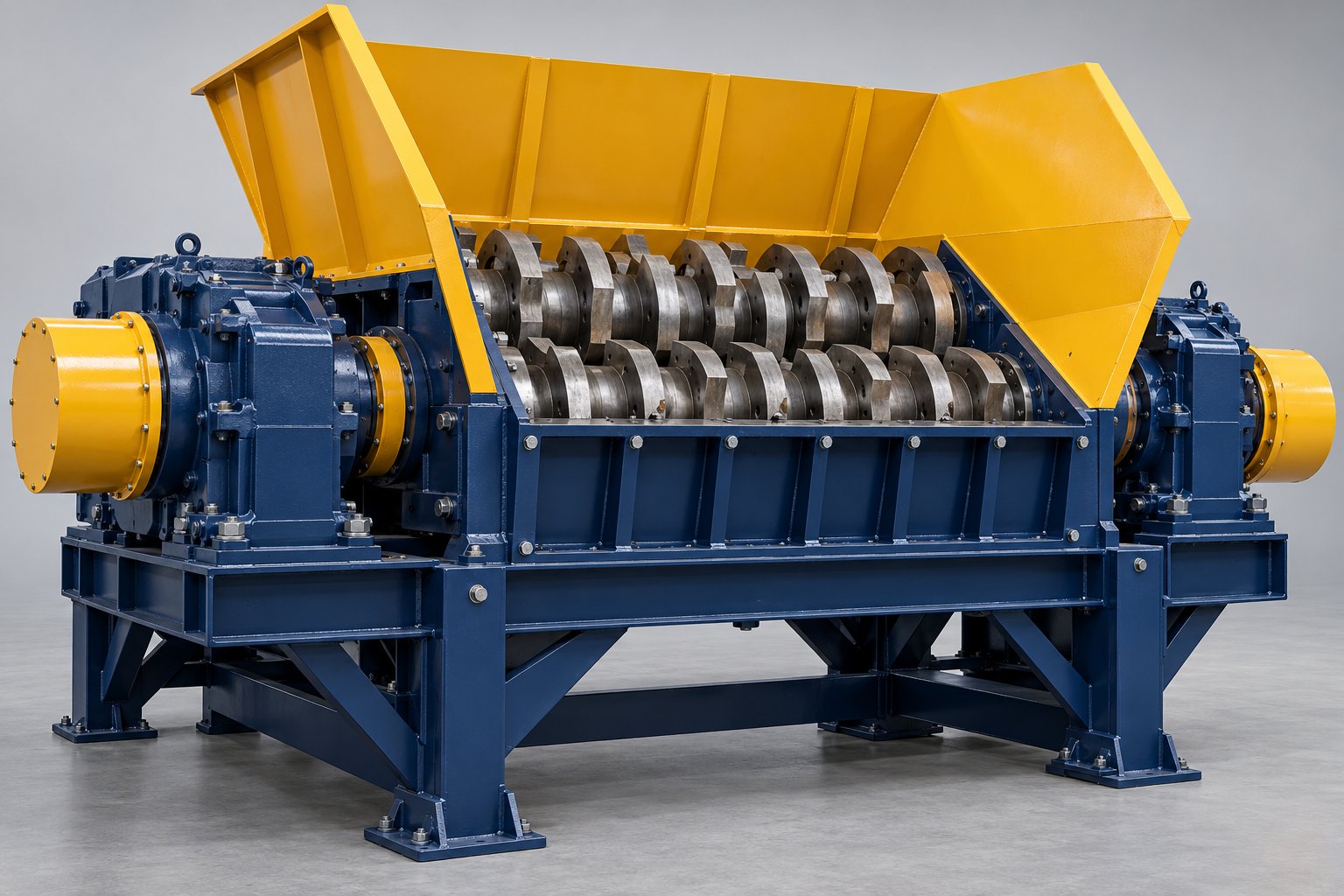
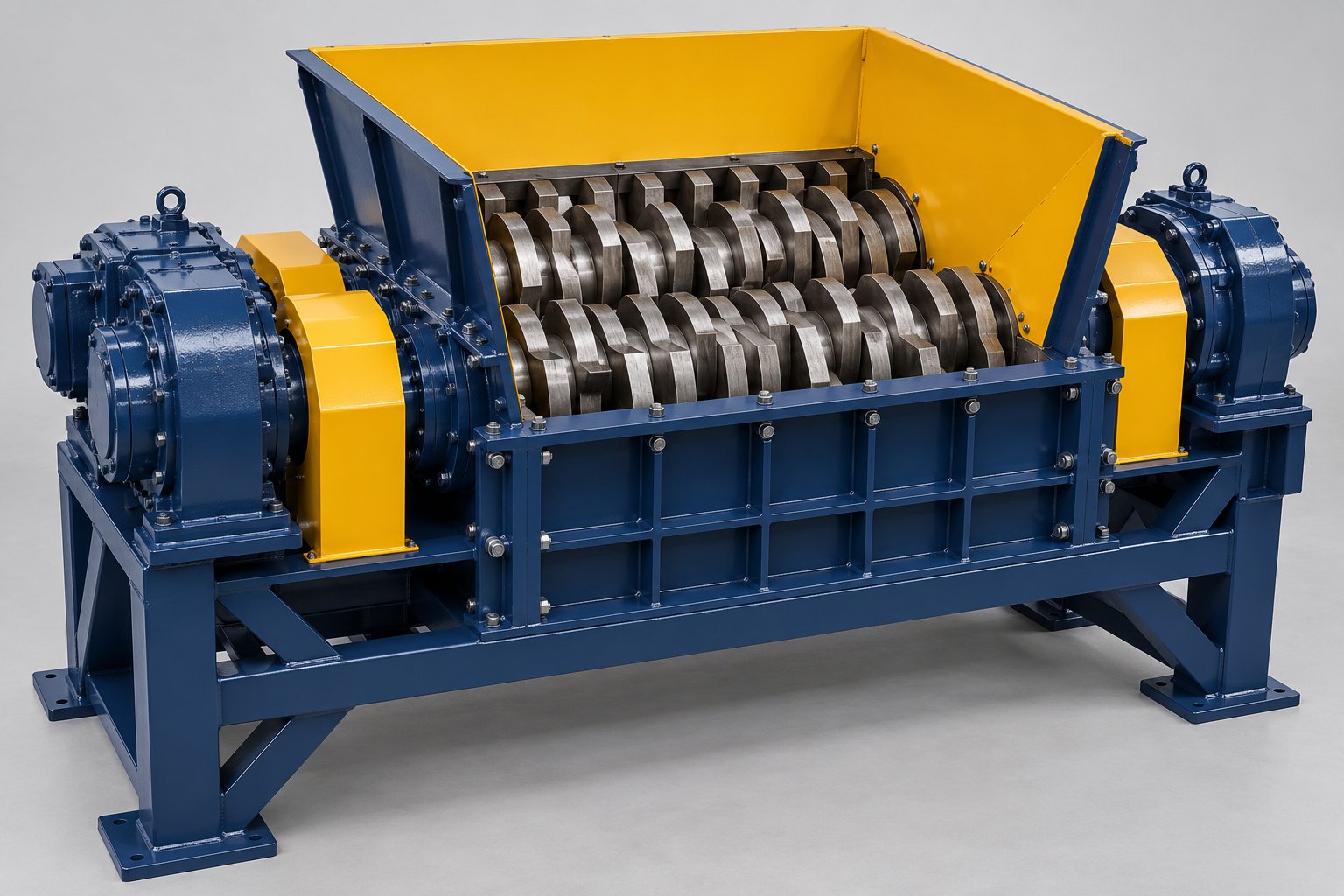
Tian Gong twin-shaft industrial metal shredders use counter-rotating shafts with bolt-on alloy cutting discs, sized chambers (800 x 600 mm up to 1,400 x 1,100 mm) and PLC auto-reverse. The low-speed, high-torque shear action grips bulky feed instead of depending on gravity drop, and auto-reverse clears jams without operator intervention. Interchangeable screens set the discharge fraction so downstream sorting sees a consistent particle size.
What that is worth to a buyer
Continuous two-shift feeding with fewer manual interventions, a discharge fraction your sorting line was actually designed for, and wear parts replaced in the yard instead of in a workshop. Every machine ships with a spare-parts kit and a 12-month warranty.