When Shredders Stall: Primary Compression for Hard Ferrous Scrap
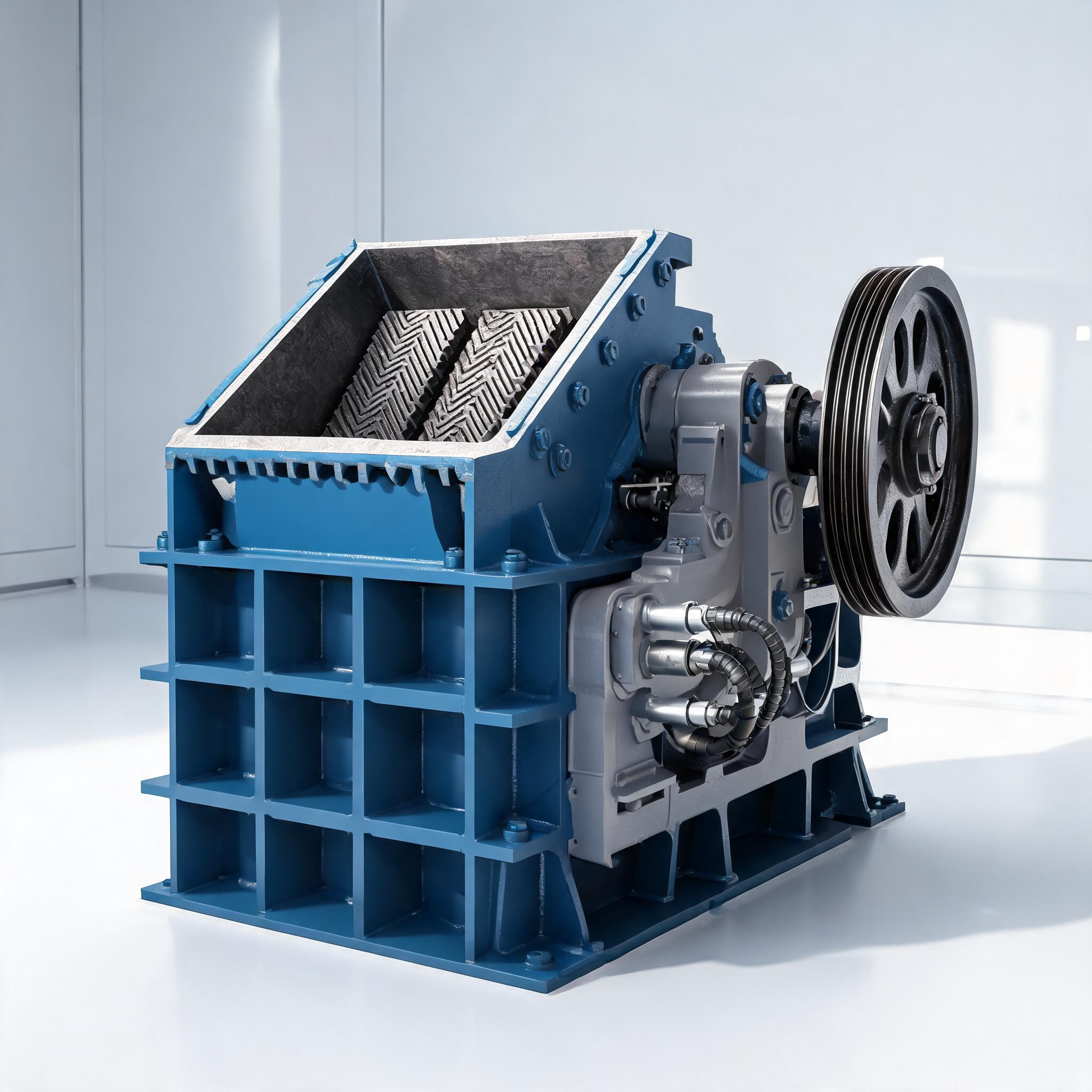
Cast iron engine blocks, thick-walled steel pipe, railway components, and large machinery castings arrive at recycling yards in sizes and hardness levels that stall twin-shaft shredders or cause accelerated wear on cutting discs. The TG-Jaw 600 addresses this feedstock by applying compressive force between a fixed jaw plate and a movable jaw plate-both lined with manganese steel-to fracture hard metal along its natural cleavage planes. The eccentric shaft drives the movable jaw in an elliptical motion, and fragmented pieces fall by gravity through the discharge opening on the return stroke.
Specifications
| Parameter | Value |
|---|---|
| Crushing Mechanism | Compression (fixed + movable jaw) |
| Feed Opening | 600 × 900 mm |
| Jaw Plate Material | Manganese Steel (Mn13 / Mn18) |
| Discharge Adjustment | Hydraulic wedge |
| Motor Frequency | 50 Hz or 60 Hz configurable |
| Throughput Capacity | Varies by material density and discharge setting - confirm at inquiry |
The 600 × 900 mm feed opening sets the maximum single-piece input size. Anything larger requires pre-shearing or thermal cutting before feeding. Discharge size is set by the hydraulic wedge at the bottom of the jaw chamber-no manual shimming required-which matters when a yard processes varying feedstock that calls for different output sizes through the day.
Jaw Plate Selection: Mn13 vs Mn18
Manganese steel work-hardens under impact: its surface hardness increases as feed material strikes it, creating a wear-resistant layer over a tough, crack-resistant core. Mn13 is the standard grade for mixed ferrous scrap. Mn18 is specified for harder, more abrasive streams like cast iron and hardened steel, where Mn13 would wear through faster. Both grades are reversible-use both sides before replacement.
- Standard jaw plates: Mn13, reversible, for general ferrous scrap
- Heavy-duty jaw plates: Mn18, for abrasive cast iron and hardened steel
- Corrugated profile: improves grip on rounded castings and cylindrical sections
- Flat profile: produces more uniform output fragment size
Plates are bolted to the frame and swing jaw-replacement requires no welding. Track wear by measuring plate thickness at scheduled intervals; replace before corrugations flatten, as worn plates reduce crushing efficiency and increase motor load.
Position in a Multi-Stage Line
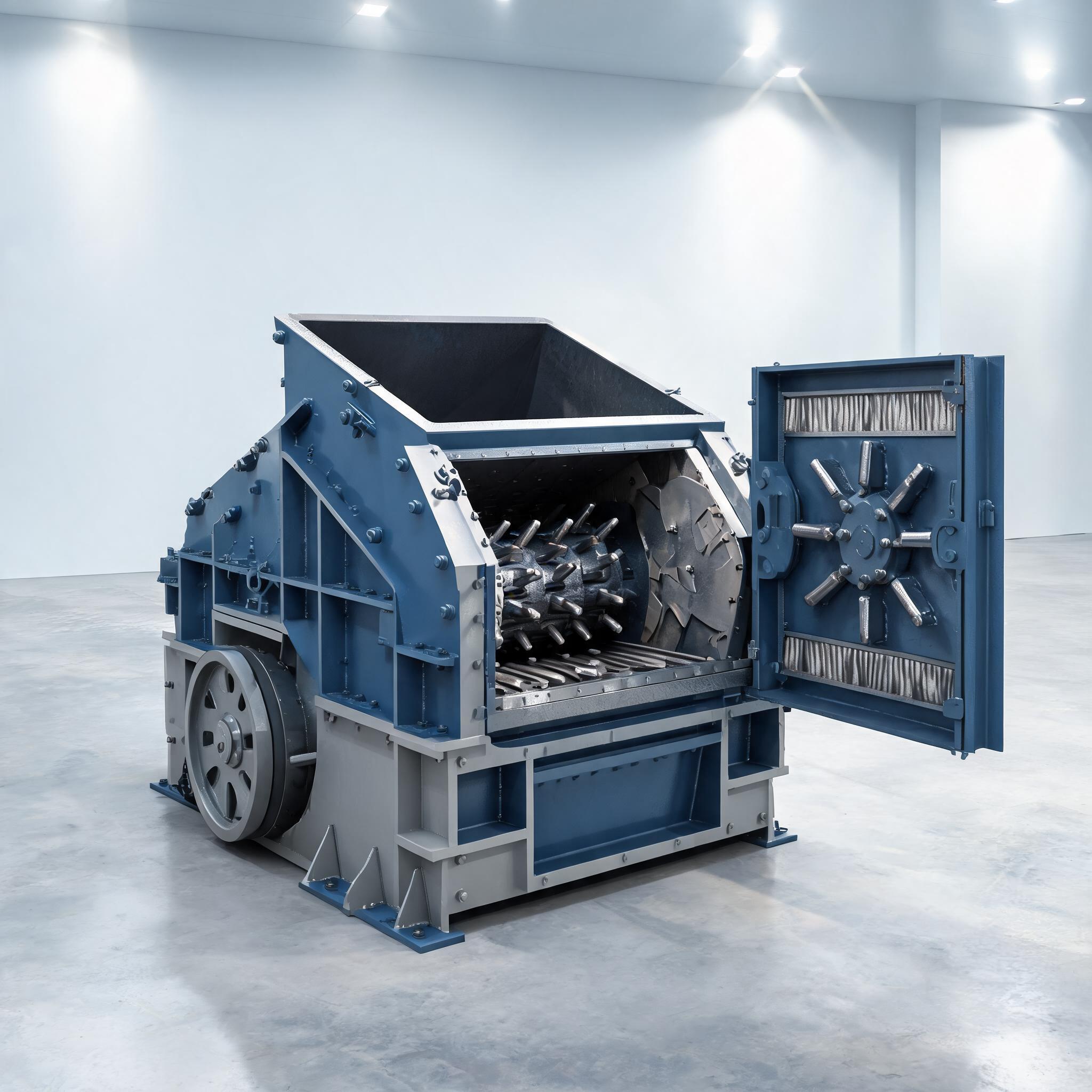
The jaw crusher is a primary stage. Oversized output can feed a secondary crusher (impact or cone) for further reduction, or a shredder for final sizing. It is not designed for light-gauge sheet metal or loose mixed scrap-these materials do not compress and fracture effectively between jaw plates and are better handled by a shredder directly.
Typical applications include cast iron engine blocks and machinery housings, thick-walled steel pipe and structural sections, railway track components, large steel castings and forgings, and hardened steel shafts and axles.
Drive Configuration
The main motor drives the eccentric shaft via V-belt and flywheel. The flywheel stores energy during the idle portion of the jaw cycle and releases it during the compression stroke, reducing peak motor load and allowing a smaller motor to handle large feed pieces. Motors are available in 50 Hz or 60 Hz configuration. The control panel includes motor protection, amperage monitoring, and emergency stop circuits.
Wear Parts and After-Sale Support
Spare jaw plates, side liners, and toggle components are available as individual replacement parts. Our engineering team can configure jaw plate profiles and discharge settings to match specific feed material characteristics. Each machine ships with a spare-parts kit, and the standard lead time for replacement wear parts is under 45 days. Installation supervision, operator training, and a 12-month warranty are included with commissioning.
Frequently Asked Questions
Request a Detailed Proposal
To prepare an accurate quotation, include your typical feed material types and hardness, maximum feed piece dimensions, target output fragment size, site power supply (voltage and frequency, 50 Hz or 60 Hz), and whether the jaw crusher will be standalone or integrated with a secondary crusher or shredder. Mention any specific certification requirements for your region.
Request product details