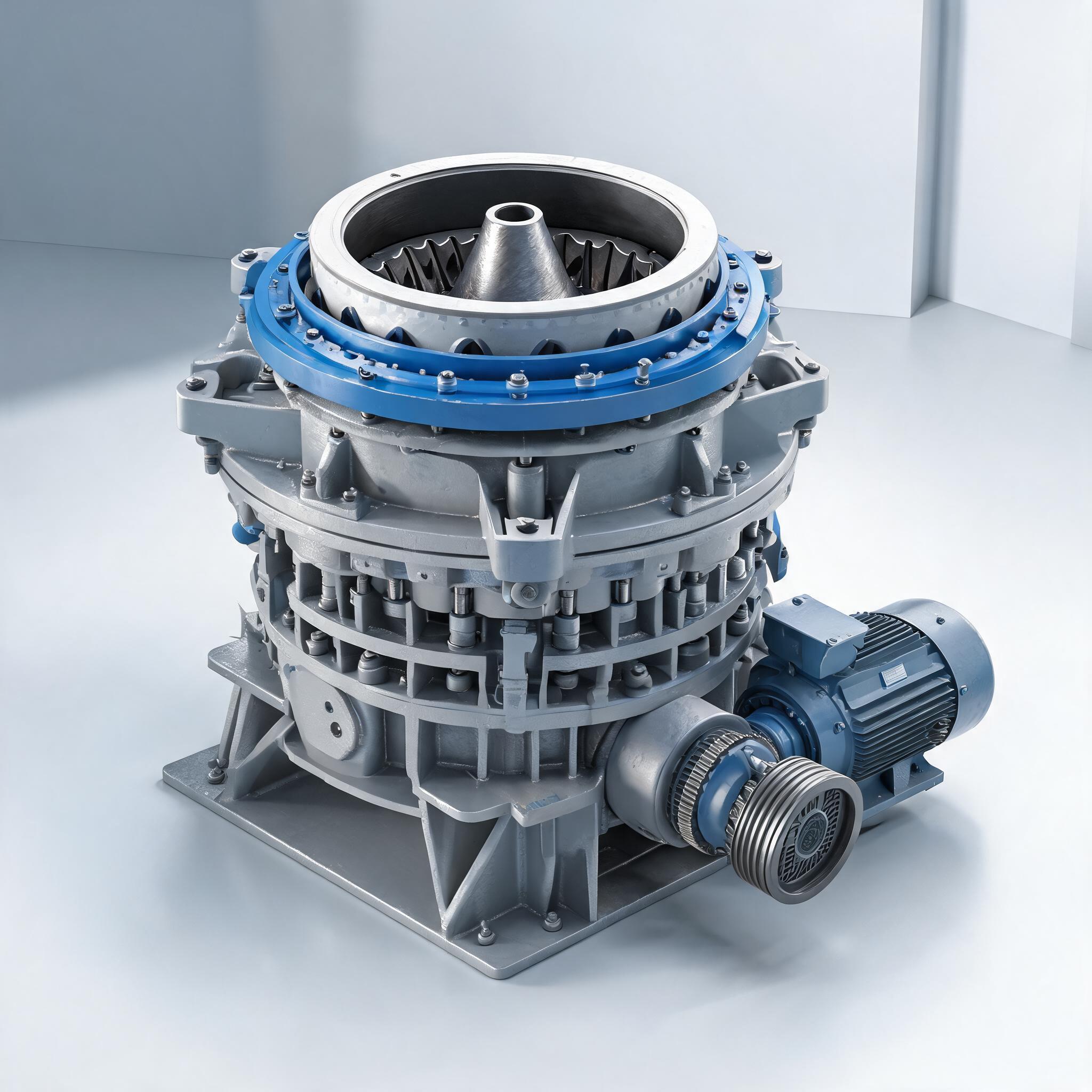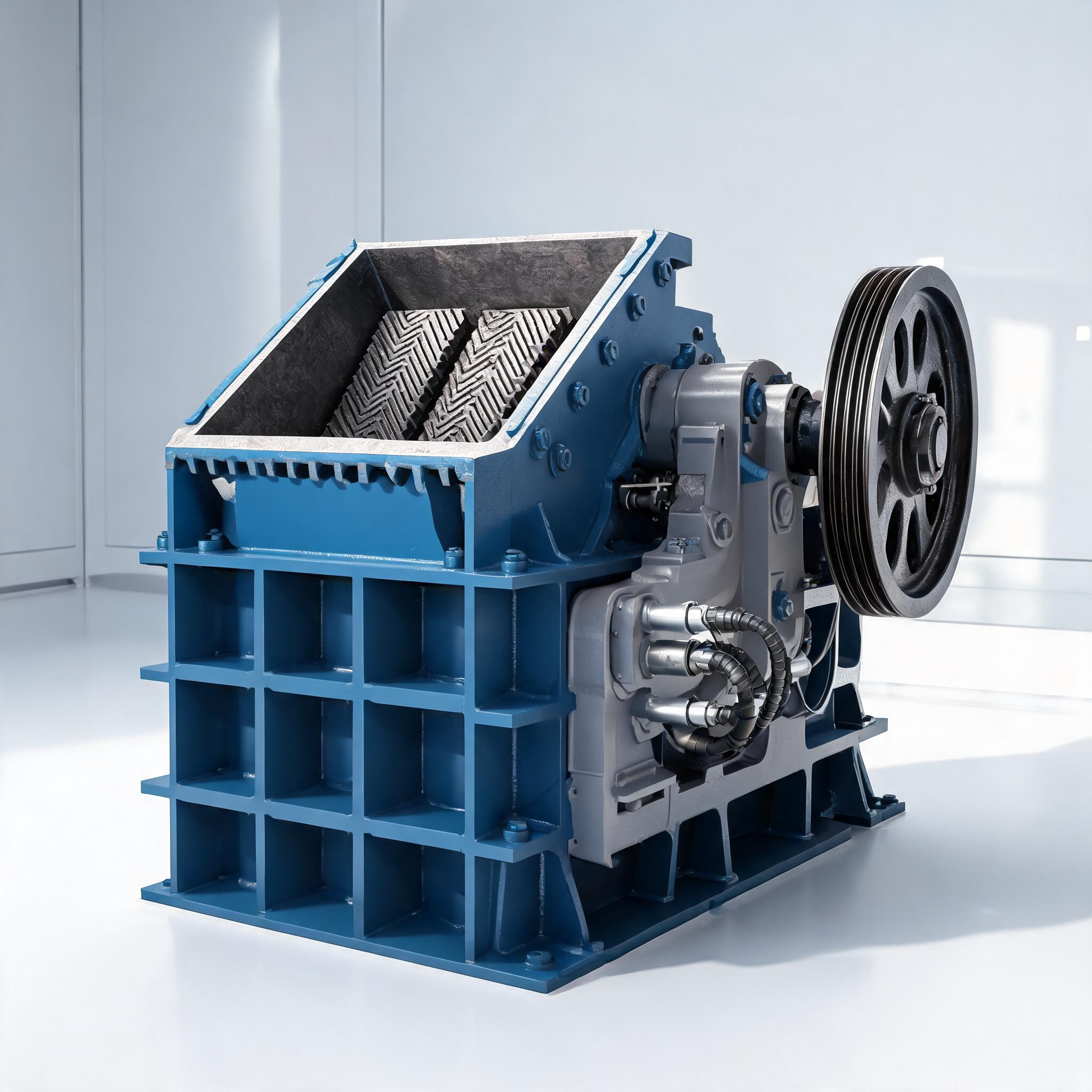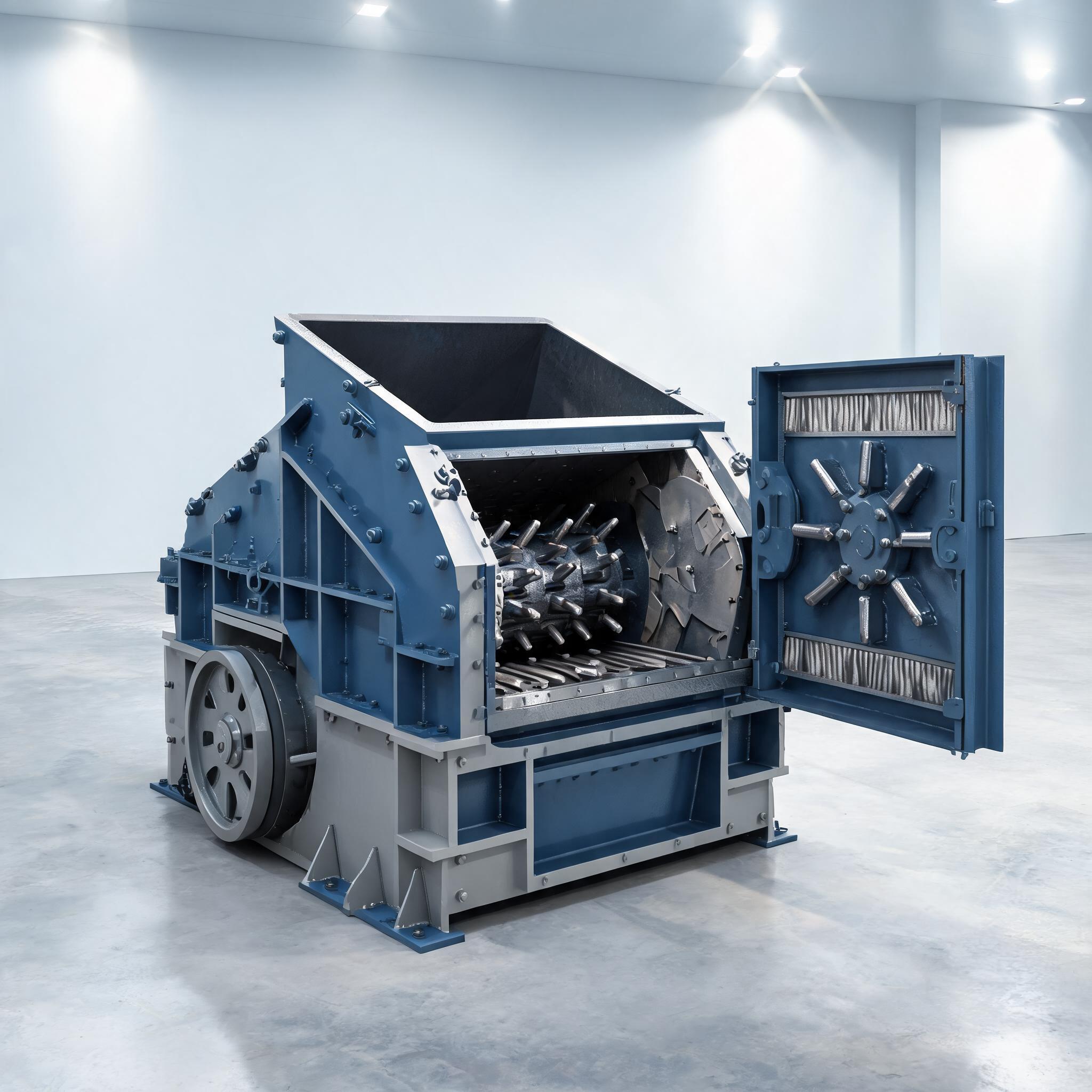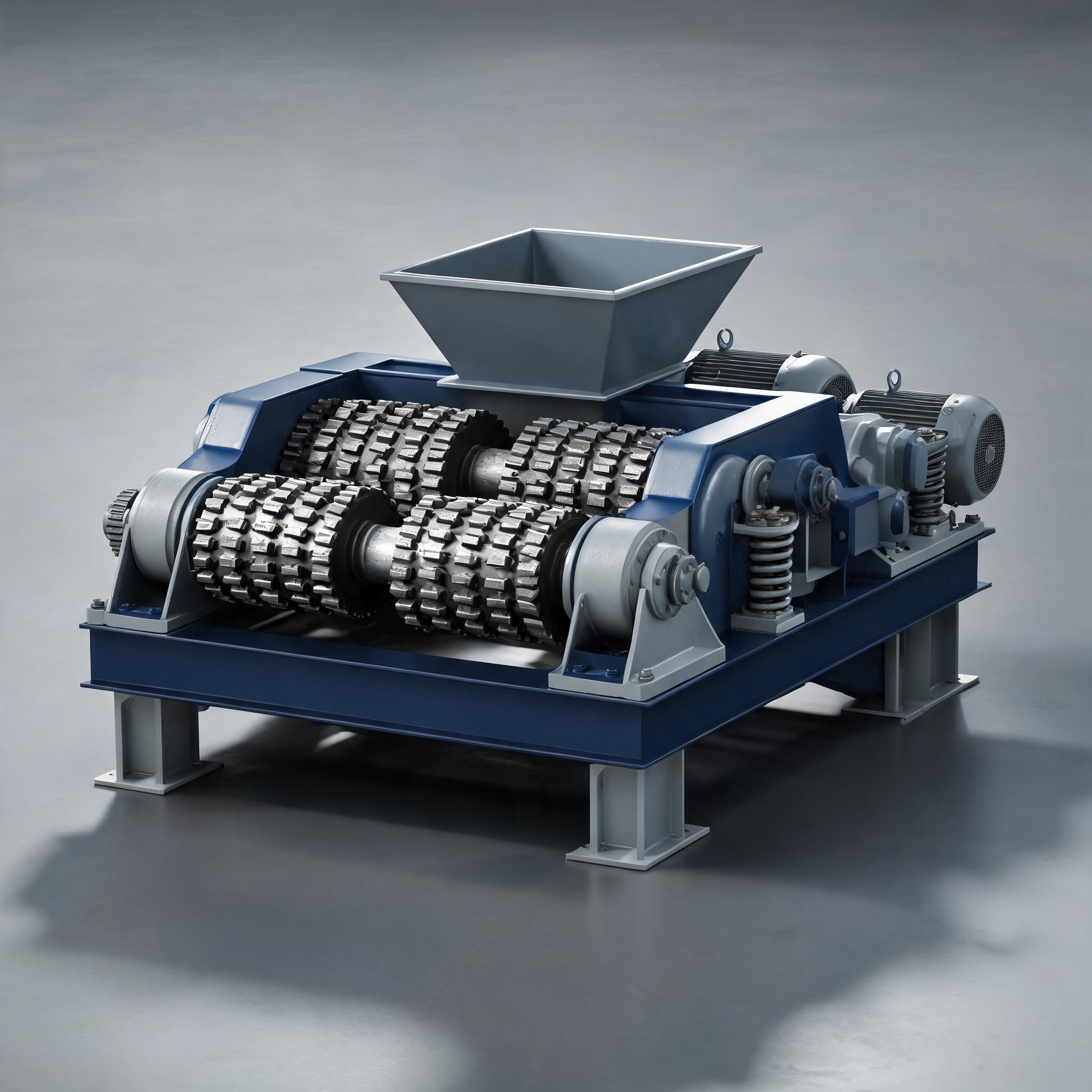
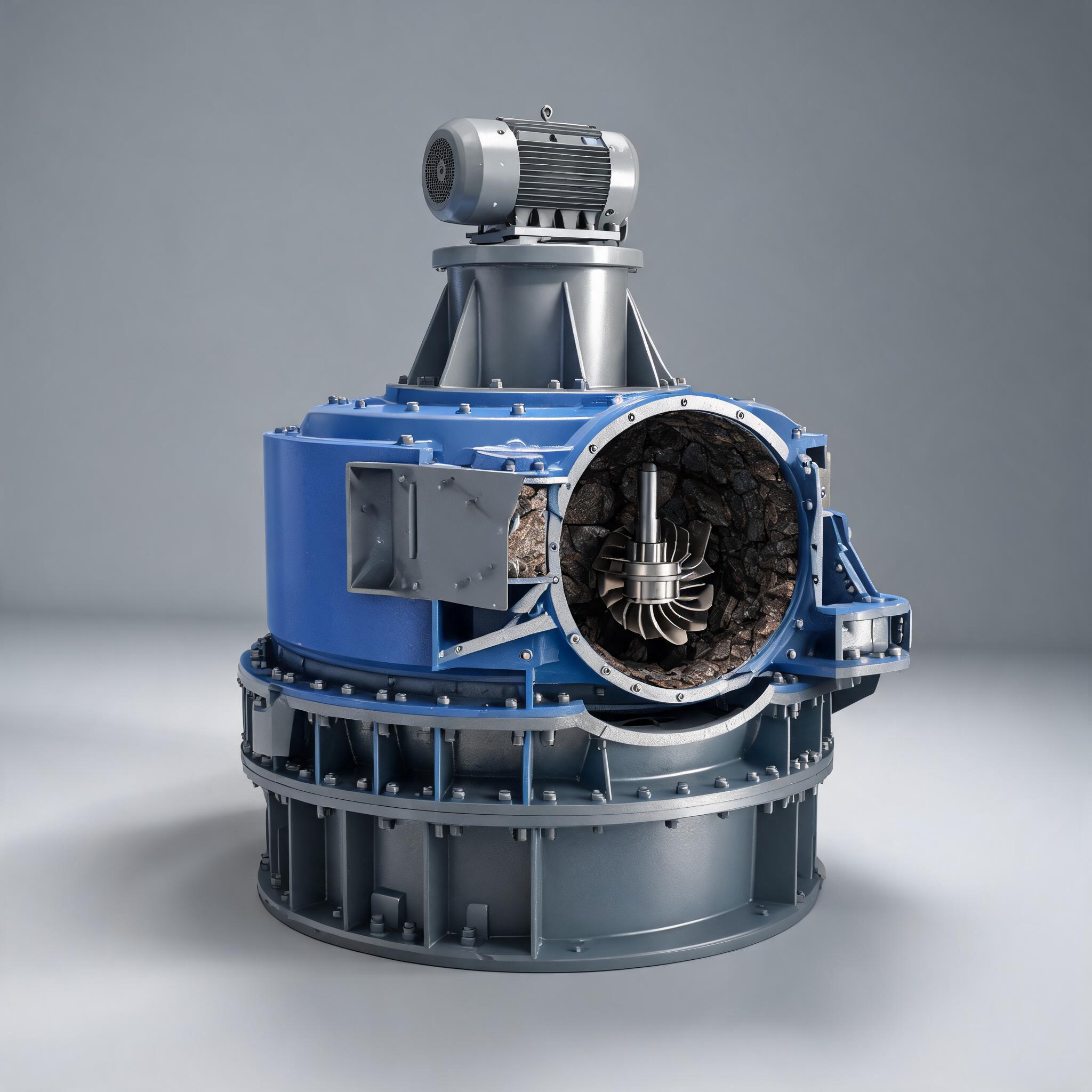
Centrifugal Impact Crushing for Metal Chip and Casting Reduction
The TG-VSI 200 is a vertical shaft impact crusher that uses centrifugal force to accelerate material against a rock-lined crushing chamber, fragmenting it through high-velocity impact rather than compression or shear. Feed material enters the rotor from above, is accelerated outward through centrifugal impeller channels, and is thrown against the chamber wall lining at high speed. The impact shatters brittle metal along grain boundaries and existing micro-cracks. Material that does not fragment on the first impact falls back into the rotor path for repeated impact cycles until it reaches the discharge size.
Key Specifications
The rock-on-rock (autogenous) crushing principle is a defining feature of this VSI design. Instead of using metal wear plates as impact surfaces, the crushing chamber is lined with the feed material itself—accumulated fragments form a self-renewing wear layer on the chamber walls. Incoming material thrown from the rotor impacts this layer rather than bare metal. This design dramatically reduces metal liner wear compared to horizontal impact crushers that use steel curtains, and it is particularly effective for abrasive feed streams where steel impact plates would wear rapidly.
How VSI Crushing Differs from Horizontal Impact Crushing
Both VSI and horizontal shaft impact (HSI) crushers use impact force, but the delivery mechanism and resulting particle characteristics differ significantly:
- Rotor orientation: The VSI uses a vertical rotor that accelerates material centrifugally outward. The HSI uses a horizontal rotor that strikes material as it passes through the chamber.
- Impact surface: The VSI uses an autogenous rock-lined chamber. The HSI uses steel impact curtains that are a primary wear item.
- Particle shape: The VSI produces more cubical, equidimensional fragments because material impacts from multiple directions during repeated cycles. The HSI produces more angular, elongated fragments.
- Wear cost: The VSI's autogenous lining means the primary wear item is the rotor impeller, not the entire chamber lining. For abrasive feed, VSI wear cost per tonne can be significantly lower than HSI.
Application Scope
The TG-VSI 200 is suited for specific metal recycling applications where its unique crushing characteristics provide advantages:
- Metal chip and swarf reduction: Brittle metal chips from machining operations are reduced to uniform particle size for briquetting or remelting. The autogenous lining handles abrasive chip material without rapid liner wear.
- Cast iron and aluminum casting fragmentation: Brittle cast components shatter under impact, producing clean, uniform fragments for foundry charging. The cubical particle shape improves furnace charging density.
- Slag and dross processing: Metal-bearing slag from smelting operations can be impact-crushed to liberate trapped metal particles for downstream recovery.
- Final shaping of pre-crushed metal: Material from a jaw or cone crusher can be passed through the VSI for final particle shape improvement before screening or separation.
The VSI is optimized for brittle, pre-sized material. It is not a primary crusher for large solid castings or thick structural sections—feed should be pre-sized to a maximum particle diameter suitable for the rotor feed tube. Ductile metals may deform rather than fragment under impact. Confirm your feed material characteristics at inquiry.
Rotor and Impeller Wear Management
The rotor impeller channels are the primary wear components in a VSI crusher. Material flowing through the channels at high velocity abrades the impeller surfaces. Wear parts include:
- Impeller tip plates: Bolted, hardened alloy steel. The first wear item to inspect and replace. Reversible where design permits.
- Distribution plate: Sits at the top of the rotor and distributes incoming feed into the impeller channels. Replace when wear groove depth exceeds specification.
- Rotor guard plates: Lining the inner rotor housing. Inspect at scheduled intervals.
The autogenous rock-lined chamber walls require no replacement—the lining is continuously renewed by the feed material itself. This is the primary wear-cost advantage of VSI over HSI for abrasive applications.
Drive and Electrical Configuration
The vertical rotor is driven from above via V-belt drive from the main motor. Motors are available in 50 Hz or 60 Hz configuration. Rotor speed determines the centrifugal acceleration and thus the impact energy—higher speed produces finer output, lower speed produces coarser output. The control panel includes motor amperage monitoring, vibration sensor, and automatic shutdown on sustained overload or excessive vibration.
Compliance and Certification
The machine frame and guarding carry CE marking per the Machinery Directive. The manufacturing facility operates under ISO 9001 quality management. UL-listed control panel configuration is available for North American buyers on request. The top feed hopper is guarded with an interlocked inspection cover that prevents access during rotor operation.
Buyer FAQ
Request a Detailed Proposal
To prepare an accurate quotation, include your typical feed material types and brittleness characteristics, maximum feed particle size, target output fragment size and shape requirements, required throughput, site power supply (voltage and frequency, 50 Hz or 60 Hz), and whether the VSI will be standalone or integrated with a multi-stage recycling line. Mention whether you need VFD for variable rotor speed control.
Request product details