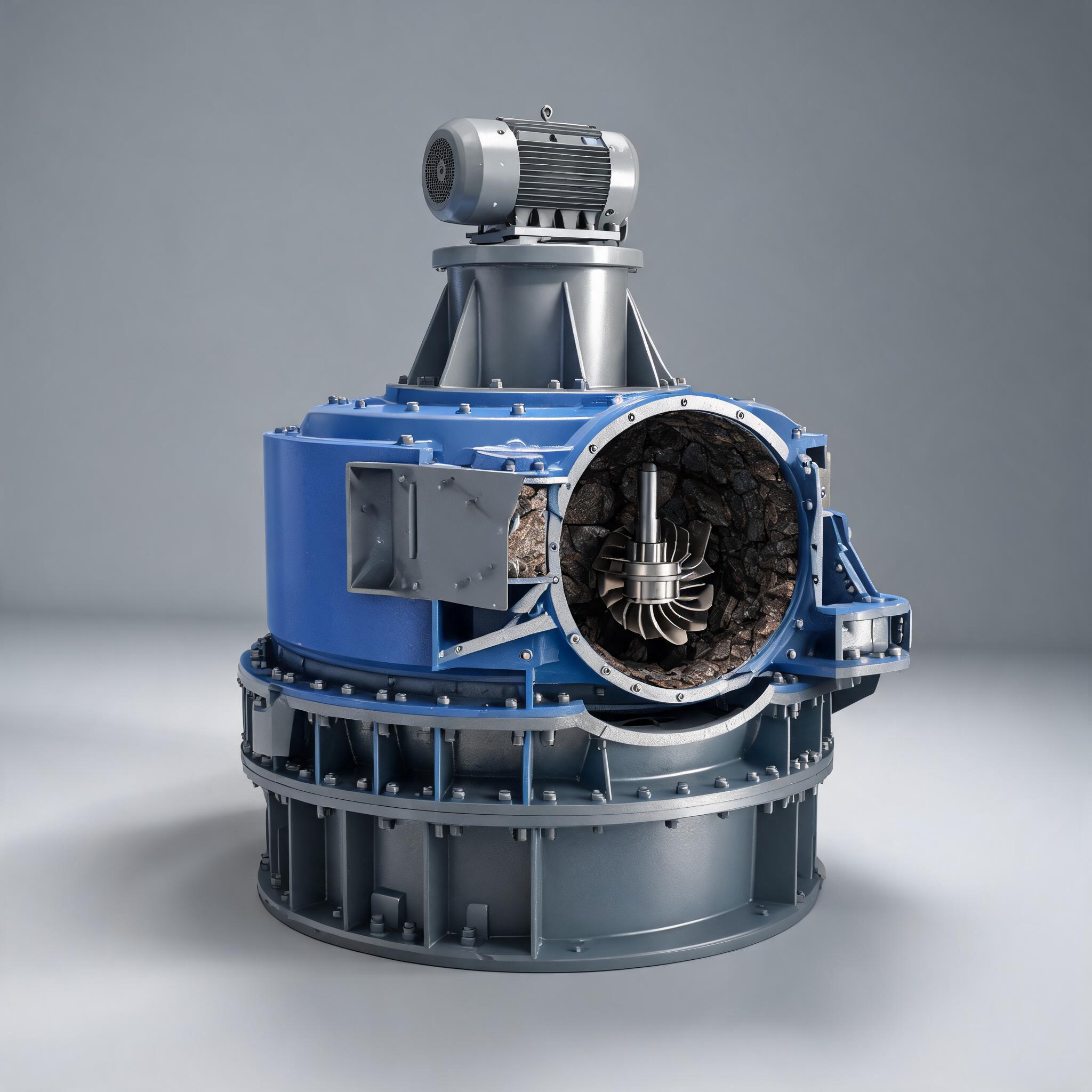
Penghancuran Hentaman Empar untuk Pengurangan Cip Logam dan Tuangan
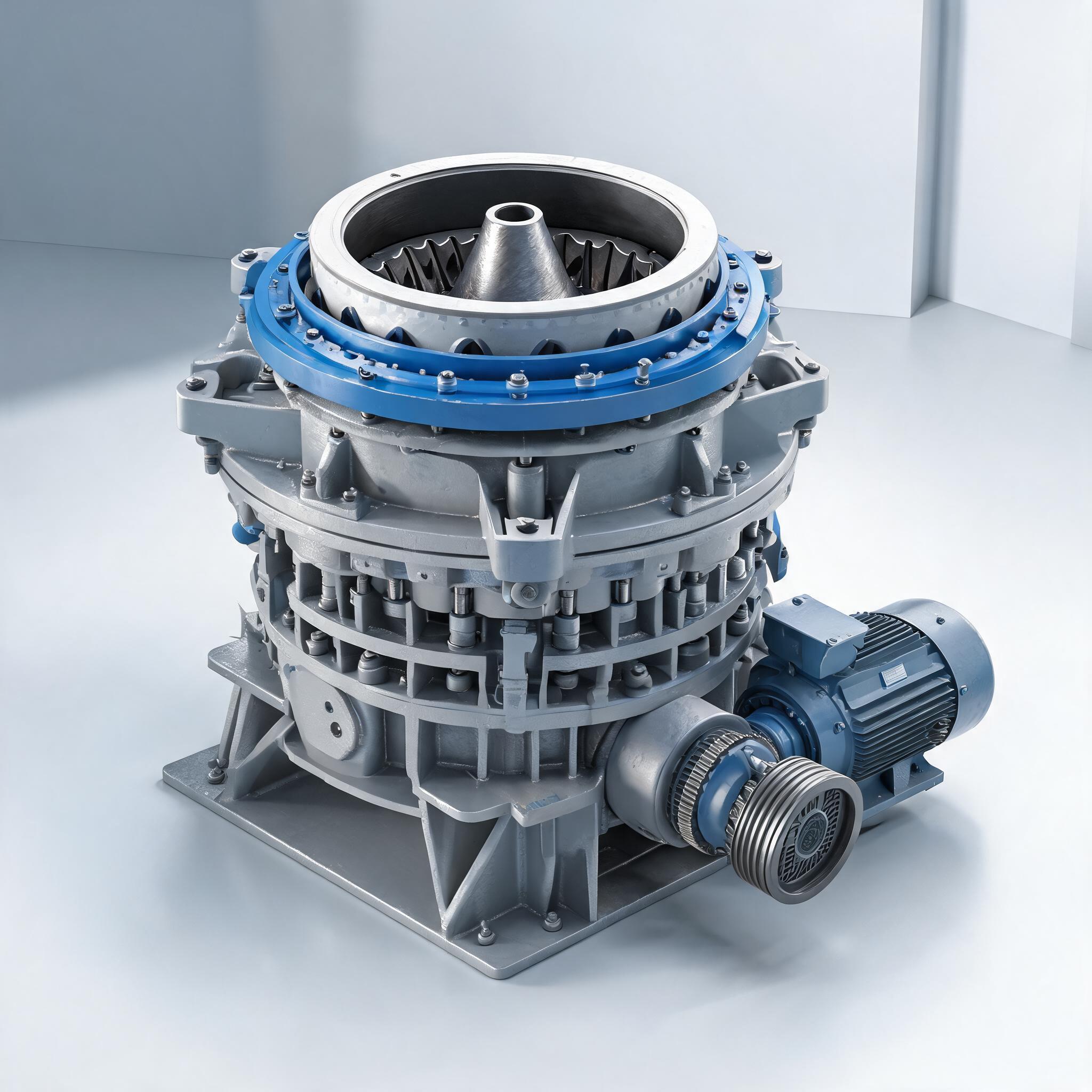
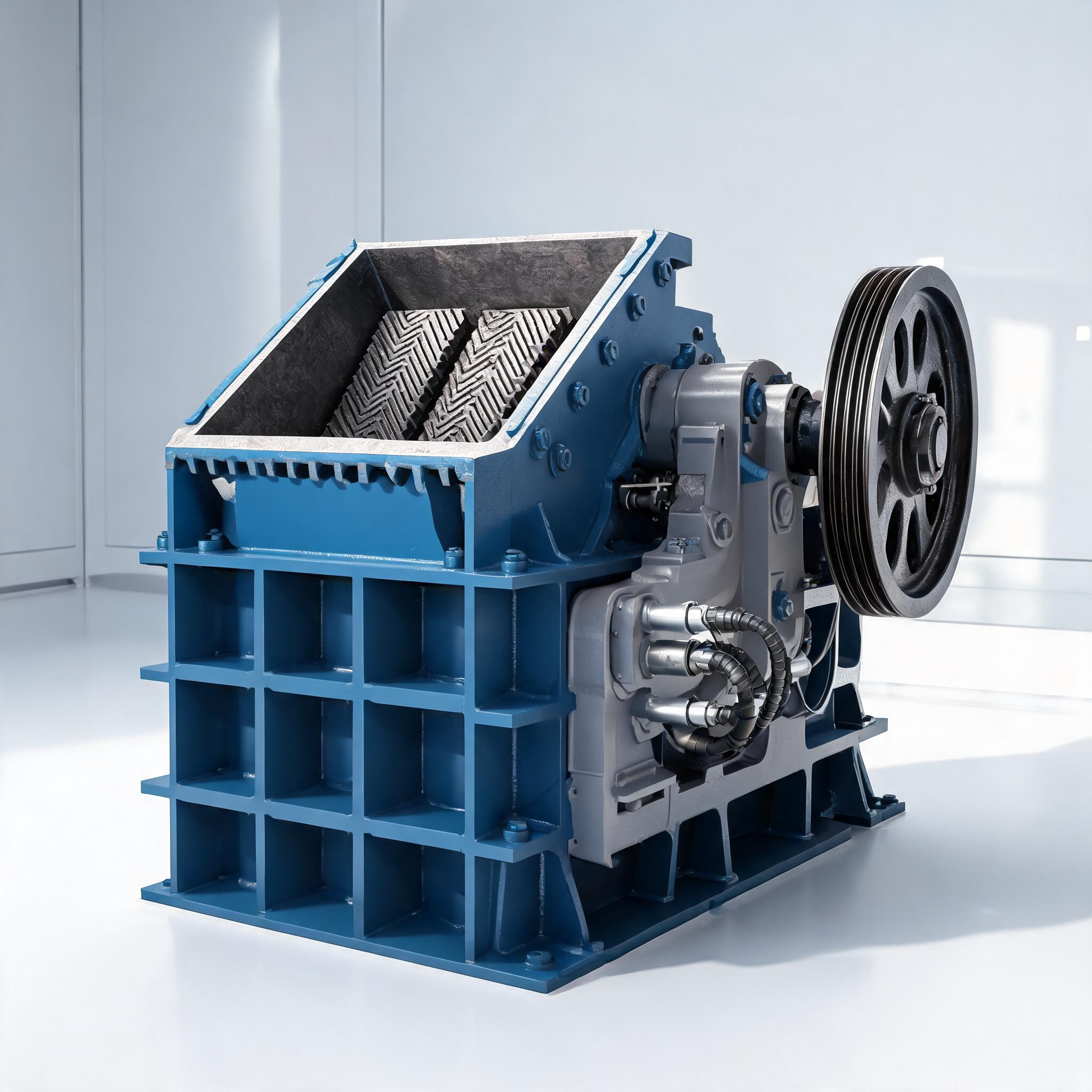
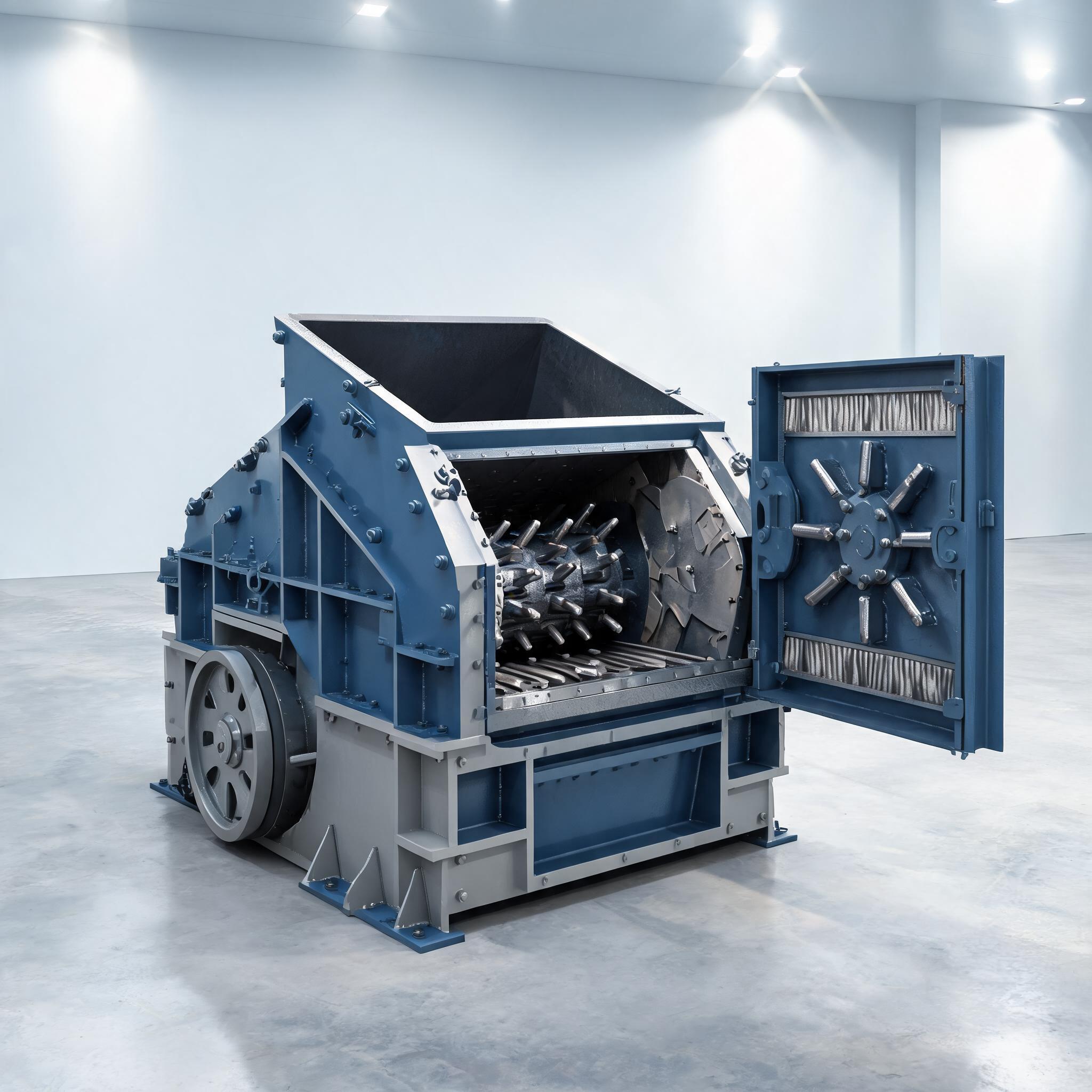
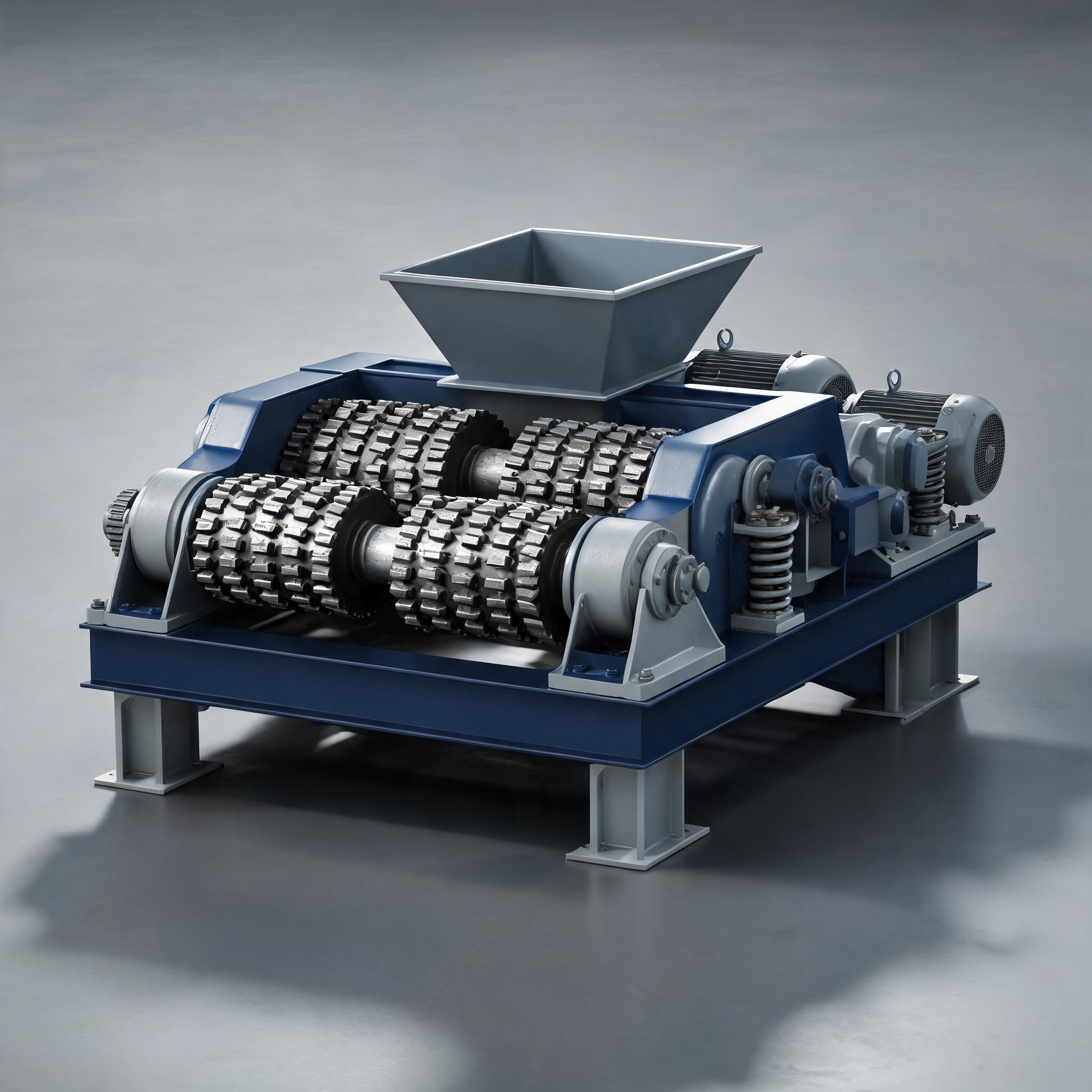
TG-VSI 200 ialah penghancur hentaman aci menegak yang menggunakan daya empar untuk mempercepatkan bahan terhadap ruang penghancuran berlapik batu, memecahkannya melalui hentaman halaju tinggi dan bukannya mampatan atau ricih. Bahan suapan memasuki pemutar dari atas, dipercepatkan ke luar melalui saluran pendesak empar, dan dibaling terhadap lapisan dinding ruang pada kelajuan tinggi. Hentaman memecahkan logam rapuh di sepanjang sempadan butiran dan retakan mikro sedia ada. Bahan yang tidak pecah pada hentaman pertama jatuh semula ke laluan pemutar untuk kitaran hentaman berulang sehingga mencapai saiz discaj.
Spesifikasi Utama
Prinsip penghancuran batu-ke-batu (autogenous) ialah ciri penentu reka bentuk VSI ini. Daripada menggunakan plat haus logam sebagai permukaan hentaman, ruang penghancuran dilapisi dengan bahan suapan itu sendiri—serpihan terkumpul membentuk lapisan haus yang memperbaharui diri pada dinding ruang. Bahan masuk yang dibaling dari pemutar menghentam lapisan ini dan bukannya logam kosong. Reka bentuk ini mengurangkan haus pelapik logam secara drastik berbanding penghancur hentaman mendatar yang menggunakan tirai keluli, dan ia amat berkesan untuk aliran suapan yang melelas di mana plat hentaman keluli akan haus dengan cepat.
Bagaimana Penghancuran VSI Berbeza daripada Penghancuran Hentaman Mendatar
Kedua-dua penghancur VSI dan hentaman aci mendatar (HSI) menggunakan daya hentaman, tetapi mekanisme penghantaran dan ciri zarah yang terhasil berbeza dengan ketara:
- Orientasi pemutar: VSI menggunakan pemutar menegak yang mempercepatkan bahan secara empar ke luar. HSI menggunakan pemutar mendatar yang menghentam bahan semasa ia melalui ruang.
- Permukaan hentaman: VSI menggunakan ruang berlapik batu autogenous. HSI menggunakan tirai hentaman keluli yang merupakan item haus utama.
- Bentuk zarah: VSI menghasilkan serpihan yang lebih kubik dan sama dimensi kerana bahan menghentam dari pelbagai arah semasa kitaran berulang. HSI menghasilkan serpihan yang lebih bersudut dan memanjang.
- Kos haus: Lapisan autogenous VSI bermakna item haus utama ialah pendesak pemutar, bukan keseluruhan lapisan ruang. Untuk suapan yang melelas, kos haus VSI setiap tan boleh jauh lebih rendah daripada HSI.
Skop Aplikasi
TG-VSI 200 sesuai untuk aplikasi kitar semula logam tertentu di mana ciri penghancuran uniknya memberikan kelebihan:
- Pengurangan cip dan tatal logam: Cip logam rapuh daripada operasi pemesinan dikurangkan kepada saiz zarah seragam untuk briket atau peleburan semula. Lapisan autogenous mengendalikan bahan cip yang melelas tanpa haus pelapik yang cepat.
- Pemecahan besi tuang dan tuangan aluminium: Komponen tuang rapuh pecah di bawah hentaman, menghasilkan serpihan bersih dan seragam untuk cas relau. Bentuk zarah kubik meningkatkan ketumpatan cas relau.
- Pemprosesan sanga dan dross: Sanga yang mengandungi logam daripada operasi peleburan boleh dihancurkan dengan hentaman untuk membebaskan zarah logam terperangkap untuk pemulihan hiliran.
- Pembentukan akhir logam pra-hancur: Bahan daripada penghancur rahang atau kon boleh melalui VSI untuk penambahbaikan bentuk zarah akhir sebelum penapisan atau pengasingan.
VSI dioptimumkan untuk bahan rapuh yang telah disaiz. Ia bukan penghancur utama untuk tuangan pepejal besar atau bahagian struktur tebal—suapan hendaklah disaiz terlebih dahulu kepada diameter zarah maksimum yang sesuai untuk tiub suapan pemutar. Logam mulur mungkin berubah bentuk dan bukannya pecah di bawah hentaman. Sahkan ciri bahan suapan anda semasa pertanyaan.
Pengurusan Haus Pemutar dan Pendesak
Saluran pendesak pemutar ialah komponen haus utama dalam penghancur VSI. Bahan yang mengalir melalui saluran pada halaju tinggi menggosok permukaan pendesak. Bahagian haus termasuk:
- Plat hujung pendesak: Keluli aloi keras dibolt. Item haus pertama untuk diperiksa dan diganti. Boleh diterbalikkan di mana reka bentuk membenarkan.
- Plat pengedaran: Terletak di bahagian atas pemutar dan mengedarkan suapan masuk ke saluran pendesak. Ganti apabila kedalaman alur haus melebihi spesifikasi.
- Plat pelindung pemutar: Melapisi perumah dalam pemutar. Periksa pada selang masa berjadual.
Dinding ruang berlapik batu autogenous tidak memerlukan penggantian—lapisan sentiasa diperbaharui oleh bahan suapan itu sendiri. Ini ialah kelebihan kos haus utama VSI berbanding HSI untuk aplikasi yang melelas.
Konfigurasi Pemacu dan Elektrik
Pemutar menegak dipacu dari atas melalui pemacu tali-V dari motor utama. Motor tersedia dalam konfigurasi 50 Hz atau 60 Hz. Kelajuan pemutar menentukan pecutan empar dan dengan itu tenaga hentaman—kelajuan lebih tinggi menghasilkan keluaran lebih halus, kelajuan lebih rendah menghasilkan keluaran lebih kasar. Panel kawalan termasuk pemantauan amperage motor, sensor getaran, dan penutupan automatik pada beban lampau berterusan atau getaran berlebihan.
Pematuhan dan Pensijilan
Rangka mesin dan pelindung membawa tanda CE mengikut Arahan Jentera. Kemudahan pembuatan beroperasi di bawah pengurusan kualiti ISO 9001. Konfigurasi panel kawalan tersenarai UL tersedia untuk pembeli Amerika Utara atas permintaan. Corong suapan atas dilindungi dengan penutup pemeriksaan berinterlock yang menghalang akses semasa operasi pemutar.
Soalan Lazim Pembeli
Minta Cadangan Terperinci
Untuk menyediakan sebut harga yang tepat, sertakan jenis bahan suapan biasa anda dan ciri kerapuhan, saiz zarah suapan maksimum, saiz serpihan keluaran sasaran dan keperluan bentuk, daya pemprosesan yang diperlukan, bekalan kuasa tapak (voltan dan frekuensi, 50 Hz atau 60 Hz), dan sama ada VSI akan berdiri sendiri atau disepadukan dengan barisan kitar semula berbilang peringkat. Nyatakan sama ada anda memerlukan VFD untuk kawalan kelajuan pemutar berubah.
Minta butiran produk