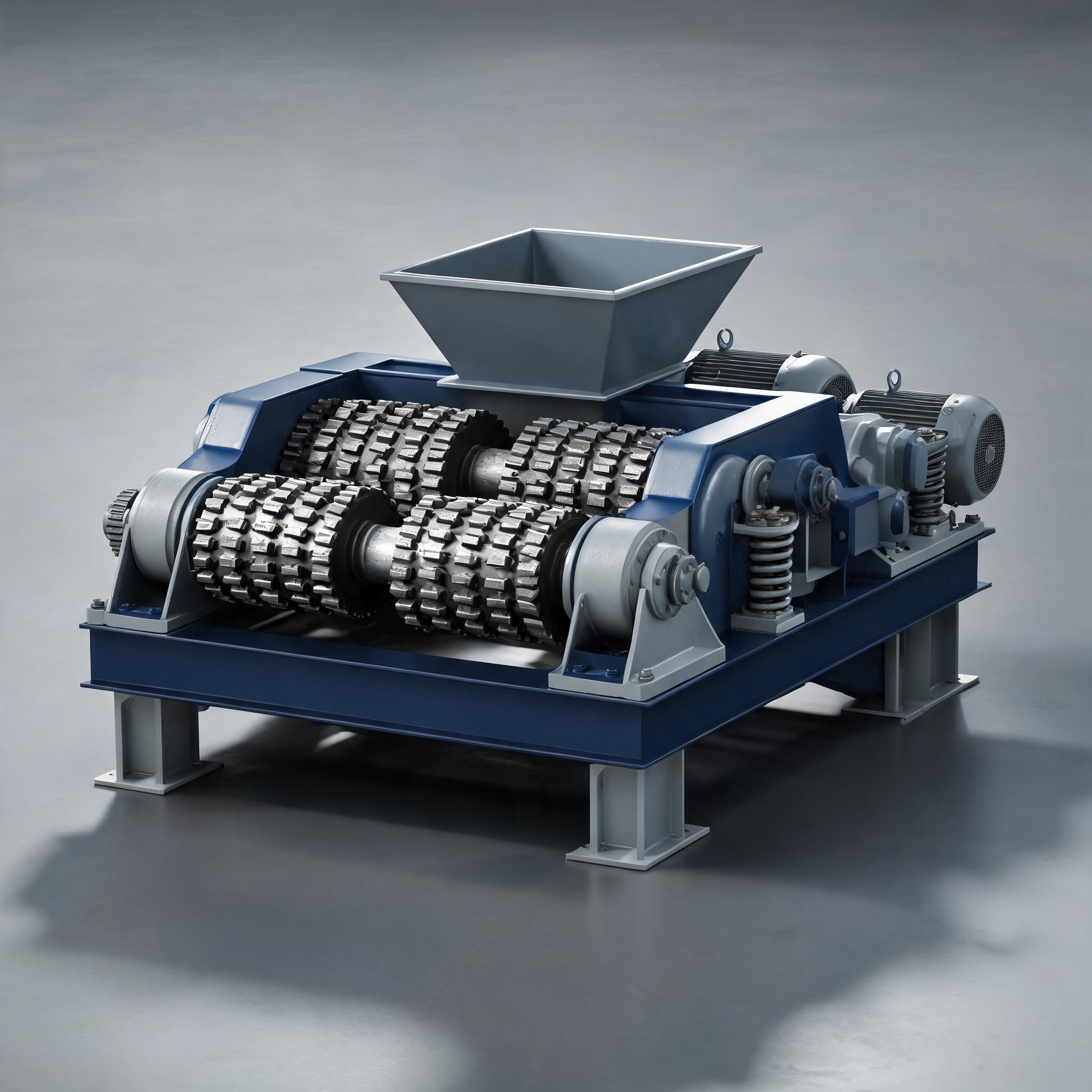
Precise Top-Size Control with Minimal Fines Generation
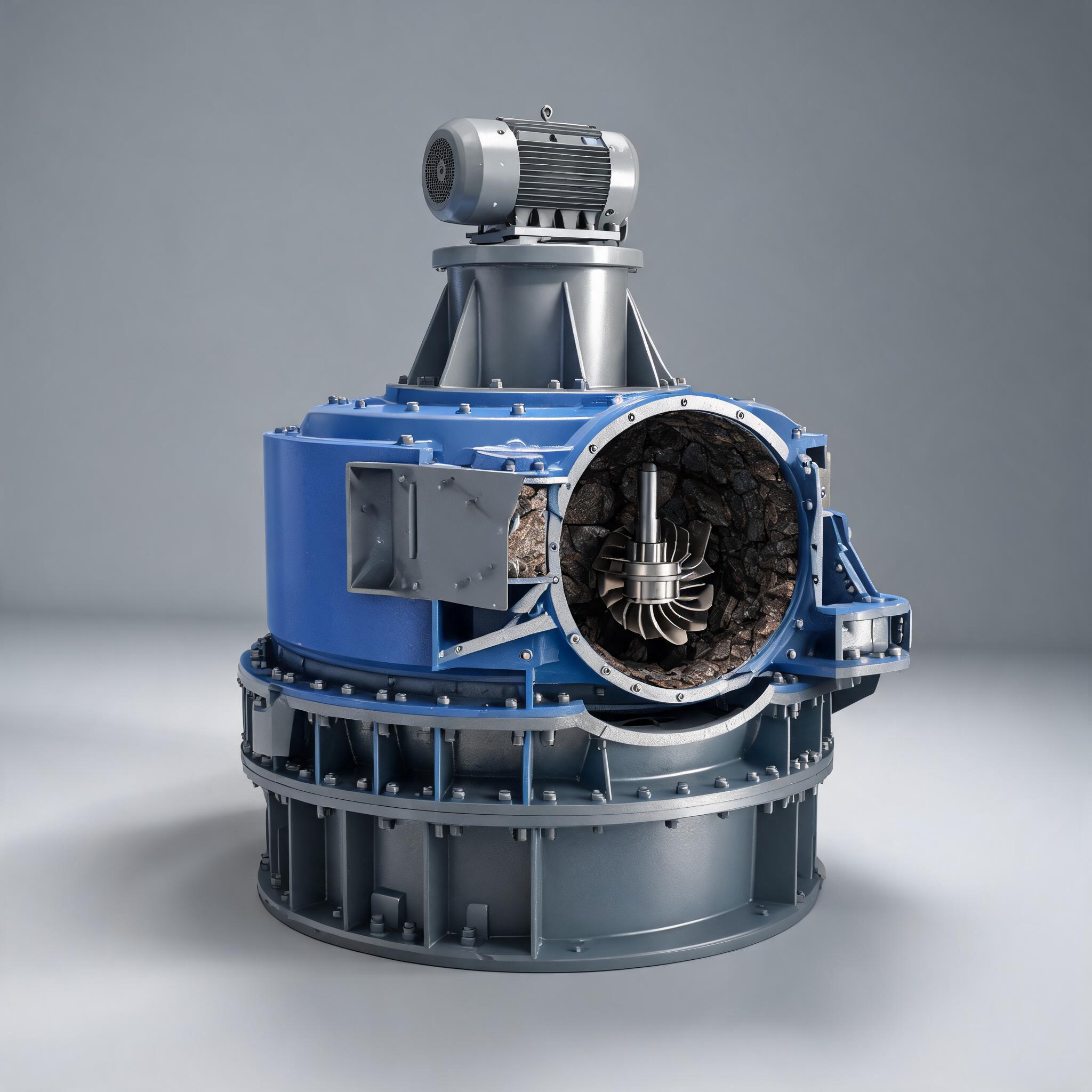
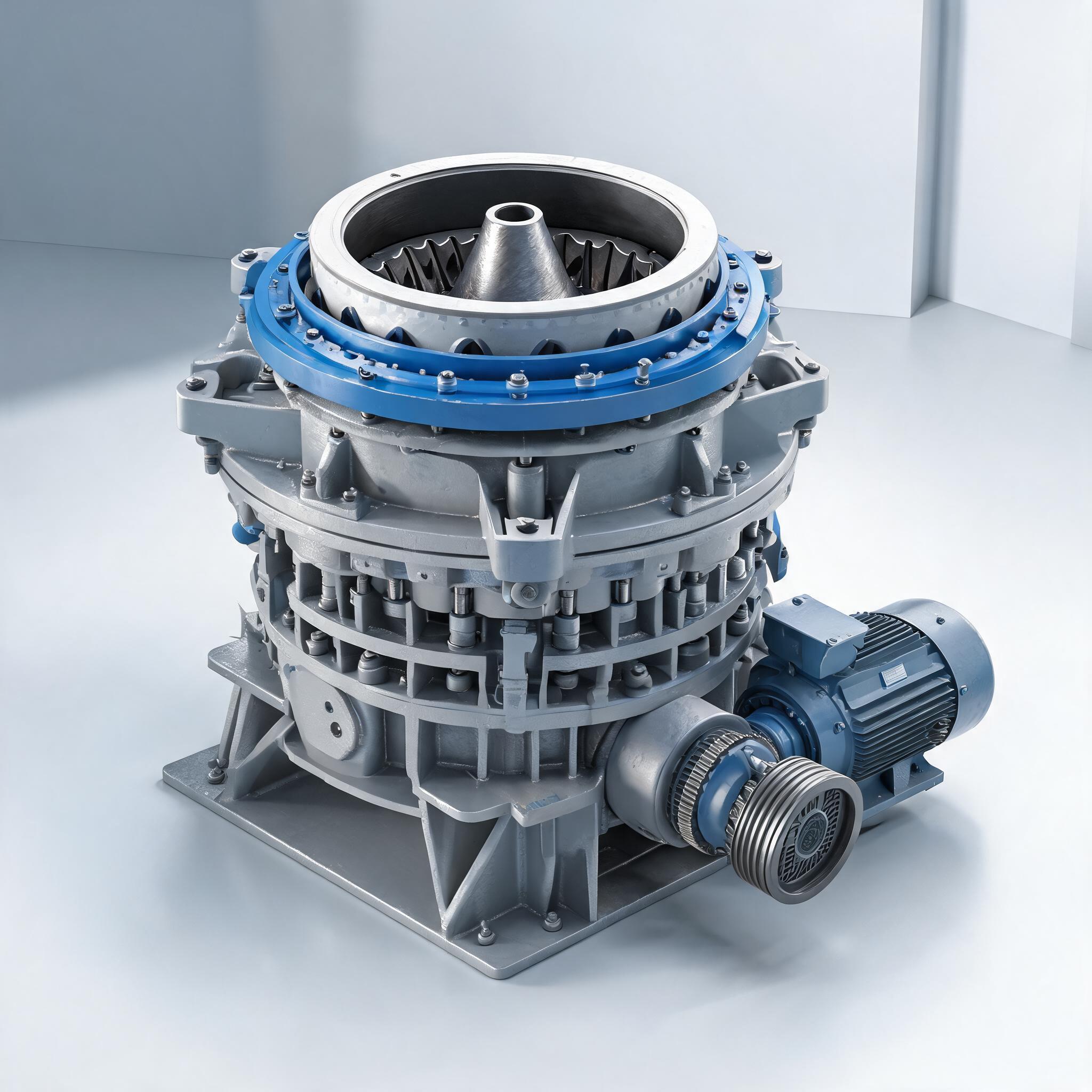
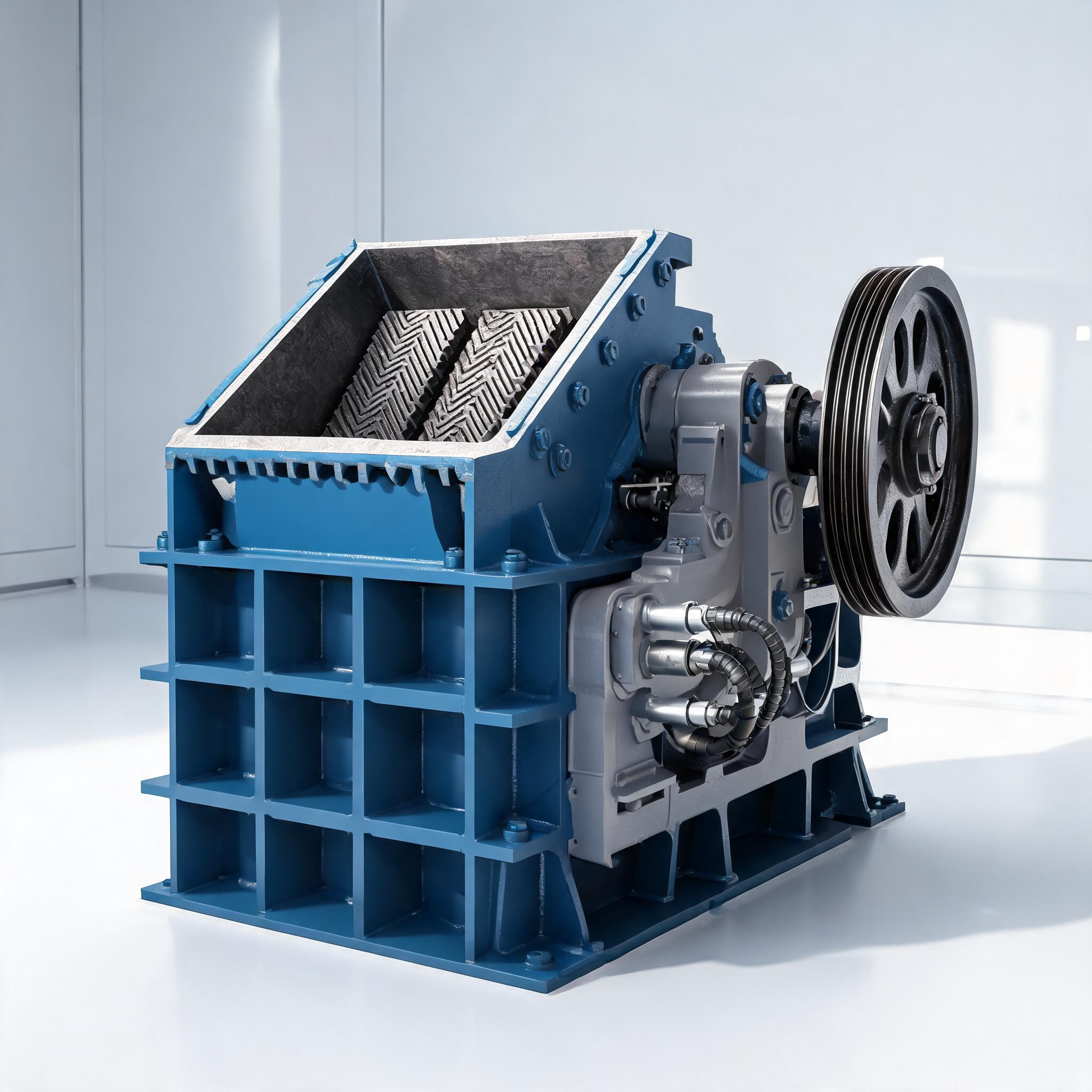
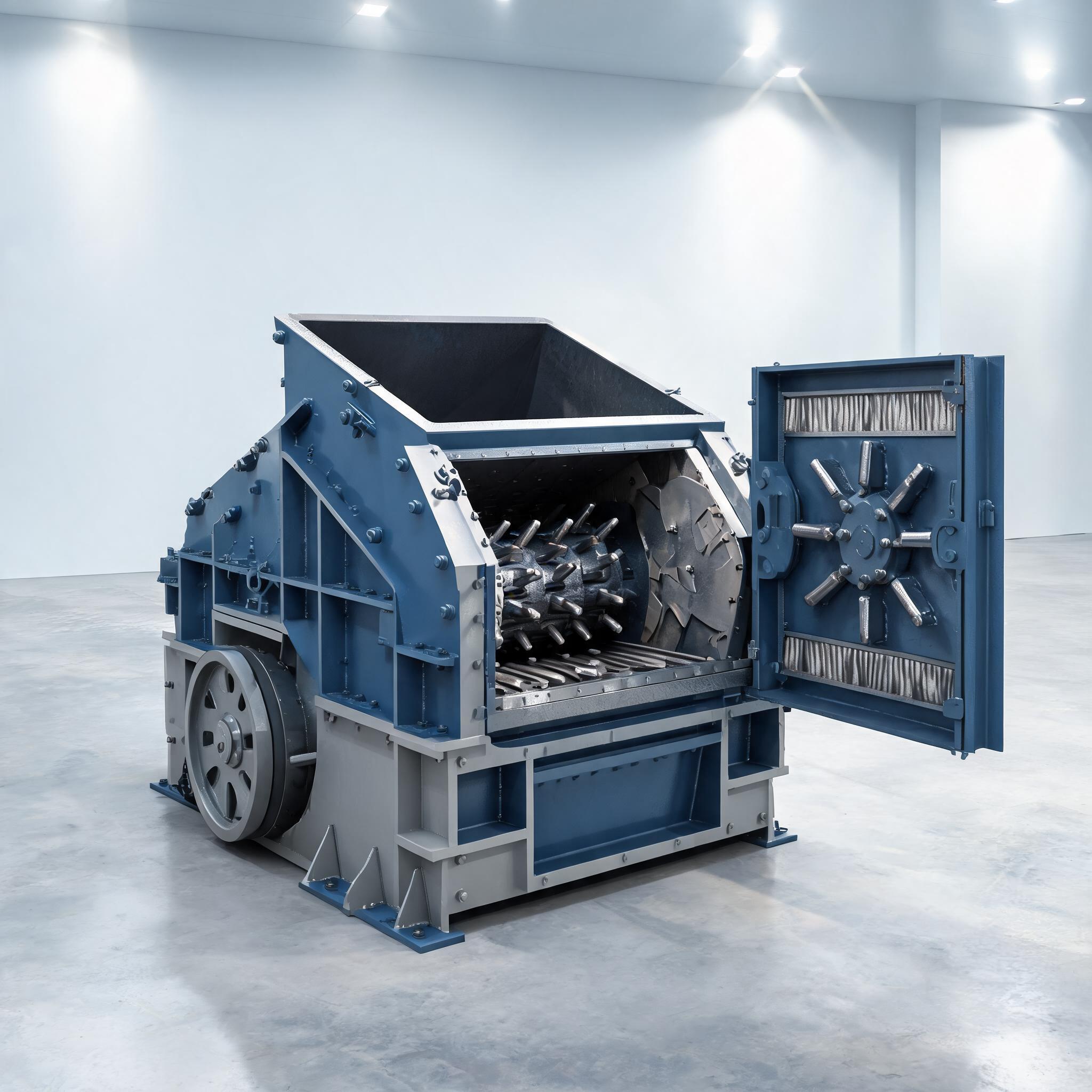
The TG-RollCrush 300 is a double roll crusher for metal recycling applications that require precise control over output fragment size with minimal fines. Two counter-rotating rolls with toothed segment surfaces draw material into the crushing gap, where it is reduced by a combination of compression and shear. The toothed profile grips individual pieces rather than relying on gravity or impact, making it effective for brittle castings, metal chips, and pre-sized fragments that need a controlled final sizing pass.
The roll gap directly determines maximum output fragment size-no material larger than the gap can pass through. This gives a hard upper bound on output size, unlike impact or jaw crushers where output size is probabilistic.
Specifications
| Parameter | Value |
|---|---|
| Crushing Mechanism | Compression and shear |
| Roll Configuration | Twin counter-rotating, independent drive |
| Roll Surface | Segmented toothed, bolted |
| Gap Adjustment | Hydraulic with spring relief |
| Tramp Protection | Spring-relief auto-separation |
| Drive | Independent motor per roll via gearbox |
| Motor Frequency | 50 Hz or 60 Hz configurable |
| Throughput Capacity | Varies by material density and gap setting - confirm at inquiry |
Why Double Roll Crushing for Metal Recycling
- Minimal fines: Compression and shear between rolls produce fewer fines than impact crushing-important when fines reduce downstream separation efficiency or lower recovered metal value.
- Precise top-size control: The roll gap sets the maximum output fragment size. No material larger than the gap can pass through.
- Low dust and noise: Slow-speed compression generates less dust and noise than high-speed impact crushers, relevant for facilities under strict environmental regulations.
- Ductile contaminant handling: Ductile metals entering the gap (copper wire, thin aluminum) tend to flatten rather than fragment. This can be an advantage if the goal is to flatten ductile contaminants for downstream screening separation.
Roll Segment Design
The roll surface carries bolted toothed segments in hardened alloy steel. Tooth profile is selected based on feed material:
- Coarse tooth: Larger teeth, wider spacing. For larger feed pieces and higher throughput.
- Medium tooth: General-purpose for most metal recycling applications.
- Fine tooth: Smaller teeth, closer spacing. For finer output sizing and smaller feed particles.
Segments are bolted to the roll core and individually replaceable. Roll cores remain in the machine-only toothed segments are swapped. Track wear by measuring tooth height at scheduled intervals.
Application Scope
- Final sizing of pre-crushed cast iron fragments before foundry charging
- Sizing of metal chips and turnings for briquetting feed
- Reduction of brittle aluminum castings to uniform particle size
- Preparation of steel scrap fragments for direct furnace charging
- Controlled sizing of pre-shredded material before eddy-current separation
Optimized for brittle, pre-sized material. Not a primary crusher-feed should be pre-sized by a jaw crusher, impact crusher, or shredder. Feeding oversized or ductile material can stall the rolls or cause excessive wear. Confirm maximum feed piece size at inquiry.
Drive and Control
Each roll is driven by an independent motor via gearbox, allowing the rolls to run at slightly different speeds to improve material pull-through. The PLC monitors motor load and reverses roll rotation on overload to clear jams. Soft-start is standard.
Wear Parts and Support
Spare toothed segments in coarse, medium, and fine profiles are available as individual replacements. Our engineering team can configure tooth profiles and gap settings to match specific feed material characteristics. Each machine ships with a spare-parts kit; standard lead time for replacement wear parts is under 45 days. Installation supervision, operator training, and a 12-month warranty are included.
Frequently Asked Questions
Request a Detailed Proposal
To prepare an accurate quotation, include your typical feed material types and maximum feed piece size, target output fragment size, required throughput, site power supply (voltage and frequency, 50 Hz or 60 Hz), and whether the roll crusher follows a jaw crusher, impact crusher, or shredder in your line. Mention your preferred tooth profile (coarse, medium, fine) if known.
Request product details