Continuous Gyratory Compression for Uniform Fragment Size
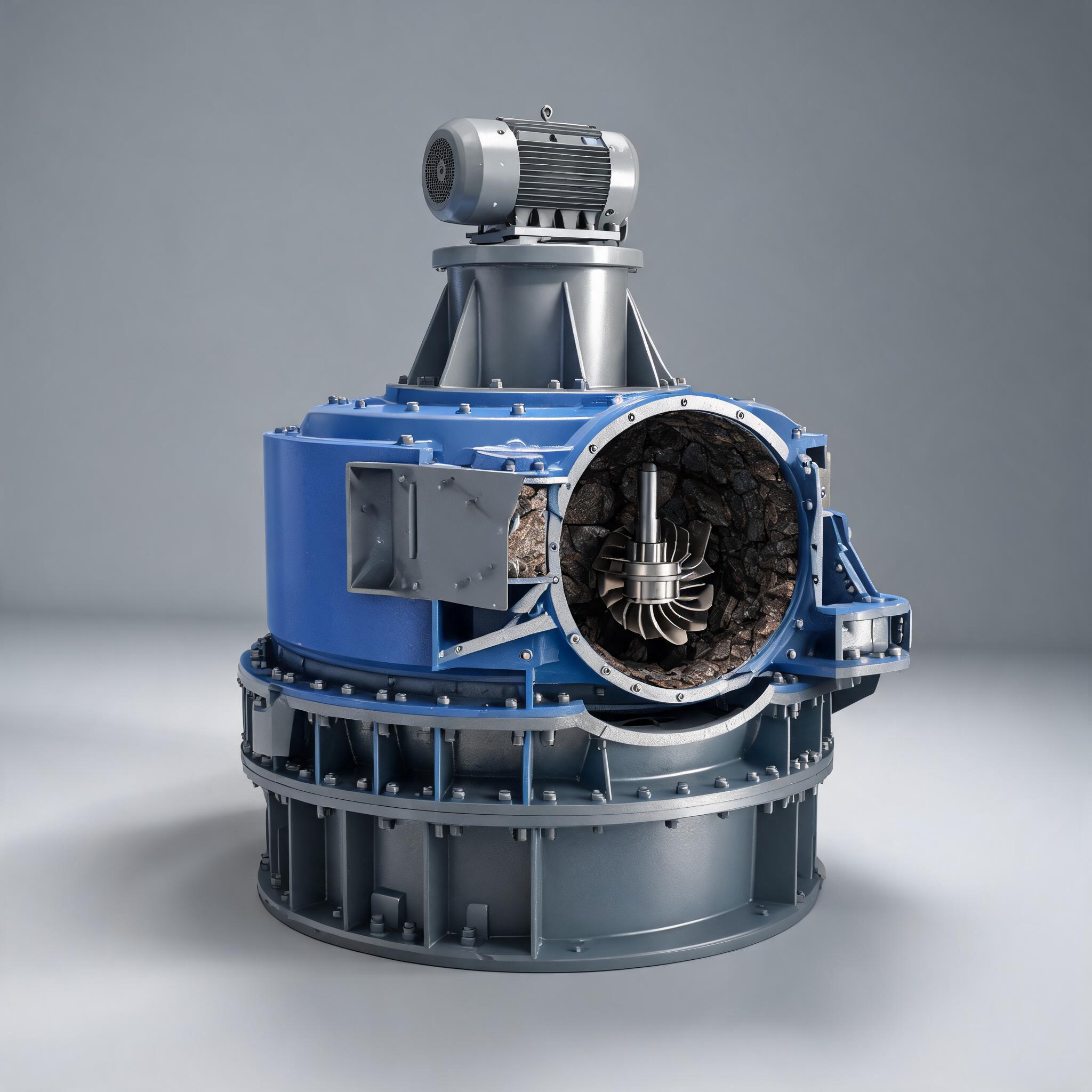
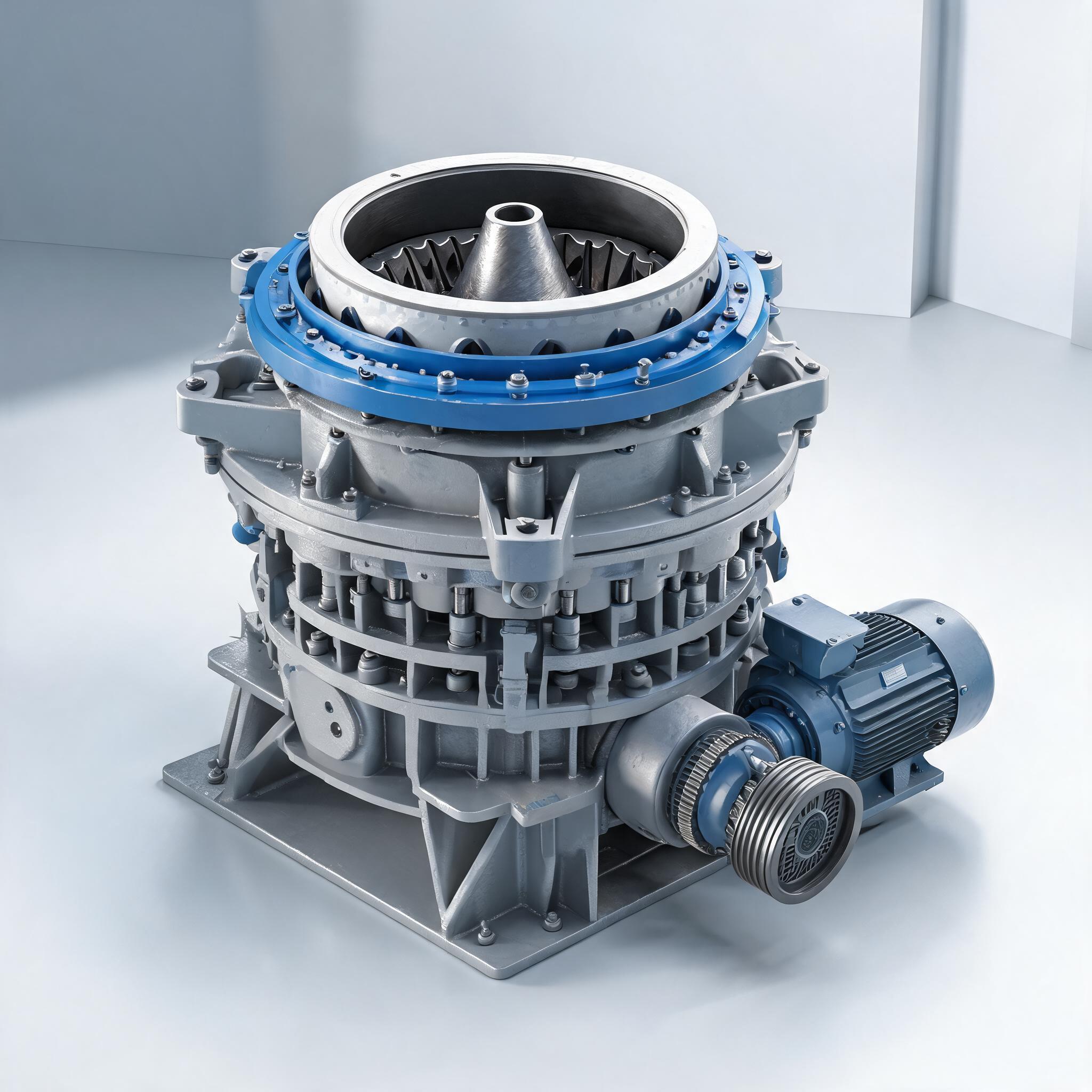
The TG-Cone 350 applies continuous compressive force through an eccentrically gyrating mantle within a fixed concave bowl-unlike a jaw crusher's intermittent compression cycle, the cone crusher delivers consistent through-flow with tighter particle size distribution. Material enters the chamber from above, is compressed between mantle and concave liner, and exits through the adjustable discharge gap at the bottom. This makes it particularly effective as a secondary or tertiary stage after a jaw crusher or primary shredder, where the goal is controlled fragment size for downstream magnetic and eddy-current separation.
Specifications
| Parameter | Value |
|---|---|
| Crushing Mechanism | Gyratory compression |
| Chamber Type | Mantle and concave bowl |
| Liner Material | Manganese steel (Mn13 / Mn18) |
| Discharge Adjustment | Hydraulic bowl adjustment (on-the-fly) |
| Tramp Release | Hydraulic, auto-reset |
| Drive | Eccentric shaft, V-belt and gear |
| Motor Frequency | 50 Hz or 60 Hz configurable |
| Throughput Capacity | Varies by material hardness and chamber profile - confirm at inquiry |
The eccentric gyration creates a compressive zone that migrates around the chamber circumference. Material is crushed on one side while fragmented pieces fall freely on the other, allowing continuous feed and discharge. The hydraulic bowl adjustment allows output size changes while the machine is running-without stopping production.
When to Choose a Cone Crusher
- After a jaw crusher or primary shredder: Takes pre-sized material and reduces it further to uniform fragment size. Advantage over a secondary jaw crusher is continuous through-flow and tighter particle distribution.
- When downstream separation requires consistent fragment size: Magnetic and eddy-current separators operate most efficiently when feed particle size falls within a narrow range. Gyratory action produces more uniform output than impact crushing.
- When processing abrasive cast iron: Compression-only action generates less liner wear than an impact crusher on the same abrasive material. Manganese liners work-harden under compressive load, extending service life.
Not ideal for ductile metals like copper wire or aluminum sheet-these deform and compact under compression, potentially clogging the chamber. For mixed streams with significant ductile content, position the cone crusher after a stage that has removed ductile metals, or use an impact crusher instead.
Chamber Profiles
The mantle and concave geometry controls reduction ratio and output size:
- Coarse chamber: Higher reduction ratio, accepts larger feed. Used when following a primary jaw crusher.
- Medium chamber: Balanced reduction ratio and throughput. General-purpose for most metal recycling.
- Fine chamber: Produces smaller, more uniform output. Used as tertiary stage before final screening.
Mantle and concave liners are manganese steel (Mn13 standard, Mn18 for highly abrasive feed). Liners are replaced by removing the bowl assembly-no welding required.
Tramp Release System
If uncrushable tramp metal enters the chamber, the hydraulic tramp release allows the mantle to drop, passing the object through the discharge gap without damaging liner or shaft. The system automatically resets to the pre-set gap after the object clears. This protection is critical in metal recycling, where feed streams frequently contain uncrushable contaminants.
Drive and Control
The mantle is driven by an eccentric shaft powered via V-belt and gear. The hydraulic system for bowl adjustment and tramp release has its own power pack. The control panel includes motor amperage monitoring, lubrication system monitoring, and automatic shutdown on low oil pressure or sustained overload.
Wear Parts and Support
Spare mantle and concave liners are available in Mn13 and Mn18 grades. Our engineering team can configure chamber profiles and discharge settings to match specific feed material characteristics. Each machine ships with a spare-parts kit; standard lead time for replacement wear parts is under 45 days. Installation supervision, operator training, and a 12-month warranty are included.
Frequently Asked Questions
Request a Detailed Proposal
To prepare an accurate quotation, include your typical feed material types and hardness, feed size range from the primary crusher, target output fragment size, required throughput, site power supply (voltage and frequency, 50 Hz or 60 Hz), and the chamber profile you need (coarse, medium, or fine). Mention whether the cone crusher follows a jaw crusher or shredder in your line configuration.
Request product details